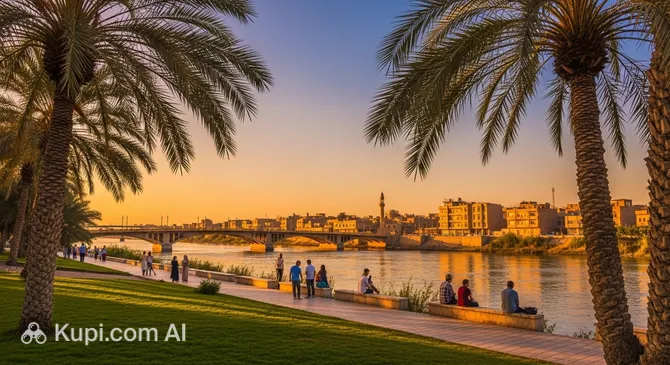
Al-Diwaniyah is the heart of provincial Iraq and the administrative center of the Al-Qadisiyah Governorate. Located in the fertile Mesopotamian plains between the Tigris and Euphrates on the banks of the Al-Hilla River, this city is steeped in the atmosphere of a traditional agricultural region. Here, there is no hustle and bustle of megacities; instead, daily life is centered around the trade of grain, rice, and the famous local dates, which are considered among the best in the country.
Diwaniyah. Illustration.
Source: Kupi.com AI
The city's geographical location makes it an important link between the northern and southern regions of the country. With a population approaching 400,000, Al-Diwaniyah maintains the appearance of a cozy and welcoming hub, where its modern administrative role intertwines with a deep respect for centuries-old farming traditions. In the history of the city, a special place is occupied by the period of its foundation by the Khaza'il dynasty, when it served as an important guest house for the tribes of the region.
Although the city is not a classic tourist center, it attracts travelers with its authenticity. Here, you can see the real Iraq, free from polished facades: bustling markets, river caravans, and endless agricultural lands in the surrounding areas. Visiting this city is an invitation to get acquainted with the rhythm of life in the Iraqi provinces and its sincere hospitality.
Weather Overview
The weather in Al-Diwaniyah is dictated by its location in a hot, arid climate zone. Summer arrives early here and is characterized by extremely high temperatures, which in July and August can reach +46°C. During this period, precipitation is virtually non-existent, and the air becomes very dry, which should be considered when planning long walks.
Winter in the city, by contrast, is quite moderate and pleasant. In January, the average daytime temperature is around +13°C to +19°C, making this season the most suitable for a visit. Nights can be chilly, so a light jacket will not be out of place. Light rains occur mainly between November and March, but they are rarely prolonged.
If you want to learn more about the typical climate of Al-Diwaniyah, keep in mind the possibility of dust storms, which occasionally occur due to the proximity of desert territories. Expect a truly sweltering summer with cloudless skies and a mild, dry winter that allows for comfortable exploration of the city's surroundings.
Average monthly temperature
Average monthly precipitation
Interesting Facts
The city's original name was Khuza'ahs Diwaniyah, which translates to "Khuza'a Guest House," named after the ruling Khaza'il dynasty.
Al-Diwaniyah is the true "rice capital" of the region—unique varieties are grown here that are prized throughout Iraq for their aroma and quality.
The city has shown phenomenal growth: while just over 22,000 people lived here in 1950, today the population of the city and its suburbs is rapidly approaching the 600,000 mark.
One of the country's oldest and most significant railway trunk lines passes through the city, connecting the capital, Baghdad, with the port city of Basra.
For ornithologists, this area is a hidden gem—due to irrigation features and the proximity of rivers, there is an anomalously high biodiversity of birds for a desert region.
How to Get There
Getting to Al-Diwaniyah is easy thanks to its location on one of the country's main transport corridors. The city is located about 180 kilometers south of the capital, and the journey by car on a modern highway usually takes 2 to 3 hours. This makes the city accessible for both business trips and transit travelers heading to the southern provinces.
Although the city itself does not have its own airport, travelers can use the international airports in Baghdad or Nasiriyah. From there, it is easy to reach the center of Al-Diwaniyah by taxi or intercity buses. More detailed information on routes can be found on the page about how to get to the city.
Rail transport is one of the most romantic and convenient ways to arrive. Al-Diwaniyah Railway Station serves trains running on the Baghdad–Basra route. It is an important transit point providing regular connections with the region's key cities. A train ride allows you to see the picturesque agricultural landscapes of the Mesopotamian plains that are inaccessible from a car window.
Station
Passenger traffic
Distance
Baghdad railway station
10
157 km
Main Attractions
The city of Al-Diwaniyah does not aim to surprise tourists with grandiose monuments of world significance; however, its charm lies in the details of everyday life. One of the main "attractions" is the rhythm of life itself on the banks of the Al-Hilla River. A walk along this water artery allows you to see how the river still nourishes the region, powering numerous irrigation systems and creating picturesque landscapes in the arid climate.
The city's central squares and markets are where real life pulses. The Old Market of Al-Diwaniyah is a labyrinth of spice aromas and sacks of premium rice and dates. It is not just a place for shopping, but a social hub where locals exchange news over a cup of strong tea. Here, you can feel the spirit of old Iraq, preserved in the traditions of trade and communication.
For those interested in the industrial history of the region, the local tire manufacturing plant may be of interest—once a major enterprise and a symbol of the city's industrial growth. It is also worth noting the railway station building, which is an important junction on the historical route from Baghdad to Basra and reflects the architectural style of mid-20th-century transport facilities.
Local Cuisine
The gastronomic face of Al-Diwaniyah is inextricably linked to its fertile lands. The main star on the local table is rice. Be sure to try kebsa—a fragrant pilaf with meat (usually lamb or chicken), generously seasoned with a blend of local spices and raisins. Thanks to the high quality of the grain grown here, the taste of this dish in Al-Diwaniyah is considered the gold standard.
It is impossible to imagine the local cuisine without dates. They are served as a snack with tea, used in desserts, or turned into a thick syrup. In the local markets, look for sambousek—crispy pastries with various fillings, from cheese to spiced meat, which are a popular quick snack for city residents.
The food culture here is deeply traditional: main meals often take place with the family, but numerous street eateries and tea houses are always open to guests. Hearty soups—shorba—and freshly baked bread are frequently found on the menu. Among drinks, strong black tea with plenty of sugar is the favorite, while alcohol is virtually non-existent in the region's public establishments, highlighting the conservative nature of local life.
Travel Tips
Preparing for a trip to Al-Diwaniyah requires considering the characteristics of the Iraqi provinces. These tips will help you feel comfortable and confident in this welcoming agricultural land.
Clothing and Dress Code: Choose modest and closed clothing made from natural fabrics. Men are advised not to wear shorts, and women should prefer items that cover the shoulders and knees. Comfortable closed shoes will be indispensable on the dusty market streets.
Getting Around the City: The best way to move around is by local taxi. Agree on the price before starting the trip. Public transport consists of minibuses, but navigating their routes without knowing the language can be difficult.
Finances and Cash: Carry a sufficient supply of Iraqi dinars in cash. International cards are rarely accepted, and ATMs can only be found in major banks in the center. Tips are welcome but remain at your discretion.
Safety: Stick to central, well-lit areas and avoid walking in unfamiliar places late at night. The city is generally calm, but it's always better to have a copy of your documents and the contact information for your embassy.
Language and Communication: The primary language is Arabic. English is not widely spoken, so learn some basic phrases: "Salam" (Hello), "Shukran" (Thank you). This will significantly endear you to the locals.
Hydration: Due to the extreme heat, always carry a bottle of water with you. Drink only bottled water and avoid ice in drinks at street cafes.
Local Etiquette: Always remove your shoes when entering a private home or a mosque. Do not use your left hand for eating or passing objects—it is considered impolite.
What to Avoid: Do not photograph military installations, government buildings, or checkpoints. Also, always ask for permission before taking photos of local residents.
Following these simple rules will allow you to fully enjoy the authenticity of Al-Diwaniyah and the warmth of the Iraqi soul.
Entertainment & Nightlife
Entertainment in Al-Diwaniyah is predominantly quiet and traditional in nature. You won't find noisy nightclubs or bars with loud music here—the city's nightlife is concentrated in cozy tea houses and small cafes where locals gather after sunset. This is the perfect time to enjoy the coolness and observe the leisurely conversations of city residents over a traditional hookah or a cup of tea.
The main areas for evening walks are the central streets adjacent to the commercial zones. During this time, the city comes alive: street food stalls open, and families come out for strolls. For those seeking more active cultural leisure, public events are occasionally held in the governorate's administrative buildings, reflecting local folklore and traditions.
Daytime leisure is often connected with nature. The city's surroundings are popular among amateur birdwatchers. Thanks to the proximity of rivers and an abundance of agricultural land, many species of birds can be found here, making simple walks outside the city a true ecological adventure. If you crave brighter lights and larger-scale entertainment, city residents often take short train trips toward the country's larger cultural centers.
Parks & Museums
In terms of classic museum experiences, Al-Diwaniyah may seem modest, as the city's main cultural values are held not behind glass cases but in its living traditions. There are no major state galleries here, but the role of an "open-air museum" is played by the old quarters and market squares, where the architecture and way of life have remained unchanged for decades.
The city's green zones are represented by small municipal parks that serve as important oases of coolness during the hot summer months. Although the scale of landscaping may seem modest compared to northern cities, these spaces are highly valued by locals for family recreation in the evening hours. In this agricultural region, the city's outskirts, where endless palm groves begin, often serve as the real "parks."
Of particular interest to nature lovers are the surrounding wetlands and riverbanks. These are natural recreation areas that attract birdwatchers with their rich fauna. Here, you can see many migratory birds, making the city's outskirts an attractive place for quiet nature contemplation and ecological walks away from the urban noise.
Getting Around
The transport system of Al-Diwaniyah is simple and functional, reflecting the city's provincial status. The main way of getting around for locals is minibuses and shared taxis. They connect the outskirts with the center and the railway station. A strict schedule often doesn't exist—vehicles depart as they fill up, which is typical for many cities in the region.
For tourists, the most convenient and reliable option remains the taxi. Cars can easily be found at designated stands in the center or simply hailed on the street. This is a relatively inexpensive way to travel; however, it is better to agree on the fare in advance, as meters are rarely used. In the central part of the city, many interesting sites, such as markets and administrative buildings, are within walking distance of each other.
An important feature of the city is its role in the railway network. Trains provide a reliable connection to Baghdad and Basra, making rail transport an excellent alternative to buses for intercity travel. Within the city itself, traffic jams are rare and are usually associated with activity in the central markets during morning hours. Bicycle rentals are not developed here, and car sharing is non-existent, so you should rely on official carriers or walking.
Accommodation
The hotel sector in Al-Diwaniyah is primarily oriented toward business travelers, government officials, and those passing through the city. You won't find large international hotel chains here, but the city offers decent accommodation options in the mid-range guest house and apartment segments. Most of them are concentrated in the central part of the city, near the railway station and administrative quarters.
For tourists, hotels in the center will be the most convenient, as they provide quick access to markets, cafes, and transport hubs. Accommodation conditions are usually simple but include all necessary amenities: air conditioning (which is critical in the local climate), Wi-Fi, and traditional Iraqi hospitality. These hotels are often managed by local families, giving the stay a special homey feel.
If you are planning a visit, it is recommended to book accommodation in advance, especially if your trip coincides with important regional holidays or agricultural exhibitions. The price range remains quite affordable, and the most common way to find options is through local services or personal arrangements on-site. For longer stays, you might consider renting private apartments, which are popular among foreign specialists working in the agricultural sector.
Nearby Cities
Al-Diwaniyah serves as an excellent starting point for exploring central Iraq, offering travelers the opportunity to see the life of the region's small but distinctive towns. Thanks to the developed road network and railway connections, many interesting locations are accessible for day trips.
Nearby is the city of Ash-Shamiya, known for its picturesque agricultural lands. It is also worth paying attention to Al-Hamza and Afaq, which allow for a deeper immersion into the atmosphere of the Iraqi province. Each of these destinations is unique in its own way and provides an insight into the diversity of the Mesopotamian cultural landscape.
Exploring the surrounding areas will allow you to see not only the region's agricultural achievements but also to meet the local people, whose warmth and sincerity make every such trip unforgettable. Traveling to neighboring cities is the best way to feel the true spirit of the Al-Qadisiyah Governorate.
Shopping & Souvenirs
Shopping in Al-Diwaniyah is primarily a journey through traditional bazaars where trade is conducted just as it was centuries ago. The city does not have huge modern shopping malls with international brands, but it offers something far more valuable: authentic local goods. The main object of interest for any visitor will be the central markets, where rows are overflowing with the region's agricultural riches.
What to bring back from Al-Diwaniyah? First and foremost, of course, are rice and dates. The local "Ambar" rice variety is famous for its unique aroma, and the selection of dates here is simply enormous—from soft dessert types to drier varieties. Also in the markets, you can find high-quality spices, local honey, and traditional handmade Iraqi textiles, which make excellent souvenirs.
Shops and stalls usually operate from early morning until lunch, after which they close for a siesta and reopen in the evening when the heat subsides. Payments are made predominantly in cash in the local currency, so it is worth taking care to have paper money on hand. Walking through the market stalls of Al-Diwaniyah is not only an opportunity to make purchases but also a great chance to practice the art of Middle Eastern bargaining, which is perceived here as an element of friendly communication.