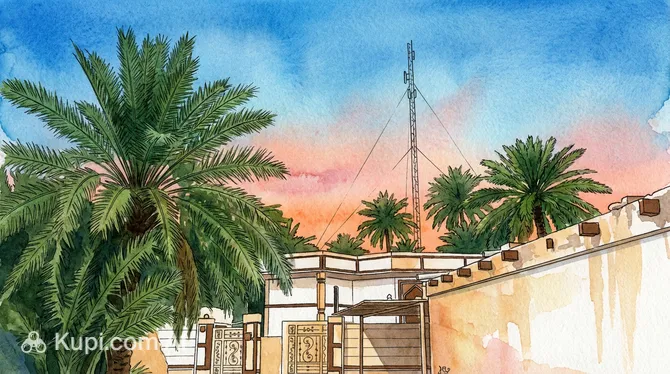
Al-Hamza is a cozy and authentic city located in the southern part of Iraq, in the Al-Qadisiyah Governorate. The city is steeped in an atmosphere of tranquility and traditional lifestyle characteristic of the Mesopotamian lowlands. Its life is inextricably linked to the banks of the Hilla River—one of the scenic branches of the legendary Euphrates, which brings life to the surrounding agricultural lands.
Al Hamza. Illustration.
Source: Kupi.com AI
The city's geographic position at 28 meters above sea level defines its flat terrain and agrarian character. If you are interested in the city's rich past, you will find that the settlement grew around a sacred site. The main spiritual landmark of Al-Hamza is the tomb of the Shiite saint Ahmad ibn Hashim al-Ghurifi (known as Hamza), which attracts thousands of pilgrims every year seeking solace and spiritual renewal.
Today, Al-Hamza represents a harmonious blend of a religious center and a typical provincial town. The population is estimated to range from 35,000 to 260,000, highlighting its role as an important hub for the surrounding rural communities. Visiting this place is a wonderful opportunity to see the authentic life of southern Iraq, free from the bustle of megacities, and to touch upon centuries-old pilgrimage traditions.
Weather Overview
The climate of Al-Hamza is typical of the hot desert regions of southern Iraq. It is dominated by dry and very hot summers, when temperatures in July and August regularly exceed +45°C. Winter in the region is mild and short: in January, the average temperature is about +13°C, though it can be quite chilly at night, so a light jacket will not be out of place.
Precipitation in Al-Hamza is rare and occurs mainly between November and March. Even in the rainiest months, the amount of moisture remains minimal, and the summer passes almost without rain. If you are planning a trip, be sure to check the current weather in the city to choose your wardrobe correctly.
The most favorable time for a visit is considered to be the spring months (March-April) and autumn (October-November). During this time, the heat recedes, giving way to comfortable temperatures of +25...+30°C, which is ideal for walks along the Hilla River and visiting local shrines. In the summer period, due to the proximity of the river, humidity may be slightly higher than in the open desert, which is worth considering for people sensitive to climate changes.
Average monthly temperature
Average monthly precipitation
Interesting Facts
The city was named after the revered Shiite saint Ahmad ibn Hashim al-Ghurifi, whose mausoleum became the core around which the settlement formed over centuries.
The Hilla River, flowing through Al-Hamza, is one of the main branches of the Euphrates and serves as the primary water source for agriculture throughout the region.
Al-Hamza is located in the flat plains of Mesopotamia at an elevation of only 28 meters above sea level, making the city's landscape perfectly level.
The distance to the nearest major administrative center, Ad-Diwaniyah, is only about 27 kilometers, making Al-Hamza an important suburban and religious satellite of the regional capital.
According to the 2012 census, the urban population was approximately 35,729 people, underscoring its status as a compact yet significant pilgrimage hub.
How to Get There
The accessibility of Al-Hamza largely depends on its proximity to the major transport hubs of southern Iraq. The city does not have its own airport, so travelers usually arrive in the nearest major cities. You can find more information on how to get to the city and plan your route in advance.
The main air gateways for visiting this region are the international airports in Baghdad or Najaf. From there, you can reach Al-Hamza by car or public transport. The drive from the capital takes about 2.5 to 3.5 hours, depending on the situation at checkpoints.
Direct railway service is not available in Al-Hamza. The nearest major station is in Ad-Diwaniyah, which serves trains from Baghdad and Basra. From Ad-Diwaniyah to Al-Hamza (about 27 km), it is most convenient to travel by taxi or local minibuses, with a travel time of 30 to 45 minutes.
Station
Passenger traffic
Distance
Baghdad railway station
10
187 km
Al Maqal Railway Station
3
297 km
Main Attractions
Although Al-Hamza is not a mass tourism destination, the city possesses a special magnetism for those who value religious heritage and an authentic Oriental atmosphere. The primary site and the heart of the city is the Tomb of Saint Hamza (Ahmad ibn Hashim al-Ghurifi). This architectural ensemble serves as an important pilgrimage point where visitors can observe unique Shiite rituals and feel the depth of local faith.
Another significant attraction is the Hilla River embankment. This is not just a natural feature, but the heart of Al-Hamza's economy and daily life. A stroll along the bank allows you to see how the river water is used to irrigate orchards and fields, as well as to watch local fishermen at work. The river creates a natural recreational zone where life flows as unhurriedly as the waters of this ancient Euphrates branch.
To immerse yourself in the local flavor, it is worth visiting the Al-Hamza Central Market and its adjacent squares. There are no organized tours here, but the atmosphere of lively trade, the scent of spices, and fresh farm products create a vivid picture of provincial Iraq. This is a place where you can witness the daily life of the townspeople and purchase items from local craftsmen who preserve the traditions of generations.
Local Cuisine
The culinary traditions of Al-Hamza are closely intertwined with the culture of southern Iraq and the resources of the Euphrates River. One of the main delicacies here is charcoal-grilled fish, caught directly from the Hilla River. Locals masterfully bake it with spices, serving it with aromatic rice and fresh flatbreads baked in traditional clay ovens.
Meat dishes, such as kebab mansaf and traditional dolma, hold a special place on the menu. Since the region is famous for its agriculture, the table always features fresh vegetables, herbs, and, of course, the famous Iraqi dates. In local eateries near the markets, you can try samosas with juicy fillings and hearty soups like shorba, prepared according to ancient recipes.
The food culture in Al-Hamza is simple and democratic: it is common to eat in small tea houses or street stalls where the food is always fresh and prepared right in front of the customer. As for drinks, a must-try is the strong, very sweet black tea with cardamom or thick Arabic coffee. Alcoholic beverages are not common in the city due to strict religious traditions, so the emphasis is on fresh juices and dairy-based drinks.
Travel Tips
A trip to Al-Hamza will be a unique cultural experience for you if you take several important practical points into account. These tips will help you feel confident and comfortable in this hospitable Iraqi city.
Clothing and Dress Code: Since Al-Hamza is a religious center, choose extremely modest clothing. Shoulders and knees should be covered for both men and women. When visiting the shrine, women may be required to wear an abaya (a traditional long cloak), which can often be rented at the entrance.
Getting Around: The best way to travel is by taxi or on foot through the center. Keep in mind that renting a car without a local driver can be difficult due to traffic patterns and checkpoints.
Finances: Be sure to carry a sufficient supply of cash in Iraqi dinars. ATMs in the city are very rare, and international cards are practically not accepted anywhere.
Health and Safety: Drink only bottled water and always use sunscreen. During the day, the heat can be grueling, so plan your visits to outdoor sites for the morning or evening.
Communication: English is not widely spoken here. Learn a few basic phrases in Arabic (for example, the greeting "As-salamu alaykum"); this is very well-received by the locals.
Local Etiquette: Be polite and always ask for permission before taking photos of local residents, especially women or clergy.
What to Avoid: Do not discuss political or religious topics in a critical manner and avoid walking on the outskirts of the city alone after dark.
Extra Tip: Combine your visit to Al-Hamza with a trip to Ad-Diwaniyah, as there are more options there for a full meal and hotel rest.
May your journey to Al-Hamza be filled with discoveries and bring only positive emotions from getting to know Iraqi culture!
Entertainment & Nightlife
The entertainment infrastructure in Al-Hamza is primarily oriented toward traditional values and family leisure, so you won't find noisy nightclubs or modern cinemas here. Life in the city slows down after sunset, and the main evening pastime for locals revolves around cozy tea houses and open-air spots along the banks of the Hilla River. These are ideal places to enjoy a strong tea and leisurely conversation to the sound of flowing water.
During the day, entertainment is mostly centered on walks along the scenic embankments or visiting the market squares, which become sites for folk celebrations during holidays. While Al-Hamza lacks large theaters or amusement parks, the hospitality of the locals often results in informal invitations for a cup of coffee, which is a vivid cultural experience in its own right for any traveler.
If you crave more active recreation, it's worth heading to neighboring Ad-Diwaniyah, which is only about 27 kilometers away. There, the choice of cafes, modern restaurants, and shopping areas is significantly wider. In Al-Hamza itself, the focus should be on the peaceful contemplation of river landscapes and participating in local religious festivals, which are the main events in the life of this quiet and pious city.
Parks & Museums
Al-Hamza is a city where the streets and natural landscapes themselves fulfill the role of parks and museums. There are no classic art galleries or local history museums in the Western sense; however, the Tomb of Hamza is a living museum of history and religion, where the architecture and rituals explain the regional cultural code better than any exhibit behind glass.
Regarding green spaces, the Hilla River valley serves as the city's main "lungs." While there are no developed parks with rides, the riverbanks are lush with date palms and fruit orchards. This is a favorite spot for locals for informal relaxation and walks, where one can enjoy the cool water and silence away from the market bustle.
If you are looking for more conventional park areas or historical museums, you should head to neighboring Ad-Diwaniyah. In Al-Hamza, the true value lies in the opportunity to connect with Iraq's natural environment and see how agriculture and the river shape a unique landscape that has remained unchanged for centuries.
Getting Around
The transport system in Al-Hamza is simple and oriented toward the needs of local residents. The main form of public transport here is minibuses, which connect the city with neighboring settlements, especially Ad-Diwaniyah. Boarding usually takes place at the central square or near the main markets, and there is no fixed schedule—the transport departs as it fills up.
For getting around within the city itself, it is most convenient to use taxis or motor-rickshaws. This is the fastest and most affordable way to reach the saint's tomb or the remote areas of the embankment. The fare is low, but it is wise to agree on the price with the driver in advance, as meters are rarely found in the vehicles.
Fares are paid in cash dinars. The center of Al-Hamza is quite compact, so many pilgrims and tourists prefer to move on foot, which allows for a better look at the local architecture and a feel for the city's rhythm. Keep in mind that during peak hours (morning and evening), the roads leading out of the city can be congested, so plan your trips to the regional center with a little extra time.
Accommodation
The choice of accommodation in Al-Hamza is quite specific and primarily focused on the needs of pilgrims. There are virtually no international-standard hotels within the city limits. Most accommodation consists of guesthouses (musafirkhana) and short-term apartment rentals for those who have come to pay their respects at the local shrine.
If you are accustomed to standard hotel services, it is best to consider staying in nearby Ad-Diwaniyah. The most comfortable mid-range hotels offering a standard set of amenities are concentrated there. The proximity of the cities makes it easy to take day trips to Al-Hamza while returning to more developed tourist infrastructure for the night.
For those who do decide to stay in the city itself, it is recommended to book accommodation through local intermediaries or directly upon arrival, as many private guesthouses are not listed on popular international online platforms. Prices here are quite low, but the level of comfort corresponds to basic pilgrim living conditions.
Nearby Cities
The city of Al-Hamza is an excellent starting point for exploring the fertile lands and historical centers of the Al-Qadisiyah Governorate. Thanks to the compact location of the settlements, you can easily take several fascinating day trips from here.
Just 29 kilometers to the north is Ad-Diwaniyah, the administrative center of the region. This is a large city where you can find modern shops, parks, and a wide network of restaurants. A trip there takes less than an hour by taxi or minibus. Also of interest is the town of Ghammas, known for its agricultural traditions and picturesque views of river channels.
Don't miss the chance to visit places like Ash-Shamiyah or the ancient Afak, which will reveal different facets of Iraqi provincial life. Each of these destinations will offer new impressions of Mesopotamian landscapes and the sincere hospitality of the local residents.
Shopping & Souvenirs
Shopping in Al-Hamza primarily means visiting traditional Oriental markets, which are concentrated in the city center and along the shoreline. You won't find huge shopping malls with designer clothes here, but you can dive into the atmosphere of authentic trade. The main market rows offer a wide selection of fabrics, household goods, and, of course, the freshest products from local farms.
Special attention should be paid to food shopping. Al-Hamza is famous for its various varieties of dates, which are considered some of the best in the province. You can also buy aromatic spices, local honey, and grains at the markets. If you're looking for a souvenir, look for religious items sold near the Tomb of Saint Hamza—these could be prayer beads, small prayer rugs, or calligraphic inscriptions.
Shops in the city usually operate from early morning until late evening, with a break during the midday heat. Payments are made exclusively in cash in the local currency (Iraqi dinars), as bank cards are virtually not accepted. For more extensive shopping, locals usually travel to Ad-Diwaniyah, but for authentic goods and fresh products, it is better to come specifically to the bazaars of Al-Hamza.