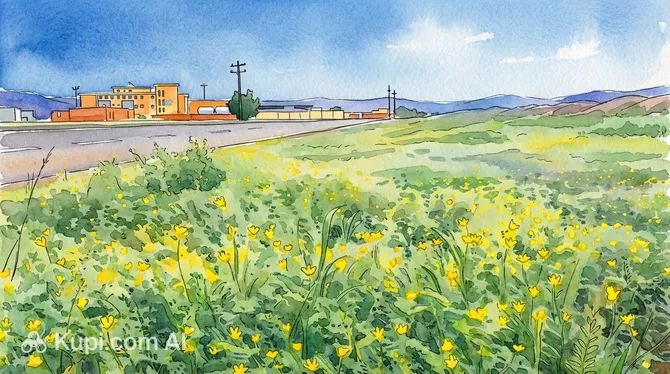
Ash-Shamiya is a quiet provincial city located in the heart of ancient Mesopotamia, in what is now Iraq. The city serves as the administrative center of the district of the same name in the Qadisiyah Governorate and is steeped in the atmosphere of a traditional Eastern lifestyle. Life here is closely tied to the Euphrates River, as the settlement is spread along one of its branches, creating a unique landscape amidst the arid plains.
Ash Shamiyah. Illustration.
Source: Kupi.com AI
With a population of about 27,000, Ash-Shamiya is showing gradual growth while remaining an important agricultural hub for the region. Due to its location at an altitude of about 20 meters above sea level and its proximity to water, this land has become one of the centers for growing the famous Iraqi rice. You can learn more about how this settlement was formed by exploring the city's historical heritage, which is rooted deep in the centuries.
For the traveler, Ash-Shamiya reveals itself as a place of authentic character, free from the hustle and bustle of major metropolises. The city's main features are its lively markets and the slow pace of daily life. A visit to this region offers the chance to see the true, non-touristy life of the inhabitants of the Euphrates river valleys and to enjoy the hospitality of the local communities.
Weather Overview
The climate in Ash-Shamiya is typical for the Mesopotamian plains and is characterized by sharp seasonal contrasts. Summers here are long, dry, and very hot: in July and August, daytime temperatures often exceed +45°C. During this time, the city goes quiet in the midday hours, and life moves closer to the cool banks of the Euphrates. Checking the current weather forecast in the city will be useful before planning your trip.
Winter in the region is mild and moderately cool. In January, the average temperature is about +13°C, although it can be quite fresh at night. Precipitation is rare, mainly occurring between November and April, and is most often short-lived. Due to the open landscape and soil characteristics, increased air dustiness is possible during dry seasons, which travelers with sensitive health should take into account.
The best time to visit Ash-Shamiya is during the spring (March–April) and autumn (October–November) months. During these periods, comfortable temperatures around +25...30°C are established, which is ideal for walking and getting to know the local way of life. The proximity of the river softens the heat, creating more pleasant conditions compared to the desert regions of the country.
Average monthly temperature
Average monthly precipitation
Interesting Facts
Ash-Shamiya holds the honorable third place in population within the Qadisiyah Governorate and 35th place in all of Iraq.
The city is a recognized center of Iraqi rice production; local rice is valued for its taste and cultivation traditions that date back to antiquity.
The city's population shows steady growth: over the last half-century, the number of Ash-Shamiya residents has more than doubled.
The city is located on the lands of legendary Mesopotamia—a region that historians call the cradle of human civilization.
Ash-Shamiya is situated at an altitude of only about 20 meters above sea level, which, combined with the proximity of the Euphrates, creates a special microclimate favorable for agriculture.
How to Get There
Transport accessibility to Ash-Shamiya is due to its status as a regional hub. The most convenient way to reach the city is by road. From the nearest major center, Al-Diwaniyah, buses and shared taxis run regularly. The journey takes about 1–2 hours, and the roads pass through picturesque agricultural lands, allowing you to enjoy views of the Iraqi countryside. Detailed information on routes can be found in the section describing ways to get to the city.
For those traveling from afar, the main point of arrival is Baghdad International Airport. It is located approximately 200 kilometers northeast of Ash-Shamiya. Upon arrival in the capital, travelers usually hire a taxi or rent a car with a driver to cover the remaining distance in 3–4 hours. There are currently no direct flights or operating passenger railway stations directly in the city itself.
Getting around the city and between neighboring settlements is primarily done by private cars and taxis. This is the most flexible and fastest way to move, as public transport does not always follow a strict schedule. The road surface in the city center is quite acceptable, but on the outskirts and near river zones, there may be unpaved sections.
Station
Passenger traffic
Distance
Baghdad railway station
10
152 km
Main Attractions
Since Ash-Shamiya is primarily an administrative and agricultural center, you won't find major world-class tourist sites here. Nevertheless, the city attracts visitors with its authenticity. The main natural attraction is the Euphrates River, whose banks serve as a natural place for walks and offer a glimpse into traditional field irrigation methods. It is an ideal place to feel the spirit of ancient Mesopotamia in its modern incarnation.
Public life is concentrated in the center of Ash-Shamiya. The Central Square is worth a visit, as it is surrounded by administrative buildings and mosques. The local religious architecture, though modest, reflects traditional Islamic canons characteristic of the Iraqi provinces. A walk through these areas allows you to see the city as it is, just as the locals know it.
The local markets are of particular interest to the curious tourist. These are not just places for trade, but true centers of social life. Here, you can see mounds of freshly harvested rice and dates, chat with farmers, and feel the rhythm of life in provincial Iraq. Although there are no organized museum routes in the city, the streets themselves and the daily lives of Ash-Shamiya residents serve as a living exhibition of the region's history and traditions.
Local Cuisine
The cuisine of Ash-Shamiya is a celebration of Mesopotamian traditions, where rice plays the leading role. Since the city is a center for rice cultivation, this grain is the basis of most meals. Be sure to try the local variation of dolma and hearty meat dishes with rice, seasoned with aromatic spices. Lamb and vegetables grown on the fertile lands near the Euphrates are particularly fresh and full of flavor.
Traditional Iraqi food is popular on the city streets and in local markets: charcoal-grilled kebabs and freshly baked samoon bread. In small family-run establishments, you can taste dishes prepared according to ancient recipes. Special attention should be paid to dates—the region is famous for their variety, and they are often served as dessert or as a complement to the main meal.
The drink culture in Ash-Shamiya revolves around tea and coffee. Strong, very sweet tea is served in small glass cups (istikan) and is an integral part of any social interaction. Traditional Arabic coffee with cardamom also holds an important place in local hospitality. Alcohol is not common in public places in the city, as residents strictly adhere to traditional norms.
Travel Tips
A trip to Ash-Shamiya will provide you with a unique experience of getting to know the authentic Iraqi heartland, but for a comfortable journey, several practical points should be considered.
Clothing and Dress Code: Choose modest and closed clothing that respects local traditions. Light natural fabrics will help you cope with the heat, and comfortable closed shoes will be indispensable for walking through dusty streets and markets.
Transport: The best way to arrive and get around is by taxi or renting a car with a driver. Within the city, walking tours of the center are quite comfortable.
Finance: Always have cash (Iraqi Dinars) with you. International cards are rarely accepted, and finding a working ATM can be difficult.
Health and Water: Drink only bottled water and avoid ice in drinks. During the summer months, be sure to use sunscreen and wear hats.
Communication: The main language is Arabic. English is not widely spoken, so learn a few basic phrases or use an offline translator. Local residents are very friendly and will always try to help.
Local Etiquette: Greet people with your right hand. In conversations, it is better to avoid political topics, focusing instead on the culture and hospitality of the region.
What to Avoid: Do not take photos of administrative buildings, military facilities, or local residents without their explicit consent. This can cause unnecessary suspicion.
Connectivity: Buy a local SIM card in a large city along the way (for example, in Baghdad), as Wi-Fi access in Ash-Shamiya may be limited.
May your journey to this unique corner of Mesopotamia be filled with bright discoveries and warm encounters!
Entertainment & Nightlife
Entertainment in Ash-Shamiya is traditional and quiet, typical of small Iraqi towns. You won't find noisy nightclubs or large concert venues here. The city's evening life is centered in local tea houses (chaihanas), where men gather to discuss the latest news, play board games, and drink strong, aromatic tea. This is the best way to immerse yourself in the social environment and feel the city's atmosphere.
Daytime leisure for locals and visitors often involves walking along the Euphrates or visiting the market squares, which are most lively in the morning. For family recreation, there are a few small squares and open spaces near the water. If you are looking for more active entertainment, such as cinemas or modern amusement parks, you should plan a trip to nearby Al-Diwaniyah, located just a couple of dozen kilometers away.
Safety in Ash-Shamiya during the evening is generally good, especially in the central residential areas. Nevertheless, tourists are advised to stick to well-lit streets and avoid walking alone in unlit outskirts. For traveling late at night, it is best to use local taxis, which remain the most reliable way to get around the city.
Parks & Museums
There are almost no classic museums or art galleries in Ash-Shamiya, which is explained by its status as a small agricultural and administrative center. The main cultural asset here is the life of the city itself and its history, which can be traced in the architecture of the old quarters and the traditions of the local residents. To visit major historical exhibitions, travelers usually head to regional centers such as Baghdad or Najaf.
The park infrastructure in the city is also minimally developed. The role of main green zones is played by the agricultural lands and gardens surrounding the city. Walks along the banks of the Euphrates serve as traditional parks for the residents: here you can find shady spots under palm trees and enjoy the coolness from the water, which is especially valuable during the hot summer months.
Although there are few organized squares in the city, the open spaces by the river provide opportunities for leisurely relaxation and nature observation. The greenery is mainly represented by date palms and rice crops, which create an emerald belt around Ash-Shamiya. This place is suitable for those seeking solitude and natural beauty rather than polished landscape designs.
Getting Around
The public transport system in Ash-Shamiya is simple and compact. The main means of transportation between districts and neighboring settlements are minibuses and shared taxis. They do not have a fixed schedule in the usual sense: the vehicle departs as it fills up with passengers, which is quite convenient for a small city. The fare is minimal and paid in cash to the driver.
Within the city, many prefer to get around on foot, as the central part of Ash-Shamiya is quite compact. However, for long-distance trips or in the heat, locals actively use taxi services. Taxis can easily be found on the main streets and squares; it is recommended to agree on the price of the trip in advance, as meters are rarely used.
For tourists, the most practical option would be to rent a car with a local driver, especially if trips outside the city to the historical monuments of Mesopotamia are planned. This will eliminate the need to figure out informal bus routes and ensure comfort. During the rainy season, keep in mind that some roads on the outskirts and in rural areas can be difficult to navigate, so choosing reliable transport becomes particularly important.
Accommodation
The choice of accommodation options directly in Ash-Shamiya is very limited. The city is not a major tourist center, so there are virtually no classic hotels with international star ratings. The bulk of available housing consists of small guest houses and apartments, which are most often oriented towards locals or specialists coming to the city for administrative or agricultural business.
Travelers who value comfort and a wide range of services are recommended to consider staying in nearby large cities such as Najaf or Al-Diwaniyah. There, you can find mid-range hotels and more modern serviced apartments. The trip from these cities to Ash-Shamiya does not take much time, allowing for day trips to the city.
If you still plan to stay exactly here, you should take care of finding accommodation through local contacts in advance, as many properties are not listed in global booking systems. The price range in the private sector is usually low, and payment is primarily accepted in cash. Booking during local holidays or important agricultural fairs should be done as early as possible.
Nearby Cities
Located in the Euphrates Valley, Ash-Shamiya serves as an excellent starting point for exploring the cultural and historical heritage of the southern Mesopotamia. Cities of immense importance to the region's history and religion are in the immediate vicinity.
Just 27 kilometers away is Najaf—one of the holy cities, attracting millions of pilgrims with its magnificent architecture and atmosphere of spirituality. Also worth visiting is the city of Kufa, known for its ancient mosques and rich historical past. For administrative matters or more modern shopping, Al-Diwaniyah, the capital of the governorate, is ideal and can be reached in less than an hour.
Additionally, nearby is Al-Kifl, where traces of various cultures and beliefs intertwine. Exploring the surroundings of Ash-Shamiya will allow you to see the contrast between a quiet agrarian province and bustling centers of pilgrimage and trade, creating a complete picture of life in modern Iraq.
Shopping & Souvenirs
Shopping in Ash-Shamiya is, first and foremost, an introduction to traditional oriental bazaars (souks). Main trade is concentrated in the local markets located in the central part of the city and near the Euphrates embankment. There are no huge shopping malls with glass windows here, but there is an abundance of the freshest locally produced goods: the famous "Amber" rice, spices, and fragrant dates straight from the plantations.
As souvenirs from Ash-Shamiya, it is worth bringing back traditional Iraqi textiles or the work of local craftsmen, which can be found in small shops. Authentic coffee pots and tea sets are particularly popular. Shops in the city usually operate from early morning until late evening, with a mandatory lunch break during the hottest hours.
Payment for purchases is made almost exclusively in cash in the local currency (Iraqi dinars) or, in some cases, US dollars. There are few ATMs in the city, so it is recommended to have an adequate supply of cash. Moderate bargaining is welcome in the markets; it is part of the local communication culture and allows you to slightly lower the price of an item you like.