Support

St Stephen's Green

About

St. Stephen's Green is a famous historic park located in the heart of Dublin, the capital of Ireland. This picturesque spot is a true green oasis amidst a bustling metropolis and one of the most beautiful and beloved public parks in the city for both locals and tourists alike.
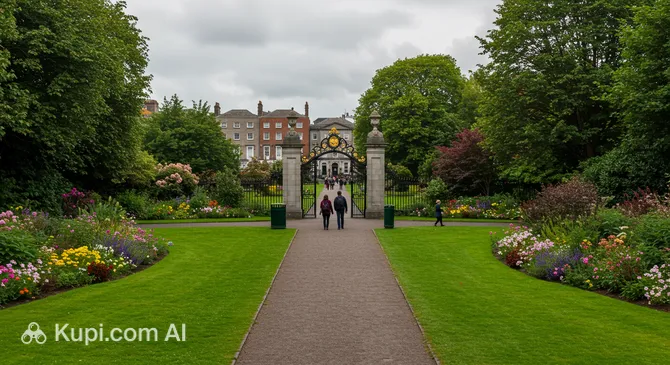
St Stephen's Green. Illustration.
Source: Kupi.com AI

Traveler photos:

The park covers an impressive area of 22 acres (about 9 hectares) and is a classic Victorian garden. It is surrounded by elegant Georgian-era townhouses, which create a unique historical atmosphere. This makes it the largest of the parks located in Dublin's main Georgian squares.

Strolling along the well-kept paths, visitors can see a large lake with waterfowl, decorative gazebos, and numerous sculptural monuments dedicated to important events and figures in Irish history. Additionally, the park is famous for its diversity of flora: you can find manicured flowerbeds, spacious lawns, and even a special garden for the visually impaired with fragrant plants and Braille signs. St. Stephen's Green is the perfect place for a leisurely walk, a picnic on the grass, or simply to take a break from the urban noise and enjoy nature.

Contacts

For up-to-date information on opening hours, special events, or to contact the park administration, you can use the official contacts. The park is managed by the Office of Public Works (OPW), and all necessary information can be found on its official website.

How to contactContact
AddressSt Stephen's Green, Dublin 2, Ireland
Phone number+353 1 475 7816
Websiteststephensgreenpark.ie

What to Do

At St. Stephen's Green, visitors can enjoy leisurely walks along well-kept paths, admire the diverse plant life, and watch the many birds that live in the area. The park offers an excellent opportunity to escape the city bustle, allowing guests to relax on one of the many benches or have a picnic on the grass. It is an ideal place to enjoy nature right in the city center.

There are various attractions and interesting sites within the park. Among them is a bust of Constance Markievicz, a heroic participant in the 1916 Easter Rising. For visitors with children, there is a playground, and one of the unique features is a special garden for the visually impaired, where plants are chosen for their scent and texture.

The park is also closely linked to the literary history of Ireland. Literature lovers can walk the same paths where famous writers William Butler Yeats, James Joyce, and Samuel Beckett once strolled and found inspiration. Thus, a visit to St. Stephen's Green is not only a rest in nature but also a chance to touch the rich cultural heritage of Dublin.

Getting There

Getting to St. Stephen's Green is very easy, as it is located in the heart of Dublin. Thanks to its central position, the park is easily accessible both on foot and by public transport. If you are in the city center, for example, near Trinity College or on the Grafton Street shopping area, a walk to the park will take just a few minutes. The main entrance to the park is from Grafton Street through the famous Fusiliers' Arch, which is a notable landmark in its own right.

The most convenient way to reach St. Stephen's Green by public transport is via the Luas tram system. The "St. Stephen's Green" stop is right next to the park and serves as the terminus for the Green Line, making it a popular and simple option for tourists. Additionally, many Dublin Bus routes stop around the park, covering almost the entire city and its suburbs. You can easily find a suitable bus from practically anywhere in Dublin.

For those who prefer comfort, taxi services are always available. A ride from most city center hotels will be short and relatively inexpensive. If you are traveling by car, keep in mind that finding parking directly at the park can be difficult. It is recommended to use one of the nearby public parking garages, such as the one at the St. Stephen's Green Shopping Centre, and walk from there.

Nearest city: Dublin

History & Facts

The history of St. Stephen's Green spans more than four centuries, and its past is as colorful as its present-day landscapes. The park owes its name to a medieval leper hospital dedicated to Saint Stephen, which was once located nearby. Until 1663, this area was marshy common land of about 60 acres on the edge of Dublin, where locals grazed their livestock. It is hard to imagine that this elegant Victorian garden was once a simple pasture.

Everything changed in 1663 when the Dublin Corporation, seeking to replenish the city treasury, decided to transform this land. The central part of 27 acres was enclosed to create a park, and the perimeter plots were sold for development. By 1664, the new park was walled in. This decision marked the beginning of the formation of Dublin's famous Georgian squares, as elegant mansions began to be built around the park.

The next important stage in the park's history began in 1814, when its management passed to a special commission of local householders. They changed the original layout and, most importantly, replaced the solid walls with the elegant railings that still surround the park today. Later, in 1877, Sir Arthur Guinness, great-grandson of the famous brewery's founder, bought out the park, paid off its debts, and after extensive redevelopment, handed it over to public use, making St. Stephen's Green a treasure for all residents and visitors of Ireland.

Time Needed

To fully enjoy a visit to St. Stephen's Green, it is recommended to set aside 1 to 2 hours. This is plenty of time to take a leisurely stroll along all the main paths, admire the well-kept flowerbeds, see the primary sculptures and monuments, and sit by the central lake. During this time, you can completely immerse yourself in the calm and peaceful atmosphere of this Victorian garden, taking a break from the city bustle.

Of course, the duration of your visit may vary depending on your interests. If you only want a quick look, you can walk the perimeter in 30-40 minutes. However, if you plan to have a picnic, study all the memorials in detail, visit the garden for the visually impaired, or simply read a book on one of the many benches, you could easily spend half a day here. In the warmer months, the park becomes a particularly popular spot for a long rest for both tourists and residents of Dublin.

Working Hours

St. Stephen's Green is open to visitors year-round, and entry is completely free, so there is no need to book tickets in advance. Opening hours depend on the day of the week and the time of year. From Monday to Saturday, the park opens at 07:30, and on Sundays and bank holidays at 09:30. The park closes at dusk, so the exact time varies throughout the year. For example, in winter the park may close as early as 16:00-17:00, while in the height of summer, it may stay open until 21:00.

As closing times change, it is recommended to check for current information on the official park website before your visit, especially if you are planning an evening walk. This will help avoid any unpleasant surprises and allow you to fully enjoy one of Dublin's most picturesque spots.

DayOpening hours
Monday7:30 – 20:30
Tuesday7:30 – 20:30
Wednesday7:30 – 20:30
Thursday7:30 – 20:30
Friday7:30 – 20:30
Saturday7:30 – 20:30
Sunday9:30 – 20:30

Nearby

Visiting St. Stephen's Green is a wonderful opportunity to experience the heart of Dublin, but don't stop there. Thanks to its central location, the park is an ideal starting point for exploring many other iconic sites located just steps away. A walk through the surrounding area will allow you to dive deeper into the history and culture of the capital of Ireland.

Exploring nearby attractions will enrich your travel experience. World-famous museums, historic buildings, and lively streets that shape the city's unique character are all close by. Below is a list of interesting places that are easily accessible on foot from the park.

NameDistance
National Museum of Ireland – Archaeology0.4 km
Whelan's0.5 km
Trinity College Dublin0.7 km
Dublin Castle0.8 km
Marsh’s Library0.8 km
The Temple Bar Pub0.9 km
Smock Alley Theatre1 km

Have you reached the end of the page?

So the route has been studied inside and out