Support

Centro Storico di Latina

About

The Latina Historic Center is a fascinating example of 20th-century urban planning, located in the heart of the city of Latina in sunny Italy. Unlike many ancient Italian settlements, this center was built in just a few years during the 1930s on the site of the drained Pontine Marshes. A walk here feels like a journey through the pages of a rationalist architecture textbook, where clean lines and monumental forms create a unique aesthetic.
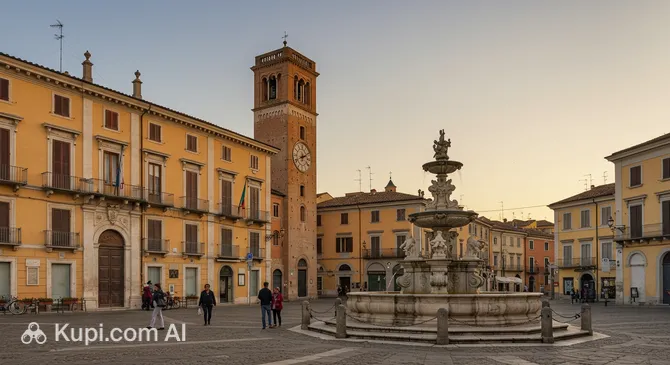
Historic Center of Latina
Historic Center of Latina. Иллюстрация. Источник: Kupi.com AI

The heart of the old city was designed by architect Oriolo Frezzotti. The master plan is striking in its geometric precision: wide avenues lead to the main squares — Piazza del Popolo and Piazza della Libertà. Iconic buildings are located here, such as the Town Hall with its high tower and the futuristic post office building, which make Latina's appearance recognizable and unique.

This "open-air museum" reflects the dream of creating an ideal functional city. Today, the Latina Historic Center is an important cultural hub of the Lazio region, where the history of large-scale land reclamation intertwines with the modern rhythm of life and the hospitality of local residents, who have preserved the traditions of their settler ancestors.

Contacts

If you are planning a visit to the Latina Historic Center, it is helpful to have the official contacts of city services on hand to check cultural event details or the opening hours of specific institutions. General information about city life is centered at the Town Hall.

How to contactContact
AddressC.so della Repubblica, 04100 Latina LT, Италия
Phone+39 0773 6521
Websitewww.comune.latina.it

What to Do

Begin your introduction to the center with a leisurely stroll down Corso della Repubblica. This main artery of the city connects key squares and allows you to view the fountains and majestic facades of 1930s buildings. Be sure to stop by Piazza San Marco to see the cathedral dedicated to Saint Mark — the patron saint of the Venetian settlers who founded this city.

For art lovers, the doors of the Palazzo della Cultura are open, housing the Municipal Gallery of Modern Art. It is also worth noting Palazzo M — an unusually shaped building in the form of the letter "M," which is one of the most striking symbols of the architectural style of that era. In between sightseeing, stop by local restaurants to try dishes that combine the traditions of Italy's northern and central regions.

If you are interested in the technology and history of the region, visit the Piana delle Orme museum, which features a rich exhibition dedicated to agriculture and daily life in the 20th century. In the evening, the historic center of Latina fills with lights, creating a cozy setting for outdoor dining and observing the leisurely Italian passeggiata — the traditional evening stroll of the local residents.

Getting There

Getting to Latina from Rome is quite simple. The most popular way is to take a train from Roma Termini station. The journey on a regional train (FL7 line) takes between 40 and 50 minutes. It is important to remember that the Latina railway station is located several kilometers from the center itself, so upon arrival, you will need to catch a local bus or take a taxi to reach Corso della Repubblica.

For those traveling by car, the drive from the capital takes about an hour via the SS148 Pontina highway. There are several parking zones arranged near the historic center where you can leave your vehicle. If you are heading here from Fiumicino Airport, it is most convenient to take an express train to Rome's central station first and then transfer to a train to Latina.

Within the city itself, the best way to get around is on foot — the layout of the center is perfect for leisurely strolls. The city also has a developed network for renting bicycles and electric scooters, allowing you to quickly reach more distant areas or even the coast, which is about 10 km away.

Ближайший город: Latina

History & Facts

The history of the Latina Historic Center began on June 30, 1932. The city, originally named Littoria, rose literally from nothing on the site of the wild and malarial Pontine Marshes. The massive reclamation project, known as Bonifica Integrale, was a true engineering feat, transforming impassable swamps into a fertile plain and allowing for the construction of a new administrative center.

The first residents of the city were thousands of settlers from the northern regions of the country — Veneto, Friuli, and Emilia-Romagna. They brought not only their families but also unique dialects and culinary traditions, forming Latina's distinct cultural code. St. Mark's Cathedral was chosen as a tribute to the patron saint of Venice, emphasizing the connection of the new residents to their roots.

By 1934, the city became the administrative center of the province, developing rapidly as an agricultural hub. After World War II, it received its modern name and gradually transformed from a rural settlement into a major industrial and tourist center of the Lazio region.

Today, the Centro Storico is recognized as a unique "open-air museum," where the rationalist architecture of the 1930s has been preserved almost in its original form. It is a living testament to the triumph of human labor over the forces of nature and a symbol of a bold urban planning experiment from the first half of the 20th century.

Time Needed

For a quick tour of the main architectural monuments, fountains, and central squares, you will need about 2–3 hours. This time is quite sufficient for a walk along the main streets, during which you can examine the building facades in detail and take memorable photos.

If you plan to visit the Palazzo della Cultura, enter the cathedral, or stop by local museums, we recommend dedicating half a day (4–5 hours) to exploring the center. Latina invites a relaxed pace, so it’s worth leaving time to rest in one of the cozy cafes to soak up the city's atmosphere over a cup of coffee.

Working Hours

The Latina Historic Center itself is an open public space and is accessible to visitors 24/7. You are free to walk through the squares and streets at any convenient time, enjoying the play of light on the monumental facades or relaxing by the fountains.

However, keep in mind that individual sites, such as museums, galleries, and the cathedral, have their own operating schedules. Before visiting specific buildings, it is recommended to check the current opening hours on the official city website or local information boards.

Круглосуточно

Nearby

Exploring the surroundings of the Latina Historic Center will allow you to dive deeper into the atmosphere of this unique region and see more architectural masterpieces of the rationalist era. Very close to the central squares, there are other notable buildings and monuments that complete the city's character.

A walk to the nearest attractions won't take much time, as most of them are within walking distance. The table below lists interesting places to include in your walking route.

NameDistance
Piazza del Popolo0 km
Basta Poco Centro0.1 km
Dozo Sushi0.2 km
Cathedral of St. Mark0.3 km
Cantone 70.6 km
Olimpo Street 660.8 km
Latinafiori Shopping Center1.1 km

Reached the end of the page?

That means the route is fully explored