Support

Orvieto Cathedral

Nearby interesting places

About

Orvieto Cathedral, officially known as the Cathedral Basilica of the Assumption of the Virgin Mary (La basilica cattedrale di Santa Maria Assunta), is an outstanding monument of Gothic architecture located in the heart of Italy. This majestic temple is situated in the city of Orvieto and is not only its main symbol but also one of the most beautiful cathedrals in the country, attracting travelers from all over the world. It serves as the main Catholic church of the Diocese of Orvieto-Todi and is considered a true masterpiece.

The cathedral's main pride is its luxurious facade, which dazzles with its splendor. It is decorated with intricate bas-reliefs, statues, and, most strikingly, golden mosaics shining in the sun that tell biblical stories. This architectural landmark is visible from almost anywhere in the city, catching the eye and evoking admiration. The construction of the cathedral lasted nearly three centuries, starting in 1290, which allowed it to incorporate features of different styles while maintaining its Gothic foundation.
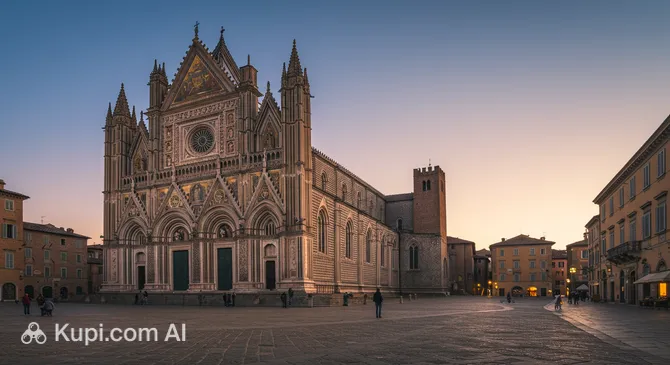
Orvieto Cathedral. Illustration.
Source: Kupi.com AI

Traveler photos:

The interior of the cathedral is no less impressive. The interior with its characteristic striped walls made of basalt and travertine creates a special atmosphere. It houses important relics and works of art, including the famous frescoes by Luca Signorelli in the San Brizio Chapel, which are said to have inspired Michelangelo himself. The Orvieto Cathedral is not just a place of pilgrimage, but a real museum, a visit to which leaves an unforgettable impression and immerses you in the atmosphere of medieval art and spirituality.

Contacts

To get the most up-to-date information on opening hours, ticket prices, or to plan your visit, you can contact the cathedral administration directly. All necessary contact information is provided below.

How to contactContact
AddressPiazza del Duomo, 26, 05018 Orvieto TR, Italy
Phone number+39 0763 342477
Websitewww.duomodiorvieto.it

What to Do

A visit to the Cathedral in Orvieto is an immersion into the world of great art. Inside, unique frescoes created by Renaissance masters await you. Two jewels of the cathedral draw particular attention — the San Brizio Chapel and the Chapel of the Corporal (Cappella del Corporale). The former is famous for its monumental and dramatic paintings by Luca Signorelli, depicting scenes of the Apocalypse and the Last Judgment — a sight that leaves a lasting impression.

Beyond the famous frescoes, the cathedral's interior is striking for its rich decoration. Be sure to notice the details: delicate 14th-century stained-glass windows that fill the space with colored light, masterfully crafted marble floors, and the majestic main altar. Your acquaintance with the history of this place will be incomplete without a visit to the Cathedral Museum (Museo dell'Opera del Duomo), which is conveniently located in the adjacent Palace of the Popes.

It is in the museum that the key to understanding the cathedral's history is kept. Here, valuable relics closely linked to its foundation are on display, including those related to the famous Miracle of Bolsena, which served as the reason for building this grand temple. The museum's exhibition allows for a deeper study of the cathedral's centuries-long history and lets you see unique artifacts not displayed in the main hall, such as the original precious reliquary for the corporal.

Getting There

Getting to the Orvieto Cathedral in Orvieto is quite easy thanks to the city's convenient location in the Umbria region, about 100 km north of Rome and 120 km south of Florence. One of the most convenient ways is traveling by train. The city is located on the railway line connecting Rome and Florence, making it easily accessible for tourists. Trains arrive at Orvieto station, which is located at the foot of the hill where the historic center is situated.

For those who prefer traveling by car, the city can be reached via the main A1 motorway (Autostrada del Sole), taking the exit marked "Orvieto." Convenient parking lots are available at the foot of the city where you can leave your car. Whether you arrive by train or car, the next part of the journey to the historic center is uphill.

You can ascend to the cathedral from the train station or parking areas using the famous Orvieto funicular — it's not only a fast way but also a little adventure in itself. The funicular will take you to the top of the hill, from where the Cathedral is just a pleasant walk through picturesque medieval streets. You can also use special elevators to climb from certain parking zones. The entire path from the base to the heart of the city is designed for the convenience of visitors.

Nearest city: Orvieto

History & Facts

The history of the Orvieto Cathedral in Orvieto is inextricably linked to one of the most famous miracles in Catholic history — the Miracle of Bolsena. According to legend, in 1263, a priest who doubted the mystery of transubstantiation saw the consecrated host (Eucharistic bread) begin to bleed during a Mass in the neighboring town of Bolsena. To preserve this sacred relic, Pope Nicholas IV initiated the construction of a grand temple. The first stone of the cathedral's foundation was laid on November 13, 1290, and from the beginning, it was conceived as a monumental reliquary worthy of such an important event.

Over long centuries of construction, many outstanding masters of their time worked on the cathedral's appearance. The original design was developed by the architect Arnolfo di Cambio, and the initial stage of work was supervised by Master Fra Bevignate di Perugia. However, the key figure who defined the temple's unique look was the Sienese architect Lorenzo Maitani. Taking over the work in 1310, he fundamentally changed the design and created that magnificent Gothic facade, which today delights travelers from all over the world with its rich sculptural decoration and glowing mosaics.

The construction of the cathedral lasted almost three centuries, during which it became a true symbol of the city and one of the main spiritual centers of Italy. Its exceptional historical and spiritual significance was officially recognized at the highest level. In 1889, Pope Leo XIII granted the cathedral the honorary status of a minor papal basilica, which forever secured its special place in the Catholic world and made it a must-visit site for pilgrims and art lovers alike.

Time Needed

To fully enjoy the splendor of the Orvieto Cathedral, you should plan from 1.5 to 2 hours for your visit. This time is generally sufficient for a leisurely tour of both the exterior with its famous facade and the interior decoration. During this period, you will have time to appreciate the impressive striped interior, examine the details of the main chapels, including the famous frescoes, and soak in the atmosphere of this unique place.

Of course, the duration of the visit largely depends on your interests. If you are short on time, you can spend about 30–45 minutes admiring the facade and quickly looking through the central nave. However, for art and history enthusiasts, this clearly won't be enough. To study Luca Signorelli's fresco cycle in the San Brizio Chapel in detail and visit the adjacent Cathedral Museum (Museo dell'Opera del Duomo), it is better to set aside more than two hours. This will allow you to immerse yourself in the cathedral's rich artistic and spiritual heritage without rushing.

Working Hours

Orvieto Cathedral is generally open to visitors throughout the year, but its opening hours can vary significantly. Usually, tourist visits are possible daily from 9:30 AM to 6:00 PM, but this schedule is for guidance only. Opening times depend on the season — they may be shorter in winter — and can also change due to religious services and church holidays. For example, during significant events like the Easter concert, access for tourists may be limited.

To ensure your visit goes smoothly, it is strongly recommended to check the current opening hours on the cathedral's official website shortly before your trip. While pre-booking tickets is usually not required, buying tickets online can be a convenient option, especially during the peak tourist season, to avoid queues. The ticket typically includes access not only to the cathedral itself but also to the adjacent museum spaces.

DayOpening hours
Monday9:30 – 19:00
Tuesday9:30 – 19:00
Wednesday9:30 – 19:00
Thursday9:30 – 19:00
Friday9:30 – 19:00
Saturday9:30 – 19:00
Sunday1:00 – 19:00

Nearby

Visiting the Cathedral is just the beginning of your acquaintance with Orvieto. To truly feel the spirit of this amazing city, it's worth taking a walk around its surroundings. The city's historic center is compact, and many other iconic sites are within walking distance of the cathedral square, allowing for a deeper dive into its centuries-old history.

Exploring nearby attractions will enrich your experience. You can discover underground labyrinths, medieval towers, and palaces, each holding its own secrets and legends. Such a walk is an excellent opportunity to see how closely eras are intertwined in Orvieto, from Etruscan times to the Middle Ages and the Renaissance.

NameDistance
Orvieto Underground0.1 km
Bottega Vèra0.2 km
FEBO0.3 km
Palace of the Captain of the People0.3 km
Torre del Moro0.3 km
Bistrò Miranda Orvieto0.4 km
Adriano's Labyrinth0.4 km

Have you reached the end of the page?

So the route has been studied inside and out