Support

Theatre of Ostia

About

The Ostia Theater is an outstanding monument of ancient architecture located within the famous Ostia Antica Archaeological Park. This ancient theater is situated near the modern city of Fiumicino, in Italy, and is one of the largest and best-preserved entertainment venues of the ancient port city of Ostia. Built during the Roman era, it still impresses with its scale and historical atmosphere, attracting lovers of antiquity from all over the world.
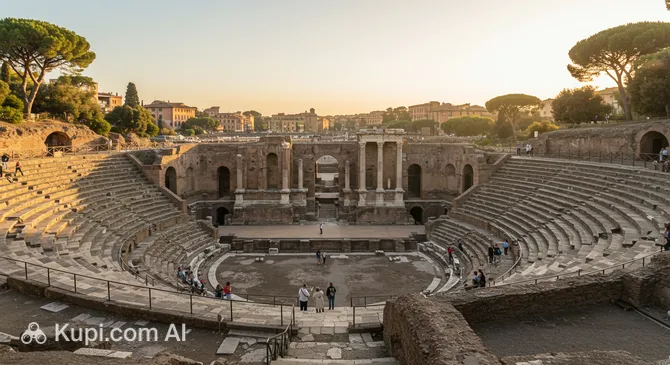
Theatre of Ostia. Illustration.
Source: Kupi.com AI

Traveler photos:

One of the unique features of the Ostia Theater is its clever location and the materials characteristic of the Roman era. The theater is made of brick, which was typical of construction practices at the time. Its majestic semicircular façade faces the Tiber River, which undoubtedly added a special picturesque quality to the performances held here many centuries ago and continues to add charm to the site today.

Architecturally, the theater stands out for its monumentality and harmonious proportions, testifying to the high skill of ancient builders. Its façade is strikingly divided into 23 arcades and decorated with two tiers of elegant Ionic pilasters. In the upper part of the structure, windows have been preserved that once illuminated the internal galleries. The theater's capacity is estimated at approximately 2,700–4,000 spectators, emphasizing its role as one of the main centers of social and cultural life in ancient Ostia.

Visiting the Ostia Theater is a unique opportunity to literally touch history and imagine how theatrical productions, gladiatorial games, or public meetings took place in ancient times. This place is not just ruins, but a living testimony to a rich past that continues to inspire and tell its stories to visitors interested in ancient Roman civilization.

Contacts

Since the Ostia Theater is part of the extensive Ostia Antica archaeological complex, it is recommended to visit the official website of the Ostia Antica Archaeological Park for up-to-date information on opening hours, ticket prices, and specific contact details. You can also find useful information at tourist information centers in the city of Fiumicino.

Usually, the Ostia Theater can be reached as part of a visit to the entire Ostia Antica complex. The archaeological park itself is conveniently located and can be reached by public transport or car from Rome or nearby towns.

How to contactContact
AddressViale dei Romagnoli, 717, 00119 Roma RM, Italy
Phone number+39 06 5635 0215
Websitewww.turismoroma.it

What to Do

Visitors to the Ostia Theater can not only admire the ancient architecture but also feel the atmosphere of Roman performances. Walking along the preserved steps of the amphitheater, one can easily imagine the large-scale productions that unfolded here many centuries ago. This is a unique opportunity to touch history and feel like a spectator of an ancient drama or comedy.

An interesting feature is the theater's proximity to an ancient square paved with impressive mosaics. They depict ships and marine creatures, reflecting Ostia's past as a port. Here, you can see unique examples of ancient decorative art and imagine the bustling life that thrived in this square.

Even today, the theater hasn't lost its purpose—it is frequently used for various cultural events and historical reenactments. Such events allow guests to dive even deeper into the atmosphere of the ancient city and witness history coming to life. This makes a visit to the Ostia Theater particularly memorable.

In addition to the theater itself, tourists can explore the surrounding ruins, the remains of ancient fountains, and commercial shops. Strolling through these sites, you can try to recreate a picture of the daily life of ancient Romans, their lifestyle, and customs, which adds educational value to your visit to this historical monument.

Getting There

Getting to the Ostia Theater from Rome is quite simple and convenient, especially if you prefer public transport. The most popular way is the Roma-Lido suburban train. You need to get off at the Ostia Antica station. The trip from central Rome stations, such as Porta San Paolo (near the Piramide metro station), takes approximately 30-40 minutes. From the Ostia Antica station to the main entrance of the archaeological park, where the theater is located, it’s a pleasant walk of about 10–15 minutes.

If you are traveling by car, there are parking spaces near the Ostia Antica Archaeological Park, making this option very convenient as well. Additionally, there are buses running from Rome toward Ostia that can serve as an alternative to the train. It is important to remember that the Ostia Theater is located within the vast Ostia Antica archaeological complex, so you will need to enter through the park's main entrance to access it.

Nearest city: Fiumicino

History & Facts

The Ostia Theater has a rich and ancient history, dating back to the 2nd century AD. It is believed that its initial construction may have been initiated during the reign of Emperor Augustus. Over the following centuries, the theater was repeatedly rebuilt and expanded, testifying to its importance to the city. The architectural design of the theater is typical of the Roman era: it rests entirely on massive substructures (foundations), which was a characteristic feature of such structures at that time.

One of the notable features of the theater was its strategic location and thoughtful design. The stage was oriented toward the Tiber River, likely creating an impressive natural backdrop for performances. The façade of the theater faced the decumanus—the main street of ancient Ostia—highlighting its central position in urban life. The exterior of the theater was adorned with numerous arcades, and semicircular fountains were located on the sides of the façade, adding elegance to the ensemble.

The internal layout of the theater was also carefully planned. The massive substructures supporting the seating rows housed not only service rooms but also shops. This turned the theater into a lively place even on days when no performances were held. Additionally, staircases were provided here to ensure easy access for the numerous spectators. Ostia Theater served not only as a venue for theatrical productions but also as an important social center where city meetings and various festivals were held, playing a significant role in the cultural and social life of the ancient port city.

Time Needed

When planning a visit to the Ostia Theater, you should consider how much time you are willing to devote to this unique site. For a fairly thorough tour of the theater itself and its immediate surroundings to soak in the ancient atmosphere and appreciate the scale of the structure, it is usually recommended to set aside at least 1–1.5 hours. This time is enough to walk through the amphitheater, examine the architectural details, and take commemorative photos.

However, it is important to remember that the Ostia Theater is only a part of the grand Ostia Antica Archaeological Park. If you are interested in a deeper immersion into the history of the ancient city and want to explore its other treasures, such as ancient streets, houses, thermal baths, and warehouses, you should allow significantly more time for visiting the entire complex. In this case, a detailed exploration of Ostia Antica, including the theater, may require 3 to 4 hours or even more, depending on your pace and interest in details.

Working Hours

The Ostia Theater is part of the large Ostia Antica Archaeological Park, so its opening hours depend directly on the operating schedule of the entire complex. As a rule, the archaeological park is open to visitors daily except Mondays. It usually begins operation at 8:30 AM. Closing times vary depending on the season: in summer, the park is typically open until 7:00 PM, while in the winter period, it closes earlier, around 4:30 PM – 5:00 PM.

Since the schedule is subject to change, it is highly recommended to verify the current opening hours immediately before your planned visit on the official website of the Ostia Antica Archaeological Park or at local tourist information centers. There, you can also find out about the need for advance ticket booking, especially during peak tourist season or for attending special events. Overall, the attraction is available for visits year-round, taking into account seasonal changes in the schedule.

DayOpening hours
MondayClosed
Tuesday8:30 – 19:30
Wednesday8:30 – 19:30
Thursday8:30 – 19:30
Friday8:30 – 19:30
Saturday8:30 – 19:30
Sunday8:30 – 19:30

Nearby

A visit to the majestic Ostia Theater is undoubtedly a highlight, but exploring its surroundings can significantly enrich your experience. By visiting nearby attractions, you can dive deeper into the historical and cultural context of this amazing region of Italy and gain a more complete picture of life in ancient Ostia and modern-day Fiumicino.

Very close to the Ostia Theater, other equally interesting sites await you, each unique in its own way. From ancient ruins that continue the story of a great past to charming corners of the modern city—these sites will complement your journey with new discoveries and emotions. Below is a list of some of them, along with their distance from the theater:

NameDistance
Ostia Antica0.2 km
Castle of Julius II0.9 km
Necropolis of Porto2.7 km
Parish of Saint Mary Queen of Peace2.8 km
QuarantunoDodici Restaurant & Bar3 km
Mit Bistrot3.1 km
Canal Park of the Stagno3.3 km

Have you reached the end of the page?

So the route has been studied inside and out