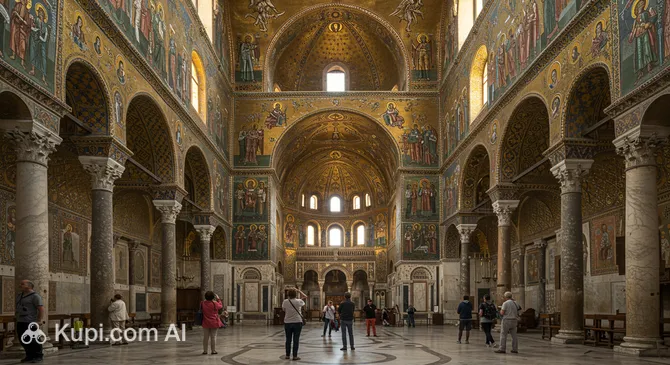
The Church of Santa Maria dell’Ammiraglio, widely known as the Martorana, is an architectural gem located in the heart of Palermo, Italy. This historic temple is one of the most striking and significant monuments of the Norman-Byzantine style in Sicily. Originally, the church was built as a Greek Orthodox temple and dedicated to the Virgin Mary, which is reflected in its full name—Santa Maria dell’Ammiraglio.
Traveler photos:
The church received its first name, "dell’Ammiraglio" (meaning "of the Admiral"), thanks to its founder, George of Antioch. He was a prominent admiral and an influential figure at the court of the Sicilian King Roger II in the 12th century. It was by his order and at his expense that this magnificent temple was erected, serving as a testament to his piety and high standing.
Later, in the 15th century, the church acquired its second and perhaps more famous name today—Martorana. This name is associated with Goffredo and Eloisa Martorana, the founders of the neighboring Benedictine convent. Over time, the temple was annexed to this monastery, and the Martorana nuns became famous for making marzipan fruits, which also became known as "frutta di Martorana," further strengthening the church's connection to this name.
Today, the Martorana attracts visitors from all over the world not only for its rich history and unique blend of architectural styles but also for the magnificent 12th-century Byzantine mosaics that adorn its interior. These mosaics are considered among the oldest and best-preserved in Sicily, making a visit to the church an unforgettable journey through time and a true aesthetic delight.