Support

Takasaki Byakue Dai-Kannon (Jigen-in Temple)

Nearby places of interest

About

Takasaki Byakue Dai-Kannon (Jigen-in Temple) is a majestic statue of the Goddess of Mercy, Kannon, and one of the most recognizable symbols of Takasaki in Japan. This monumental figure is located on the grounds of the Jigen-in Buddhist Temple and draws the eye with its grace and scale.
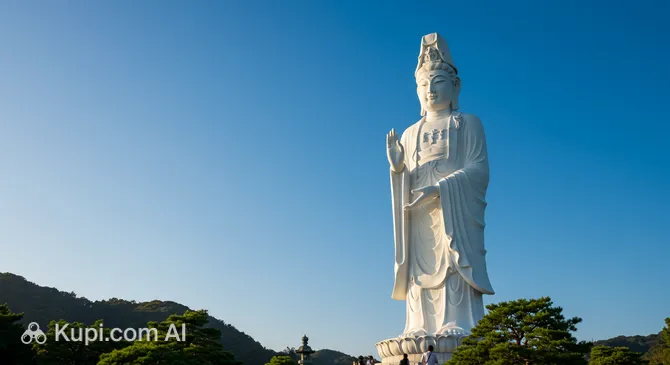
Takasaki Byakue Dai-Kannon (Jigen-in Temple). Illustration.
Source: Kupi.com AI

Traveller photos:

The statue is impressive in size: its height reaches 41.8 meters, and it weighs almost 6,000 tons. The name "Byakue," meaning "white robe," reflects the snow-white color of the sculpture, symbolizing purity and compassion. Kannon, or Guanyin, is one of the most revered bodhisattvas in Japanese Buddhism, embodying infinite mercy toward all living beings.

Completed in 1936, the statue was built using donations from a local businessman. Inside the statue, there are 9 levels where you can climb to see small Buddha statues and enjoy panoramic views of the city and surrounding mountains. Takasaki Byakue Dai-Kannon is not only an important religious site attracting pilgrims but also a popular tourist attraction that allows visitors to touch the spiritual culture of Japan.

Contacts

To find the latest contact information for the Jigen-in Temple (Takasaki Byakue Dai-Kannon), such as a phone number or opening hours, we recommend visiting the official website of the attraction if one exists, or contacting the tourist information centers in the city of Takasaki. Typically, such iconic landmarks are easily accessible by public transport or taxi.

How to contactContact
Address2710-1 Ishiharamachi, Takasaki, Gunma 370-0864, Japan
Phone+81 27-322-2269
Websitewww.takasakikannon.or.jp

What to Do

Visiting Takasaki Byakue Dai-Kannon, located on the grounds of Jigen-in Temple, offers a unique experience—the opportunity to climb inside the majestic statue itself. After climbing 146 steps up the internal staircase, guests reach an observation deck positioned at approximately the statue's shoulder level. From here, magnificent panoramic views of Takasaki and its picturesque surrounding landscapes open up.

The Byakue Dai-Kannon statue is particularly scenic during certain seasons. In spring, its snow-white appearance contrasts beautifully with the soft pink cherry blossoms in the temple gardens, creating a truly magical scene. In autumn, the surrounding maples turn vibrant shades of red and yellow, adding even more charm to the place. Besides climbing to the observation deck and admiring the statue, visitors can also explore the well-kept grounds of Jigen-in Temple, enjoying its peaceful atmosphere and traditional architecture.

Getting There

Reaching the majestic Takasaki Byakue Dai-Kannon statue, located at Jigen-in Temple, is quite simple as the city of Takasaki is famous for its convenient transportation hubs. This makes one of the region's main attractions easily accessible for travelers wishing to experience Japanese culture and spirituality.

If you are traveling through Japan, you can comfortably reach Takasaki by train. The city has excellent rail connections linking it to major metropolises, including Tokyo. A ride on the Shinkansen bullet train from the capital takes relatively little time, allowing you to quickly arrive in this interesting corner of Gunma Prefecture.

Upon arrival at the Takasaki railway station, you can reach the Jigen-in Temple itself, where the famous Kannon statue stands, by taking a local bus. This is an economical and convenient way to see the city on the way to the attraction. Additionally, a taxi from the station to the temple complex entrance is always an option, which will be slightly faster and more comfortable, especially if you have luggage or are traveling in a group.

Nearest city: Takasaki

History & Facts

Takasaki Byakue Dai-Kannon, located at Jigen-in Temple in the city of Takasaki, is one of the iconic landmarks of Japan. This majestic statue depicts the goddess Kannon (Avalokiteshvara in Sanskrit), who is revered in Buddhism as the embodiment of infinite mercy and compassion. Such monuments are often built with deep symbolic meaning, serving as places to pray for world peace and the well-being of humanity.

While the exact construction date of the Byakue Dai-Kannon statue in Takasaki is not fixed in all available sources, it can be compared to other similar structures in Japan. For example, the famous Sendai Daikannon statue was completed in 1991. The statue in Takasaki reaches an impressive height of 41.8 meters. Although it is smaller than the 100-meter Sendai Kannon (considered the tallest statue of Kannon in the world and the tallest statue of a goddess in Japan), the Takasaki monument makes a lasting impression with its scale and elegance.

The construction of such giant statues usually pursues noble goals. As with the Sendai statue, built by businessman Sugawara Yorozu to pray for universal peace and happiness, it can be assumed that Takasaki Byakue Dai-Kannon was also created with similar intentions. Inside the statue, there are often shrines and observation decks, allowing visitors not only to experience the spiritual side but also to enjoy panoramic views of the surroundings. The statue is an important center of pilgrimage and attracts many tourists eager to see this wonder of engineering and religious thought.

Time Needed

It is usually recommended to set aside 1.5 to 2 hours to explore the majestic Takasaki Byakue Dai-Kannon statue, one of the main attractions of Takasaki, and the adjacent Jigen-in temple. This time is generally sufficient to not only admire the impressive figure of the Goddess of Mercy from the outside but also to climb to the observation levels inside the statue, which offer views of the surrounding area.

In addition to the statue itself, the Jigen-in temple complex also deserves attention. A walk through its grounds, seeing other halls and perhaps a small garden, can take another 30-60 minutes. If you plan to take photos leisurely, visit the souvenir shop, or simply enjoy the peaceful atmosphere of the place, you should add this time to your overall plan.

Ultimately, for a comfortable and fairly complete experience of Takasaki Byakue Dai-Kannon and Jigen-in Temple, it is better to plan for 2-2.5 hours. Tourists with a deep interest in Buddhist culture and the art of Japan may spend even more time here, while for a quick look and a few photos, one hour might suffice, though it would be a rather superficial visit.

Working Hours

Precise information about the opening hours of Takasaki Byakue Dai-Kannon (Jigen-in Temple) in Takasaki can vary, so it is highly recommended to check the temple's official website or contact local tourist information centers for the most up-to-date data before your visit. Typically, Japanese temples are open to visitors during daylight hours, but specific times may change depending on the season or special events.

Regarding the need for advance ticket booking or registration, for many temples in Japan, this is not required for a standard visit; however, participating in special ceremonies, guided tours, or visiting during peak tourist seasons may require prior arrangement. Check this information in advance to ensure your visit goes smoothly and without any surprises.

9:00 – 17:00

Nearby

A visit to the majestic Takasaki Byakue Dai-Kannon statue and Jigen-in Temple is certainly a highlight of a trip to Takasaki. However, to make your experience even richer and more complete, it is worth paying attention to other interesting places located nearby. Exploring the surroundings will allow you to dive deeper into the city's atmosphere, discover its hidden gems, and form a more multifaceted impression of the culture and history of this region of Japan.

Near Jigen-in Temple, you will find many other attractions, each unique in its own way and worth your attention. Below is a list of some of them with distances to help you plan your route.

NameDistance
Kannon-yama Park0.5 km
Gunma Gokoku Shrine0.8 km
Dōkutsu Kannon Cave0.9 km
Tokumeien Garden0.9 km
Masaka1 km
Takasaki Park2.2 km
Kuromatsu2.7 km

Reached the bottom of the page?

Looks like you know this route inside out