Support

Oya History Museum

About

The Oya History Museum is one of the most unusual and impressive attractions not only in the city of Tochigi but in all of Japan. This unique museum is located in a massive former quarry where the famous Oya stone—a rare volcanic tuff highly valued in Japanese architecture—was mined for centuries. Instead of traditional halls and display cases, visitors are greeted by grandiose underground spaces that create the atmosphere of a mysterious ancient city.
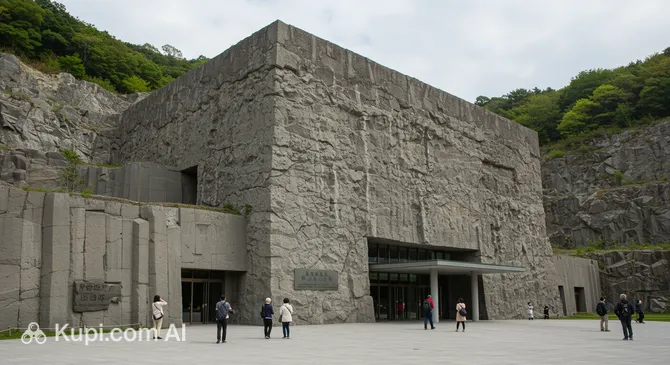
Oya History Museum. Illustration.
Source: Kupi.com AI

Traveler photos:

The scale of the museum is mind-blowing: it is a giant cave descending to a depth of 30 meters and covering an area of about 20,000 square meters. At one time, stone was mined here by hand and with machines, which was used for the construction of famous buildings, including the facade of the former Imperial Hotel in Tokyo. The cool halls, where the average temperature stays around 10 degrees Celsius, are illuminated with colorful lights, giving the place a surreal and mysterious look.

The museum's exhibits tell the detailed history of mining in the region, the geology of the Oya stone, and the tools used by miners. However, the Oya History Museum is not just a historical site. Today, its majestic halls serve as a unique venue for concerts, art exhibitions, wedding ceremonies, and film and music video shoots, making it a vibrant center of modern culture.

Contacts

To plan your visit to the Oya History Museum and check the latest information on opening hours, ticket prices, and special events, it is recommended to consult official sources. All the necessary information is usually available on the museum's website or by phone.

How to contactContact
Address909 Ōyamachi, Utsunomiya, Tochigi 321-0345, Japan
Phone number+81 28-652-1232
Websitewww.oya909.co.jp

What to Do

Visiting the Oya History Museum is an immersion into an amazing underground world. The main activity here is a leisurely walk through its grand underground halls and tunnels, which have a special, almost mystical atmosphere. You can learn in detail about the history of mining in the region, the technologies for extracting and processing the famous Oya stone, and see authentic antique tools and historical photographs telling the story of the miners' hard work. The exhibits clearly demonstrate how elements for iconic architectural structures were born from common natural material.

In addition to the historical component, the museum is an active part of modern cultural life. Its unique acoustic and visual characteristics make it an ideal venue for various events. Temporary exhibitions, impressive art installations, and music concerts are regularly held here, taking on a special sound in the cool stone halls. Attending such an event can be one of the highlights of your trip, as the combination of art and such an unusual setting leaves unforgettable emotions.

Touring the museum can be successfully combined with exploring its picturesque surroundings. Very close by is the ancient Oya-ji Temple, famous for its unique Buddhist reliefs carved directly into the rock face. This site attracts history and architecture enthusiasts. After some spiritual nourishment, it is also worth paying attention to gastronomic discoveries: you should try the famous gyoza dumplings in this region. Such a program will not only introduce you to a unique industrial heritage but also let you enjoy the nature and cuisine of Tochigi Prefecture.

Getting There

The Oya History Museum is located about 8 kilometers west of Utsunomiya city center, making it easily accessible for a visit. The most popular and convenient way to get here by public transport is to take a bus that regularly departs from Utsunomiya railway station. The journey takes about 30 minutes. For those who prefer more comfort or are traveling by private vehicle, taxi or car travel is available, and visitor parking is provided next to the museum.

For travelers coming from Tokyo, the route to the Oya History Museum is also well-organized and doesn't take much time. First, you need to take a train to Utsunomiya Station—the main transport hub of Tochigi Prefecture. From the capital of Japan, you can reach it via the JR Tohoku Shinkansen bullet train or the JR Utsunomiya Line. The train journey from Tokyo to Utsunomiya takes approximately one and a half hours. Upon arrival at the station, you only need to transfer to a local bus or take a taxi, which will bring you to the museum in about another 30 minutes.

Nearest city: Tochigi

History & Facts

The history of the Oya History Museum is inextricably linked to the centuries-old extraction of the unique Oya stone (Oya-ishi). This volcanic tuff was highly valued throughout Japan for its exceptional properties: it was remarkably easy to process, durable, and fire-resistant. This is why it was actively used for building temples, hotels, and other significant structures that can still be found in various parts of the country today.

Active development of the quarry, where the museum is now located, began in the second half of the 19th century. During this time, modern underground mining methods for that era were introduced, allowing workers to reach deep layers of the precious stone. The quarry operated intensively for nearly 70 years, becoming an important part of the region's industrial history, and was finally closed only in 1986.

After its closure, it was decided not to leave this grand underground space abandoned. The former quarry was transformed into a museum to preserve the memory of an industry vital to Tochigi Prefecture and to open up the amazing underground spaces where work once hummed to visitors. Today, it is not just a historical site but one of the most unusual and impressive attractions, drawing tourists from all over the world.

Time Needed

For a thorough exploration of the Oya History Museum, it is recommended to set aside approximately 1.5 to 2 hours. This time will be quite sufficient to leisurely walk through all the main halls, feel the grand scale of the former quarry, and study the exhibits dedicated to the history of stone mining. A walk through the vast underground spaces, covering more than 20,000 square meters, is the main highlight in itself.

The planned time will allow you not only to enjoy the unusual atmosphere and light installations in the underground area but also to carefully examine the exhibition at the entrance. It showcases the tools used by miners and details the geology and methods of Oya stone extraction. Given that the average temperature underground stays around 10 degrees Celsius even in summer, such a leisurely tour will be comfortable if you bring warm clothing.

If you want to make your trip even more eventful, this time is also enough to visit the nearby ancient Oya-ji temple. It is located just a ten-minute walk from the museum and is famous for its unique Buddhist sculptures carved directly into the rock. This combination will provide a complete picture of the cultural and industrial heritage of Tochigi Prefecture.

Working Hours

The Oya History Museum is open to visitors year-round, but the opening hours depend on the season. During the warm period, from April to November, the museum is open from 9:00 AM to 5:00 PM, with the last entry at 4:30 PM. During this period, the museum is open every day. In the winter months, from December to March, the hours are shorter: from 9:30 AM to 4:30 PM, with entry possible until 4:00 PM. Additionally, during the winter season, the museum is closed on Tuesdays and during the New Year holidays.

Special ticket booking for a standard visit is generally not required; however, during peak periods such as national holidays, long queues are possible. As there is a possibility of temporary closure for events or other reasons, it is highly recommended to check for current information and the exact schedule on the official Oya History Museum website or call ahead before your visit.

9:00 – 16:30

Nearby

A visit to the Oya History Museum is just the beginning of a fascinating journey through Tochigi Prefecture. To get a complete picture of this picturesque region of Japan, it is worth spending time in its surroundings. There are many other interesting places near the majestic quarry—from nature parks and zoos to cozy cafes and restaurants that will help you dive deeper into the local culture and way of life.

Exploring the nearby attractions will enrich your experience and allow you to create a more diverse itinerary. You can not only touch the industrial past but also enjoy nature, family entertainment, and the gastronomic discoveries this part of the country is so famous for. Below is a list of nearby places, along with their distance from the museum.

NameDistance
Four Seasons Bamboo Forest Wakayama Farm2.9 km
Utsunomiya Zoo4.5 km
Kouran6.6 km
Concept Cafe Million6.9 km
Matsugamine Coffee Building7 km
Bistro Quatorze7.8 km
Tochinoki Family Land10.2 km

Have you reached the end of the page?

So the route has been studied inside and out