Support

Wat Si Muang

About

Wat Si Muang is a revered Buddhist temple (wat) located in the eastern part of Vientiane, the capital of Laos. This temple is considered one of the most visited religious structures in the city and plays a key role in the spiritual life of local residents, attracting both believers and tourists with its special atmosphere and rich history.
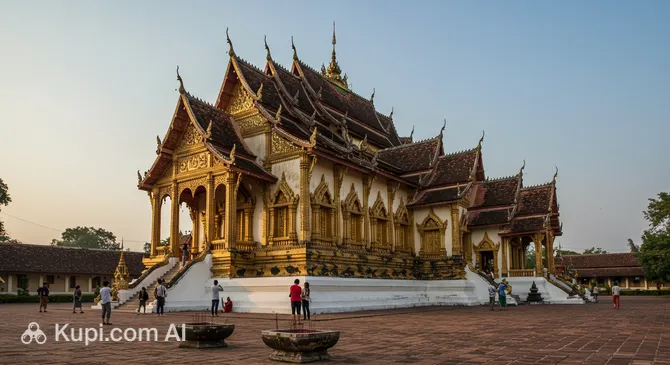
Wat Si Muang. Illustration.
Source: Kupi.com AI

Traveler photos:

The Wat Si Muang complex is strategically located at the entrance to the central part of Vientiane, along the main Settathirath Road. This important thoroughfare leads from the famous Thai-Lao Friendship Bridge connecting Laos and Thailand, making the temple a prominent landmark and easily accessible to visitors arriving in the capital.

One of the main features of Wat Si Muang is its unique blending of Buddhist traditions and Hindu elements. The temple was built on the ruins of an ancient Khmer Hindu sanctuary. Attentive visitors can still find fragments of this earlier historical heritage within the temple complex today, which gives this sacred site additional depth and cultural significance.

Contacts

For the most up-to-date information on Wat Si Muang, including current visiting hours, we recommend visiting the official website. The available contact details are listed below:

Unfortunately, direct contact information like a phone number or email for Wat Si Muang is not always publicly accessible. To obtain these details or other necessary information, please visit the official website or contact local tourist information centers in Vientiane.

How to contactContact
Address15 Rue Bourichane, Vientiane, Laos
Phone number+856 20 99 690 409

What to Do

When visiting Wat Si Muang, you can immerse yourself in its unique atmosphere by exploring the main highlights of the temple complex. Be sure to visit the main temple, which is richly decorated with traditional Lao and Hindu motifs. The numerous statues depicting scenes from the life of Buddha and various Hindu deities are particularly striking. Don't miss the ancient laterite stupa located behind the main building—it is the only structure of its kind in Vientiane, making it especially valuable.

Wat Si Muang is not just an architectural monument but also a living spiritual center. Visitors can often witness religious ceremonies: observing prayers, offerings, and other traditional rituals regularly held at the temple. Locals and pilgrims come here for blessings and to ask for good luck and protection for their families. Tourists can respectfully join in certain aspects of these rituals or simply enjoy the atmosphere of deep peace and spirituality that reigns in this holy place.

Getting There

Getting to Wat Si Muang is quite simple, as the temple is conveniently located in the eastern part of Vientiane, not far from the city center. The most common ways to get around are by taxi or the popular local tuk-tuks. For more active travelers, renting a bicycle is an excellent option, allowing for a leisurely exploration of the surroundings on the way to the temple.

The main thoroughfare leading to Wat Si Muang is Settathirath Avenue. This street not only provides direct access to the temple but also connects it to the Thai-Lao Friendship Bridge, which is particularly convenient for tourists arriving from Thailand. If you are staying in the center of Vientiane, the trip to the temple will take no more than 10–15 minutes by car or public transport. Thanks to its proximity to other famous city landmarks, visiting Wat Si Muang can easily be integrated into your sightseeing itinerary.

Nearest city: Vientiane

History & Facts

The history of Wat Si Muang dates back to the mid-16th century. The temple was founded in 1563 during the reign of King Setthathirath, one of the most revered figures in the history of Laos. The uniqueness of this site lies in the fact that the complex was built on the remains of an ancient Khmer stupa dating back to the Hindu period. This fact highlights the multi-layered history and cultural heritage of Vientiane, where Buddhist traditions are intertwined with earlier beliefs.

The original stupa, made of laterite bricks, is of particular historical value. It has survived to this day and serves as important evidence of Khmer influence in the region. King Setthathirath, under whom Wat Si Muang was established, is known for his contributions to the development of Buddhism and the strengthening of the Lao state, and the founding of this temple was one of the significant events of his reign.

Throughout its centuries-old history, Wat Si Muang has witnessed many turbulent events. In the 18th and 19th centuries, the temple repeatedly suffered from military conflicts. For instance, it was partially destroyed in the 18th century, and in 1828, it was seriously damaged during events involving the Siamese army. Despite all the destruction, the sanctuary was restored each time, which underscores its incredible significance to the local people.

Today, Wat Si Muang remains not just a historical monument but also one of the primary spiritual centers of Vientiane. It attracts many pilgrims and tourists wishing to touch its ancient history and experience the special atmosphere of this sacred place. Its resilience in the face of trials and its capacity for rebirth make it a symbol of enduring faith and cultural continuity in Laos.

Time Needed

To fully enjoy your visit to Wat Si Muang and soak in its special atmosphere, it is recommended to set aside approximately 1-2 hours of your time. This period is generally sufficient to leisurely explore the main structures of the temple complex, including the main sanctuary, the ancient stupa, and the numerous statues that are an integral part of its decor.

During this time, you can also observe the daily life of the temple and, if you're lucky, witness some religious rituals regularly performed by locals and monks. Of course, if you wish to delve deeper into the meditative atmosphere of the site or study every architectural element in detail, your stay might take a bit longer, but the specified time is quite enough for a general introduction to this iconic Vientiane landmark.

Working Hours

The exact opening hours of Wat Si Muang may vary; however, like most Buddhist temples in Vientiane, it is typically open to visitors from early morning, around 6:00–7:00 AM, until sunset, approximately 18:00–19:00 PM. The daytime is considered the best time for a visit, as you can fully appreciate the beauty of the temple complex and its atmosphere.

As a rule, visiting Wat Si Muang does not require advance booking or registration, and the temple is open year-round. Nevertheless, it is always recommended to check the most current information regarding opening hours, possible schedule changes, or special ceremonies on the temple's official website or confirm with local tourist information centers upon your arrival in Vientiane.

Nearby

Visiting Wat Si Muang is undoubtedly a highlight, but Vientiane has much more to offer! Exploring the temple's surroundings will allow you to dive deeper into the city's atmosphere, discover other iconic sites, and gain a more complete understanding of the cultural and historical heritage of the capital of Laos.

Many interesting sites are within walking distance or a short ride from Wat Si Muang, making them convenient to include in your itinerary. This is a wonderful opportunity to complement your impressions and see different facets of Vientiane. Below is a list of some attractions and points of interest located nearby.

NameDistance
COPE Visitor Centre0.3 km
Parkson Supermarket0.4 km
Vientiane Center0.5 km
Haw Phra Kaew0.7 km
Wat Sisaket0.8 km
Chao Anouvong Park1.1 km
That Dam Stupa1.1 km

Have you reached the end of the page?

So the route has been studied inside and out