Support

Pha That Luang

About

Pha That Luang (Lao: ພຣະທາດຫຼວງ) is a magnificent Buddhist stupa located in Vientiane, the capital of Laos. It is rightfully considered the primary national symbol of the country and its most significant architectural monument. This sacred monument holds immense cultural and historical importance for the Lao people.
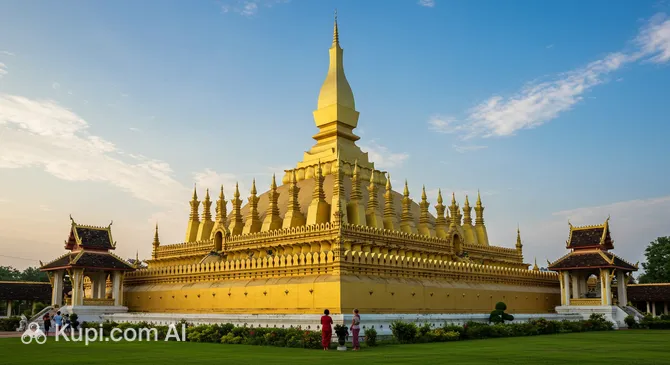
Pha That Luang. Illustration.
Source: Kupi.com AI

Traveler photos:

Externally, Pha That Luang is a grand structure: the massive golden stupa, covered in gold leaf, rises to a height of 45 meters. The central stupa is surrounded by 30 smaller stupas, creating an impressive and harmonious architectural ensemble. The majestic look of the stupa is so recognizable that its image often adorns souvenirs, postcards, and even the national emblem of Laos.

Pha That Luang is not only a vital center of religious life for Buddhists but also an extremely popular tourist destination, attracting pilgrims and travelers from all over the world. A visit to the stupa offers a unique opportunity to connect with the spiritual traditions of Laos and admire this true masterpiece of architecture.

The stupa complex is located about 5 kilometers northeast of central Vientiane on a small hill, making its golden spire visible from afar. This place is imbued with an atmosphere of peace and spirituality, offering visitors an unforgettable experience.

Contacts

Since Pha That Luang is a significant religious and cultural site, direct contact details such as a phone number or email for general inquiries may be unavailable or not widely publicized. For the most up-to-date information regarding opening hours, visiting rules, potential restrictions, or special events, we recommend contacting the official tourism portals of Vientiane and Laos, or checking with local tourist information centers upon your arrival in the city.

How to contactContact
AddressThat Luang, Xaysettha 10009, Laos

What to Do

Visitors to Pha That Luang can enjoy a walk through the extensive grounds of the complex, closely examining the majestic main stupa and the smaller stupas surrounding it. There are also two active monasteries on the site worth visiting: Wat That Luang Neua (Northern Monastery) and Wat That Luang Tai (Southern Monastery). This is a wonderful opportunity to take impressive photos, delve deeper into the history of Laos and its Buddhist traditions, and observe the daily life of monks and local rituals.

A particularly vibrant experience is visiting Pha That Luang during the annual That Luang Festival, which traditionally takes place in November. During this time, the complex is transformed: thousands of pilgrims gather here, and colorful fairs, traditional dances, and solemn processions are held, creating a unique festive atmosphere. Additionally, the stupa grounds offer picturesque views of Vientiane and its surroundings, which will be especially appreciated by fans of panoramic shots and beautiful landscapes.

Getting There

Getting to Pha That Luang from the center of Vientiane is quite simple, as the stupa is located just 5 kilometers northeast of the city center. The most common way to get there is by taxi or the popular Southeast Asian tuk-tuk. A trip by car or motorcycle will take approximately 10-15 minutes, depending on traffic conditions. If you prefer a more active approach, you can rent a bicycle—it will take a bit longer but will allow you to enjoy the city views along the way.

Additionally, Pha That Luang can be reached by city bus, which is a more budget-friendly option. Many local travel agencies also include the stupa in their Vientiane sightseeing tours, which can be convenient for those who want to get the most information from a guide. For independent travelers, finding Pha That Luang is easy: the stupa is one of the most famous landmarks in the capital of Laos, and there are numerous signs leading to it. You can also use a navigator.

Nearest city: Vientiane

History & Facts

The history of Pha That Luang is steeped in ancient legends and significant events. According to local lore, the very first structure on this site was established as early as the 3rd century BC. It is believed that missionaries of the Indian Emperor Ashoka arrived here and founded the stupa to house a sacred relic of the Buddha—presumably his breastbone or pelvic bone. While this remains a legend, archaeological finds confirm the site's antiquity: remains of a Khmer monastery dating back to the 12th century were discovered within the complex.

Pha That Luang began to take on its modern appearance in the 16th century. In 1566, when Vientiane became the capital of the prosperous Kingdom of Lan Xang, King Setthathirath ordered the construction of a grand stupa on this site. By the 17th century, eyewitnesses described Pha That Luang as a "huge pyramid" with surfaces covered in gold leaf, which some estimates suggested weighed nearly a thousand pounds. This speaks to the incredible wealth and significance of the stupa during that period.

Unfortunately, the subsequent centuries were difficult for Pha That Luang. In the 18th and 19th centuries, the stupa was repeatedly damaged during turbulent periods and was even abandoned for a time. However, thanks to the efforts of the Lao people and restoration projects, the shrine was revived. A major restoration in the 1930s returned much of its former glory. The final appearance we see today was completed following further reconstruction work in the mid-20th century, allowing Pha That Luang to shine once again as the primary symbol of Laos.

Time Needed

To fully experience the grand Pha That Luang complex and its surroundings, most visitors are recommended to set aside about 1-2 hours. This time is generally sufficient to leisurely explore the main golden stupa, walk around the grounds, take memorable photos, and soak in the atmosphere of this holy site.

Within this timeframe, you can walk around the central structure, examine its details, and visit the nearby monasteries, such as Wat That Luang Neua and Wat That Luang Tai, to get a more complete picture of the complex. If you plan a deeper immersion—for example, for meditation, a detailed study of the architectural features, or visiting every corner of the adjacent monasteries—you should budget a bit more time.

Working Hours

The majestic Pha That Luang complex in Vientiane is generally open to visitors daily. The usual opening hours are from 8:00 AM to 12:00 PM and then, after a lunch break, from 1:00 PM to 4:00 PM. This allows you to plan your visit for either the morning or afternoon hours.

While the attraction is typically accessible year-round, it is highly recommended to check the current schedule on the official website or at local tourist information centers before your trip. This is especially important if your visit falls on public holidays in Laos, as operating hours may change. It is also best to check through official channels regarding the need for advance ticket booking or tour registration to avoid potential inconveniences and plan your visit as effectively as possible.

8:00 – 17:00

Nearby

A visit to the majestic Pha That Luang stupa is undoubtedly a highlight for many travelers in Vientiane. However, to make your introduction to the capital of Laos even more fulfilling, it is worth paying attention to other interesting places located nearby. Exploring the surroundings will allow you to dive deeper into the city's atmosphere, see it from different angles, and complement your impressions of the main shrine with new discoveries.

In the immediate vicinity of Pha That Luang, there are other attractions that may interest tourists. These include cultural sites as well as places for relaxation or shopping, allowing you to diversify your itinerary. Below is a list of some of them, along with their approximate distances.

NameDistance
Patuxay Park1.7 km
Patuxay (Victory Monument)2 km
Parkson Supermarket2.5 km
Vientiane Center2.5 km
COPE Visitor Centre2.7 km
Go Dunk2.9 km
Wat Si Muang2.9 km

Have you reached the end of the page?

So the route has been studied inside and out