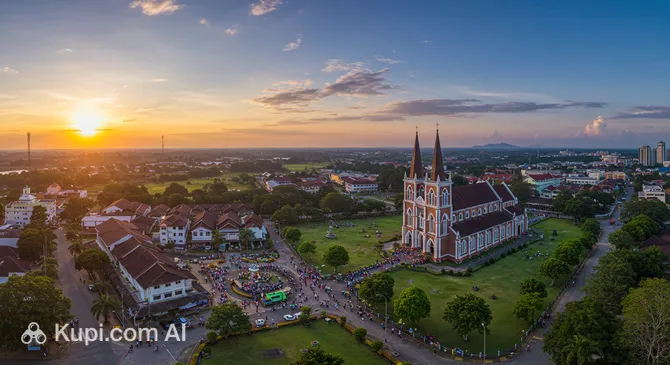
Welcome to Bukit Mertajam — a vibrant and colorful town located on the mainland of Penang state in Malaysia. As the administrative center of the Central Seberang Perai District, it blends the energy of a modern transport hub with the charm of a historic settlement. The town is nestled at the foot of its namesake hill, which is the highest point on the state's mainland, providing residents with pleasant air circulation and picturesque views.
Bukit Mertajam. Illustration.
Source: Kupi.com AI
In terms of city history, Bukit Mertajam has evolved from a 19th-century agricultural zone famous for its spice plantations into a significant economic center. Today, it is home to approximately 210,000 people, creating a unique cultural melting pot where Chinese, Malay, and Indian traditions are closely interwoven. This is a place where the daily life of locals takes precedence over tourist polish, allowing travelers to experience the authentic atmosphere of Penang.
Among the town's main magnets are the famous St. Anne's Church, which attracts pilgrims from all over the world, and a recreational forest ideal for morning walks. Bukit Mertajam invites those seeking authenticity, magnificent street food, and the opportunity to see Malaysia as it truly is — welcoming and multifaceted.
Weather Overview
Bukit Mertajam enjoys a typical tropical climate characteristic of Penang state. This means it is warm and humid throughout the year. Average air temperatures fluctuate between 25–32°C. The hottest months are usually March, April, and May, when daytime highs often reach 31°C, and the humidity level makes the heat more palpable.
Precipitation in the town is abundant, and rain can occur at any time of the year; however, the most pronounced rainy season falls between September and November. November is considered the wettest month, with rainfall levels potentially exceeding 420 mm. These are usually short-lived but very powerful tropical downpours, after which the sky clears quickly. You can check more details about the weather in Bukit Mertajam to better plan your visit.
For a comfortable visit, it is best to choose periods from December to February or June-July, when rain is less frequent and there are more dry days. The proximity of Mertajam Hill ensures decent air circulation in residential areas; however, during peak hours, the town center can feel stifling due to heavy traffic.
Average monthly temperature
Average monthly precipitation
Interesting Facts
Bukit Mertajam is a town with deep roots and surprising features that are often hidden from the casual passerby. Here are a few facts to help you get to know it better:
Sharp Hill: The town's name translates from Malay as "sharp hill," referring to the distinctive shape of the Bukit Mertajam summit, which served as a landmark for travelers for centuries.
Ancient Heritage: The town is home to the Cherok To'kun relic — a granite boulder with Sanskrit inscriptions dating back to the 5th century AD, proving the existence of settlements here over 1,500 years ago.
Granite Capital: In the 19th century, the town was the largest producer of granite in northern Malaysia. The local stone was of such high quality that it was used to build the prison on Penang Island.
Architectural Recognition: The town's railway station was once honored as the most beautiful station in the entire country, and it remains an important transport hub today.
Birthplace of a Prime Minister: Anwar Ibrahim, the 10th Prime Minister of Malaysia, was born and raised here, which is a source of great pride for the local residents.
How to Get There
Bukit Mertajam is a strategic transport hub for the mainland of Penang state, making it easily accessible for travelers. Thanks to a well-developed road network and rail connections, getting here is straightforward from both the national capital and neighboring regions.
If you are arriving by air, the nearest major aviation hub is Penang International Airport (PEN). It is located on the island, and a trip to the town by taxi or via the Grab app will take approximately 45–60 minutes, depending on bridge traffic. The airport handles many flights from Kuala Lumpur, Singapore, and other cities in Southeast Asia.
The railway is perhaps the most convenient and fastest way to travel. The local Bukit Mertajam Station is served by KTM ETS and KTM Komuter trains. High-speed trains connect the town with Kuala Lumpur, while commuter trains allow for quick trips to Butterworth, where you can catch the ferry to George Town. The trip from Butterworth takes only about 20 minutes.
Station
Passenger traffic
Distance
Butterworth railway station
9
11 km
Butterworth railway station
9
11 km
Alor Setar railway station
6
83 km
Ipoh railway station
9
109 km
Arau railway station
6
120 km
For those who prefer buses, express and local Rapid Penang services run regularly from Butterworth. However, keep in mind that roads to Seberang Perai can experience significant congestion during peak hours, making rail transport the most predictable option.
Main Attractions
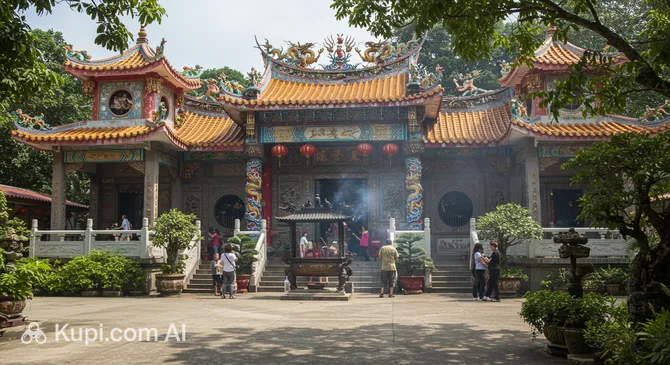
Although Bukit Mertajam is better known as a residential and administrative hub, it hides several surprising gems worthy of a traveler's attention. One of the most colorful sites is Pek Kong Cheng Temple. This ancient sanctuary is located in the heart of the town and serves as an important spiritual center for the local community. The atmosphere here is filled with the scent of incense, while the bright facades of traditional Chinese shophouses surrounding the temple create a beautiful backdrop for a stroll.
Pek Kong Cheng Temple. Illustration.
Source: Kupi.com AI
Traveler photos:
For nature lovers, Bukit Berapit is a must-visit. This area is famous for its fruit orchards, where the renowned durians and mangosteens are grown. A walk along the hillside will not only offer views of the surroundings but also allow you to visit secluded Buddhist temples hidden among the greenery. It is an excellent place to escape the city bustle and enjoy the silence.
Also not to be missed is St. Anne's Church — one of the largest Catholic shrines in the region. Its majestic architecture and extensive grounds attract thousands of people, especially during annual festivals. History buffs will be interested in finding the nearby Cherok To’Kun relic — an ancient artifact with Sanskrit inscriptions that serves as a reminder of the region's centuries-old heritage.
Local Cuisine
The gastronomic scene in Bukit Mertajam is a true paradise for street food lovers, dominated by Chinese influence blended with vibrant Malay spices. Founded by migrants from Fujian province in the 19th century, the local cuisine has remained true to its traditions. Must-try dishes here include char kway teow (stir-fried noodles with seafood) and fresh mussel dishes, which are prepared with exceptional skill.
If you're looking for something unique, stop by Tangshan Kitchen. This place is famous for its authentic recipes, allowing you to experience the traditional flavors of the region in a cozy setting. Local shophouses also offer incredible street food, where every dish is prepared right before your eyes.
Tangshan Cuisine. Illustration.
Source: Kupi.com AI
Traveler photos:
In addition to Chinese dishes, Middle Eastern cuisine is also well-represented in the town. For example, at Ahlien Arabic Kitchen, you can enjoy fragrant rice and meats prepared with Arabic spices, reflecting the modern diversity of the town's population. For drinks, be sure to try the local Penang-style coffee (Kopi-O) or refreshing tropical fruit juices.
The dining culture here centers around food courts and night markets. Locals prefer dining in open-air cafes where a bustling and friendly atmosphere prevails. Shopping malls also offer a wide selection of chain restaurants, from Japanese ramen to Western fast food, catering to all tastes.
Travel Tips
A trip to Bukit Mertajam will be a pleasant discovery if you keep a few practical nuances characteristic of this region of Malaysia in mind.
Clothing and Essentials: Choose light cotton clothing, as the climate is tropical and humid. If you plan to visit St. Anne's Church or other religious sites, be sure to cover your shoulders and knees. Comfortable shoes will come in handy for walks in the hills.
Transport: Install the Grab app — it is the most reliable and affordable way to get around. For trips to other cities in the state, it is better to use KTM trains to avoid traffic jams on the bridges.
Finances: The local currency is the Malaysian Ringgit (MYR). Cards are accepted in shopping malls, but always keep cash on hand for markets and street food. ATMs are easy to find in the town center and malls.
Health and Safety: Drink only bottled water. The town is generally safe, but keep an eye on your bags in crowded places like markets. Pharmacies can be found in any major shopping center.
Communication: Malay is the official language, but English is widely spoken, especially among the youth and in the service sector. A few simple phrases in Malay, such as "Terima kasih" (thank you), will always elicit a smile from locals.
Local Etiquette: It is customary to remove your shoes when entering someone's home or certain temples. Greet people with a slight nod, and use your right hand when passing items or money.
What to Avoid: Do not point at people or objects with your index finger (use the thumb of your right hand instead). Try not to schedule important trips during peak hours (7:00–9:00 and 17:00–19:00) due to heavy traffic.
Environment: Remember that the town is active in its efforts for cleanliness, so do not leave trash in recreational zones and forests.
Following these simple rules will help you feel confident and enjoy the hospitality of this wonderful town!
Entertainment & Nightlife
Evening life in Bukit Mertajam has a quiet and family-oriented character, typical of Malaysia's residential suburbs. Instead of noisy nightclubs, the town is dominated by cozy establishments in shophouses and large shopping centers like Aeon Mall. Inside the malls, you can find modern cinemas and gaming zones, which become the main gathering points for locals after sunset.
For those who enjoy active recreation with friends, Bukit Mertajam Karaoke is an excellent option. This popular venue offers private singing rooms where you can have a fun evening performing local and international hits. Such places are famous for their relaxed atmosphere and are an important part of the townspeople's leisure time.
Karaoke Bukit Mertajam. Illustration.
Source: Kupi.com AI
Traveler photos:
If you are looking for more vibrant nightlife with dance floors and bars, it is worth heading toward nearby Butterworth or crossing over to the island to George Town. A taxi ride takes about 30–45 minutes, and that is where the state's main nightlife scene thrives. Within Bukit Mertajam itself, the best way to spend an evening is at the night markets (pasar malam), where life is buzzing and the air is filled with the aromas of freshly prepared street food.
Parks & Museums
The primary natural treasure of Bukit Mertajam is its namesake Recreational Forest (Bukit Mertajam Recreational Forest). This massive green zone serves as the "lungs" of the town. There are hiking trails of various difficulty levels leading to the summit of the hill, which offers a panoramic view of the mainland and Penang Island. Locals come here for morning exercises, picnics, and simply to enjoy the cool air of the tropical forest.
Another picturesque spot for outdoor relaxation is Bukit Berapit. Besides fruit plantations, it is known for its quiet corners, perfect for contemplating nature. Also nearby is the Mengkuang Dam — the state's largest reservoir, whose shores are a popular spot for jogging and sunset walks, offering a peaceful, mirror-like water surface surrounded by mountains.
As for cultural sites, the town does not have large museums in the classical sense; however, historical sites fulfill this role. The ancient Cherok To'kun inscription, located within the St. Anne's Church complex, is a unique open-air archaeological monument. It provides insight into the early Hindu-Buddhist influence in the region and will be of great interest to those fascinated by the ancient history of Southeast Asia.
Getting Around
The public transport system in Bukit Mertajam relies on the railway and a network of bus routes connecting the town with the rest of the mainland and Penang Island. The main hub is the railway station, which serves as a vital stop for KTM trains. This is the most reliable way to travel between cities: comfortable ETS trains and Komuter suburban trains run strictly according to schedule.
Within the town and its surroundings, Rapid Penang buses are in operation. They connect Bukit Mertajam with Butterworth and Seberang Jaya. For paying fares on buses, it is convenient to use a Touch 'n Go card or cash (but note that drivers do not provide change). Although the bus network covers major areas, intervals can be long, and buses may be overcrowded during peak hours.
The most popular and convenient way for tourists and locals to get around is by taxi, specifically through the Grab mobile app. It allows you to call a car quickly, see the fare in advance, and avoid difficulties in explaining your destination. Renting a car is also a good option if you plan to explore the surrounding areas, but be prepared for heavy traffic on main highways during morning and evening rush hours.
Accommodation
In Bukit Mertajam, tourist accommodation is primarily geared toward those seeking practicality and authenticity. While you won't find massive beach resorts here, the town offers a decent selection of mid-range hotels, guesthouses, and apartments for long-term stays.
The most convenient area for staying is near Aeon Mall or the central part of town. Modern hotels are concentrated here, offering comfortable air-conditioned rooms and Wi-Fi at very attractive prices. Proximity to the shopping center ensures access to various cafes, shops, and services.
For those looking to save money or experience local flavor, guesthouses in newer townships like Taman Alma are a great fit. It is also worth considering accommodation near the Billion Shopping Centre, where you can find budget hotels with good transport accessibility.
When planning your trip, especially if it coincides with religious holidays at St. Anne's Church, it is recommended to book accommodation in advance through popular international platforms. On ordinary days, there is no shortage of rooms, and you can easily find a suitable option upon arrival.
Nearby Cities
Bukit Mertajam serves as an excellent starting point for exploring the mainland part of Penang and neighboring states. Thanks to its proximity to major highways, you can easily take several fascinating day trips from here.
Just 11 kilometers away is Butterworth — a major transport hub where the famous ferries to Penang Island depart. The town itself is interesting for its industrial atmosphere and art installations. An even more enticing destination is George Town, the state capital. This UNESCO World Heritage site is striking for its colonial architecture, street art, and incredible variety of restaurants.
For those who want to see a quieter, more provincial side of Malaysia, a trip to Sungai Petani in Kedah state is a good choice. This fast-growing town offers interesting shopping opportunities and historical monuments of the northern region. You can get there by KTM Komuter train in less than an hour.
Exploring the surroundings of Bukit Mertajam will allow you to see the contrast between quiet suburbs, natural attractions like the Mengkuang Dam, and the bustling life of historic metropolises, making your trip truly rich and diverse.
Shopping & Souvenirs
Shopping in Bukit Mertajam is a blend of modern shopping malls and traditional markets where you can find almost anything. While the town is not a recognized center for high fashion, it offers excellent opportunities for buying quality goods at prices lower than on Penang Island.
The main shopping destination is Aeon Mall. This massive complex features international brands, electronics, and home goods. It also houses an excellent supermarket with exotic fruits and local products. Another popular spot is the Billion Shopping Centre, which attracts residents with its affordable prices and wide range of everyday goods.
Billion Shopping Centre. Illustration.
Source: Kupi.com AI
Traveler photos:
Those looking for authentic souvenirs should head to the historic shophouses near the station. There, you can purchase local spices that the area was once famous for, or granite items — a tribute to the town's industrial past. The town is also famous for its fresh fruit, particularly durian and mangosteen, which are best bought from street stalls along the roads.
The town's markets, especially the night markets (pasar malam), deserve special attention. Here, you can not only buy inexpensive clothes and accessories but also immerse yourself in the local culture. Shops are generally open from 10:00 to 22:00, and card payments are accepted in all major centers, though you will definitely need cash ringgits for markets and small stalls.