Support

Dar Si Said Museum

About

The Dar Si Said Museum is one of the gems of Marrakech's cultural heritage, serving as a treasure house of Moroccan art and traditional crafts. Located in the heart of the Medina, this museum is housed in a magnificent 19th-century palace, which is itself an outstanding example of Morocco's architectural artistry. A visit to Dar Si Said is not just a tour of exhibits, but an immersion into an atmosphere of luxury and refinement from bygone eras.
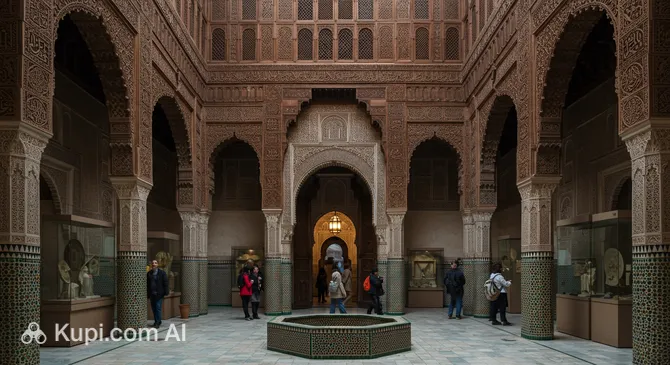
Dar Si Said Museum. Illustration.
Source: Kupi.com AI

Traveller photos:

The museum building was once the residence of Si Said Ben Moussa, the brother of the powerful Grand Vizier Ba Ahmed. The palace captures the imagination with its richly decorated halls, cozy courtyards with fountains, and shady gardens designed in an exquisite Andalusian style. Every detail of the interior—from the carved cedar ceilings and colorful zellij mosaics to the delicate plaster moldings—testifies to the exceptional skill of Moroccan architects.

The exhibition at the Dar Si Said Museum offers visitors a unique opportunity to experience the rich and diverse world of Moroccan crafts. It features extensive collections of antique hand-woven carpets, exquisite ceramics, traditional clothing, jewelry, weapons, musical instruments, and household items. Special attention is given to the art and culture of the Berbers, the indigenous people of North Africa, making the museum an important center for understanding their heritage. You will see masterfully crafted items made of wood, leather, and metal, each telling its own story.

A walk through the halls of the Dar Si Said Museum allows you not only to appreciate the beauty of the artifacts on display but also to gain a deeper understanding of Morocco's artistic traditions and cultural roots. It is a place where history comes alive, and the craftsmanship of ancestors inspires modern-day artisans.

Contacts

To find the latest contact information for the Dar Si Said Museum, such as a phone number or email address, we recommend visiting the museum's official website, if available. Information regarding opening hours and contact details can also often be found at tourist information centers in Marrakech or directly when visiting the site.

How to contactContact
Address8 Rue de la Bahia, Marrakech 40000, Morocco
Phone+212 5243-89564
Websitedarsisaid.com

What to Do

Visiting the Dar Si Said Museum in Marrakech is an immersion into the rich world of Moroccan art and crafts. Here, you can see impressive collections demonstrating the skill of local artisans. Exhibits include antique carpets with intricate patterns, exquisite Berber jewelry, masterfully carved wooden panels and doors, and various ceramic items ranging from everyday utensils to decorative plates. Furthermore, the museum displays ancient oil lamps, collectible weapons, and traditional clothing from different eras, allowing you to trace the evolution of Moroccan costume.

Viewing the exhibits is only part of the experience. The palace itself, which houses the museum, is a work of art. Visitors can spend hours admiring its architectural details: richly decorated halls where every decorative element is carefully considered, exquisite zellij tiles covering the walls and floors, delicate stucco on the ceilings and columns, and magnificent cedar carvings that adorn the doors, ceilings, and window frames. A walk through the museum's inner courtyards and shady gardens provides a sense of peace and serenity.

At the Dar Si Said Museum, you don't just look at antiques; you immerse yourself in the atmosphere of a true Oriental fairytale. The exhibition allows you to learn more about the life, daily routines, and traditions of various segments of the Moroccan population. Many exhibits are unique and possess significant historical and artistic value, telling silent stories and legends associated with this wonderful place and its former residents.

Getting There

The Dar Si Said Museum is ideally located in the heart of Marrakech's historical district, making it easily accessible for travelers. It is situated in close proximity to other iconic landmarks, such as the Bahia Palace and the Tiskiwin Museum, allowing you to combine your visits. You can take a pleasant walk to the museum if you are exploring the central part of the Medina, or take a quick taxi ride from anywhere in the city.

Finding the museum entrance is straightforward: it is located on one of the characteristic narrow streets of the old city. For ease of navigation, you can follow the signs or use a navigation app on your phone. Since the Dar Si Said Museum is located near major tourist routes, a visit here can easily be included in a walking tour of the ancient quarters of Marrakech.

For independent travelers who prefer comfort and speed, public transport or a taxi is the best choice. This is especially convenient if your accommodation is not in the center of the Medina or if you want to save time for other sightseeing. Taxis in Marrakech are a common and relatively inexpensive way to get around.

Nearest city: Marrakech

History & Facts

The Dar Si Said Museum, located in Marrakech, is more than just a collection of exhibits; it is a true monument to the history and architecture of Morocco. It was originally a lavish palace built in the second half of the 19th century by order of Si Said Ben Moussa. Si Said held the important post of Minister of War under Sultan Moulay Abd al-Aziz and was the brother of the powerful Grand Vizier Ba Ahmed, which explains the building's grandeur and scale.

The architecture of the Dar Si Said palace is a prime example of the finest traditions of Moroccan building. Visitors are greeted by exquisite Andalusian gardens that create an atmosphere of peace and coolness. The interior decoration is stunning in its richness: intricate zellij mosaics, skillful cedar wood carvings, and plaster moldings (stucco) adorn the walls and ceilings, showcasing the exceptional craftsmanship of the artisans of that time. Every decorative element tells its own story and reflects the region's cultural heritage.

An important milestone in the building's history was its conversion into a museum of Moroccan art in the early 1930s. This event made Dar Si Said one of the oldest museums not only in Marrakech but in all of Morocco. Since then, the museum has been dedicated to preserving and showcasing the rich variety of Moroccan crafts and decorative arts. Over the years, the museum's collections have been expanded and updated many times, turning it into one of the city's key cultural hubs, attracting both tourists and researchers.

This work of forming and developing the collections continues to this day, reflecting the Dar Si Said Museum's commitment to not just storing artifacts, but telling the living history of Moroccan art and daily life through them. The exhibitions allow visitors to trace the evolution of craft traditions, see how materials and techniques changed over the centuries, and understand how the cultural heritage of various regions of Morocco has been woven into a unique tapestry of national art. Thus, a visit to the museum is an opportunity not only to admire ancient objects but also to gain a deeper understanding of the soul and history of the Moroccan people.

Time Needed

When planning a visit to the Dar Si Said Museum in Marrakech, you should expect that it will take on average from 1 to 2 hours to explore. This time is generally sufficient to see the main exhibits and soak in the atmosphere of this historical site.

Of course, the duration of your visit may vary depending on your personal interest in the Moroccan art, crafts, and architecture presented in the museum. If you wish to examine each exhibit in detail, study the intricacies of the wood carvings, ceramics, or traditional carpets, and take a leisurely stroll through the courtyards and gardens, your stay may be longer. Photography enthusiasts might also linger to capture the exquisite interior details and the play of light in the Andalusian gardens.

Nevertheless, for a general impression and to view the key collections—including household items, weapons, musical instruments, and jewelry—as well as to enjoy the beauty of the building itself, which is a fine example of Moroccan architecture, 1-2 hours will be quite enough. This will give you a complete picture of the rich cultural heritage preserved by Morocco and, specifically, the Dar Si Said Museum.

Working Hours

When planning a visit to the Dar Si Said Museum in Marrakech, it is important to check the current opening hours in advance. As schedules may change depending on the season or for other reasons, the most reliable way to get up-to-date information is to check the museum's official website or consult local tourist information centers upon your arrival in Morocco. This will help you plan your visit effectively and avoid any potential inconvenience.

Regarding the need for advance ticket booking, it is also recommended to check official resources, especially if your trip coincides with the peak tourist season. Some popular attractions offer online booking options. Typically, museums of this type are open to visitors year-round, but there may be exceptions or special hours on holidays. Therefore, to be certain, always check the latest information before visiting the Dar Si Said Museum.

Nearby

When you find yourself at the Dar Si Said Museum, you are in the very heart of the historical and cultural richness of Marrakech. Exploring the surroundings will allow you to immerse yourself further in the city's atmosphere, discovering other gems located just steps away. Every street and square around the museum has its own story to tell, and nearby attractions will complement your impressions of Moroccan art and lifestyle.

To make your journey even more fulfilling, we have prepared a list of interesting places located near the Dar Si Said Museum. This will help you plan your itinerary and ensure you don't miss anything important.

NameDistance
Bahia Palace0.2 km
La Pergola0.3 km
Le Bistro Arabe0.3 km
Place des Ferblantiers0.4 km
El Badi Palace0.6 km
Monde des Arts de la Parure Museum0.6 km
Jemaa el-Fnaa0.6 km

Reached the bottom of the page?

Looks like you know this route inside out