Support

El Badi Palace

About

El Badi Palace is one of the most famous and impressive historical landmarks in Marrakech, Morocco. These majestic ruins, located in the heart of the old Medina, were once a luxurious palace built in the late 16th century by order of Sultan Ahmad al-Mansur of the Saadi dynasty. Today, El Badi Palace stands as a testament to former power and architectural scale.
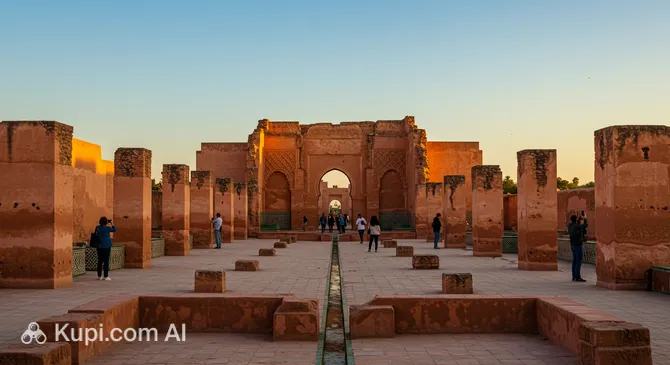
El Badi Palace. Illustration.
Source: Kupi.com AI

Traveller photos:

During its heyday, the palace was considered a true wonder, symbolizing the wealth and artistic taste of Moroccan rulers. Although only fragments of its former splendor remain—remnants of walls, vast courtyards, and the outlines of pools—El Badi still makes a strong impression today. The scale of the ruins allows visitors to imagine the original grandiosity of the structure.

Visiting El Badi Palace is an opportunity to touch history and imagine the luxury and daily life of the Saadi era. Walking through its grounds allows you not only to appreciate the architectural features but also to enjoy panoramic views of Marrakech from the terraces. This site will certainly interest anyone seeking to understand the culture and past of this fascinating country more deeply.

Contacts

El Badi Palace is a majestic historical complex of ruins, so traditional contact details like a phone number or email address are usually not listed. You can find the palace at: Place des Ferblantiers, in Marrakech, Morocco. We recommend checking current information on opening hours and entrance fees directly on-site or at the city's official tourist information centers.

How to contactContact
AddressKsibat Nhass, Marrakech 40000, Morocco
Websitebadipalace.com

What to Do

Visitors to El Badi Palace can immerse themselves in history while wandering through its extensive ruins. Here, you can explore the remains of numerous halls, majestic courtyards, and once-lush gardens, imagining the former splendor of this place. A highlight is climbing the surviving towers, which offer a breathtaking panorama of old Marrakech, allowing you to appreciate the scale of the city and the palace complex itself.

The central courtyard of El Badi Palace, with its enormous pool and the remains of gardens where orange trees once bloomed, invites a leisurely stroll and a rest in the shade. It is the perfect place to catch your breath and try to recreate in your mind scenes of palace life during its prime, when it amazed contemporaries with its luxury and magnificence.

In addition to exploring the ruins themselves, El Badi Palace often hosts various cultural events. Guests can visit temporary exhibitions dedicated to both history and contemporary art, adding new dimensions to the visit. One of the preserved parts of the palace houses a small museum, featuring interesting archaeological finds and exhibits that tell the story of El Badi Palace itself and the reign of the Saadi dynasty.

Getting There

El Badi Palace is conveniently located in the heart of the historic part of Marrakech—the Medina—making it easily accessible for most tourists. If you are staying in the old city or exploring its sights, reaching the palace on foot is quite simple. It is located in close proximity to the famous Jemaa el-Fnaa square and other key tourist routes, so a walk there will be a pleasant addition to your exploration of Marrakech.

For those who prefer public transport, El Badi Palace can be reached by city buses that stop on the streets adjacent to the Medina. From there, a short walk through the colorful streets of the old city is required. Another convenient option is to use a taxi. Most drivers know this popular spot well, and a trip from any point in Marrakech will not take much time, provided there are no traffic jams.

If you are staying outside the center of Marrakech, it is recommended to use official taxis. This will help avoid navigation and parking difficulties in the narrow and busy streets of the Medina, where private vehicle traffic may be restricted or difficult. A taxi will take you as close as possible to the palace entrance, saving you time and energy for touring this significant landmark.

Nearest city: Marrakech

History & Facts

The history of El Badi Palace, which translates to the "Incomparable Palace," is closely linked to one of the most significant events in the history of Morocco. Its construction began in 1578 by order of the powerful Sultan Ahmad al-Mansur of the Saadi dynasty. The creation of this grandiose complex symbolized the triumph of the Moroccan army over the Portuguese in the famous Battle of the Three Kings at Ksar el-Kebir. The Sultan wished to create a palace that would eclipse all known structures of the time with its splendor and become an eternal monument to his victory and power.

It took about a quarter of a century to build El Badi Palace, and no expense was spared in its decoration. Legends say that the most expensive and rare materials from around the world were used for its finishing: high-quality Italian marble, Irish granite, Indian onyx, pure gold, precious turquoise, sparkling crystal, and valuable wood. The palace featured about 360 richly decorated ceremonial and residential halls. The heart of the complex was a massive inner courtyard measuring 135 by 110 meters, featuring an impressive pool with a fountain surrounded by lush gardens. All of this was enclosed by a high, impenetrable wall, emphasizing the status and security of the Sultan's residence.

Alas, the brilliance and splendor of El Badi Palace were short-lived. Following the death of Sultan Ahmad al-Mansur, a period of decline began. Subsequent rulers gradually dismantled the palace, taking its valuable materials to build new residences and decorate other buildings, particularly in Meknes. By the 19th century, only majestic ruins remained of the once "Incomparable Palace." Today, these ruins rising in Marrakech serve as a silent reminder of the past glory and power of the Saadi dynasty, attracting tourists with their scale and the atmosphere of a bygone era.

Time Needed

To fully enjoy the atmosphere of El Badi Palace and explore its main sections, most visitors will need approximately 1-2 hours. This time is generally sufficient to leisurely stroll through the vast courtyards, imagine the former grandeur of the palace halls, and climb the terraces, which offer views of Marrakech.

If you plan to explore every corner of the ruins in more detail, linger for photos, or visit the small museum on the complex grounds, you might need a bit more time. However, even with a thorough inspection, few people spend more than two and a half hours here. Overall, a visit to El Badi Palace fits well into a one-day itinerary of other Marrakech attractions.

Working Hours

El Badi Palace is typically open to visitors daily from 9:00 AM to 5:00 PM. This is the standard operating time; however, it is important to remember that it can vary. The schedule may be affected by seasonal changes, as well as events or official holidays held within the palace complex.

Due to possible schedule changes, it is strongly recommended to check the current opening hours before planning your visit. The latest information can be found on the attraction's official website (if available) or by contacting the tourist information centers in Marrakech. Generally, El Badi Palace is open for visits year-round. Advance booking for individual visits is usually not required, but if you plan to visit as part of a large group or during special events, it is best to confirm this in advance.

9:00 – 17:00

Nearby

A visit to El Badi Palace will undoubtedly be a highlight of your trip to Marrakech. However, to make your introduction to this amazing city even more complete and rewarding, it is worth paying attention to the attractions located nearby. Exploring the surroundings of the palace will allow you to dive deeper into the atmosphere of the old Medina and discover other gems of Moroccan culture and history.

Right next to the majestic ruins of El Badi Palace, other equally interesting sites await, each unique in its own way. A short walk will allow you to see other historical monuments, visit colorful museums, or simply enjoy the authentic atmosphere of the ancient city.

NameDistance
Monde des Arts de la Parure Museum0.2 km
Place des Ferblantiers0.2 km
Bahia Palace0.5 km
Bab Agnaou0.5 km
Dar Si Said Museum0.6 km
La Pergola0.7 km
Le Bistro Arabe0.7 km

Reached the bottom of the page?

Looks like you know this route inside out