Support

Jemaa el-Fnaa

About

Jemaa el-Fnaa is not just a square, but the beating heart of Marrakech and one of the most famous squares in the world. Located in the historic medina, it is the city's main symbol and a UNESCO World Heritage site, protecting its unique cultural space. This is a place where a live performance full of traditions and the Oriental flavor of Morocco unfolds every day.
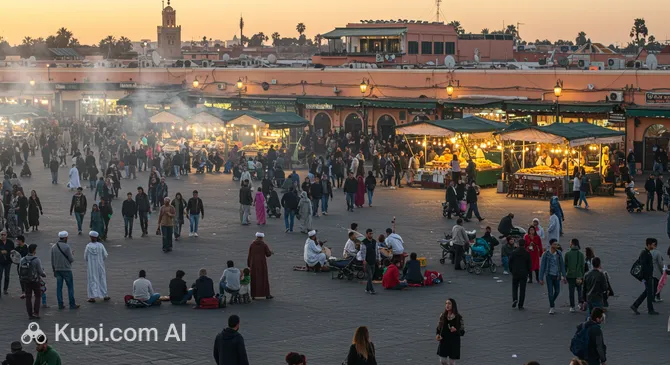
Jemaa el-Fnaa. Illustration.
Source: Kupi.com AI

Traveller photos:

During the day, the square may seem relatively calm: you can find vendors selling spices and fresh orange juice, and see snake charmers with their mesmerizing performances. However, at sunset, Jemaa el-Fnaa transforms beyond recognition. It turns into a massive open-air restaurant, filled with smoke from grills, the aromas of cooking food, and the roar of thousands of voices.

In the evening, the square becomes a stage for countless street performers: Gnawa musicians, acrobats, tellers of ancient tales, dancers, and fortune tellers. The air fills with the rhythms of drums and the sounds of traditional instruments, creating a unique and truly magical atmosphere. A visit to Jemaa el-Fnaa is a total immersion into a kaleidoscope of sounds, smells, and sights that leaves an unforgettable impression on every traveler.

Contacts

Jemaa el-Fnaa is an open public square in the heart of the Marrakech medina, so it does not have a single official address or information telephone number. The square is the city's main landmark and can be reached from any part of the city by taxi or public transport; for example, bus route No. 14 stops nearby. Any local resident or driver will easily show you the way to this famous spot.

How to contactContact
AddressMarrakesh 40000, Morocco

What to Do

A visit to Jemaa el-Fnaa is an immersion into a kaleidoscope of experiences available from morning until late at night. During the day, and especially in the evening, the square fills with street performers who create the unique atmosphere of a living theater. Here you can see mesmerizing performances by snake charmers, acrobats, Gnawa musicians, dancers, and tellers of ancient Berber legends. The air is filled with the sounds of drums and traditional instruments, while numerous fortune tellers offer to reveal your destiny. This colorful and dynamic show is the heart of Marrakech's cultural life.

As the sun sets, Jemaa el-Fnaa turns into a massive open-air gastronomic market. Dozens of mobile kitchens and street cafes offer authentic Moroccan dishes. Travelers can enjoy the famous tagine, couscous, charcoal-grilled lamb, or the aromatic pastilla pie. Be sure to try the fresh-squeezed juices, especially the orange juice, and traditional oriental sweets sold at the many stalls.

In addition to entertainment and food, the square is a hub for crafts and trade. In the shops and markets adjacent to the square, you can purchase a variety of goods: from spices and textiles to leather goods, carpets, and unique handmade souvenirs. For those who want to understand the cultural significance of this place more deeply, the nearby Jemaa el-Fnaa Museum of Intangible Heritage is a must-visit. This museum tells the rich traditions and history of the square, which is recognized as a Masterpiece of the Oral and Intangible Heritage of Humanity by UNESCO.

Getting There

Jemaa el-Fnaa square is located in the heart of the historical Marrakech medina, making it easily accessible from most central districts. For many travelers, their introduction to one of the main cities of Morocco begins right here. If you are staying in a riad or hotel within the old city, the easiest and most pleasant way to reach the square is a walk through the colorful streets of the medina, which is an adventure in itself.

For those staying in more distant areas, the square can be easily reached by taxi or public transport. Tourist buses stop near the medina, which is also a convenient option. Local taxi drivers know the place perfectly, so you just need to say Jemaa el-Fnaa, and you will be taken to one of the medina entrances, from where the square is just a few minutes' walk away. Bus No. 16 also passes near the square.

An excellent landmark for finding the square is the tall minaret of the Koutoubia Mosque, visible from almost anywhere in central Marrakech. It is located in the immediate vicinity of Jemaa el-Fnaa and serves as a beacon for tourists, helping them avoid getting lost in the labyrinth of narrow streets. Moving toward the minaret, you will easily find your way to the city's main cultural hub.

Nearest city: Marrakech

History & Facts

The history of Jemaa el-Fnaa is shrouded in mystery, and the exact date of its founding remains unknown. It is believed to be almost as old as Marrakech itself, which was founded in the 11th century. The square's name causes no less debate and has several translated versions. One is "the square without a mosque," which may point to an unfinished project to build a large temple in the 16th century. Another, darker interpretation is "the assembly of the dead" or "the square of severed heads." This is due to the fact that public executions and slave trading were held here until the 19th century.

Over the centuries, Jemaa el-Fnaa has remained the heart of the city's social and cultural life. By the early 20th century, when Marrakech's population was around 75,000, it was already considered its main center. It was not only a place for trade but also a stage for all kinds of performances, gatherings, and important events. The square has always been a living organism reflecting the spirit and traditions of Morocco.

The architectural appearance and economic significance of the square also emphasize its central role. Nearby rises the famous minaret of the Koutoubia Mosque, built in the 12th century, which serves as the city's main landmark. In the 20th century, highlighting Jemaa el-Fnaa's growing importance as a business center, one of the first branches of the State Bank of Morocco opened here. Thus, the history of the square is the history of the city itself, where trade, culture, and daily life merge into one.

Time Needed

To fully experience the unique atmosphere of Jemaa el-Fnaa, it is recommended to set aside 2 to 4 hours for your visit. This will be enough time to leisurely stroll across the area, watch the daytime street performances, try fresh-squeezed orange juice, and soak in the overall flavor of this incredible place. In a couple of hours, you can get a general impression and take some memorable photos.

However, to see the full diversity of life on the square, it is worth planning a visit for the afternoon and staying until late evening. As the sun sets, Jemaa el-Fnaa completely transforms: numerous street cafes and restaurants appear, the air fills with the aromas of cooking, and the number of musicians, storytellers, and acrobats increases significantly. If you want to not only watch the performances but also dine at one of the temporary stalls while enjoying authentic Moroccan cuisine, you should allow for more time—perhaps even an entire evening. Many travelers believe that it is the evening hours that reveal the true magic of this place.

Working Hours

Jemaa el-Fnaa is an open public space, so it has no strict opening hours. The square is accessible 24 hours a day, year-round, and no tickets or reservations are required for entry. This allows travelers to freely explore the heart of Marrakech at any convenient time.

However, keep in mind that life on the square changes throughout the day. The main action, which draws thousands of people, unfolds as evening falls and continues until late at night—this is when street performers and musicians gather, and the famous food courts open. If you want to see Jemaa el-Fnaa in all its bustling glory, it's best to plan your visit for the evening. During the day, the atmosphere is more relaxed, making it suitable for a leisurely stroll and meeting the vendors.

Nearby

Visiting Jemaa el-Fnaa is an unforgettable experience, but a trip to Marrakech would be incomplete without exploring its immediate surroundings. The labyrinth of narrow streets branching off from the square hides many treasures: from bustling traditional markets and ancient mosques to cozy restaurants and quiet gardens. Walking through these areas allows you to dive deeper into the medina's atmosphere and see different facets of city life.

Just a few minutes' walk from the main square, you can find iconic attractions that will enrich your impressions and help you better understand the history and culture of this amazing place. Each has its own unique character and offers a special perspective on the rich heritage of Marrakech.

NameDistance
Souk Semmarine0.2 km
La Pergola0.3 km
Le Bistro Arabe0.3 km
MK Rooftop0.3 km
Koutoubia Mosque0.5 km
Le Jardin Secret0.5 km
Dar Si Said Museum0.6 km

Reached the bottom of the page?

Looks like you know this route inside out