Support

BaB Nouader

About

The majestic Bab Nouader gates (also known as Bab Nouader or Bab Rouah) are one of the main symbols of the ancient medina in the city of Tetouan. Built at the end of the 15th century, they served as an important defensive and ceremonial entrance to the old city. This site embodies the unique heritage left by Andalusian refugees, who brought the exquisite Moorish style to the architecture of Morocco.
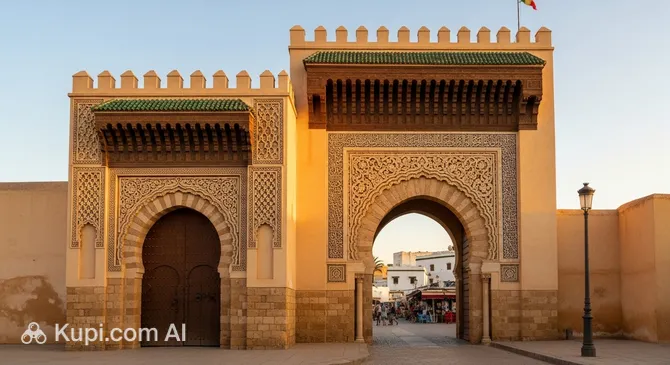
Bab Nouader
Bab Nouader. Иллюстрация. Источник: Kupi.com AI

The construction of the gate is striking in its massiveness and elegance at the same time. The snow-white walls, characteristic of the "white dove" (as Tetouan is often called), are combined here with traditional arches and elements of medieval fortification. Bab Nouader is not just a historical object, but part of a living monument listed as a UNESCO World Heritage site.

Today, these gates are considered a popular photo spot and a starting point for many tourist routes. Travelers appreciate them for their authenticity and the opportunity to instantly transport themselves from the modern city into the atmosphere of the Arab Middle Ages, where artisan workshops and fragrant markets are hidden behind every turn.

Contacts

To easily find these famous gates, use the address provided below. We recommend saving the coordinates in your navigator, as the streets of the old city can be quite confusing.

The site is open to the public, so official phone numbers or booking websites are usually unavailable.

How to contactContact
AddressТетуан, Марокко

What to Do

Start your acquaintance with Bab Nouader with a detailed inspection of the architecture: note the decorative elements of the arch and the massive fortifications that protected the residents for centuries. This is an excellent spot for atmospheric photos, especially against the dazzling white walls that contrast with the blue Morocco sky.

Passing through the gate, you will find yourself in the heart of the medina. This is a great place for some artisan shopping: in the immediate vicinity are shops where craftsmen hand-make carpets, ceramics with traditional patterns, and leather goods. Don't miss the chance to watch the work process—Tetouan artisans are famous for their skill throughout the country.

Gastronomic experiences also won't keep you waiting. Cozy cafes operate near the gate, serving classic Moroccan tajine, couscous, and refreshing mint tea. Immersing yourself in the daily life of the locals, the hustle and bustle of the market, and the sounds of the calls to prayer create that very feeling of the "real" East for which it is worth visiting Tetouan.

In the evening, the gates are effectively illuminated, taking on a mysterious and romantic appearance. A stroll at dusk will allow you to see the landmark in a completely different light and enjoy the cool air that descends on the old city after a hot day.

Getting There

The most convenient way to reach the historical center where the Bab Nouader gates are located is from Tangier Airport (TNG). The journey by taxi or regular bus takes about an hour (the distance is approximately 60–100 km depending on the route). If you are already in Tetouan, you can use local taxis (grand taxi or petit taxi), asking to be dropped off at the bus station or the Ensem Hotel.

From the country's major metropolises, such as Casablanca or Rabat, it is convenient to take a train to Tangier and then transfer to comfortable buses operated by CTM or Supratours. The bus ride from Tangier to Tetouan takes about 2–3 hours. Since the medina is a pedestrian zone, the final part of the journey must be done on foot, allowing you to fully enjoy the authenticity of the local alleys.

For those who prefer to travel by rental car, there are parking zones near the boundaries of the old city. The coordinates for the entry point are easily found on Google Maps, which will help you not miss the correct turn to Bab Nouader among the white walls of the medina.

Ближайший город: Tetouan

History & Facts

The history of this site dates back to antiquity: as early as the 3rd century BC, the settlement of Tamuda existed here, having seen the times of Carthage and Rome. However, the modern appearance of Bab Nouader and the entire medina began to take shape only at the end of the 15th century. After the fall of Granada in 1492, a flood of refugees—Muslims and Jews from Andalusia—arrived here, rebuilding the city, which had been almost completely destroyed by the Castilians a century earlier.

In the 14th century, Sultan Abu Thabit of the Marinid dynasty reinforced the city as a military outpost, and the gates became an integral part of a powerful defensive system. It was the Andalusian influence that gave the gate's architecture the refinement we see today. The combination of austere fortification and Moorish aesthetics makes them a unique monument of the Reconquista era.

Interestingly, Tetouan was often called "Little Jerusalem" because of its significant Jewish community. For centuries, the Bab Nouader gates served not just as an entrance, but as a portal through which European craft traditions and architectural styles entered Morocco, creating a unique cultural melting pot.

During the Spanish protectorate (20th century), the city was an administrative center, which also left a mark on the appearance of the adjacent neighborhoods. Today, the gates are witnesses to Tetouan's long journey from Phoenician times to its recognition as a UNESCO World Heritage site.

Time Needed

Tourists usually need 1 to 2 hours to leisurely inspect the structure of the Bab Nouader gate itself, take memorable photos, and peek into the first few shops located right behind the arch. This time is quite sufficient for an introductory visit.

If you plan to use these gates as a starting point for a deep exploration of the entire medina, you should set aside at least 3–4 hours for the walk. Tetouan's narrow labyrinths are full of surprises, and you will likely want to linger at the artisans' workshops or spend time in one of the local cafes, watching life go by in this historic district.

Working Hours

As an element of urban architecture, the historical Bab Nouader gates are available for viewing daily and 24/7. However, the best time to visit the surrounding markets and shops in the medina is from 09:00 to 22:00. This is when the area fills with life, and workshops and cafes open.

Although the site is a public space, the operating hours of nearby establishments may change on holidays or during religious events. We recommend checking information on the city's official tourism resources before planning your visit.

09:00–22:00

Nearby

Being at the Bab Nouader gate is just the beginning of your acquaintance with the treasures of the old city. Exploring the surrounding streets will allow you to see how closely history and modernity are intertwined in this amazing place.

Very close by are other historical entrances to the medina and iconic buildings that create the unique architectural ensemble of Tetouan. Pay attention to the following sites:

NameDistance
Feddan Square0.2 km
Bab Tut0.3 km
Place Moulay El Mehdi0.3 km
Archaeological Museum of Tetouan0.5 km
El Reducto Riad Restaurant0.5 km
Mechouar Square0.6 km
Royal Palace of Tetouan0.7 km

Reached the end of the page?

That means the route is fully explored