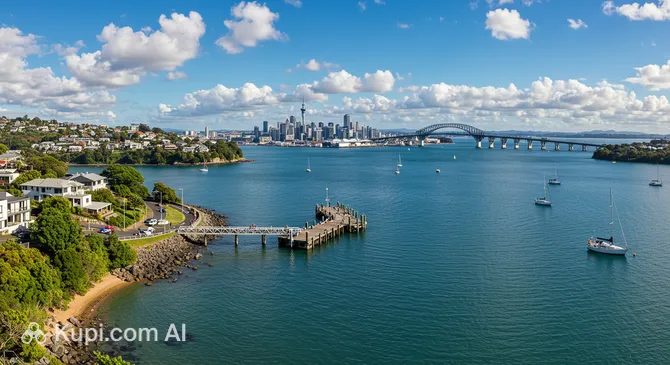
Northcote is a cozy and picturesque suburb of Auckland, located on the northern shore of the Waitemata Harbour in New Zealand. This area harmoniously combines the atmosphere of a quiet residential suburb with a rich historical heritage dating back to the mid-19th century. With a population of about 11,500, Northcote attracts visitors with its proximity to the city center and magnificent panoramic views of the harbor and the famous Auckland Harbour Bridge.
Northcote. Illustration.
Source: Kupi.com AI
The area's geographical position on the Northcote Point peninsula makes it both strategically important and visually stunning. Here, historic villas stand alongside modern apartments, creating a unique architectural character. The district is divided into a residential zone and the Northcote Central commercial hub, which serves as the heart of the local community.
For tourists, the town is primarily interesting for its walking trails along the coastline and unique volcanic maars. Despite the lack of loud attractions, Northcote offers an authentic experience of New Zealand suburban life with excellent transport links. We invite you to take a stroll through its quiet streets and enjoy the sunset overlooking the Auckland skyline.
Weather Overview
The weather in Northcote is shaped by its coastal position and temperate maritime climate. Thanks to its proximity to the Waitemata Harbour, temperature fluctuations are moderated: summers offer pleasant warmth without extreme heat, while winters remain mild, albeit accompanied by frequent rain. If you are interested in learning more, you can explore the city's climate in greater detail.
The summer season (December–February) is the most popular time to visit, with average high temperatures staying around 22–23°C. In winter (June–August), the air warms up to 14–15°C, and nighttime temperatures rarely drop below 10°C. Expect warm summers with occasional refreshing showers and damp, windy winters when the ocean breeze becomes particularly noticeable.
Rainfall is distributed fairly evenly throughout the year, but July and September are traditionally considered the wettest months. The peninsula's terrain facilitates good air circulation, making walks pleasant even in overcast weather. When planning your trip, follow the locals' lead: the principle of layering clothes is relevant here at any time of year.
Average monthly temperature
Average monthly precipitation
Interesting Facts
The early Maori name for this area is Onewa, which translates to "divided land." The district received its current name in the 1880s in honor of the British politician Sir Stafford Northcote.
Before the famous harbor bridge was built, Northcote was linked to central Auckland by a regular ferry service starting in 1854, making it one of the first residential settlements on the North Shore.
In 1959, the Northcote Shopping Centre opened here—Auckland's first shopping center built in the ultra-modern mall style of the time, shortly after the opening of the Harbour Bridge.
Historically, the area was a center for horticulture; from 1849, fruit and strawberries were grown here on an industrial scale, supplying fresh berries to the growing city of Auckland.
Northcote's landscape includes ancient volcanic maars—craters formed by eruptions, which are typical of the unique geology of the Auckland volcanic field.
How to Get There
Northcote boasts excellent transport accessibility, serving as a sort of northern gateway to Auckland. The primary route into the area is via the famous Auckland Harbour Bridge. If you are planning a trip, detailed route information will help you choose the best way to get around.
For those arriving from further away, the nearest major hub is Auckland Airport, located approximately 25–30 kilometers away. A taxi or shuttle ride takes about 40 minutes, though travel time can increase significantly during peak hours due to traffic on the bridge.
Within the region, it is convenient to travel using the AT (Auckland Transport) bus system. Regular services connect Northcote Central with the Auckland Central Business District (CBD) and other parts of the North Shore. While there is no train station in Northcote itself, the bus service compensates for this perfectly, offering fast routes via dedicated bus lanes.
Station
Passenger traffic
Distance
Waitematā railway station
9
5 km
The Strand Station
5
6 km
Hamilton railway station
2
119 km
Waro railway station
2
141 km
Te Maunga railway station
1
164 km
Main Attractions
While Northcote is not a major tourist hub filled with monuments, it possesses its own quiet charm. One of the main points of interest is the Northcote Point peninsula. It offers some of the best views of the Auckland Harbour Bridge and the skyscraper-filled skyline of central Auckland. It is an ideal spot for evening walks and photo shoots against the backdrop of the Waitemata Harbour.
Another important landmark is Northcote Central. This is more than just a shopping area; it is the heart of the community where you can feel the rhythm of local life. Numerous cafes and shops here reflect the district's cultural diversity. For architecture enthusiasts, the historic villas preserved in the older part of the suburb offer a glimpse into the lives of the first settlers on the North Shore.
The area's natural beauty is best represented by the Shoal Bay coastal zone. This spot is popular among hikers and birdwatchers. The bay's tidal flats create a unique landscape that changes several times a day, offering visitors a peaceful retreat away from the hustle and bustle of the large metropolis.
Local Cuisine
The culinary scene in Northcote is a vibrant reflection of New Zealand's overall gastronomic diversity. Seafood (kaimoana) holds a special place in the local diet. The proximity to the harbor has historically shaped the local menu, ranging from freshly caught fish to shellfish, which were harvested here as far back as the era of the Maori tribes.
The Northcote Central area features many establishments offering dishes for every taste. Be sure to try the classic New Zealand version of fish and chips or traditional meat pies with rich fillings. For dessert, you will often find treats featuring fresh fruit and berries, a nod to the area's horticultural past.
The coffee culture in Northcote is excellent, with local cafes opening early in the morning to offer fresh pastries and craft beverages. In the evenings, residents prefer to gather in international restaurants—ranging from Asian eateries to cozy bistros with European menus. The atmosphere in these establishments is usually laid-back, perfect for a long meal with family or friends.
Travel Tips
Welcome to Northcote! To ensure your introduction to this charming Auckland suburb is perfect, we have prepared a few practical tips.
Clothing and Essentials: The weather in New Zealand is changeable. Even in summer, bring a light jacket and be sure to use sunscreen with a high SPF—the sun here is very strong. Comfortable shoes are a must for coastal walks.
Transport: The most convenient way to get around is by AT buses. Be sure to buy an AT HOP card as soon as you arrive—it will save you a lot of time and money.
Finances: The official currency is the New Zealand Dollar (NZD). Cards are accepted almost everywhere, even in the smallest cafes, but having a small amount of cash on hand doesn't hurt.
Health and Safety: The area is very quiet and safe. If needed, pharmacies and medical centers can be found in Northcote Central.
Communication: The primary language is English. Wi-Fi is available in most cafes and the shopping center, but for navigation, it is better to purchase a local SIM card.
Local Etiquette: New Zealanders (Kiwis) are very friendly. It is customary to greet the driver when boarding a bus and say "Thank you!" when getting off.
What to Avoid: Do not leave litter in parks or on beaches—locals are very protective of the environment. Try not to plan trips across the bridge during peak rush hours (weekday mornings and evenings).
Extra Tip: Be sure to visit the historic Bridgeway Cinema—it is a great way to feel the atmosphere of "old" Auckland.
Enjoy your stay in Northcote, and may this place give you the warmest memories of New Zealand!
Entertainment & Nightlife
Entertainment in Northcote is generally quiet and family-oriented. The district's main cultural gem is the historic Bridgeway Cinema, built in the 1920s. This iconic venue allows you to watch both modern hits and arthouse films in a cozy, almost domestic setting that has preserved the charm of a bygone era.
For those seeking lively bars and nightclubs, locals usually recommend heading to nearby Takapuna or crossing the bridge to reach central Auckland. In Northcote itself, evenings are best spent in one of the local pubs or restaurants in the Northcote Point area, where the crowd values quality conversation and good food without excessive noise or fuss.
Daytime entertainment revolves mainly around outdoor activities. Walking along coastal paths and picnicking in local parks are favorite pastimes for both residents and visitors. Safety in the area is high, allowing for enjoyable evening walks along illuminated waterfronts while admiring the lights of the big city on the other side of the harbor.
Parks & Museums
The green spaces of Northcote are its pride and joy. Stretching along the coast are the Shoal Bay recreation areas and parks near Ocean View Road. These spots are perfect for leisurely strolls, morning jogs, or quiet picnics overlooking the yacht masts in the harbor. The terrain's volcanic features give the parks a unique look, and the abundance of trees provides pleasant shade on sunny days.
There are no major museums within the suburb itself, as the area historically developed as a residential and agricultural hub. However, the peninsula itself can be called an open-air museum: many colonial-era buildings and plaques telling the story of the early settlement have been preserved here. Locals carefully maintain this heritage, which is evident in the architecture of the old quarters.
For those seeking classic museum exhibits, the Auckland War Memorial Museum and various art galleries are just a ten-minute drive across the bridge. Northcote remains a place where nature and history intertwine in the silence of coastal gardens and cozy squares, offering guests a peaceful outdoor getaway.
Getting Around
The public transport system in Northcote is tightly integrated into Auckland's wider network, managed by AT (Auckland Transport). Buses are the primary mode of transport here. Thanks to dedicated bus lanes on the main roads, they allow for quick travel to central Auckland even during peak hours when traffic on the Harbour Bridge can be slow.
Fares are paid using the universal AT HOP card, which can be purchased and topped up at Northcote Central or online. Using the card is significantly cheaper than buying single-trip tickets from the driver (which are also not accepted on all routes). When boarding and exiting the bus, you must tap your card on the validator (the tag on / tag off system) to ensure the correct fare is calculated.
For those who prefer alternative ways to get around, Northcote is a very convenient area for walking and cycling due to its compactness. Taxis and popular ride-sharing services are available 24/7. However, keep in mind that since the area relies on the harbor bridge, it is best to allow a little extra time for important trips to the airport or the city center.
Accommodation
Accommodation in Northcote is mainly geared toward those who prefer a quiet, home-like atmosphere or are looking for long-term stay options. The area is dominated by cozy apartments, guest houses, and traditional New Zealand villas, which are often available for rent through popular online services.
For budget travelers and nature lovers, the Auckland North Shore Motels & Holiday Park is an excellent option. This site offers both classic motel rooms and camping sites, which is a rarity for areas located so close to the center of a major city.
If you plan to visit during the peak season (December–February), it is recommended to book your accommodation in advance. Rates here may be slightly lower than in central Auckland, while offering the advantages of peace and quiet and beautiful harbor views. For those seeking luxury five-star hotels, the best solution is to stay in the Auckland CBD and visit Northcote for day trips.
Nearby Cities
Due to its location on the North Shore, Northcote serves as an ideal starting point for exploring the Waitemata Harbour surroundings and the country's northern regions. Just 6 kilometers away is Auckland—the country's largest metropolis, home to the Sky Tower, world-class museums, and the vibrant Viaduct Harbour waterfront.
For those who want to swap urban landscapes for natural beauty, a trip to Waitakere is a great choice. This area is famous for its ancient forests and wild black-sand beaches on the west coast. It is also worth visiting Manukau, where you will find the famous botanical gardens and major theme parks.
Exploring the areas around Northcote allows you to see both modern skyscrapers and New Zealand's untouched nature in a single day. We recommend taking a ferry or renting a car to fully appreciate the diversity of this amazing region.
Shopping & Souvenirs
Shopping in Northcote is primarily focused on daily needs and offers an authentic local experience. The main shopping hub is the Northcote Shopping Centre. This historic site is interesting because it was one of the first modern-style shopping centers in the region. Here you will find large supermarkets, pharmacies, and essential goods stores, as well as small shops selling items from all over the world.
If you are looking for unique souvenirs or local handicrafts, it is worth checking out the small boutiques scattered around the Northcote Point area. You can often find artisan ceramics, jewelry, or decor items that make great mementos of your trip. However, for large-scale brand shopping, travelers usually head to the malls in neighboring Takapuna or the boutiques of central Auckland.
Shops in Northcote typically operate from 9:00 AM to 5:30 PM or 6:00 PM, while large supermarkets are open until late evening. Bank cards are accepted everywhere, and tipping culture in New Zealand is not mandatory, though it is always appreciated for exceptional service. If you are planning significant purchases, remember that there is no Tax-Free system in the traditional European sense, but prices in shops already include the Goods and Services Tax (GST).