Support

Raufoss

Attractions

About

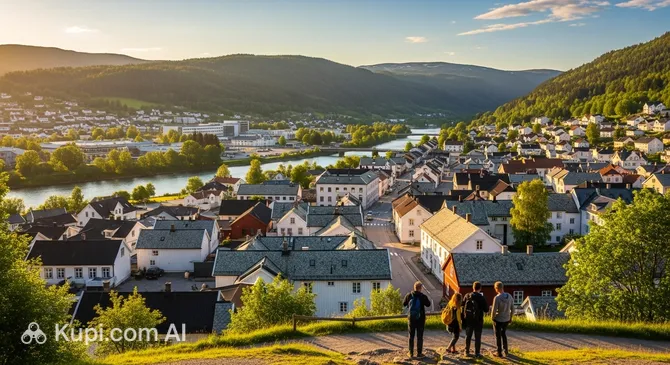
Raufoss is a lively administrative center of the Vestre Toten municipality, located in the picturesque Innlandet region. Despite its relatively modest size, with a population of about 6,700, this town plays an important role in the industrial life of Norway. Here, high technology, industrial heritage, and the cozy atmosphere of a Scandinavian settlement intertwine in a surprisingly harmonious way.

Raufoss. Illustration.
Source: Kupi.com AI

The unique history of Raufoss has transformed it from a traditional factory settlement into the location of one of the country's largest industrial parks. It is a town that has managed to adapt to modernity while maintaining respect for its past and the environment.

One of the main points of attraction for tourists is Totenbadet — a popular water complex considered one of the best water parks in the region. It is an ideal place for a family vacation, offering artificial wave pools, slides, and relaxation zones. Nature lovers will also find plenty to do: the town is surrounded by dense forests and hills with scenic hiking trails.

Raufoss is an excellent stop for travelers exploring the country's inland regions, offering a comfortable stay and a glimpse into authentic, non-touristy Norwegian life.

Weather Overview

The climate in this region is typical for Norway's inland areas: all four seasons are clearly defined, each giving the town a special atmosphere. Winters are usually snowy and frosty, while summers are moderately warm and comfortable for active recreation. If you are interested in a detailed weather in Raufoss for specific dates, keep in mind that conditions can change, but general seasonal trends remain stable.

In the winter months, from December to February, the average temperature stays in the range of -5°C to -7°C, sometimes dropping to -9°C. This is a time of true Scandinavian winter. Spring arrives gradually: while frosts are still felt in March, by May the air warms up to an average of +9°C, marking the beginning of the warm season.

Summer here is mild, without exhausting heat, which is perfect for long walks. July is considered the warmest month, when daytime temperatures reach a comfortable +19.5°C. However, be prepared for precipitation: even in summer, rain is not uncommon, and the number of wet days varies from 13 to 15 per month. Autumn brings the chill, and by November the temperature drops below zero again.

Expect moderately warm summers with occasional rain and cold, snowy winters that create the perfect backdrop for a cozy evening after a walk.

Average monthly temperature

Average monthly precipitation

Interesting Facts

Raufoss is not just a point on the map, but a place where history and technology create a unique context. In addition to its main attractions, the town holds several fascinating secrets that will surprise even seasoned travelers.

  • From matches to high technology. The history of the local industrial giant didn't begin with the production of ammunition or aluminum parts, but with the manufacture of ordinary matches. In 1873, the Rødfos Tændstikfabrik factory was founded here, and only decades later did the production profile change drastically, predetermining the town's fate.

  • A connection to space. It's hard to believe, but this small town makes a significant contribution to space exploration. Local high-tech enterprises develop and produce components for the European Ariane rocket family, strengthening the position of Norway in the aerospace industry.

  • A football phenomenon. Locals are known for their incredible dedication to sports. The town's football club, Raufoss IL, regularly competes in the top divisions, going head-to-head with teams from major metropolitan areas—a true achievement for a settlement with such a modest population.

How to Get There

When planning a trip to this cozy corner of the Innlandet region, it is important to think through the logistics in advance. You can find more details on how to get to Raufoss by studying various routes and types of transport. The town has good transport accessibility due to its proximity to the capital region.

The most convenient way for international tourists to get to Raufoss is by air. The nearest major hub is Oslo Airport Gardermoen (OSL), located near Oslo. This is the country's main gateway, receiving flights from all over the world. The airport is about 65 km from Raufoss, making the transfer quick and easy: a car or bus trip will take about 1–1.5 hours.

Alternatively, you could consider Sandefjord Airport Torp (TRF), which also serves the capital region but is much further away—about 173 km. This airport is often chosen by travelers flying with low-cost airlines. The journey from here to Raufoss will take more time, approximately 2.5–3 hours by taxi or rental car.

For clarity, here is a summary of the main airports you can use to reach the region:

AirportPassenger trafficDistance
Oslo Airport Gardermoen26.4 mln65 km
Scandinavian Mountains Airport25 000130 km
Torp Sandefjord Airport1.9 mln173 km
Sogndal Airport91 145195 km
Karlstad Airport20 607208 km

Rail travel is another popular way to get around Norway. If you arrive in the capital, the key transfer point will be Oslo Central Station (XZO). It is located in the center of Oslo, about 64 km from Raufoss. Trains regularly depart from this station in a northerly direction, passing through the Toten region.

It is also worth mentioning the Nationaltheatret station (ZZN) located in Oslo. While Raufoss has its own railway station on the Gjøvikbanen line, many long-distance routes begin at the major capital hubs, from which you can comfortably reach your destination.

Below is information about the nearest major railway hubs:

StationPassenger trafficDistance
Oslo Central Station54.8 mln64 km
Nationaltheatret Station14.6 mln91 km
Leksand Railway Station239 km
Borlänge Railway Station800 000265 km
Falun Central Station275 km

Main Attractions

The small but dynamic town of Raufoss offers guests an interesting mix of active recreation, cultural monuments, and scenic nature. Despite its compact size, there are places here that attract travelers from across the Innlandet region and other corners of the country.

The undisputed gem of the town and a magnet for families with children is Totenbadet. This is one of the largest and most popular water parks in the country's interior. The complex is famous for its "tropical" atmosphere: the air temperature is maintained at +32°C year-round, and the water at +35°C. Visitors can enjoy artificial wave pools, exciting water slides, relaxing jacuzzis, and areas for the little ones. It is the perfect place to take a break from the Norwegian chill and enjoy some water fun.

History and architecture enthusiasts should visit Raufoss Church (Raufoss kirke). This majestic brick building was consecrated in 1939 and is a beautiful example of church architecture from that era. Designed by architect Henry Bucher, the church features strict lines and a beautiful interior with stained glass windows. It serves not only as the spiritual center of the community but also as an important cultural monument reflecting the town's development in the 20th century.

For those who prefer outdoor activities, a walk through Raufosskogen Sport & Fritidspark (Raufosskogen Sport & Leisure Park) is an excellent choice. This is a vast green area featuring not only sports facilities but also picturesque hiking trails. In winter, the ski center with the Lønnberget ski jumps comes to life, while in summer, the park turns into a cozy spot for picnics and active outdoor games, allowing you to feel the true sporting spirit of Norway.

Local Cuisine

Raufoss cuisine is inextricably linked to the rich gastronomic traditions of the Toten region, which Norwegians themselves often call the "country's vegetable garden." This area is famous for its fertile soil, so the local diet is based on high-quality root crops and vegetables. The king of the table here is the famous Toten potato, which is served with almost any hot dish.

If you want to try something truly authentic, be sure to ask at local bakeries for Totenkringla. This is a traditional local pretzel, which is a hallmark of the region. For lunch, it's worth ordering classic kjøttkaker (meatballs) in a thick brown gravy or moose dishes. The forests around the town are rich in game, so moose meat is prepared excellently here—usually as steaks or in a hearty stew.

As for drinks, the region is famous for the production of aquavit. This strong Scandinavian spirit is made from potato alcohol with the addition of caraway and other spices, which perfectly fits the agricultural profile of the area. Among non-alcoholic drinks, locals prefer coffee, which they drink in large quantities at any time of day, as well as berry juices made from forest berries.

The food culture in Raufoss is characterized by modesty and a casual nature. It is not common to hold lavish feasts in expensive restaurants. Locals and tourists prefer cozy cafes in shopping centers or traditional roadside taverns ("kro"), where portions are large and the atmosphere is homey. These are ideal places to have a quick and tasty snack after visiting the water park or walking in the forest.

Travel Tips

Raufoss is a quiet and safe town where it's comfortable to relax with the whole family, but even in such a cozy place, there are some nuances. To ensure your trip goes smoothly, we've prepared a list of practical recommendations to help you feel confident in this corner of the Innlandet region.

  1. Clothing and essentials. The weather here is changeable, so the layering principle is your best friend. In winter, thermal clothing, a windproof jacket, and sturdy shoes with thick soles are essential. In summer, even if the forecast promises sun, always bring a light raincoat or windbreaker. And, of course, don't forget your swimwear—without it, a visit to the famous Totenbadet water park will be impossible.
  2. Transport. Raufoss is quite compact, and its center is easy to explore on foot. Public transport is represented by Innlandstrafikk buses and trains, which are convenient for trips to Oslo or neighboring Gjøvik. If you plan to explore the natural beauty of the surroundings, we strongly recommend renting a car, as many scenic spots are not accessible by bus.
  3. Finance. The official currency is the Norwegian Krone (NOK), but Norway is a country of triumphant cashless payments. Bank cards are accepted absolutely everywhere: on buses, at kiosks, and even at markets. Cash is practically unnecessary. Be prepared for high price levels for food and services. Tipping is not mandatory, but rounding up the bill in cafes is welcomed as a sign of politeness.
  4. Health and safety. Raufoss is a very safe town with a low crime rate; you can safely walk around at any time of day. Pharmacies (Apotek) are usually located in shopping centers and are closed on Sundays, so keep a basic set of medicines with you. Water can be drunk straight from the tap—it's pure and very tasty here.
  5. Communication. Almost all locals, from teenagers to the elderly, speak English fluently. For internet access, it's convenient to use Wi-Fi, which is available in most public places, or buy a prepaid SIM card (e.g., Telenor or Telia) at convenience stores like Narvesen. It's useful to download the Entur app for planning public transport routes throughout the country.
  6. Local etiquette. Norwegians value personal space and silence. In public places, it is customary to speak quietly. When entering a shop or bus, it's standard to greet with a short "Hei." Using the informal "you" is the norm even with strangers; extra formalities aren't common here, but politeness and restraint are mandatory.
  7. What to avoid. It is strictly not recommended to consume alcohol in public places (on streets, in parks)—this is prohibited by law. Also, don't plan to buy spirits or wine on a Sunday evening or late on a weekday evening: state Vinmonopolet stores close early, and regular supermarkets only sell light beer, and only until a certain hour.
  8. Sunday silence. Remember that on Sundays in Raufoss, as in all of Norway, almost all shops are closed, including large grocery supermarkets. Only small "duty" shops at gas stations and some restaurants are open. Plan your grocery shopping in advance, on Friday or Saturday.

By following these simple tips, you can avoid minor everyday inconveniences and fully focus on your vacation, enjoying the hospitality and steady pace of life in the Norwegian provinces.

Entertainment & Nightlife

Nightlife in Raufoss is characterized by a calm and steady rhythm, which is quite expected for a small industrial town. You won't find noisy discos or 24-hour clubs here, but the town offers several cozy locations to enjoy an evening after an active day. Most evening life is concentrated in the center, around the main street Storgata, where locals gather to socialize and relax.

The main attraction for those looking for a classic bar atmosphere is Retro Bar & Scene. This venue, which works in conjunction with the Retro Eatery restaurant, mainly comes to life on weekends. It regularly hosts live music concerts, themed nights, and performances by local bands. The interior is designed in a nostalgic style, perfect for leisurely conversations. It's a great platform to get to know the local music scene and feel the community spirit.

For a more gastronomic evening, Efesos Restaurant is a good choice. This popular establishment specializes in Mediterranean and Turkish cuisine and also offers a wide selection of pizzas. The restaurant is known for its casual atmosphere and hospitality. In the evenings, large groups of friends and families often gather here to enjoy a hearty dinner in a relaxed setting. It is one of those places where you can stay late talking over delicious food.

The cultural heart of evening leisure is Fyrverkeriet Kulturhus. This modern cultural center combines a cinema, a library, and a concert hall under one roof. The schedule here is quite diverse: from world cinema premieres to theatrical productions and concerts by famous artists touring Norway. If you prefer intellectual relaxation, be sure to check the event schedule at this center before your trip.

If you're looking for a more vibrant nightlife and a wider choice of venues, it's worth heading to the neighboring city of Gjøvik, located just a 10–15 minute drive away. The selection of bars, pubs, and night clubs there is significantly wider, and transport links between the towns are excellent.

A few useful tips for planning your evening:

  • Opening hours: Be prepared for many establishments to close fairly early on weekdays, around 22:00–23:00. Most of the fun happens on Friday and Saturday.
  • Alcohol: Prices for alcoholic drinks in establishments are high. Strong alcohol can only be purchased in specialized state stores called Vinmonopolet, which close early (usually at 18:00 on weekdays and 16:00 on Saturdays).
  • Transport: If you plan on returning late, check the night bus schedule in advance or save the number of a local taxi service, as catching a car on the street at night can be difficult.
  • Dress code: The style of dress in Raufoss venues is very free and casual. Comfort and neatness are valued more than fashion brands here.

Parks & Museums

Raufoss harmoniously combines industrial power and picturesque natural landscapes, offering tourists not only an immersion into the industrial history that Norway is famous for, but also excellent opportunities for outdoor recreation. Green areas here blend into forests, and cultural institutions carefully preserve the heritage of the Toten region.

The town's main recreational area is Raufosskogen Sport & Fritidspark (Raufosskogen Sport & Leisure Park). This is not just a park, but a real center of outdoor activity that attracts residents year-round. In winter, high-quality ski trails are laid out, leading to the Lønnberget ski jumps, while in summer, the forest trails become an ideal place for jogging and family walks. The park is surrounded by dense forest, creating a sense of complete seclusion with nature despite its proximity to the town center.

Just a few minutes' drive from the center of Raufoss is the unique Stenberg Park (Stenbergparken). This historic park in the English landscape style was laid out in the 19th century around the estate of a local official. Here you can walk along ancient alleys, admire centuries-old trees, and find cozy gazebos. The place breathes tranquility and an aristocratic past, making it a wonderful location for a leisurely promenade and photo shoots.

To get acquainted with the town's unique history, a visit to the Raufoss Industrimuseum (Raufoss Industrial Museum) is a must. Located in a historic building within the industrial park, the museum's exhibition tells the fascinating story of a small settlement's transformation into a high-tech center. You can learn how match production gave way to ammunition, and then to components for space rockets and cars. This is a key place for understanding the town's identity.

Another important cultural point is the Stenberg Open-Air Museum (Mjøsmuseet Stenberg). This is a branch of the regional Mjøsmuseet, representing a preserved 19th-century estate with period interiors and farm buildings. Visitors can peek into the houses where the amtmann's (governor's) family lived and see the life of ordinary peasants, providing a complete cross-section of the social structure of past centuries.

Modern cultural life thrives at Fyrverkeriet Kulturhus ("Fireworks" House of Culture). The name, which translates to "fireworks," refers to the town's explosive past associated with ammunition production. Today, this peaceful space unites a library, a cinema, and exhibition halls, where art exhibitions by local masters and touring exhibits reflecting the region's modern art trends regularly take place.

Insider tip: If you find yourself in the Stenberg area in the summer, don't miss the annual "Stenberg Day" celebration. On this day, the museum comes to life: volunteers in historical costumes demonstrate ancient crafts, bake bread in wood-fired ovens, and put on theatrical performances, transporting guests straight back to 1814.

Getting Around

The transport system in Raufoss is compact and efficient, typical of small towns in the Innlandet region. Since the town is small, there are no subways, trams, or trolleybuses. The backbone of public transport consists of buses and suburban trains, which provide stable connections both within the town and with neighboring settlements.

Bus service is regulated by the regional operator Innlandstrafikk. The route network is well-developed: modern and comfortable buses run on schedule, connecting residential areas with the industrial park, the shopping center, and the railway station. The most popular destination is the route to the neighboring city of Gjøvik—buses depart there frequently, making travel between the cities quick and convenient.

Raufoss Railway Station is an important transport hub on the Gjøvikbanen line. Trains from the Vy company depart from here regularly. This is an excellent option for tourists wanting to take a trip to the capital or simply enjoy the scenic views from the train window. The station is located right in the center of town, within walking distance of the main shops and hotels.

The fare payment system is highly digitized. The most convenient and profitable way to buy tickets is through the "Innlandstrafikk Billett" mobile app or the national planner "Entur." In the app, you can link a bank card and buy both single tickets and passes for 24 hours or a week. The fare depends on the number of zones crossed. Paper tickets can still be bought from the driver for cash, but this will cost significantly more due to an additional manual sales commission, so tourists are strongly encouraged to use the apps.

For getting around the town itself, transport is often not required: the center of Raufoss is very compact, and most attractions, including the water park, can be easily reached on foot in 15–20 minutes. If you need to reach remote natural locations or are traveling with heavy luggage, you can use taxi services. Taxi stands are usually located near the railway station, but it is more reliable to order a car by phone or through an app, as it's not customary to "hail" them on the street here.

In the summer, a bicycle becomes a pleasant alternative. Although there is no large automated bike rental system in the town, the flat landscape and calm traffic are conducive to independent cycling. Tourists should also remember that public transport runs less frequently in the evening and on weekends, so always check the current schedule in the Entur app before heading out to avoid a long wait.

Accommodation

Where to stay:

Raufoss is a small town, so the choice of accommodation here is quite limited, but it fully satisfies the needs of most travelers. The hotel stock consists not of large chain hotels, but of cozy guesthouses and apartments focused on functionality and comfort. You won't find luxury five-star resorts here; mid-range options prevail, which are great for families with children and transit tourists.

The most popular location for staying is the area near the town's main attraction—the Totenbadet water complex. Staying here means ensuring you are within walking distance of entertainment, which is especially convenient for family trips. Another convenient area is the town center (Sentrum) near the railway station. Living here allows you to be in the heart of things, close to shops, cafes, and transport hubs, from which it is easy to reach neighboring cities or the capital.

For those looking for a wider choice or a higher level of service, it makes sense to consider accommodation options in the neighboring city of Gjøvik, which is only a 10–15 minute drive away. However, if your goal is to visit the water park or the industrial museum, staying overnight directly in Raufoss will save time and allow you to enjoy the quiet of a provincial evening.

Booking tips:

Since there are few accommodation options, demand for them can be high, especially during school holidays and the summer season (July–August), when the flow of visitors to the water park is at its peak. It is recommended to book accommodation in advance, preferably several weeks before the trip. This not only guarantees availability but often allows you to get a better price.

Prices and booking methods:

The price range in Raufoss can be described as "average for Norway." There are practically no budget hostels here, nor are there luxury apartments. A standard double room will cost an amount typical for the Norwegian provinces. Booking is most convenient through major international online platforms where current prices and reviews are presented. However, for small guesthouses, it is sometimes more profitable to contact them directly by phone or through their own websites.

Nearby Cities

For those who want to explore the surroundings, Raufoss serves as an excellent starting point for day trips to several interesting nearby places. Thanks to its convenient location in the Innlandet region, it is easy to reach cultural and historical centers, each of which possesses its own unique charm.

Just half an hour's drive away is Hamar—a picturesque city on the shores of Lake Mjøsa. It is famous for its unique architectural sites: the ruins of a medieval cathedral covered by a glass dome (Domkirkeodden) and the "Vikingskipet" (Viking Ship) building, built for the '94 Olympics in the shape of an overturned drakkar. It's an ideal place for history buffs and those who enjoy waterfront strolls.

A little further, about 45 minutes away, is the famous Lillehammer. This city, which hosted the 1994 Winter Olympics, has preserved the atmosphere of a sporting festival and the charm of traditional Norwegian architecture. The main attraction here is the Maihaugen open-air ethnographic museum, which features historic buildings from all over the Gudbrandsdalen valley, as well as an impressive ski jump offering panoramic views of the surroundings.

If you are ready for a longer trip, you can head to the capital—Oslo. The journey takes about an hour and a half but allows you to dive into the rhythm of a big city, visit the Royal Palace, the Opera House, and numerous world-class museums.

CityPopulationDistance
Gjovik20 5898 km
Ringsaker35 07321 km
Moelv3 30023 km
Brumunddal11 01925 km
Hamar27 94726 km

These nearby destinations offer a glimpse into the diverse culture and landscapes of the region, making your trip through Norway even more fulfilling.

Shopping & Souvenirs

Shopping in Raufoss is calm and utilitarian, which is typical for small Norwegian towns. You won't find districts with luxury boutiques or huge outlets here, but the town's infrastructure fully covers travelers' needs. The range of local shops is focused on quality and functionality: here you can buy excellent sportswear, outdoor gear, and, of course, the famous local products that Norway is known for.

The heart of town trade is the main street—Storgata. Along this artery are small specialized shops, cozy cafes, and service points. A walk along Storgata allows you to combine shopping with a tour of the central part of the town. You can find pharmacies, home goods stores, and small clothing boutiques, which often feature Scandinavian brands known for their minimalist design and durability.

The main attraction for all shopping lovers is the AMFI Raufoss shopping center. This is a modern complex located in the center of town, bringing dozens of shops under one roof. It features popular chain clothing brands, electronics stores, bookstores, and supermarkets. AMFI also houses the state-run Vinmonopolet—the only place where you can buy spirits and wines. The shopping center is convenient because you can solve any everyday issues here, from buying groceries to updating your wardrobe, without having to go outside, which is especially valuable in cool weather.

There are no traditional permanent markets in the usual sense in Raufoss, but the Toten region is famous for its agriculture. During the harvest season (late summer and early autumn), temporary farmer stalls often appear in the central square or near shopping centers. Here you can buy fresh vegetables, strawberries, and forest berries directly from the producers. Holiday fairs are also organized leading up to Christmas, where local artisans sell knitted items and home-baked goods.

As souvenirs from Raufoss, it's worth bringing something related to the region's gastronomic traditions. Look out for potato chips from local brands—the Toten region is considered the country's potato capital, and the quality of this product here is top-notch. Other great gifts include traditional brown cheese (brunost), cloudberry or lingonberry jam, and warm wool socks or sweaters with classic Norwegian patterns to keep you warm on cold evenings.

Shops in Raufoss usually operate from 10:00 to 20:00 on weekdays and from 10:00 to 18:00 on Saturdays. Supermarkets may open earlier, around 07:00–08:00, and stay open until 23:00. It's important to remember that Sunday is a day off for most shops, including large shopping centers. Only small grocery stalls at gas stations and kiosks may be open. Payments everywhere are made primarily by bank cards; cash is accepted, but locals hardly ever use it. Contactless payment terminals are available even in the smallest kiosks.

Tourists living outside of Scandinavia can take advantage of the Tax Free system. If you make a purchase in a store marked with the Global Blue logo or similar for an amount over a certain threshold (usually around 315 NOK for regular goods), you are entitled to a partial VAT refund when leaving the country. Don't forget to ask for a special receipt (Tax Free form) at the checkout and present it along with your unopened purchases and passport at a refund point at the airport or border.
Reached the end of the page?

That means the route is fully explored