Support

Brumunddal

About

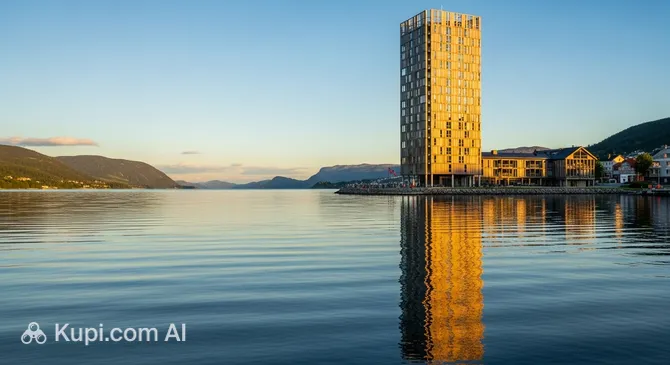
Brumunddal is a picturesque and cozy town located in the Innlandet region, near Lillehammer and in close proximity to the city of Hamar. It stretches along the eastern shore of Lake Mjøsa, the largest body of water for which Norway is famous. This corner combines the tranquility of provincial life with bold modern solutions, attracting travelers with its unique atmosphere and breathtaking landscapes.

Brumunddal. Illustration.
Source: Kupi.com AI

The town, with a population of about 11,000, stands at the mouth of the Brumunda River, making it an important geographical center of the district. Although it is a modern settlement today, the history of Brumunddal is inextricably linked to the development of the woodworking industry and agriculture. The climate here is humid continental: summers are usually warm and pleasant for walks by the water, while winters are snowy, creating fairy-tale views.

One of the main reasons to visit this town is the famous Mjøstårnet. This impressive wooden skyscraper held the title of the world's tallest wooden building until recently. Next to the tower is the popular Mjøsparken recreation area—an ideal place for strolling along the waterfront, swimming, and picnicking with a view of the water.

Brumunddal will make a wonderful stop on your journey. Here you can not only admire innovative architecture but also enjoy the silence of nature, breathe in the fresh air, and feel true Norwegian coziness.

Weather Overview

The climate in Brumunddal is characterized by distinct seasonal changes, typical for the Innlandet region. Summers here are moderately warm and pleasant for travel: the highest temperatures are seen in July, when the average is around +14.8°C, and daytime highs often reach +19.3°C. However, it's worth noting that the summer months are also the wettest—August, for example, has up to 16 days with precipitation.

Winter brings a true Scandinavian freshness. The coldest month is traditionally January, with an average temperature of -6.6°C, and night frosts can reach -8.9°C or lower. During this period, there is less precipitation by volume, but there are still many overcast days.

Spring and autumn serve as transitional periods: May already pleases with warmth up to +13.9°C, and by November the temperature drops below zero again. When planning your wardrobe, check the detailed weather in Brumunddal for your travel dates. Expect a moderately warm summer with occasional rain and cold, mostly dry winters.

Average monthly temperature

Average monthly precipitation

Interesting Facts

In addition to its main attractions, Brumunddal holds many fascinating secrets that reveal its character from an unexpected side. This town is a shining example of how industrial traditions can harmoniously intertwine with ecological innovation and gastronomic discoveries.

  • A World Record in Wood. The famous Mjøstårnet tower is known not only for its height (85.4 meters) but also for its materials. Local spruce was used in its construction, and engineers proved that wooden structures can be as reliable as concrete. Surprisingly, the massive wooden beams are designed to withstand fire even better than steel, which melts at high temperatures.

  • The Region's Gastronomic Showcase. Brumunddal is often called the "pantry" of the Innlandet region. In the town center is a unique space called Matfatet ("The Food Platter"), where the best products from local farmers are collected. Here you can taste authentic cheeses, meat delicacies, and seasonal vegetables grown on the fertile lands around Lake Mjøsa.

  • Fishing Within Town Limits. The Brumunda River, flowing through the town center, is a spawning ground for the famous lake trout (mjøsørret). In the autumn, you can witness an amazing sight: large fish swimming upstream right past the town's buildings, making the waterfront an excellent spot for nature watching.

  • Waterfront Transformation. Until recently, the picturesque waterfront was occupied by the old E6 highway and industrial zones, cutting residents off from the water. Moving the road and creating the Mjøsparken recreation area was one of the most successful urban planning projects in Norway, turning an industrial site into a favorite beach and skate park for thousands of people.

How to Get There

When planning a trip to this picturesque region of Norway, it is important to think through the logistics in advance. Brumunddal is conveniently located near the country's main transport arteries, making the journey here comfortable. You can find all the details on how to get to Brumunddal on a separate page, and below we will look at the key transport hubs through which tourists most often travel.

Brumunddal itself does not have its own airport, so most travelers arrive via the air gateways of the capital or neighboring regions. The most convenient and popular option is Oslo Airport Gardermoen (IATA: OSL). It is located near Oslo, approximately 77.5 km from Brumunddal. It is the country's largest international airport, receiving flights from all over the world. The journey from here to your destination will take very little time.

As an alternative, you can consider Sandefjord Airport Torp (IATA: TRF), which is also in the Oslo region but significantly further south—193 km from Brumunddal. Budget airlines often fly here. However, keep in mind that the transfer from this airport will take much more time—the trip will take several hours.

For clarity, here is a summary of the main airports:

AirportPassenger trafficDistance
Oslo Airport Gardermoen26.4 mln78 km
Scandinavian Mountains Airport25 000107 km
Roros Airport21 575190 km
Torp Sandefjord Airport1.9 mln193 km
Sogndal Airport91 145208 km

If you prefer land transport, the railway connection in Norway is excellent, and this is perhaps the best way to reach the town. The important Dovrebanen railway line passes through Brumunddal. Therefore, upon arriving at Oslo Central Station (IATA: XZO), located 76.7 km away, it is most convenient to transfer to a direct train heading north rather than taking a taxi. This is not only more comfortable but also allows you to enjoy the views from the window.

Another important hub is Nationaltheatret Station (IATA: ZZN) in Oslo, located 109.1 km from Brumunddal. Trains also regularly depart from here, connecting the capital with the Innlandet region.

Below is a table of the nearest major railway stations:

StationPassenger trafficDistance
Oslo Central Station54.8 mln77 km
Nationaltheatret Station14.6 mln109 km
Leksand Railway Station222 km
Borlänge Railway Station800 000249 km
Falun Central Station258 km

Main Attractions

Brumunddal offers guests a harmonious combination of active outdoor recreation, cultural discoveries, and an introduction to local traditions. The town and its surroundings are perfect for leisurely walks and family entertainment, leaving warm memories of a trip to this part of the Innlandet region.

Mjøsparken Park (Mjøsparken)

This large-scale recreation area on the shores of Lake Mjøsa is rightfully considered the pride of the town. The park attracts visitors not only with its picturesque beach and walking paths but also with excellent sports infrastructure. It features one of the most impressive skate parks in Norway, as well as basketball and petanque courts. Those seeking peace should visit the "Sensory Garden"—a specially created space with a variety of plants that engage the senses.

Prøysenhuset Cultural Center

Located in the wooded area of Rudshøgda, this museum complex is dedicated to the life and work of the famous Norwegian writer and balladeer Alf Prøysen. This place is ideal for a family visit: interactive exhibits immerse you in the world of fairy tales, and play areas keep children engaged. You can round off your tour in the cozy Kafé Julie, which serves traditional pastries and dishes prepared according to old recipes.

Matfatet Gastronomic Center

For foodies, a visit to Brumunddal would be incomplete without a stop at Matfatet. This unique venue in the town center combines a farmers' market and a deli. It showcases products from the region's best producers: from aromatic cheeses and cold cuts to fresh bread and jams. This is a great opportunity to experience the true taste of local cuisine and purchase edible souvenirs.

Tørudbakken Ski Center

In the winter season, Tørudbakken awaits travelers—a compact ski slope located just a few kilometers from the center. It lacks the hustle and bustle of major resorts, making it an excellent choice for beginners and families with children. The slope is equipped with a lift and an artificial lighting system, allowing for evening skiing.

Local Cuisine

The culinary traditions of Brumunddal are inextricably linked to the wealth of the Innlandet region, which is rightfully considered the "pantry of Norway." The fertile soils around Lake Mjøsa and advanced agriculture provide local chefs with first-class products, so the cuisine here is built on the "farm-to-table" principle, where the main focus is on the freshness and natural taste of the ingredients.

The main gastronomic symbol of the town is mjøsørret—the famous trout from Lake Mjøsa. This fish is known for its large size and tender meat, which often has a rich reddish hue. In local restaurants, it is prepared according to classic recipes: fried or baked, served with boiled young potatoes, cucumber salad, and a thick sour cream (rømme) sauce.

Travelers wishing to discover authentic tastes of the past should try pultost. This is a traditional soft cheese made from sour milk, generously seasoned with caraway seeds. It has a specific sharp aroma and a grainy texture. Locals eat it with flatbread, butter, and potatoes, or simply spread it on crispbread. This is a dish with character that leaves no one indifferent.

The summer season in Brumunddal is impossible to imagine without fresh berries. Local strawberries and raspberries are considered among the best in Scandinavia: thanks to the cool climate and long daylight hours, they ripen slowly, gaining incredible sweetness. The berries are served as a standalone dessert with cream or used as a filling for famous Norwegian waffles and cakes.

Among drinks, aquavit (akevitt) holds a special place—the national spirit infused with spices. The potatoes needed for its production are grown right here in the fields near the coast. For those who prefer non-alcoholic options, natural apple juices and ciders from farms on the nearby island of Helgøya, distinguished by their rich fruity bouquet, are an ideal choice.

The center of attraction for all gourmets is Matfatet—a unique space in the town center that combines a farmers' market and a cafe. Here you can not only purchase local delicacies as a souvenir but also have a full meal, enjoying dishes from the seasonal menu in a cozy atmosphere.

Travel Tips

A trip to Brumunddal promises to be peaceful and comfortable if you consider a few important nuances of local life in advance. We have gathered practical recommendations for you that will help avoid minor difficulties and plan an ideal trip to this cozy corner on the shores of Lake Mjøsa.

  1. Dress for the weather. The climate in the Innlandet region is continental, so the weather can be changeable. In summer, the principle of layering is essential: even on a sunny day, bring a windbreaker or a fleece jacket for evening walks by the water. In winter, you will need high-quality thermal clothing, a down jacket, and waterproof shoes with thick soles and good tread—it can be snowy and slippery.
  2. Getting around town. The center of Brumunddal is very compact and is most pleasant to explore on foot. For trips to the surrounding area, use buses from the local company Innlandstrafikk. We recommend downloading the Entur app—it is a universal route planner for all of Norway, where you can check schedules and buy tickets online, avoiding the need for change for the driver.
  3. Finances and payment. Norway is one of the countries that has almost completely abandoned cash. Cards are accepted everywhere: from hotels to tiny ice cream kiosks. Moreover, many establishments are "card only." You likely won't need Norwegian krone (NOK) in cash at all, so don't rush to exchange large sums.
  4. Health and safety. Brumunddal is a safe town where you can walk peacefully at any time. Pharmacies (Apotek) are usually located in shopping centers and close around 5:00–6:00 PM; there are no 24-hour pharmacies in the town, so it's best to have personal medication with you. You can drink water straight from the tap—it is pure and very tasty.
  5. Communication and language. Practically all locals speak English fluently, so you won't experience a language barrier. For mobile internet, it is convenient to buy a prepaid SIM card (e.g., Telia or MyCall) at convenience stores like Narvesen or 7-Eleven. Free Wi-Fi is available in most cafes, hotels, and on public transport.
  6. Local etiquette. Norwegians value personal space and silence. It is customary to keep your distance in lines or at stops. However, different rules apply in nature: if you are walking on the trails around Mjøsparken or in the forest, it is customary to greet passers-by with a simple and friendly "Hei!" (Hi), even if you don't know them.
  7. What to avoid. Do not try to buy wine or spirits in regular supermarkets—only beer is sold there until 8:00 PM (until 6:00 PM on Saturday). All drinks stronger than 4.7% are sold only in state-run Vinmonopolet shops, which close quite early and are not open on Sundays.
  8. Sunday opening hours. Remember that Sunday in Brumunddal is a "quiet day." Most shops, including grocery supermarkets and shopping centers, are closed. Only small convenience stores (Joker, Bunnpris), gas stations, and restaurants are open. Plan your shopping and grocery runs in advance.

Brumunddal is a place where modernity harmoniously intertwines with a leisurely pace of life. By following these simple tips, you will be able to feel confident and focus on the main thing—enjoying the magnificent views and Norwegian hospitality.

Entertainment & Nightlife

Nightlife in Brumunddal is calm and laid-back, which perfectly matches the atmosphere of a small Norwegian town. You won't find noisy nightclubs with neon signs and all-night parties typical of large metropolises here. Instead, the town offers cozy pubs, gastro-bars, and restaurants with excellent cuisine where locals gather to socialize, listen to live music, and enjoy a glass of something in pleasant company.

The center of gravity in the evening is undoubtedly the waterfront area of Lake Mjøsa and the famous Mjøstårnet tower. This is where one of the town's most prestigious establishments is located—the restaurant and bar at the Wood Hotel. This place is ideal for a romantic dinner or an evening cocktail. Panoramic windows offer breathtaking views of the dark surface of the lake and the surrounding lights, while the interior, crafted using natural wood, creates a sense of warmth and luxury. The dress code here is elegant but not strict (smart casual).

If you are looking for a more casual and lively atmosphere, head to the town center, around the Brugata pedestrian street. Bakgården is a popular spot here. This is a classic meeting place for locals that combines the features of a pub and a concert venue. On weekends, local bands and DJs often perform here, playing rock or pop music. The crowd is diverse and very friendly, and drink prices are average by Norwegian standards.

Another spot on the evening entertainment map is Hjørnet—a bar located on the central square. This is a traditional establishment where you can watch sports broadcasts, play billiards, or darts. The atmosphere here is as relaxed as possible, making it a great place to strike up a conversation with locals and learn more about life in the region.

When planning your evening, keep local specifics in mind. In Norway, alcohol is expensive, so the average bar bill might be higher than you are used to (a glass of beer can cost between 90 and 120 NOK). Most establishments close around 01:00 or 02:00 AM on Friday and Saturday, and significantly earlier on weekdays. Night walks in Brumunddal are perfectly safe: the crime rate is extremely low, and the streets are well-lit. However, public transport is rare at night, so if you live far from the center, download a taxi app in advance or save the number of a local service (e.g., 04800).

As for daytime entertainment, Brumunddal offers excellent opportunities for cultural leisure. Film enthusiasts should visit Brumunddal Kino—a modern cinema showing world premieres (in Norway, films are often shown in their original language with subtitles). Also, fairs and seasonal festivals are regularly held in the main square, which can be a great alternative to standard entertainment.

Parks & Museums

Brumunddal, located in the heart of the picturesque Innlandet region, offers tourists a wonderful combination of modern landscape solutions and a careful approach to cultural heritage. The town is harmoniously integrated into the surrounding nature, so it is best to start your acquaintance with it by strolling through green areas, gradually moving on to studying local traditions and architecture.

Mjøsparken is not just a city park, but a true landscape masterpiece on the shores of Lake Mjøsa, the largest body of water that Norway takes pride in. Special attention here should be paid to the "Sensory Garden" (Sansehagen). This is a specially designed botanical zone where plants are selected to engage all the senses: they can be touched, smelled, and admired for their bright colors. It is an ideal place for meditative relaxation, contrasting with the park's active zones.

Another important natural artery of the town is Elvepromenaden. This is a picturesque pedestrian trail laid out along the Brumunda River. The route connects the town center with the waterfront and passes through quiet green areas where you can hear the sound of water and birdsong. A walk here allows you to see the town from a different perspective—as a cozy settlement that grew on the banks of a river rich in trout.

In cultural terms, Prøysenhuset remains the main magnet for guests. Although it is located a bit away from the center, it is the key museum complex in the district. It is dedicated to Alf Prøysen—one of the country's most beloved writers and musicians. The museum's exhibits tell the story of the life of ordinary people in these parts in the last century, and the architecture of the building itself, done in Scandinavian style, deserves separate attention. This is a place where the Norwegian soul is revealed through literature and music.

History and architecture enthusiasts should take a look at Brumunddal Church (Brumunddal kirke). Consecrated in 1965, it is an interesting example of church architecture, combining traditional materials (wood and brick) with modernist forms of the mid-20th century. Its high spire is one of the town's recognizable landmarks, and inside reigns an atmosphere of peace and light.

Those seeking inspiration in modern architecture should not miss Mjøstårnet. While it is not a museum in the classic sense, the building itself is a monumental exhibit of engineering art. It is living proof that wood can be a material for skyscrapers, symbolizing the ecological future of construction.

Insider Tip: If you want to see the best panorama of the town and the lake, go for a walk to the top of Bangoberget. This is an upland north of the center, reached by marked trails. The climb is not too difficult, but the view from the top over the valley and the sparkling surface of Lake Mjøsa will be one of the highlights of your trip—one that not all tourists know about.

Getting Around

The transport system in Brumunddal is characterized by typical Scandinavian efficiency and comfort, although the town itself is compact enough to explore its center on foot. There is no metro, tram, or trolleybus; the main burden of passenger transport is carried by trains and an extensive network of bus routes connecting the town with the surrounding areas of the Innlandet region.

The main transport hub is Brumunddal railway station, located in the very center, near the waterfront. The important Dovrebanen main line passes through it. Trains are the fastest and most reliable way to get to neighboring Hamar and Lillehammer or head towards the capital. Trains run regularly; they are modern, quiet, and usually equipped with free Wi-Fi and power outlets.

Intra-city and suburban services are operated by the company Innlandstrafikk. Buses connect residential areas with the center, the station, and outlying attractions such as the Prøysenhuset museum. It is important for tourists to remember that the schedule depends heavily on the day of the week: on Saturday and especially on Sunday, the number of services is significantly reduced, and evening routes may finish quite early.

The most convenient and cost-effective way to pay for travel is by using mobile apps. It is highly recommended to download the universal planner Entur or the regional Innlandstrafikk Billett app. You can use them to plan your route, see real-time transport arrival times, and buy a single ticket valid within the selected zones (it often covers both bus and train for short distances).

Buying a ticket directly from the bus driver is possible but not recommended: it will cost more due to a service surcharge, and cash payment may not be available as Norway is actively moving towards fully cashless transactions. If you bought a ticket in the app, it must be activated before boarding; scanning it upon entry is usually not required, but you must be ready to show the phone screen to a conductor.

As an alternative to public transport, you can use a taxi. Local services (e.g., Brumunddal Taxi) operate in the town. The cars are comfortable, but the trips are expensive. "Hailing" a taxi on the street is not common here—a car should be ordered by phone or found at a designated stand near the railway station.

During the summer season, the bicycle becomes a popular means of transport. Brumunddal has excellent infrastructure for cyclists, including scenic paths along Lake Mjøsa. There is no centralized city bike-sharing system, but you can often rent a bike at major hotels or sports shops, allowing you to explore the area at your own pace.

Accommodation

The choice of accommodation in Brumunddal, while not matching the scale of a capital city, is capable of satisfying the needs of various travelers. The town offers a compact but high-quality range of options: from unique stays in the world's tallest wooden building to cozy campgrounds in the heart of nature and practical apartments for long-term stays.

In terms of location, the most attractive area for tourists is the Lake Mjøsa waterfront and Mjøsparken. By staying here, you will be at the epicenter of the town's recreational life with stunning views of the water. Another convenient option is the town center itself, near the railway station and the Brumunda River. This is a strategically sound choice for those planning to actively use trains to travel around the region or who do not have a rental car, as shops and cafes will be within walking distance.

The undisputed gem of the city's hotel industry is the Wood Hotel. It occupies the floors of the famous Mjøstårnet tower. Staying here is not just an overnight stop, but a real experience: rooms offer breathtaking panoramas of the lake and surrounding hills, while the interiors, made of local wood, create a unique coziness and a sense of unity with nature. For travelers on a budget or fans of outdoor recreation, local campgrounds and guest cabins (hytter) located along the shoreline are excellent alternatives. They offer more affordable prices and a relaxed atmosphere.

Booking Tip: As Brumunddal becomes an increasingly popular destination, especially during the summer season (June to August), it is highly recommended to book accommodation in advance. Rooms with lake views are often booked up months in advance, so a spontaneous search for a place to stay during peak dates can be a difficult task.

The price range varies from mid-range to high, which is traditional for Norway. Budget accommodation (campgrounds, simple rooms) will be cheaper, while a night in a modern comfort or luxury class hotel will require more significant expenditure. The most common and reliable way to book is using major international online platforms or direct bookings through official hotel websites, which sometimes allows you to find special offers.

Nearby Cities

For those who want to explore the surrounding area, Brumunddal serves as an excellent starting point for day trips to several interesting nearby locations:

CityPopulationDistance
Ringsaker35 07312 km
Hamar27 94712 km
Moelv3 30014 km
Gjovik20 58917 km
Stange21 15623 km

The region around Lake Mjøsa is rich in attractions, and thanks to convenient transport links, you can easily visit neighboring towns, each with its own unique character.

Hamar

Located just 12 km to the south, this city is the administrative center of the region and an ideal place for a short visit. The main attraction here is Domkirkeodden—an open-air museum on a picturesque cape, where the ruins of a medieval cathedral are covered by an impressive glass dome. It is also home to the famous "Vikingskipet" (The Viking Ship)—an Olympic ice arena shaped like an inverted ship, which is striking in its architecture.

Lillehammer

Heading north, you will reach this world-famous city, the host of the 1994 Winter Olympic Games. Lillehammer charms with its cozy pedestrian street, Storgata, lined with 19th-century wooden houses. Be sure to visit Maihaugen—one of the largest ethnographic museums in Northern Europe, where you can see how Norwegians have lived through the centuries, from peasant huts to town apartments.

Eidsvoll

For history buffs, a trip to Eidsvoll will be a true journey back in time. It was here in 1814 that the Constitution of Norway was signed. The historic Eidsvollsbygningen building, where this event took place, is open to the public and is considered one of the country's most important national monuments. This place is steeped in the spirit of independence and democracy.

These nearby destinations provide an insight into the diverse culture and landscapes of the region.

Shopping & Souvenirs

Shopping in Brumunddal is a calm and pleasant activity, devoid of the hustle and stress of major metropolises. The town does not claim to be a fashion capital but offers an excellent selection of shops where the emphasis is on quality, comfort, and supporting local producers. Here, modern retail spaces sit alongside historic architecture, creating a special atmosphere for shopping.

The town's main shopping artery is the pedestrian street Brugata. This is the heart of Brumunddal's social life, where it is pleasant to stroll, popping into small clothing boutiques, home interior stores, and sporting goods shops. Shop windows here are often designed with typical Scandinavian minimalism and taste. Cozy cafes are located along the street, allowing you to take a break between purchases.

For those who prefer focused shopping under one roof, Mølla Storsenter is the center of attraction. This shopping mall is located in the historic building of an old mill by the river, which gives it a unique character. Inside you will find popular Norwegian chain stores for clothing, cosmetics, and household goods, as well as a pharmacy and the Vinmonopolet wine store. This is a convenient place to buy everything you need in a comfortable setting.

Special attention should be paid to Matfatet—a gastronomic market and shop located in the town center. This is a true showcase of the Innlandet region, where farmers offer their products directly to buyers. There are no usual rows of souvenir trinkets here, but there is a huge selection of local food: from fresh vegetables and berries to meat delicacies and homemade pastries.

As souvenirs from Brumunddal, it is best to bring back local products. Look out for lingonberry jams, craft cheeses, or the famous apple juice from the farms of Helgøya island. Woolen items—traditional Norwegian sweaters or warm socks that will keep you warm in any cold—also make excellent gifts. Given the town's fame as a center for wooden construction, you might consider kitchenware or decor made of natural wood.

Most shops in the center are open from 10:00 AM to 5:00 PM on weekdays, while shopping centers often stay open until 8:00 PM. On Saturday, working hours are shorter (usually until 3:00 PM or 6:00 PM), and Sunday is an official day off when almost all shops are closed, except for small grocery kiosks. Payment is everywhere by bank card; Norway is actively moving towards a cashless society, so you will hardly need cash.

For tourists living outside Scandinavian countries, the Tax Free system is available. In shops marked with the Global Blue sign (usually large chains and souvenir shops), you can get a tax refund form for purchases over a certain threshold. Don't forget to ask for the form at the checkout and present your passport to get part of your money back when leaving the country.
Reached the end of the page?

That means the route is fully explored