Support

Vinstra

About

Vinstra is a picturesque small town located in the heart of the famous Gudbrandsdal valley. Despite its modest size, this place possesses a special charm and a unique atmosphere where majestic nature is harmoniously interwoven with a rich cultural heritage. Travelers are greeted here by cozy streets and breathtaking views of the surrounding mountain ranges.

Geographically, the town is situated at the confluence of the Vinstra and Gudbrandsdalslågen rivers in the Innlandet region. Norway is famous for its rugged yet beautiful landscapes, and this corner of the country is a vivid testament to that. The climate here is temperate continental, with quite snowy winters ideal for skiing and comfortable summers. The town's population is just over 2,700 people, which allows for a quiet and measured pace of life that is so highly valued by tourists.
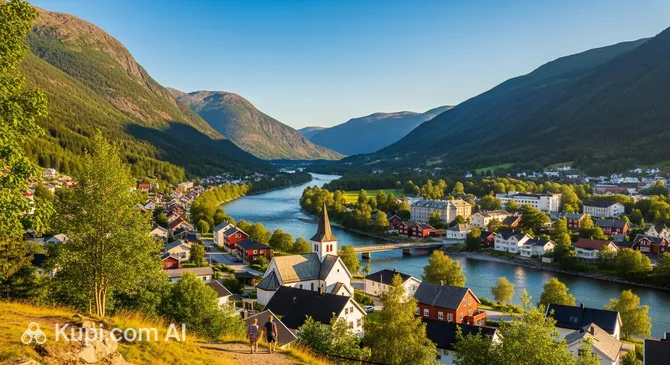
Vinstra. Illustration.
Source: Kupi.com AI

World fame came to this place through its connection to literature. These lands are considered the birthplace of Peer Gynt—the historical prototype of the hero of Henrik Ibsen's famous drama. The fascinating history of Vinstra is inextricably linked with folk legends, and the large-scale Peer Gynt Festival is held here annually, attracting theater and music lovers from all over the world. Additionally, the town serves as an excellent starting point for journeys to Rondane National Park.

Vinstra is a wonderful choice for those seeking inspiration and tranquility. The combination of literary fame, opportunities for outdoor activities, and the hospitality of the locals makes this town a must-visit when exploring the central part of the country.

Weather Overview

The climate in this region is characterized by distinct seasonality, typical of the interior regions of Norway. Winter here is long and frosty: in January and December, the average temperature stays around -11°C, and at night it can drop to -14°C. This time of year is ideal for winter sports, but it requires serious preparation in terms of gear.

The summer season brings milder weather, but don't expect extreme heat. July is the warmest month, when the air warms up to an average of +11.7°C, and on the best days, the temperature reaches +16°C. Travelers should note that summer here is quite wet: the highest number of rainy days is recorded in July and August. The current weather in Vinstra can be changeable, so a waterproof jacket will not be superfluous even in the warm season.

Spring and autumn serve as short transitional periods. Already in October, the average temperature drops to +0.9°C, foreshadowing the early onset of cold weather, and in May, the air warms up only to +5.3°C. Expect a cool summer with frequent rains and cold, snowy winters with steady sub-zero temperatures.

Average monthly temperature

Average monthly precipitation

Interesting Facts

Vinstra holds a special place on the cultural map of Norway, being the heart of the Gudbrandsdal valley. This town is inextricably linked with literature and folk tales, offering travelers a chance to immerse themselves in the atmosphere of Scandinavian folklore. Here are some notable facts to know before your trip.

  • The Prototype of Peer Gynt. The famous character in Henrik Ibsen's play had a real historical prototype—Peder Olsen Hågå. He lived on a farm in the vicinity of Vinstra, and a monument to this man, whose life inspired the great playwright, stands in the old cemetery at Sødorp Church.

  • Young Status. Despite the long history of the settlement, Vinstra only received official city status on September 1, 2013. This event was an important milestone for local residents and was celebrated with three days of festivities.

  • The Region's Main Festival. Every year in August, the town becomes the center of the Peer Gynt Festival (Peer Gynt-stemnet). The highlight of the celebration is an open-air theatrical performance on the shores of Lake Gålå, considered one of the most impressive productions in Scandinavia.

  • The Birthplace of Brunost. The Gudbrandsdal valley, where the town is located, is considered the birthplace of the famous Norwegian brown cheese. It was here, on mountain pastures in the 1860s, that the recipe for caramelized cheese—which became a national gastronomic symbol—was invented.

  • The "Milky Way" Route. Vinstra is one of the key points on the popular Mjølkeveien cycling route. The path, stretching about 250 kilometers, passes through picturesque mountain farms and allows tourists to enjoy views of Jotunheimen National Park.

How to Get There

Vinstra is located in the picturesque Innlandet region, deep within the famous Gudbrandsdal valley. Since the town does not have its own airport, traveling here usually involves a combined route: a flight to one of Norway's major air hubs followed by a transfer to ground transportation. To help you plan your trip, we have gathered information on how to get to Vinstra, considering various transfer options.

The main air gateway for most tourists is Oslo Airport Gardermoen (OSL). This is the country's largest international hub, located approximately 172 km from Vinstra. Thanks to the developed infrastructure, it is easy to continue your journey from here by train, bus, or rental car, enjoying the views along the way.

Another option, especially for those traveling in the western part of the country, is Sogndal Airport (SOG). It is geographically closer—at a distance of about 149 km—but the characteristics of the mountainous terrain, which can affect the route, should be taken into account. This is a small regional airport, primarily serving domestic flights.

Below is a table with data on the nearest airports to help you choose the optimal arrival point:

AirportPassenger trafficDistance
Roros Airport21 575138 km
Sogndal Airport91 145149 km
Scandinavian Mountains Airport25 000172 km
Oslo Airport Gardermoen26.4 mln172 km
Molde Airport, Årø481 406183 km

Rail travel is an excellent way to enjoy views of Norwegian nature on your way to Vinstra. The Dovrebanen line passes through the town, so you can comfortably reach it by train, either by transferring or departing from one of the major stations.

Most often, tourists start their journey via Oslo Central Station (IATA: XZO). This is the capital's main railway hub, located 171 km from Vinstra. Trains head north from here regularly, providing a reliable connection to the region.

For travelers heading from the north, the key point will be Trondheim S Station (IATA: XZT). It is located in the historic city of Trondheim, approximately 216 km from Vinstra. A trip by car or train from this station will allow you to see the changing landscapes of central Norway.

A list of major railway stations that may be useful when planning your route:

StationPassenger trafficDistance
Oslo Central Station54.8 mln171 km
Nationaltheatret Station14.6 mln195 km
Trondheim S Station1.5 mln216 km
Bergen Railway Station2.2 mln285 km
Leksand Railway Station298 km

Main Attractions

Despite its small size, Vinstra offers guests a unique combination of cultural and natural riches. The town's main attractions are closely linked to the name of the literary hero Peer Gynt and the picturesque landscapes of the Gudbrandsdal valley. A walk through these places allows you not only to enjoy the views but also to touch the history of Norwegian folklore.

One of the most significant locations is the Peer Gynt Farm (Per Gynt-gården), also known as Hågå farm. It is believed that the historical prototype of the famous character from Henrik Ibsen's drama—Peder Olsen Hågå—lived here. The complex consists of ancient wooden buildings that have carefully preserved the atmosphere of past centuries. Tourists come here to see traditional Norwegian architecture and feel the spirit of the legends that shroud this land.

No less interesting is the Sødorp Church (Sødorp kirke). This is a beautiful wooden cross-shaped church built in the mid-18th century. The building is a fine example of local architecture and an important spiritual center for the community. The old cemetery at the church attracts special attention from travelers: it is here that the grave of Peder Olsen Hågå himself is located, making it a cult site for fans of Ibsen's work.

For lovers of quiet walks and photo shoots, the Park in the center of Vinstra is perfect, where a monument to Peer Gynt is installed. The sculpture has become a kind of symbol of the town, reminding everyone of its literary heritage. It is a cozy place where you can relax after excursions and observe the steady life of the small town.

Furthermore, the Gudbrandsdal valley itself and the river flowing through the town are natural attractions. The picturesque banks and views of the surrounding mountains attract hikers and fishing enthusiasts. It is a convenient starting point for routes through the local hills, offering breathtaking panoramas of the Innlandet region.

Local Cuisine

The gastronomic traditions of Vinstra and the Gudbrandsdal valley reflect the very essence of rural life. This region is often called Norway's "pantry" due to the abundance of farms and organic products. Local cuisine consists of hearty, simple food, perfect for recovering your strength after active outdoor recreation.

The signature of local culinary art is the brown cheese brunost. It was in this valley that its most famous variety—Gudbrandsdalsost—was created. It has a unique caramel flavor with hints of boiled condensed milk. Local residents traditionally eat it for breakfast, sliced thin on bread, or serve it as a dessert with hot waffles and jam.

For a substantial lunch, tourists should order rømmegrøt. This is a thick and high-calorie porridge made with sour cream, served with sugar, cinnamon, and melted butter. An ideal accompaniment to it is spekemat—an assortment of cured meats and sausages, creating an interesting contrast of flavors.

The location in the Innlandet region provides restaurants with fresh game and fish. The menu often features moose dishes, served with potatoes and lingonberry or juniper sauce. Local trout, caught in mountain lakes and clear rivers, is also highly valued.

A meal is usually accompanied by a cup of strong coffee or a glass of aquavit—a traditional Scandinavian spirit distilled from potatoes and spices. The dining culture here is devoid of pretension: instead of expensive fine-dining restaurants, cozy roadside cafes (kro) are popular in Vinstra, where an atmosphere of home warmth and hospitality prevails.

Travel Tips

Preparing for a trip to Vinstra does not require complex logistics, but knowing local nuances will make your stay much more comfortable. We have compiled a list of useful recommendations to help you enjoy the nature and culture of this region of Norway without any unnecessary hassle.

  1. Clothing and Gear. The weather in the Gudbrandsdal valley is changeable. In winter, be sure to bring thermal underwear and wool garments, as frosts can be severe. In summer, the layering principle is also relevant: even on a warm sunny day, take a waterproof windbreaker and comfortable trekking boots, especially if you plan to walk along the Peer Gynt routes.
  2. Transport. The town itself is compact, and the center is pleasant to explore on foot. However, public transport (buses) does not run very frequently, especially on weekends. To freely explore the surrounding mountains, national parks, and remote farms, car rental is highly recommended. Taxi apps are not as active here as in Oslo; it's better to book a car in advance by phone.
  3. Finance. The local currency is the Norwegian Krone (NOK), but you're unlikely to need cash. Bank cards are accepted everywhere: from supermarkets to small kiosks and mountain huts. Be prepared for a high price level for food and services. Tips are often already included in the bill, but rounding up the amount is considered good form.
  4. Health and Safety. Vinstra is a very safe place where you can walk peacefully at any time of day. The tap water here is of excellent quality and can be drunk directly. Note that pharmacies (Apotek) close quite early (around 5:00 PM) and are not open on Sundays, so carry a supply of necessary personal medications with you.
  5. Communication. Almost all local residents speak English fluently, so there will be no communication problems. For internet access, it's convenient to buy a prepaid SIM card (e.g., Telenor or Telia) at 24-hour convenience stores like Narvesen or at gas stations, but a passport is required for registration. Wi-Fi is available in most hotels and cafes.
  6. Local Etiquette. Norwegians value personal space and quiet. Greetings are usually limited to a handshake. In public places, it is not customary to talk loudly or attract undue attention. When entering a private home, always remove your shoes.
  7. What to Avoid. Never head out on mountain trails without checking the weather forecast and a map, relying only on your phone (signal can be lost in the mountains). Also, avoid trying to haggle in shops or markets—it is considered impolite here, and prices are always fixed.
  8. Important Shopping Note. Remember that in Norway, most grocery supermarkets are closed on Sundays. If you arrive for the weekend, buy groceries in advance on Saturday. Spirits are only sold in the state-owned Vinmonopolet chain, which closes early (often at 3:00 PM on Saturdays) and is closed on Sundays.

Following these simple rules will allow you to feel at home in Vinstra. The locals are hospitable and always ready to help with advice if you show respect for their way of life and the beautiful nature around them.

Entertainment & Nightlife

Vinstra is a small and cozy town, so one should not expect the bustling nightlife of a capital city here. The local entertainment industry is oriented more toward quiet relaxation, heartfelt conversations, and enjoying the "hygge" atmosphere after a day spent outdoors. Evening leisure here is focused on socializing in warm company, good food, and local events.

The centers of evening life are traditionally the bars and restaurants at large hotels, as well as local cafe-bars. This is where both tourists and locals gather to enjoy a glass of beer or aquavit. The atmosphere in such establishments is very democratic and relaxed. There is practically no dress code: neat casual style or even hiking clothes will be quite appropriate. The crowd here is friendly, and despite the language barrier, Norwegians are often open to conversation after a couple of drinks.

One of the most famous meeting places in town is Vinstra Vegpark. Although technically a roadside complex and diner, it has become a cult spot (especially after being mentioned in Norwegian films) and serves as a popular gathering point for young people and car enthusiasts. In the evenings, you can have a snack, grab a coffee, and feel the real rhythm of life in the Norwegian countryside. For a more classic evening out with dinner and drinks, guests often choose the restaurant at the Peer Gynt Hotel & Spiseri, where the setting is conducive to a long meal.

A special time for Vinstra is August, when the Peer Gynt Festival takes place. During these days, the town is transformed: the streets fill with people, and open-air concerts, theatrical performances, and temporary fairs are held. If your trip falls on these dates, you will see the town from a completely different, festive side. At other times, most establishments close quite early, around 10:00 PM – 11:00 PM, although on Fridays and Saturdays, bars may stay open until midnight or slightly later.

Regarding practical tips, it is worth remembering the high prices for alcohol characteristic of all of Norway. A glass of beer or wine in a bar can cost significantly more than in Central Europe. Getting around the town at night is absolutely safe—the crime rate here is nearly zero. However, if you are staying far from the center, take care of transportation in advance: it is practically impossible to hail a taxi on the street at night; the car must be called by phone.

During the day, Vinstra's entertainment program is also of a calm nature. There is a cinema in the cultural center where you can watch the latest movies (in this country, films are often shown in their original language with subtitles). Shopping enthusiasts should check out the local shopping centers, which are not just places for shopping but also popular locations for daytime coffee and meeting friends.

Parks & Museums

Vinstra and the surrounding Innlandet region offer travelers a harmonious blend of active outdoor recreation and a deep dive into Norwegian traditions. Here, green zones flow seamlessly into wild nature, and cultural sites are inextricably linked with the history of the valley and the legends of Peer Gynt.

The main natural treasure available to guests of the town is undoubtedly Rondane National Park. Although technically its boundaries are a bit further away, Vinstra serves as one of the key gateways to this realm of majestic mountains and deep valleys. This is the oldest national park in the country, where tourists can encounter wild reindeer and enjoy views that have inspired artists for centuries. Routes here range from easy walks to serious ascents of peaks over 2,000 meters high.

For more relaxed recreation within the town, the Park in the center of Vinstra is suitable. It is a well-maintained green zone that has become the heart of social life. It's pleasant to walk along the alleys, rest on the benches, and, of course, take a photo at the famous monument to Peer Gynt. The park especially comes alive in the summer months, becoming a venue for small events and local gatherings.

The cultural life of the region is focused on preserving historical heritage. A key site is the Peer Gynt Estate (Per Gynt-gården), also known as Hågå farm. This architectural complex consists of 20 ancient wooden buildings, some of which date back to the 17th century. For tourists, it is a unique opportunity to see the daily life of wealthy Norwegian farmers of the past and touch the real history behind Ibsen's drama.

History buffs should visit the Gudbrandsdal War Memorial Museum (Gudbrandsdal Krigsminnesamling), located in the neighboring village of Kvam, just a few minutes' drive away. The museum's exhibition details the events of World War II in the Gudbrandsdal valley, presenting unique artifacts, uniforms, and documents. This place allows for a deeper understanding of the local population's resilience and the strategic importance of the region in Norway's history.

Insider Tip: If you are traveling by car, be sure to drive along the mountain road Peer Gynt Vegen. This route offers fantastic panoramas not available from the main highway and leads to authentic mountain farms where you can taste fresh local products directly from producers in the summer.

Getting Around

The transport system of Vinstra is typical for small settlements in the Innlandet region: there is no metro, trams, or trolleybuses. The town is compact, and its historic center is easy to explore on foot. However, for trips to the surrounding areas, mountain resorts, or neighboring villages, you will need to use a bus or train. The main transport hub is Vinstra skysstasjon—a combined station where railway and bus routes intersect.

The backbone of public transport consists of buses from the regional operator Innlandstrafikk. They connect the town with popular tourist locations such as Gålå, Fefor, and Kvam. It is important to consider that bus schedules in rural areas are often tied to school hours: there are plenty of trips on weekdays, but on weekends and during school holidays, their number is sharply reduced, and some routes may not be serviced at all.

Rail connection plays a key role for tourists. The Dovrebanen line, connecting Oslo and Trondheim, passes through Vinstra station. Trains are the most reliable way to reach the town or set off on a further journey through the country. The station is equipped with a waiting room and storage lockers, which is convenient for travelers with luggage.

Payment for public transport is highly digitized. The most convenient and profitable way to buy tickets is through the Innlandstrafikk mobile app or the national planner Entur. In the app, the ticket is activated automatically or before boarding. You can also buy a ticket from the bus driver, but an additional fee is often charged for this, and payment is primarily accepted by bank card or cash (which is becoming rare).

For trips on complex routes or in the evening, you can use a taxi. However, it is worth remembering that there are no services like Uber in Vinstra, and you cannot simply hail a car on the street. Taxis must be ordered in advance by phone through local dispatch services. Trip prices are quite high, so for short distances, this may not be the most budget-friendly option.

Given that the main natural beauties and starting points of hiking trails are located outside the town, the best alternative to public transport is renting a car. This gives you the freedom to move along the scenic "Peer Gynt Road" (Peer Gynt Vegen) and allows you to reach national parks at any time. In summer, bicycle rentals are also popular, often offered by local hotels and campsites for exploring the valley.

Accommodation

The choice of accommodation in Vinstra and the surrounding Gudbrandsdal valley reflects the peaceful and traditional way of life of this region. Here, travelers will not find skyscrapers or huge luxury chain complexes. Instead, the hotel stock is represented by cozy family hotels, historic mountain lodges (fjellstue), modern apartments, and numerous campsites, which are particularly popular in the summer season.

In terms of geographical location, two main zones can be identified. The first is the town center, located in close proximity to the railway station and shops. This option is ideal for those traveling by public transport or planning a short overnight stay before continuing their journey. The second zone is the mountainous surroundings, such as the Gålå plateau or the Fefor area. Here, at higher altitudes, are resort hotels offering panoramic views, direct access to ski slopes in winter, and hiking trails in summer.

A special category is formed by the so-called "mountain hotels" (høyfjellshotell). These are historic hotels, often with a century of history, where the atmosphere of old Norway is preserved: wooden interiors, fireplaces in the halls, and traditional cuisine. Staying in such a place is not just an overnight stay, but part of a cultural experience. For budget-conscious tourists, campsites on the riverbank are an excellent solution, where you can rent an inexpensive cabin (hytte) or a spot for a tent.

Booking Tip: When planning your trip, it is crucial to consider the local events calendar. At the beginning of August, when the famous Peer Gynt Festival takes place in town, the demand for housing skyrockets. Hotel rooms and even spots in campsites for this period are booked six months in advance, if not earlier. High demand is also observed during the Easter holidays, when Norwegians head to the mountains in large numbers to go skiing.

The price range in Vinstra varies from medium to high, which is typical for the entire region. Budget options (hostels or simple cabins without amenities) will be cheaper, but their number is limited. Booking is available through major international online platforms; however, many small guesthouses and cottages prefer direct bookings through their own websites or by email, which can sometimes save you a little money.

Nearby Cities

For those who wish to explore the surroundings, Vinstra serves as an excellent starting point for day trips to several interesting nearby places:

CityPopulationDistance
Ringebu4 50022 km
Otta2 30023 km
Dombas2 30063 km
Lillehammer28 49365 km
Koppang2 70069 km

Among the cities listed, Lillehammer stands out, located just an hour's drive away. This is a world-famous resort that hosted the 1994 Winter Olympics. Tourists should visit the Maihaugen open-air museum, which features historical buildings from across the valley, and take a stroll along the charming pedestrian street, Storgata, with its wooden architecture.

A bit further, on the shores of Lake Mjøsa, lies Hamar. The city is famous for its unique "Vikingskipet" ice arena, built in the shape of an inverted Viking ship. Also a must-visit is the Domkirkeodden museum complex, where the ruins of a medieval cathedral are sheltered by a modern glass dome, creating incredible acoustics and visual effects.

Gjøvik, known as the "White City by Mjøsa," also deserves attention. It is a wonderful place for summer walks along the waterfront. From here, you can set sail on the Skibladner—the world's oldest paddle steamer still in regular service, which will be an unforgettable adventure for history and technology enthusiasts.

These nearby destinations provide an insight into the diverse culture and landscapes of the region, harmoniously complementing the impressions from visiting Vinstra.

Shopping & Souvenirs

Vinstra offers guests a calm and steady shopping experience, free from the hustle and bustle of metropolises. You won't find high-fashion boutiques here, but it is an excellent place to discover the high-quality goods that Norway is famous for. Trade in the town is focused on practicality, reliable equipment for outdoor activities, and support for local craft traditions.

The heart of the town's commercial life is concentrated in its compact center, near the railway station. The main artery can be called Nedregata street. This is a cozy area where it's pleasant to walk, browsing through small private shops selling clothing, flowers, and home goods. The Sødorptunet shopping center is also located here, where you can buy everything needed for daily life.

Another important point of attraction is Vinstragata street. Here you'll find the popular Peer Gynt Kjøpesenter shopping complex, offering a wide range of goods: from food to electronics and sports gear, which is particularly relevant for tourists planning mountain hikes. On this street, right next to the shopping center, is a store of the state-owned chain Vinmonopolet—the only place in town where you can legally buy wine and spirits.

Classic markets are not a daily part of town life, but the situation changes during holidays. During the annual Peer Gynt Festival in August, the streets come alive: temporary fair stalls and market rows open. At this time, local farmers and artisans offer handmade items, traditional pastries, mountain berry jams, and other unique goods that are difficult to find at other times.

The main souvenir from Vinstra is rightfully considered to be brunost—the famous Norwegian brown cheese. Since the Gudbrandsdal valley is considered its birthplace, buying a piece of the local Gudbrandsdalsost variety will be the best gastronomic gift. It is also worth paying attention to high-quality wool knitwear: sweaters with traditional patterns, warm socks, and mittens. Souvenirs related to the legend of Peer Gynt, as well as troll figurines carved from wood, are also popular.

Shops operate on a standard schedule. On weekdays, doors are usually open from 10:00 AM to 5:00 PM (shopping centers often work until 8:00 PM). On Saturdays, the working day is shorter, most often until 3:00 PM or 4:00 PM. It is important to remember that Sunday is a day off for most shops, including grocery supermarkets. Payment almost everywhere is made by bank cards; terminals are available even in small shops.

Tourists residing outside of Scandinavian countries can use the Tax Free system. Many clothing, souvenir, and sports equipment shops (usually marked with the Global Blue logo) provide a tax refund service. If the amount of your purchase on one receipt exceeds the set minimum (usually around 315 NOK for manufactured goods), don't forget to ask the seller to issue a special form for a VAT refund upon leaving the country.

Reached the end of the page?

That means the route is fully explored