Support

Alvdal

About

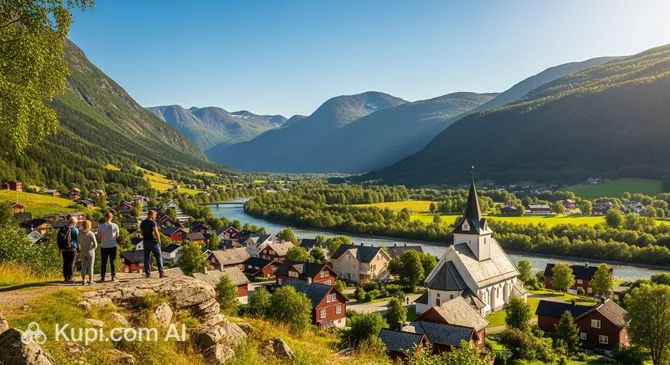
Alvdal is a picturesque settlement located in the heart of the Østerdalen valley, where an atmosphere of peace and harmony with nature prevails. This cozy corner of Norway attracts travelers not with noisy entertainment, but with its authenticity and the opportunity to take a break from the urban bustle. With a population of about 2,600, Alvdal retains the charm of a traditional village surrounded by the majestic mountains and dense forests of the Innlandet region.

Alvdal. Illustration.
Source: Kupi.com AI

For many tourists, getting to know the town begins with a visit to the Aukrust Centre (Huset Aukrust), dedicated to the work of the beloved Norwegian artist and writer Kjell Aukrust. The museum building itself is an architectural landmark. Another important attraction is Mount Tronfjellet, rising to 1,666 meters. It is famous for having the second-highest road in the country leading to its summit, offering breathtaking panoramic views.

The rich history of Alvdal is closely intertwined with farming traditions and forestry, which is reflected in the preserved old buildings. In summer, hiking and fishing in the Glomma River are popular here, while in winter, the region turns into a paradise for skiers. Alvdal is a wonderful place to stop, breathe in the fresh mountain air, and experience authentic Norwegian culture.

Weather Overview

The climate in Alvdal is characterized by pronounced seasonality, typical for Norway's inland regions. Winters here are truly frosty: in January and February, the average temperature stays around -9...-10°C, and at night the air can cool down to -13°C. This time of year is ideal for lovers of snowy landscapes but requires warm clothing and thermal underwear.

The summer season brings mild warmth, though you shouldn't expect intense heat. In July, the warmest month, the air warms up to an average of +11...+12°C, and daytime maximums usually do not exceed +16°C. Expect a cool summer with occasional rain and cold, snowy winters. Since the number of days with precipitation is high even in the warm season, detailed weather in Alvdal will help you plan your travel wardrobe wisely.

Average monthly temperature

Average monthly precipitation

Interesting Facts

In addition to its famous landscapes and cultural centers, Alvdal hides amazing stories capable of surprising even experienced travelers. This region, which Norway is proud of, is full of legends and unexpected facts that go far beyond a standard guidebook.

  • An Indian philosopher on the summit. Mount Tronfjellet became home to the Indian philosopher Swami Sri Ananda Acharya (known locally as Baral). He lived here in the first half of the 20th century and dreamed of building a global "University of Peace" on the mountain plateau. His grave is located at an altitude of 1,430 meters—one of the highest burial sites in the country, which has become a place of pilgrimage.

  • The legend of the giant axe. Nearby is Jutulhogget, one of Northern Europe's largest canyons. Although geologists claim it was formed during the ice age, local legend says otherwise: the canyon appeared after an axe blow from a giant troll from a neighboring valley, who was trying to steal the Glomma River to redirect it to his home.

  • The real Flåklypa. The famous fictional village of Flåklypa from Kjell Aukrust's cult animated films was modeled after Alvdal. In the local center, you can see a full-size, working model of the fantastic car Il Tempo Gigante, which, according to the film, is equipped with radar, two speedometers, and even its own reactor.

  • The potato capital. Alvdal is famous for a special variety of potato—the "Mandelpotet" (almond potato), which is considered a delicacy due to the specific soil and climate. Locals are so proud of this product that they hold a large-scale Potato Festival every year, attracting gourmets from all over the area.

How to Get There

Planning a trip to this picturesque corner of Norway requires attention to logistics, as the town is located away from major metropolises. To choose the best route and mode of transport, we recommend reading more about how to get to Alvdal, where all available options and tips for travelers are collected.

For those who prefer air travel, the closest option is Røros Airport (IATA: RRS). It is located only 64 km from the town. This is a small regional airport that accepts domestic flights, and a trip from there by taxi or rental car will take about an hour. It is an excellent choice for saving time compared to traveling by land.

If you are arriving on an international flight, it is more convenient to use the services of a major transport hub—Trondheim Airport, Værnes (IATA: TRD). It is located approximately 151 km from Alvdal. The transfer from here will take more time (about 2.5–3 hours), but the airport offers a wide range of flights and regular connections with other countries.

Below is information on the nearest airports for planning your route:

AirportPassenger trafficDistance
Roros Airport21 57564 km
Trondheim Airport Værnes4 mln151 km
Scandinavian Mountains Airport25 000158 km
Kristiansund Airport, Kvernberget278 854182 km
Molde Airport, Årø481 406188 km

Rail travel is one of the most scenic ways to get to the region. The town itself has Alvdal station, which is part of the Røros Line (Rørosbanen), connecting the south and north of the country. However, when planning a long trip, tourists often use major hub stations as starting points.

The key hub in the south is Oslo Central Station (IATA: XZO). From here, trains depart toward Trondheim with a transfer or direct connection to the region. The distance from the capital is about 214 km in a straight line, and the train journey will allow you to enjoy views of the Norwegian nature. From the north, a convenient starting point is Trondheim S Station (IATA: XZT), located 150 km from Alvdal.

The main railway hubs often used to build routes are:

StationPassenger trafficDistance
Trondheim S Station1.5 mln150 km
Oslo Central Station54.8 mln214 km
Nationaltheatret Station14.6 mln245 km
Leksand Railway Station279 km

Main Attractions

Despite its modest size, Alvdal offers travelers a rich cultural and natural program. The attractions here are closely linked to local folklore, the unique nature of the Østerdalen valley, and the rich heritage carefully preserved by the locals.

The absolute gem of the town is the Aukrust Centre (Huset Aukrust). This is not just a museum, but a real portal into the fantasy world of the famous artist Kjell Aukrust. Visitors can see drawings and models of incredible inventions, including the famous Il Tempo Gigante car, and meet beloved national characters—Solan and Ludvig. The building is interesting for its architecture, and inside there is a cinema and a cafe serving traditional waffles.

History buffs should visit Husantunet. This is one of the best-preserved farm complexes in Norway, functioning as an open-air museum. The site contains about 17 historical buildings, some of which date back to the 18th century. A walk here allows you to immerse yourself in the daily life of Norwegian peasants of past centuries and appreciate the craftsmanship of ancient wooden architecture.

For those seeking spectacular views without exhausting climbs, Mount Tronfjellet is the perfect spot. Its unique feature is a toll road that leads almost to the very top at an altitude of 1,666 meters. This makes the mountain accessible to all categories of tourists, including families with children. From the peak, a stunning panorama of the surrounding national parks and the Glomma River valley opens up.

Not far from the town lies a natural wonder—Jutulhogget, often called the "Grand Canyon of Scandinavia." This dry canyon, 2.4 kilometers long, is impressive for its scale and sheer cliffs. Tourists can walk along the edge of the canyon, enjoying the rugged beauty of the geological rifts, or descend along marked trails to feel the grandeur of nature from within.

Local Cuisine

Alvdal's gastronomic traditions are inextricably linked to the gifts of the Østerdalen valley's nature and the farming lifestyle. The local cuisine is simple, hearty, and incredibly eco-friendly. The main culinary symbol of the region is undoubtedly the almond potato (Mandelpotet). This variety, grown in local soils, is distinguished by its rich flavor and crumbly texture. It is served with almost all main dishes, but it is especially good when paired with rakfisk (fermented trout) or cured meat, creating a unique flavor balance that Norwegians value so much.

Since Alvdal is surrounded by dense forests, game is often found on restaurant menus and home tables. Moose is particularly popular: it is used to prepare juicy patties (elgkarbonader), aromatic stews, or served as steaks with lingonberry sauce. You should also try the traditional rømmegrøt, a porridge made with heavy sour cream. It is a very filling dish, usually eaten with sugar, cinnamon, and a piece of cured mutton—an ideal way to restore strength after a walk in the mountains.

The food culture here is devoid of pretension; locals prefer cozy roadside taverns and cafes with a homey atmosphere. One of the most famous places is the legendary Taverna Alvdal, located by the main road. This is not just an eatery, but a real institution of local gastronomy, where travelers are offered classic Norwegian dishes prepared according to old recipes. It is customary here to eat slowly, enjoying large portions and friendly conversation.

As for drinks, meals are often accompanied by pure local water or craft beer from regional breweries. As a digestif, especially in cold weather or on holidays, akevitt (aquavit) is served—a traditional Scandinavian alcoholic drink based on potatoes and caraway. And the meal should be finished with a cup of strong black coffee and the famous heart-shaped Norwegian waffles, which are traditionally eaten here with brown cheese (brunost) and sour cream.

Travel Tips

A trip to Alvdal promises to be peaceful and full of natural discoveries, but as with any trip to Norway, proper preparation is important. We have put together a list of practical recommendations to help you avoid minor inconveniences and focus on the beauty of the Østerdalen valley.

  1. Dress in layers. Mountain weather changes rapidly. Even in summer, be sure to bring a waterproof windbreaker and a fleece jacket. For winter visits, high-quality thermal underwear and wool socks are critical. Since the main activities here involve walking (for example, to the Jutulhogget canyon), comfortable trekking shoes with stiff soles are a must in any season.
  2. The transport issue. Although Alvdal station is easy to reach by train, renting a car is highly recommended for exploring the surroundings. Public transport within the region is infrequent and won't take you to the foot of Mount Tronfjellet or remote farms. Taxis exist, but it's better to book them in advance, as there are few cars.
  3. Finances and payment. Norway is a country of triumphant cashless payments. The local currency is the Norwegian Krone (NOK), but you will hardly need cash: bank cards are accepted even in small kiosks and mountain huts. An ATM can be found in the village center at the grocery store. Tipping is not mandatory, but rounding up the bill in a cafe will be received with gratitude.
  4. Health and pharmacies. Alvdal is a safe place with a low crime rate; the main risks are related to nature (slippery stones, hypothermia). Note that the local pharmacy (Apotek 1) follows standard hours and is closed on Sundays and evenings. If you need specific medications, bring them with you. The single emergency number is 112, and ambulance is 113.
  5. Communication and language. Almost all locals speak English fluently, so there will be no communication problems. Learn a few words in Norwegian, such as "Takk" (thank you) and "Hei" (hello)—this will endear you to your interlocutors. Mobile signal and 4G work excellently in the village but may drop in deep gorges, so download offline maps of the area in advance.
  6. Etiquette and the right of access. Norway has the "right of public access" (Allemannsretten), allowing you to walk almost anywhere. However, it is important to maintain a distance from private houses and windows. When meeting someone on a forest trail, it is customary to greet passers-by with a slight nod or a smile. Loud conversations in public places are not common—silence is valued here.
  7. What to avoid. It is strictly forbidden to walk on cultivated fields (innmark) and meadows where grass for livestock grows, even if they are not fenced off—this is farmers' private property. Also, avoid planning active shopping on Sundays: on this day all supermarkets and most shops are closed, with only small gas station kiosks and some cafes operating.
  8. Food hack. If you are traveling on a budget or late in the evening, keep in mind that the choice of restaurants in Alvdal is limited. The legendary Taverna Alvdal by the main road is not just a roadside cafe, but a local life hub with great food, operating longer than other establishments. It is the most reliable place to have a hearty dinner after a long day in the mountains.

By following these simple tips, you can feel right at home in Alvdal. Enjoy the pure mountain air, delicious food, and incredible hospitality of the locals without any extra worries!

Entertainment & Nightlife

Nightlife in Alvdal is fundamentally different from the noisy parties in large metropolises. Here you won't find neon signs for nightclubs, districts with discos until dawn, or 24-hour bars. Evening leisure in this region follows the rhythm of nature and the concept of "koselig"—Norwegian coziness. Entertainment here is intimate: soul-stirring gatherings by the fireplace, tasting local drinks at a hotel bar, or a quiet dinner with friends after an active day in the mountains.

The evening hub for locals and tourists alike is the legendary Taverna Alvdal. This establishment serves as the village's main social hub. In the evening, there is a lively but relaxed atmosphere: travelers share stories about their routes, and locals discuss the latest news. The bar menu features varieties of Norwegian beer and akevitt, which warms you up perfectly in cool weather. It is an ideal place for those seeking conversation and authentic cuisine without unnecessary pretension.

For a more secluded and sophisticated evening, it’s worth stopping by the historic Steien Hotel. This building has a special atmosphere where you can enjoy a glass of wine in a peaceful setting. The hotel's interiors transport guests back in time, creating the perfect backdrop for unhurried conversations. Unlike noisy pubs, it is customary here to observe quiet and respect the personal space of other guests. During the summer season, some campsites, such as Langodden Gård, may host BBQ evenings or live outdoor music, which is a great alternative to traditional bars.

The atmosphere in Alvdal's establishments is extremely informal. There is a complete lack of a strict dress code: it is perfectly appropriate to appear in a bar in comfortable trekking clothes or a sweater. The crowd mostly consists of tourists, fishermen, and local farmers, so the communication style is simple and friendly. Most places close quite early—kitchens often stop serving by 9:00 PM or 10:00 PM, although bars may stay open a bit longer, especially on weekends.

When planning your evening, consider Norwegian prices and alcohol sales regulations. The average check for dinner with drinks will be higher than the European average, and the price of a glass of beer or wine might surprise a budget traveler. The easiest way to get around is on foot, as the village is compact, or by taxi if you are staying in a remote campsite. It is important to remember that public transport does not run at night, and it is better to book a taxi in advance, as there may not be free cars on the line.

In terms of safety, Alvdal is one of the quietest places on earth. The crime rate here is near zero, and night walks are absolutely safe even alone. The only "threat" might be the local fauna, such as moose, which sometimes come out near the roads at dusk, so be careful when moving through unlit areas.

If you are looking for things to do during daylight hours before your evening rest, Alvdal offers an equally interesting program. In addition to the already mentioned Aukrust Centre, it is worth looking into active recreation opportunities: fishing on the Glomma River or visiting local farms where you can get acquainted with the traditional way of life. Cultural life here doesn't boil over like in the capital, but it is filled with deep meaning and a connection to nature.

Parks & Museums

In Alvdal, you won't find typical city squares with manicured lawns, as nature itself acts as a huge park. This region, for which Norway is famous, offers travelers a unique combination of wild landscapes and carefully preserved cultural heritage. Green zones here transition smoothly into mountain slopes, and museums are not just repositories for exhibits, but living centers of creativity and history.

The main natural treasure, replacing any walking alleys for locals, is the Jutulhogget canyon. This impressive gorge, formed at the end of the ice age, offers spectacular hiking routes. Tourists come here for the silence and the chance to see the geological history of the region with their own eyes. Another important natural area is Mount Tronfjellet. Thanks to the road leading almost to the summit, this place is accessible even for those not ready for difficult climbs, and is ideal for picnics with panoramic views of the valley.

For lovers of quiet walks by the water, the banks of the Glomma River are perfect. Here you can find secluded spots to relax, surrounded by forest, or simply walk along the current, enjoying the fresh air. This is the town's "green artery," where you can often meet local fishermen and nature lovers.

Cultural life in Alvdal is inextricably linked with the name of the famous artist and writer Kjell Aukrust. The Aukrust Centre (Huset Aukrust) is perhaps the region's most famous museum. It is an amazing combination of an art gallery and an interactive exhibition of inventions. Visitors can immerse themselves in the world of fantastic characters and mechanisms created by the author's imagination, making the museum interesting for guests of all ages.

To dive into the past, visit the open-air museum Husantunet. This is a unique complex of well-preserved wooden buildings, some dating back to the 18th century. Walking among the old farmhouses, barns, and workshops, tourists can feel the atmosphere of peasant life from past centuries and appreciate the craftsmanship of traditional Norwegian architecture.

In the very center of the village, in the Steia area, is another interesting architectural landmark—Alvdal Church (Alvdal kirke). This wooden building, constructed in 1861, is a fine example of the Neo-Gothic style and an important spiritual center for the community. Although it is an active church, its architecture and interior attract many history lovers.

For those looking for unconventional experiences, we suggest noticing the sculpture in the town center depicting Aukrust's characters—Solan and Ludvig. This is a popular spot for photos, adding a touch of kind humor and fairy-tale charm to a walk through Alvdal, characteristic of this cozy corner of the country.

Getting Around

The public transport system in Alvdal matches the size of this small settlement: it is compact, clear, but does not have a high frequency of service. There is no metro, trams, or trolleybuses here. The basis of the transport connection is the railway station and regional bus routes that connect the municipality with neighboring towns and larger transport hubs of the Innlandet region.

The main bus operator in the region is the company Innlandstrafikk. Local buses mostly run along the main roads, connecting the village center with the administrative center of Tynset and other settlements in the valley. It is important to note that the route network within Alvdal itself is poorly developed: most trips are geared toward schoolchildren and commuters, so during the middle of the day, as well as on weekends and holidays, intervals between buses can be very long.

To pay for travel and plan routes, it is most convenient to use mobile technology. The most reliable tool for a tourist will be the national app Entur or the regional Innlandstrafikk Billett. In these, you can plan a route, check the current schedule, and buy a ticket, which is often cheaper in digital form. Payment by bank card is also possible directly from the driver upon boarding, but cash is rarely used.

Given the nature of the mountainous terrain and the remoteness of natural attractions like Mount Tronfjellet, public transport is not always convenient for sightseeing. The most practical alternative is renting a car, which will give you complete freedom of movement. Taxi services also operate in the village, but there are few cars on the line, and it is strongly recommended to book them in advance by phone, as catching a car on the street is almost impossible.

The village center (the Steia district) is compact enough to be easily and pleasantly explored on foot. In the summer season, cycling is popular: two-wheeled transport can be rented at some campsites or tourist points. The main advice for a traveler in Alvdal is to always check the schedule before heading out, as transport life here quietens down quite early, and there are no night services provided.

Accommodation

Accommodation options in Alvdal perfectly match the spirit of this peaceful and picturesque region. Here you won't find huge hotel chains or world-class luxury spa resorts. Instead, Norway offers guests cozy family hotels, traditional farmhouses, and well-equipped campsites. The main emphasis is on proximity to nature, a homey atmosphere, and authenticity, allowing tourists to feel like part of local life.

When choosing a place to stay, you should consider your plans and mode of transport. If you are traveling without a car or plan to use the train, the most convenient area is Steia—the historic center of the village. Here, within walking distance of the railway station, you will find shops, cafes, and major cultural sites. For those seeking solitude and planning to fish or hike, campsites located along the banks of the Glomma River or at the foot of the mountains, slightly away from the center, are ideal.

Among the specific accommodation options, a special place is held by the historic Steien Hotel, located in the heart of the village. This establishment with a century of history offers not just a place to sleep, but an immersion into the atmosphere of old Norway with its unique hospitality. For fans of more informal holidays and road trippers, Langodden Gård is an excellent choice—a working farm and campsite where you can stay in a wooden cabin and enjoy the silence of the forest.

The price range in Alvdal can be described as mid-range. The cost of living here is generally lower than in the country's major tourist centers, but the level of service remains high. Budget travelers can save money by choosing a tent site or a simple cabin in a campsite, while hotel rooms or fully equipped apartments will cost more. Booking is available through popular international online platforms, but many local guesthouses also take orders directly through their websites or by email.

We advise you to take care of housing in advance, especially if your trip falls during the peak summer season (July-August) or Easter holidays, when Norwegians head to the mountains in large numbers. Since the number of accommodations in the village is limited, the best options with a good price-quality ratio are booked up several months before the arrival date.

Nearby Cities

For those who want to explore the surroundings, Alvdal serves as an excellent starting point for day trips. Its convenient location in the Østerdalen valley allows you to reach significant cultural and historical centers of the Innlandet region. This is a great opportunity to see how diverse and beautiful Norway is beyond the main tourist routes.

One of the most popular destinations is Lillehammer. This city, world-famous as the host of the 1994 Winter Olympics, is about a one-and-a-half to two-hour drive away. Tourists come here to visit Maihaugen, one of the largest open-air museums in Europe, which features hundreds of historic buildings. The city also attracts visitors with its cozy pedestrian street, Storgata, lined with wooden houses and shops.

If you are ready for a slightly longer journey, it is worth visiting Trondheim—the country's third-largest urban area and its historic capital. The main gem of the city is the majestic Nidaros Cathedral, the coronation site of Norwegian monarchs. A walk through the old Bakklandet district with its colorful wooden warehouses along the Nidelva River will provide unforgettable impressions and great photos.

Closer to Alvdal is Elverum, often called the forest capital of the region. Here you will find the Norwegian Forest Museum and the Glomdal Museum, with exhibitions dedicated to hunting, fishing, and forestry. This is an excellent option for those who want to deepen their knowledge of the traditional way of life in this rugged but beautiful land.

CityPopulationDistance
Tynset5 60820 km
Hjerkinn23058 km
Koppang2 70064 km
Roros1 80065 km
Otta2 30069 km

These nearby destinations provide a full picture of the culture and landscapes of the region, making your stay in Alvdal even more rewarding and interesting.

Shopping & Souvenirs

General Overview: Shopping in Alvdal is an immersion into the atmosphere of quiet rural life, far from the bustle of huge malls. You won't find streets with global fashion brands here, but you can visit unique niche shops offering high-quality goods. Trade in this region, of which Norway is proud, is focused on supporting local producers, farm products, and handmade items, making the shopping process truly heartfelt and authentic.

Main Shopping Areas: The heart of the village's commercial life is the Steia district—the historic center of Alvdal, located around the railway station. This is a cozy area where the main shops, a pharmacy, a sports shop, and flower stalls are concentrated. A walk through Steia allows you to combine shopping with viewing old architecture. There is a friendly atmosphere here, and shopkeepers often personally know their customers, ensuring a high level of service.

Shopping Centers: There are no large shopping centers in the traditional sense within Alvdal itself. The retail format here is intimate. However, if you need a wide selection of chain clothing or electronics stores, locals head to the neighboring town of Tynset, located just 15–20 minutes north. There you will find the Amfi Tynset shopping center, which covers mass-market needs, while Alvdal retains its niche for exclusive and traditional goods.

Markets: The brightest event on the shopping calendar is the annual Norwegian Almond Potato Festival (Norsk Mandelpotetfestival), which takes place in September. During these days, the town center turns into a huge open-air fair. Here you can buy not only the famous local potatoes but also other farm delicacies, handicrafts, and souvenirs. At other times, farm shops offering fresh seasonal products serve as the market.

Souvenirs: A mandatory stop on any shopping itinerary should be Søberg Gård—a famous shop located in an old barn a few kilometers south of the center. It is a real treasure trove of local products (light, food, and coziness), where it is worth buying cured meats, cloudberry jams, traditional cheeses, and woolen items. Also popular as souvenirs are figurines of Kjell Aukrust's characters—Solan and Ludvig, which can be found in the shop at the Aukrust Centre.

Opening Hours and Payment: Shops in Alvdal are usually open from 10:00 AM to 5:00 PM on weekdays, and may stay open a bit longer on Thursdays or Fridays. On Saturdays, the working day is shortened to 3:00 PM or 4:00 PM, and Sunday is a universal day off, with the exception of small kiosks and garden centers in season. Bank cards are accepted everywhere, even in the smallest shops, so cash is practically unnecessary. Contactless payment is standard for the region.

Tax Free: Norway has a VAT refund system (Tax Free) for tourists from countries outside the Scandinavian region. If you make a purchase of over 315 NOK on one receipt in stores with the "Global Blue" or "Tax Free" logo, remember to ask for a special form at the checkout. You can get a portion of your money back when leaving the country at the airport or at the border.
Reached the end of the page?

That means the route is fully explored