Support

Gilgit

About

Gilgit is a strategically important and scenically stunning city that serves as the administrative capital of the Gilgit-Baltistan region. Often referred to as the gateway to the Karakoram mountains, it is a bustling hub for trekkers and tourists exploring the northern reaches of Pakistan. The city offers a unique blend of vibrant culture and breathtaking landscapes, making it an essential stop for anyone venturing into the high Himalayas.
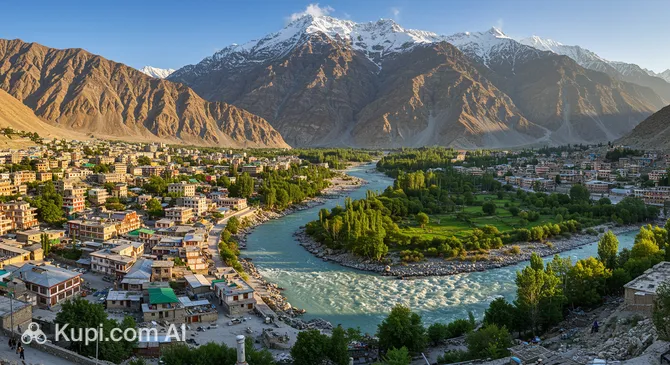
Gilgit. Source: Kupi.Binoculars

Geographically, the city is situated in a broad valley near the confluence of the Gilgit and Hunza rivers. It enjoys a dry climate with hot summers and cold winters, providing a distinct atmosphere in every season. The region has long been a vital stopover on the ancient Silk Road, and the history of Gilgit reflects a rich tapestry of trade and cultural exchange that has shaped its identity over centuries.

Travelers will find several intriguing sites within and around the city. The Kargah Buddha, a magnificent rock carving dating back to the 7th century, stands as a testament to the area's ancient Buddhist heritage. Another iconic landmark is the Gilgit Suspension Bridge, which offers spectacular views of the rushing river below. For a taste of local life, the bustling bazaars are perfect for finding dried fruits, traditional woolens, and gemstones.

Whether you are preparing for a mountain expedition or simply soaking in the serene valley views, Gilgit promises a memorable experience. Its welcoming atmosphere and proximity to some of the world's highest peaks make it a truly remarkable destination to visit.
Weather Overview

The climate in this region is characterized by distinct seasonal changes, offering a unique experience depending on when you visit. Winters are notably harsh and freezing, with January being the coldest month, featuring an average temperature of -15.8°C and lows dipping to -19.7°C. Travelers planning a winter trip must be well-prepared for these sub-zero conditions.

In contrast, the summer months bring milder weather, though it remains quite cool. July and August are the warmest times of the year, with average temperatures hovering around 14°C and maximums reaching just over 19°C. For those looking to time their visit perfectly, checking the detailed weather in Gilgit is highly recommended to ensure you pack the right gear.

Precipitation patterns here are quite specific; while the total volume is low, averaging about 3mm to 4mm per month, the frequency of wet days is significant. June through August can see up to 21 wet days per month, suggesting that while heavy downpours are rare, light rain or snow is a common occurrence throughout the year.

Interesting Facts

Beyond the main attractions, Gilgit holds many fascinating secrets that reveal its deep historical and strategic significance. This ancient city is not just a stopover but a place where legends, unique traditions, and geographical wonders come to life.

  • One of the most significant archaeological finds in the region is the discovery of the Gilgit Manuscripts. Uncovered in 1931 inside a stupa, these birch-bark documents date back to the 5th and 6th centuries and are among the oldest surviving Buddhist texts in the world, surviving for over a millennium due to the region's dry climate.

  • Just a short drive from the city lies a rare geographical phenomenon known as the Junction of Three Mountain Ranges. It is one of the few places on Earth where you can stand and see the collision point of the Himalayas, the Karakoram, and the Hindu Kush, alongside the confluence of the Gilgit and Indus rivers.

  • Gilgit is famous for its wild version of the "Game of Kings," known locally as Freestyle Polo. Unlike the standardized international sport, the matches here are played with very few rules, on rugged terrain, and accompanied by the frantic beat of drums and traditional flutes to keep the players' adrenaline high.

  • The city is home to a unique engineering marvel at the Danyore Suspension Bridge. This bridge is renowned not just for its precarious swing but because it leads directly into a narrow, hand-hewn tunnel excavated into the sheer rock face of the mountain, creating a thrilling passage for locals and visitors alike.

How to Get There

Reaching this mountainous destination is an adventure in itself, offering travelers a choice between a scenic flight over the Himalayas or a legendary road trip along the Karakoram Highway. While flights are the fastest option, they are highly dependent on weather conditions, whereas the road journey offers unparalleled views of the landscape. You can find more about how to get to Gilgit and the various transport options available for your trip.

The most convenient entry point is Gilgit Airport (GIL), located directly in the city, just 2.3 km from the center. It is a small domestic airport that receives flights primarily from the capital. The journey to the city center is very short, taking approximately 10 to 15 minutes by taxi. However, due to the challenging mountain terrain, flights here are frequently cancelled if visibility is poor.

For a more reliable connection, many travelers choose Islamabad International Airport (ISB) in Islamabad. Although the airport is situated roughly 296 km away in a straight line, the actual overland journey is much longer and more arduous. From Islamabad, you can either take a connecting domestic flight or embark on a spectacular drive via the Karakoram Highway. If traveling by road from this airport, be prepared for a long trip taking approximately 14 to 18 hours by private car or bus, depending on road conditions.

Another regional alternative is Skardu Airport (KDU) in the city of Skardu, located roughly 129 km away. This airport handles a fair number of tourists visiting the Baltistan region. The drive from Skardu to Gilgit is incredibly scenic, winding along the Indus River, and typically takes around 4 to 5 hours by car.

For clarity, here is a summary of the main airports:
Airport Name City Passenger Traffic Km from City
Islamabad International Airport Islamabad Large 295.8
Tashikuergan Hongqilafu Airport Taxkorgan Small 212.3
Skardu Airport Skardu Small 128.8
Gilgit Airport Gilgit Small 2.3

The city of Gilgit does not have a railway station, as the mountainous terrain makes rail travel unfeasible in the immediate area. The closest major railhead is Rawalpindi Railway Station in the city of Rawalpindi. While the station is approximately 282 km away in geodesic distance, the road journey to Gilgit is the same arduous route taken from Islamabad. Travelers arriving by train typically continue their journey by bus or rental car, with the drive taking around 14 to 18 hours via the main highway.

Here is the information about the nearest railway station:
Station City Passenger Traffic Km to Center
Rawalpindi Railway Station Rawalpindi Large 281.7

Main Attractions

Exploring this mountainous region offers a mix of natural wonders, historical depth, and cultural experiences. While the city itself serves as a bustling base, the surrounding valleys and landmarks provide the true highlights for any visitor. Here are some of the most notable places to include in your itinerary.

One of the most scenic excursions from the city is a trip to Naltar Valley. Renowned for its dramatic landscapes, this area is famous for its three magnificent lakes, often referred to as the "Bashkiri Lakes," which display vibrant shades of green and blue depending on the sunlight. In winter, Naltar transforms into a premier skiing destination, while summer offers lush pine forests and blooming wildflowers, making it a paradise for trekkers and nature photographers.

For a poignant look at recent history, the Chinese Memorial Cemetery in nearby Danyore is a significant site. This well-maintained park serves as the final resting place for the Chinese engineers and workers who lost their lives during the construction of the Karakoram Highway. The serene atmosphere and the rows of headstones facing China stand as a silent tribute to the immense human effort required to build the road often called the "Eighth Wonder of the World."

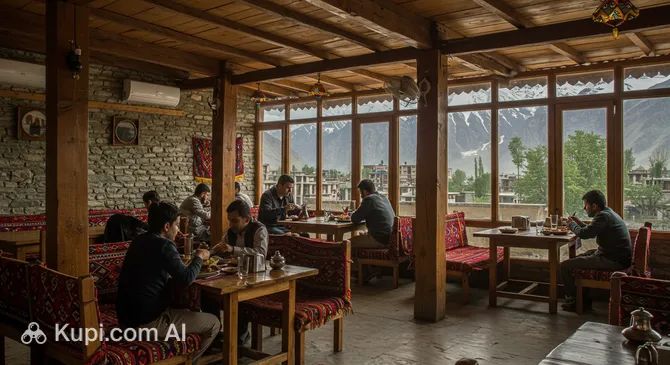
Indus Lodges Restaurant. Source: Kupi.Binoculars

After a day of exploring, visitors can enjoy a meal at the Indus Lodges Restaurant. Situated in a convenient location, this establishment offers a chance to relax and sample local and traditional cuisine. It is a popular spot for travelers looking to recharge and enjoy the hospitality of the region before heading out on their next adventure.

Another essential stop is the Kargah Buddha, located in the Kargah Nallah ravine. This 7th-century archaeological marvel features a massive standing Buddha carved into the sheer rock face. Local folklore adds a layer of mystery to the site, associating it with legends of a man-eating giantess. The site not only highlights the area's ancient Buddhist heritage but also offers a pleasant short hike with rewarding views of the surroundings.

Local Cuisine

The culinary landscape of Gilgit is a delightful departure from the spicy curries typically found in the southern parts of the country. Influenced by its proximity to Central Asia and the harsh mountain climate, the local food is hearty, warming, and mildly spiced. Wheat, dairy, and meat—particularly mutton and yak—form the staples of the diet, designed to provide sustained energy for life in the high altitudes.

One of the most beloved dishes to try is Mamtu, a steamed dumpling filled with minced meat, onions, and local spices, often served with vinegar or a chili sauce. Another signature delicacy is Chapshuro, frequently described by travelers as "Gilgit Pizza." It consists of a semicircular bread crust stuffed with a savory mixture of chopped meat, onions, and coriander, baked to perfection in a traditional oven. For those visiting in colder months, Dawdo, a thick soup made with handmade noodles and mustard greens, offers a comforting embrace against the chill.

When it comes to beverages, the local culture revolves heavily around tea. Namkeen Chai (salty tea) is a daily staple, often enriched with milk and sometimes butter or almond oil to combat the dry weather. Unlike the sweet milky tea found elsewhere in Pakistan, this version is savory and deeply traditional. In summer, visitors can enjoy fresh fruit juices, particularly those made from the region's famous apricots, which are sweet and refreshing. Alcohol is not part of the general local dining culture, so you will primarily find tea, mineral water, and soft drinks served with meals.

The food scene in Gilgit ranges from bustling street stalls in the main bazaars to quieter dining rooms in hotels. Travelers can explore the markets to find fresh dried fruits and walnuts or sit down for a full meal at local eateries. For a reliable dining experience where you can sample both traditional and standard Pakistani dishes, the Indus Lodges Restaurant is a known establishment in the city. Whether eating at a simple roadside stall or a proper restaurant, the warm hospitality of the locals adds a special flavor to every meal.

Travel Tips

Visiting Gilgit is the start of an unforgettable Himalayan adventure, but the region's unique geography and culture require some smart planning. Here are some essential practical tips to ensure your journey through this spectacular valley is as smooth and enjoyable as possible.

  1. Clothing and Gear: Due to the conservative local culture, modesty is essential; both men and women should wear loose-fitting clothing that covers arms and legs, such as the traditional shalwar kameez or loose trousers. Since the weather can fluctuate rapidly, packing layers is key—bring a warm fleece or jacket for chilly evenings, even in summer. Sturdy walking shoes or hiking boots are a must for navigating the uneven terrain.
  2. Transportation: There is no public metro or tram system in Gilgit. The primary way to get around the city is by local taxis or private 4x4 jeeps, which are necessary for visiting surrounding valleys like Naltar. Ride-hailing apps are generally not available here. For day trips, it is highly recommended to hire a car with an experienced local driver who knows the winding mountain roads well.
  3. Finances: Cash is king in Gilgit. While there are ATMs in the city, they can frequently be out of service or may not accept all international cards. It is crucial to carry a sufficient amount of Pakistani Rupees (PKR) with you. Credit cards are rarely accepted outside of high-end hotels, so keep small denominations handy for bazaars and tips.
  4. Health and Safety: The high altitude and dry air can cause dehydration quickly, so drink plenty of bottled or boiled water and use high-SPF sunscreen. Pharmacies are available in the main city center, but it is wise to bring a personal supply of essential medicines, especially for motion sickness if you plan to travel by road. Gilgit is generally safe for tourists, but always stick to well-traveled routes and avoid trekking alone in isolated areas.
  5. Communication: Urdu is the lingua franca, and English is understood in hotels and by tourism professionals. A critical tip for connectivity is that standard Pakistani SIM cards (like Jazz or Telenor) often have poor or no coverage in Gilgit-Baltistan. You should purchase a local SCOM SIM card upon arrival in the region to ensure you have reliable phone and 4G internet service.
  6. Local Etiquette: The people of Gilgit are incredibly hospitable. Greeting locals with a warm "Assalam-o-Alaikum" (Peace be upon you) goes a long way. Always ask for permission before taking photographs of people, especially women, as privacy is highly valued. When entering a home or a mosque, remember to remove your shoes.
  7. What to Avoid: Avoid wearing shorts or revealing clothing in public, as this is considered disrespectful to local norms. Public displays of affection are also culturally inappropriate and should be avoided. Additionally, refrain from drinking tap water; always stick to sealed mineral water to avoid stomach issues.
  8. Power Supply: Electricity shortages and load shedding can be common in the mountains. It is a great "life hack" to carry a high-capacity power bank and a universal travel adapter to keep your devices charged during power outages or long road journeys.

With these tips in hand, you are ready to embrace the warm hospitality and rugged beauty of Gilgit without worry. Pack your bags with confidence and get ready for a truly immersive experience in the heart of the mountains.

Entertainment & Nightlife

Entertainment in Gilgit is defined by its rich cultural heritage and spectacular natural surroundings rather than modern urban nightlife. Visitors will not find nightclubs, cinemas, or shopping malls here. Instead, leisure time is best spent immersing oneself in local traditions, watching thrilling sports, or exploring the vibrant marketplaces that have served travelers for centuries.

The heartbeat of the city's social scene is undoubtedly Polo, often referred to locally as the "Game of Kings." The Aga Khan Shahi Polo Ground, located right in the city center, is a historic venue where matches draw enthusiastic crowds. Unlike the polished version of the sport played elsewhere, polo here is fast, furious, and played to the rhythm of traditional drums and flutes. Catching a match or a practice session is a quintessential Gilgit experience that offers a glimpse into the region's warrior spirit.

For those interested in cultural festivities, the region hosts several vibrant events throughout the year. The Silk Route Festival is a major highlight, usually held in autumn. This colorful event celebrates the diversity of the area with folk music, traditional dances, and exhibitions of local handicrafts. It is a fantastic opportunity for tourists to see artisans at work and witness the unique customs of the various mountain communities gathered in one place.

Shopping in the local bazaars serves as a primary form of entertainment for many visitors. The NLI Market and the main bazaars are bustling with activity and offer a treasure trove of local goods. Travelers can spend hours browsing for precious gemstones, intricate silver jewelry, and the famous Gilgit woolen caps and shawls. The markets are also the perfect place to engage with friendly locals and observe the daily rhythm of life in the valley.

Evenings in the city are generally quiet and relaxed. The local concept of nightlife revolves around gathering at chai dhabas (tea shops) or riverside eateries to enjoy a hot cup of tea and conversation under the starry sky. A walk along the banks of the Gilgit River at sunset provides a serene end to the day, allowing visitors to unwind while listening to the soothing sound of the water against the backdrop of towering mountains.

Parks & Museums

Gilgit is a city where history and nature are inextricably linked, offering visitors a chance to explore cultural heritage under the open sky rather than within the walls of traditional museums. The city's green spaces are often steeped in historical significance, serving as memorials and gathering places that reflect the region's storied past and its stunning natural geography.

One of the most prominent green spaces in the heart of the city is Chinar Bagh. Located along the banks of the Gilgit River, this park is named after the majestic Chinar trees that provide ample shade and a serene atmosphere. It holds deep patriotic value as the site of the Freedom Fighters Monument, dedicated to the local heroes who fought for the region's independence. It is a favorite spot for locals to take evening strolls, offering peaceful views of the flowing river and the surrounding mountains.

For a unique blend of history and tranquility, the British Cemetery, historically known as Hayward's Garden, is a must-visit. Tucked away from the main hustle of the town, this small, well-maintained enclosure serves as the final resting place for 19th-century explorers, officials, and mountaineers who perished in the region during the Great Game era. The cemetery is like a quiet park that tells the stories of Victorian-era adventurers, with a map on-site detailing the history of those buried there, including the famous explorer George Hayward.

While Gilgit may not have large conventional museums, the Chinese Memorial Cemetery in the nearby Danyore suburb functions as a poignant open-air museum and park. It honors the Chinese engineers and workers who died constructing the Karakoram Highway. The meticulously kept grounds, with their uniform headstones and evergreen trees, offer a somber yet beautiful environment. The site provides visitors with a tangible connection to the massive engineering feats that connected Pakistan and China.

The entire valley can be described as a living museum of archaeology. Beyond the famous Kargah Buddha, the region is scattered with ancient Rock Carvings and inscriptions found along the rivers and old trade routes. These petroglyphs date back thousands of years and depict animals, hunters, and stupas, offering a raw and unfiltered look at the travelers and civilizations that once passed through this Silk Road hub.

For an authentic local experience, take a walk across the Konodas Bridge or the Danyore Suspension Bridge. These are not just functional crossings but engineering marvels that offer the best "gallery" views of the Gilgit and Hunza rivers merging. Walking these swaying structures provides a thrill and a perspective on the landscape that no indoor venue can match.

Getting Around

The public transport system in Gilgit is distinctively different from large metropolitan areas, reflecting the city's mountainous geography and relatively small size. Travelers should not expect to find metros, trams, or large municipal bus networks here. Instead, the city relies on an informal yet efficient network of road-based transport that connects the main market areas, the airport, and the surrounding residential valleys.

The most common form of local public transport is the "Suzuki," a modified pickup truck utilized as a shared minibus. These vehicles run on fixed routes along the main roads and are the most affordable way to get around. Passengers typically hop on and off at designated stops or simply by flagging the driver down from the roadside. For slightly longer distances to nearby suburbs or villages, Toyota Hi-Ace vans are frequently used, operating on a similar shared basis. While these vehicles can be crowded, they offer an authentic glimpse into local life.

Payment for all forms of local transport is strictly cash-based. There are no travel cards, digital passes, or mobile ticketing apps available for the public transit network. Fares for the Suzuki pickups and vans are fixed and generally very low, usually amounting to a small sum of local currency. It is highly recommended to carry small denominations of cash, as drivers often do not have change for large banknotes. You pay the conductor or the driver directly at the end of your journey.

For those seeking more comfort or flexibility, taxis are widely available throughout the city. Unlike the shared vans, taxis do not use meters, so it is essential to negotiate and agree on the fare before getting into the car. While ride-hailing apps are popular in other parts of the world, they are generally not operational or reliable in this region. Therefore, obtaining a taxi usually involves hailing one on the street or asking your hotel to arrange a trusted driver.

Given the rugged terrain surrounding the city, standard cars cannot access many of the popular tourist spots located off the main highway. For excursions to places like Naltar Valley or other high-altitude destinations, hiring a private 4x4 jeep is not just an alternative but a necessity. These jeeps can be rented with a driver from the main bazaar area or through local hotels. Car sharing and bike rentals are not standard practices here, although some adventurous tourists bring their own motorcycles.

Tourists should be aware of local etiquette and operating hours. Public transport typically runs from early morning until sunset; options become very scarce after dark. In shared vehicles like the Suzukis, it is customary for women to sit in the front seat next to the driver or in a designated section, while men occupy the back. Respecting these cultural norms ensures a smooth and welcoming experience while navigating the city.

Accommodation

Accommodation in Gilgit caters primarily to trekkers, backpackers, and domestic tourists, offering a range of options that prioritize functionality and hospitality over opulence. The city generally features a wide selection of budget guesthouses and mid-range hotels, which are perfect for resting before or after a mountain expedition. While you will not find ultra-modern international hotel chains, there are several comfortable resorts and heritage-style lodgings that provide excellent amenities and stunning views of the surrounding peaks.

When choosing where to stay, location plays a key role in the experience. The most popular area for tourists is along the banks of the Gilgit River or near the Civil Lines area. Staying here offers a peaceful atmosphere and easy access to the main roads leading out to the valleys. Conversely, the city center near the main bazaars is convenient for shopping and finding transport but can be quite noisy and crowded. Travelers seeking tranquility often prefer the riverside establishments located slightly away from the downtown hustle.

Booking accommodation in Gilgit requires some foresight, particularly during the peak summer months of June through August. This is the height of the trekking season, and the best rooms fill up quickly. It is highly advisable to book your stay well in advance to secure your preferred location. During the winter, many establishments may operate with limited services or close entirely due to the harsh weather, so always confirm availability if traveling in the off-season.

In terms of pricing, the city is generally affordable for international travelers. Budget hostels and simple guesthouses offer very economical rates, while mid-range and upper-tier hotels remain reasonably priced compared to global standards. While some larger hotels are listed on major online booking platforms, many smaller, family-run guesthouses still rely on direct phone bookings or walk-ins. It is also worth noting that payment is often expected in cash, as credit card facilities can be unreliable or unavailable in many lodgings.

Nearby Cities

While Gilgit acts as the central hub for the northern regions, it is surrounded by other significant towns and cities that offer their own unique charm. Due to the rugged mountainous terrain of the Karakoram and Himalayas, travel between these locations is an adventure in itself. "Nearby" in this region often implies a scenic road trip rather than a quick commute, as winding highways and changing elevations dictate the pace of travel.

The closest major town to Gilgit is Chilas, located approximately 59 km away. It serves as a crucial transit point on the Karakoram Highway and is known for its ancient rock carvings. For those willing to travel further south, the city of Abbottabad offers a greener landscape and a milder climate, popular among tourists seeking a retreat in the hills.

Travelers interested in exploring the rich history and culture of the Swat Valley can head towards Mingaora and its twin city, Saidu Sharif. These cities are bustling centers of trade and heritage, though reaching them involves a longer journey through some of Pakistan's most picturesque valleys. Another notable city in the region is Swabi, which lies further afield but is significant for its agricultural prominence.

The following table provides a summary of these nearby cities, including their estimated distance from Gilgit and population size, to help you plan your regional explorations:

City Name Population Distance (km)
Chilas 214,000 59
Mingaora 279,914 218
Abbottabad 148,587 218
Saidu Sharif 1,860,310 220
Swabi 115,018 260

Shopping & Souvenirs

Shopping in Gilgit offers a unique experience that reflects its position as a historic trade hub along the Silk Road. While you will not find high-end fashion boutiques or luxury retail chains, the city is a treasure trove for authentic local handicrafts, precious stones, and goods imported from neighboring China. The shopping scene here is vibrant and bustling, centered around traditional bazaars where bargaining is part of the culture and the variety of products ranges from trekking gear to dried organic foods.

The most prominent shopping district in the city is the NLI Market (Northern Light Infantry Market). This sprawling commercial area is the heart of Gilgit's retail activity, lined with hundreds of shops selling everything from electronics and clothing to crockery and camping equipment. Another key area is the Main Bazaar, particularly along Airport Road and the streets surrounding the central Jamat Khana. These streets are perfect for a leisurely walk, allowing visitors to soak in the local atmosphere while browsing through small stalls and shops.

Travelers looking for large, modern shopping malls in the Western sense will not find them here. Gilgit's retail landscape is dominated by open-air markets and multi-story shopping plazas rather than enclosed mall complexes. The NLI Market itself functions as the city's primary shopping complex, housing numerous independent retailers under one extensive umbrella, effectively serving the purpose of a mall for the local population.

For a more traditional experience, the local food and flea markets are fascinating places to explore. The sections of the bazaar dedicated to Dry Fruits are particularly famous. Here, you can find high-quality organic produce from the surrounding valleys, including apricots, walnuts, almonds, and dried mulberries. These markets are aromatic and colorful, offering a glimpse into the agricultural richness of the Gilgit-Baltistan region.

When it comes to souvenirs, Gilgit is renowned for its gemstones and minerals. The region is rich in deposits of aquamarine, ruby, emerald, and tourmaline, and you can find many shops selling both raw stones and finished jewelry at competitive prices. Additionally, traditional woolen items are excellent buys; look for the iconic Gilgit cap (a round woolen hat adorned with a feather) or warm, hand-woven shawls known as pattu, which are perfect for the cold mountain weather.

Stores in Gilgit typically open around 10:00 AM and remain open until late in the evening, often closing around 8:00 PM or 9:00 PM. However, on Fridays, many shops may close for a few hours in the afternoon for prayers, or remain closed for the entire day. Cash is the primary mode of payment everywhere. Credit cards are rarely accepted outside of a few major hotels, so it is essential to carry sufficient Pakistani Rupees when visiting markets and smaller shops.

Tourists should be aware that there is no tax-free shopping or VAT refund system available in Gilgit. The prices you see or negotiate are final, and the concept of tax refunds for travelers does not apply in this region.

Reached the end of the page?

That means the route is fully explored