Support

Taxkorgan

About

Taxkorgan is a captivating destination nestled high in the majestic Pamir Mountains, offering travelers a glimpse into a world of rugged beauty and cultural diversity. Far removed from the bustling metropolises of the east, this remote town serves as a gateway to some of the most spectacular high-altitude landscapes in Asia. Its unique atmosphere is defined by the stunning backdrop of snow-capped peaks and the warm hospitality of its residents.

Located in the Xinjiang Uygur Autonomous Region of China, Taxkorgan sits at an elevation of over 3,000 meters, making it one of the highest towns in the country. Geographically, it is a strategic border hub situated near the frontiers of Pakistan, Tajikistan, and Afghanistan. Despite its vast surroundings, the town itself has a modest population of approximately 8,900 people, creating an intimate and peaceful environment for visitors.

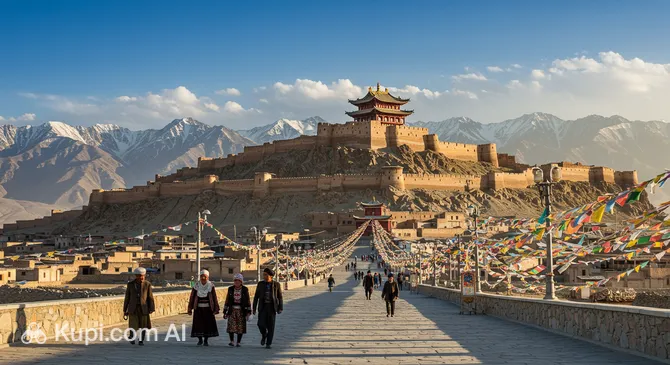
Taxkorgan. Source: Kupi.Binoculars

The town is steeped in legend and antiquity, most notably represented by the ruins of the Stone City (Shitoucheng). Standing atop a hill on the edge of town, this fortress offers panoramic views and a tangible connection to the rich history of Taxkorgan as a vital trading post on the ancient Silk Road. Below the ruins lies the Golden Grassland, a lush wetland that provides a stunning contrast to the arid mountains and serves as a perfect spot for photography and leisurely walks.

Beyond its historical allure, Taxkorgan is a base for exploring the breathtaking scenery of the Pamirs, including views of the towering Muztagh Ata and Kongur Tagh peaks. Whether you are interested in the unique culture of the local Tajik community or seeking the solitude of the mountains, Taxkorgan invites you to experience a truly extraordinary corner of the world.

Weather Overview

Due to its high elevation in the Pamir Mountains, Taxkorgan experiences a cold, semi-arid climate characterized by long, freezing winters and short, cool summers. The thin air and altitude significantly influence the temperature, keeping it low throughout the year, so visitors should always be prepared with warm layers.

Winter conditions are severe and prolonged, with average temperatures in January and December dropping to around -20°C and minimums often plunging below -27°C. For a better understanding of these conditions before your trip, it is advisable to check the current weather in Taxkorgan. Even the spring months remain very cold, with April still averaging around -7°C.

Summers are surprisingly cool rather than warm, with the average temperature in July reaching only about 7.5°C and daily highs peaking near 13°C. While actual precipitation amounts are negligible year-round—rarely exceeding 2mm per month—the summer season from June to August is characterized by a higher frequency of wet days, bringing light rain or snow showers.

Interesting Facts

Beyond the main attractions, Taxkorgan holds many fascinating secrets that reveal the deep cultural roots and unique daily life of its people. Here are some intriguing facts that make this high-altitude town truly one of a kind:

  • The Legend of the Sun Princess: The ancient Stone City isn't just a fortress; it is the setting of a mystical origin story. According to local folklore, a Han Dynasty princess was hidden here for her safety but mysteriously became pregnant by the "Sun God." Her descendants are said to be the ancestors of the local Tajik people, who still refer to themselves as the "Children of the Sun."

  • The Eagle Totem: The eagle is a sacred symbol here, representing heroism and freedom. This reverence is brought to life in the "Eagle Dance," where dancers mimic the bird's soaring movements. Traditionally, the music for this dance is played on a rare flute made specifically from the wing bones of an eagle.

  • A Unique Greeting: The local etiquette is distinct and heartwarming. When greeting guests or elders, it is customary for men to kiss the palm or the back of the other person's hand as a sign of utmost respect, while women typically greet each other with a kiss on the cheek.

  • Living in a "Time Warp": Although the town officially operates on Beijing Time, the sun here rises and sets nearly three hours later than in the capital. This creates a quirky reality where locals might eat dinner at midnight, and the sky often remains bright well past 10:00 PM during the summer.

  • What the Name Means: The name "Taxkorgan" (or Tashkurgan) literally translates to "Stone Fortress" or "Stone Tower" in the Turkic language, a direct reference to the ancient citadel that has guarded these trade routes for over 2,000 years.

How to Get There

Reaching Taxkorgan is an adventure in itself, often involving a journey along the legendary Karakoram Highway. For those planning their trip, you can find more about how to get to Taxkorgan and the various transport options available. While the town is remote, modern infrastructure has made it increasingly accessible for travelers exploring the Xinjiang region.

The most convenient option for direct access is the Tashikuergan Hongqilafu Airport (HQL). Located within the county itself, this high-altitude airport is situated just 13.3 km from the town center. A taxi or shuttle ride from here is quick, taking approximately 40 minutes. Although it is a smaller facility with an annual passenger traffic of around 160,000, it offers a stunning aerial introduction to the Pamir Plateau.

Alternatively, many tourists choose to fly into Kashi Airport (KHG) in the city of Kashgar, which serves as a major regional hub. Located about 208 km from Taxkorgan, this airport handles significantly more traffic and offers more frequent connections. The overland journey from Kashgar to Taxkorgan is a highlight of the trip, taking approximately 5.5 hours by car or bus, allowing visitors to experience the breathtaking scenery of the Karakoram Highway.

For clarity, here is a summary of the main airports:

Airport Name City Passenger Traffic Km from City
Kashi Airport Kashgar Large 208.3
Shache (Yeerqiang) Kuiyibagecun Medium 171.5
Tashikuergan Hongqilafu Airport Taxkorgan Small 13.3
Skardu Airport Skardu Small 271.9
Gilgit Airport Gilgit Small 220.6

Main Attractions

Stone City (Shitoucheng) is perhaps the most iconic landmark in the area, standing as a silent witness to the region's vibrant past. Perched on a precipitous hill just outside the town center, this ancient fortress dates back over 2,000 years and was once a crucial strategic point on the Silk Road. Visitors are drawn here to explore the crumbling earthen walls and foundations of the citadel. It offers a tangible connection to history and provides one of the best vantage points for panoramic views of the surrounding snow-capped mountains and the valley below.

Located directly beneath the fortress is the Golden Grassland, also known as the Alar National Wetland Park. This lush expanse of wetlands creates a striking visual contrast against the arid, rocky backdrop of the Pamir landscape. It is particularly mesmerizing during sunrise and sunset when the meandering streams reflect the changing colors of the sky and the grass glows in golden hues. For photographers and nature lovers, strolling along the wooden boardwalks here offers a peaceful retreat and a chance to capture the quintessential beauty of the high plateau.

A journey to Taxkorgan is often incomplete without visiting the Khunjerab Pass, the highest paved international border crossing in the world. Situated at an elevation of approximately 4,693 meters, this mountain pass marks the frontier between China and Pakistan. The drive up the Karakoram Highway to reach the pass is an adventure in itself, featuring dramatic scenery of glaciers and rugged peaks. Tourists flock here to take photos with the iconic border monument and to experience the thrill of standing at the "Roof of the World."

For those seeking a unique driving experience, the Panlong Ancient Road has become a viral sensation and a must-see attraction. Often referred to as the "Plateau Sky Road," this winding route in Wacha Township is famous for its dizzying array of over 600 hairpin turns that snake up the dark mountain slopes. It is a favorite spot for drone photography and road trip enthusiasts who want to test their driving skills while enjoying some of the most surreal and dramatic road geometry on the planet.

Local Cuisine

The local cuisine of Taxkorgan is a hearty reflection of its high-altitude environment and the rich cultural heritage of the Tajik people. Situated on the Pamir Plateau, the food here is designed to provide warmth and energy to withstand the cold climate. The gastronomic scene is distinct from typical Chinese cuisine, leaning heavily towards dairy products, wheat-based breads, and meats such as mutton, beef, and especially yak, which is a local specialty.

One of the absolute must-try dishes in Taxkorgan is the Yak Meat Hotpot. This delicacy is unique to the high plateaus of Xinjiang and is renowned for its tender, flavorful meat that is believed to have warming properties essential for the mountain weather. Another staple is Hand-Grabbed Mutton (Shou Zhu Rou), where large chunks of lamb are boiled simply with salt to preserve the natural taste and served to be eaten by hand. These meat dishes are often accompanied by Tajik Naan, a dense, golden roasted flatbread that is a daily essential for the locals.

When it comes to beverages, Salty Milk Tea is the lifeblood of the local diet. Unlike the sweet variations found elsewhere, this tea is savory, brewed with strong brick tea and fresh milk, and often enriched with butter. It is typically consumed at every meal and serves as a vital source of hydration and energy. Additionally, since the region is famous for its apricot orchards, visitors should try fresh apricot juice or dried apricots, which offer a sweet and tangy contrast to the rich, savory main courses.

The food culture in Taxkorgan is deeply rooted in hospitality. In the town center, you will find small, welcoming restaurants serving a mix of Tajik and Uighur dishes, including savory lagman noodles and spicy skewers. However, the most authentic dining experience often happens in the homes of local families or homestays, where breaking bread—dipping pieces of naan into a bowl of warm milk tea—is a cherished communal ritual that symbolizes friendship and respect.

Travel Tips

Visiting the "Roof of the World" requires a bit more foresight than your average holiday, as the remote location and high altitude present unique challenges. To help you navigate your journey smoothly and respectfully, here is a set of practical guidelines for your time in Taxkorgan.

  1. Clothing and Gear: The weather here is notoriously unpredictable due to the high elevation. Even if you visit in summer, bring a warm down jacket and thermal layers, as temperatures drop significantly at night. The sun is incredibly strong at 3,200 meters, so high-SPF sunscreen, lip balm, and good sunglasses are non-negotiable to prevent sunburn and windburn.
  2. Transportation: Taxkorgan is a small, compact town, and the best way to explore the center is on foot. You can easily walk between the museum, the Stone City, and the Golden Grassland. For trips to the airport or slightly further scenic spots, local taxis are available and generally inexpensive, but you should agree on the fare beforehand or ensure the meter is used.
  3. Finances: While digital payments like Alipay and WeChat Pay are widely used in China, they can sometimes be tricky for foreigners to set up without a local bank account. Cash (Chinese Yuan - CNY) is king here, especially in smaller shops and local markets. International credit cards are rarely accepted, and ATMs that take foreign cards may be scarce, so withdraw sufficient cash in Kashgar before arriving.
  4. Health and Safety: Altitude sickness is a genuine concern for many visitors. Take it easy for the first 24 hours, avoid strenuous exercise, and stay hydrated. Portable oxygen canisters are available in local shops and pharmacies if you feel short of breath. Pharmacies are available, but staff likely won't speak English, so bring a translation app or your own supply of basic painkillers and stomach medicine.
  5. Communication: English is virtually non-existent in daily interactions. The common languages are Mandarin Chinese and the local Sarikoli (Tajik) dialect. It is essential to download an offline translation app (like Baidu Translate or a configured Google Translate) before you arrive. Buying a SIM card in Xinjiang can be bureaucratically complex for foreigners; it is highly recommended to purchase one in a major city like Beijing or Shanghai before traveling west.
  6. Local Etiquette: The local Tajik people are incredibly hospitable, but it is important to respect their conservative culture. Dress modestly, covering shoulders and knees. If you are invited into a local home or yurt, always remove your shoes at the entrance. When greeting, placing your right hand over your heart and nodding slightly is a polite and universally appreciated gesture.
  7. What to Avoid: As Taxkorgan is a sensitive border region near Pakistan, Tajikistan, and Afghanistan, strictly avoid photographing police stations, military personnel, or border checkpoints. Doing so can lead to having your camera checked or memory card deleted. Also, avoid discussing sensitive political topics with locals.
  8. Timing Your Day: Be aware of the "unofficial" time difference. While clocks are set to Beijing Time, the sun rises and sets much later here. Don't expect shops or restaurants to open before 10:00 AM or 11:00 AM Beijing Time. Plan your breakfast and morning activities accordingly to avoid waiting for the town to wake up.

By keeping these practical tips in mind, you can focus less on logistics and more on the breathtaking scenery and warm hospitality that make Taxkorgan such a special destination. Prepare well for the altitude and the culture, and you are sure to have an unforgettable adventure on the Pamir Plateau.

Entertainment & Nightlife

Entertainment and nightlife in Taxkorgan differ significantly from the bustling scenes found in China's major coastal cities. Due to its remote location, high altitude, and relatively small population, the town does not offer a traditional western-style nightlife with loud nightclubs or dedicated bar districts. Instead, the evening atmosphere is tranquil, intimate, and deeply rooted in local culture. The "nightlife" here revolves around social dining, stargazing under the incredibly clear high-altitude skies, and community gatherings in the public squares.

The center of evening activity is undoubtedly the main commercial thoroughfare, often referred to as Taxkorgan Road or the Sino-Pakistan Friendship Street. As the sun sets behind the Pamir mountains, this area lights up with small eateries and shops. The vibe is relaxed and safe, with locals and tourists alike strolling along the sidewalks. The dress code is strictly casual and practical; given the sharp drop in temperature at night, a warm jacket is far more important than fashionable attire.

For those looking to experience the local evening culture, the Taxkorgan Night Market is a must-visit spot. Located near the town center, this isn't a rowdy party zone but a lively culinary hub. Here, you can sit at outdoor tables (weather permitting) or inside heated tents to enjoy sizzling yak meat skewers, freshly baked naan, and hot tea. It is the best place to mingle with locals and soak in the spirited atmosphere without the noise of a club.

Another focal point for evening entertainment is Eagle Square (Cultural Square). In the warmer months, this large public space often comes alive after dinner with spontaneous community dancing. You might witness locals performing traditional Tajik dances to the sound of eagle flutes. It is a wholesome and mesmerizing form of entertainment where visitors are often welcomed to watch or even join in the circle. It offers a rare glimpse into the social life of the residents.

If you are seeking a place to have a drink, options are limited to the dining areas of major hotels rather than standalone pubs. The Pamir Hotel and other tourist-friendly accommodations typically have restaurants or lobby lounges where travelers gather to swap stories over a beer or local wine. Additionally, like many towns in China, Taxkorgan has a few KTV (Karaoke) venues tucked away in commercial buildings. These are popular with the younger local crowd and offer a private room experience for singing and socializing, which is the closest thing to a "club" experience you will find here.

Practical advice for a night out involves preparing for the elements. The best time to head out is around 9:00 PM or 10:00 PM Beijing time (due to the late sunset). Prices are generally affordable, with a hearty meal costing a fraction of what you would pay in Shanghai. The town is small enough that you can walk almost anywhere, but local taxis are available if you prefer not to brave the cold. Safety is excellent; the town is heavily patrolled and crime against tourists is virtually unheard of, making night walks perfectly secure.

During the daytime, entertainment shifts towards cultural and scenic exploration. The Taxkorgan Museum is a small but informative venue that provides context to the region's history and the customs of the Tajik people. For a more active day, walking along the wooden boardwalks of the Golden Grassland offers relaxing entertainment with spectacular mountain views, serving as a peaceful precursor to the quiet evenings.

Parks & Museums

While Taxkorgan is a small town nestled in the high mountains, its approach to green spaces and cultural preservation is defined by the spectacular natural environment rather than manicured urban gardens. The "parks" here are vast, open landscapes framed by snow-capped peaks, and the cultural venues offer an intimate look into the unique heritage of the Tajik people and the ancient Silk Road.

Alar National Wetland Park (Golden Grassland) is the crown jewel of the town's natural areas. Located just on the edge of the city center, this expansive wetland offers a stunning contrast of lush green grass and winding streams against the arid backdrop of the Pamir Mountains. It serves as the primary "city park" for both locals and tourists. Visitors can wander along well-maintained wooden boardwalks that crisscross the wetlands, providing excellent opportunities to observe grazing horses, yurts, and the reflection of the mountains in the water. It is a peaceful retreat perfect for a leisurely afternoon walk or photography, particularly during the golden hour.

Although not a park in the traditional sense, Eagle Square acts as a vital open-air public space where the community gathers. Surrounded by views of the mountains, this plaza is often the site of cultural events and daily social life. It features sculptures celebrating the eagle—the totem of the local Tajik culture—and offers a paved area where children play and elders converse. In the evenings, it transforms into a venue for spontaneous traditional dancing, making it a living showcase of local customs.

For a deeper dive into the region's history, the Taxkorgan Museum is a must-visit cultural institution. Though compact, the museum houses a fascinating collection of artifacts unearthed from the surrounding areas, including pottery, bronze ware, and silk fragments that date back to the Han and Tang dynasties. The ethnographic section is particularly engaging, displaying colorful traditional Tajik costumes, jewelry, and the unique eagle bone flutes. It provides essential context for understanding the distinct identity of the people who have inhabited this high plateau for centuries.

The Stone City (Shitoucheng), while primarily a historical ruin, functions as an open-air museum. Walking among the crumbled earthen walls and foundations, visitors can trace the layout of this ancient Silk Road fortress. Informational signs help reconstruct the past, explaining the strategic importance of the citadel. The site connects directly to the wetland boardwalks, allowing for a seamless cultural and natural tour.

For an authentic experience, try visiting the wetland park just before sunset. As the sun dips behind the mountains, the temperature drops quickly, but the lighting on the "Golden Grassland" lives up to its name, turning the grass a brilliant yellow-gold. It is a quiet, magical moment shared by few, offering a sense of solitude that is hard to find in more crowded tourist destinations.

Getting Around

Navigating Taxkorgan is a refreshingly simple experience compared to the complex transit webs of China's megacities. As a small, high-altitude town with a compact layout, it does not possess a metro system, trams, or a comprehensive city bus network. The public transport options are limited and straightforward, reflecting the modest size of the population and the town's remote location on the Pamir Plateau.

The primary mode of motorized public transport within the town is the taxi. Taxis are readily available on the main streets and are the most convenient way to travel if you are carrying luggage or visiting spots on the outskirts. In Taxkorgan, taxis are generally inexpensive. While meters exist, it is common practice in this smaller locale for drivers to charge a flat rate for short trips within the town center. It is always wise to confirm the price with the driver before getting in to avoid any confusion.

For getting around the immediate town center, walking is often the best and most enjoyable option. Most of the key facilities, including hotels, restaurants, the museum, and the entrance to the Stone City, are located within a reasonable walking distance of one another along the main thoroughfare. The streets are wide and generally quiet, allowing tourists to soak in the mountain views and local architecture at their own pace without the need for a vehicle.

Regarding payment, there are no specific travel cards or transit passes like you would find in Beijing or Shanghai. The payment system is informal. While local drivers accept digital payments via WeChat Pay or Alipay, these apps can sometimes be difficult for short-term tourists to configure. Therefore, it is highly recommended to carry small denominations of cash (Chinese Yuan - CNY). Having 5, 10, and 20 RMB notes on hand will make paying for taxi rides seamless and quick.

Since many of the major attractions—such as the Khunjerab Pass or the Panlong Ancient Road—are located far outside the town limits, standard public transport does not serve these routes. For these excursions, the most popular alternative is to hire a private driver or charter a car for the day. You can often arrange this through your hotel or by negotiating with a taxi driver for a full-day rate. This allows you the flexibility to stop for photos and manage the high-altitude conditions comfortably.

A few practical tips will ensure a smooth experience: few drivers speak English, so you should always have the name of your destination written in Chinese on your phone or a piece of paper. Operating hours for taxis are generally flexible, but the number of available cars drops significantly late at night. If you have an early morning flight or bus to catch, it is advisable to arrange your ride the evening before to ensure availability.

Accommodation

Accommodation in Taxkorgan is generally practical and modest, reflecting its status as a remote, high-altitude outpost rather than a luxury resort destination. The options typically range from basic hostels and guesthouses favored by backpackers to comfortable mid-range hotels that cater to tour groups and independent travelers. While you will not find international five-star hotel chains here, there are several locally managed establishments that offer modern amenities, clean rooms, and hot water, which is a welcome luxury in the cold mountain climate.

The most convenient area to stay is undoubtedly the town center, particularly along the main thoroughfare often referred to as Taxkorgan Road or the Sino-Pakistan Friendship Street. This strip is the heartbeat of the town, lined with restaurants, shops, and the majority of the lodging options. Staying here puts you within easy walking distance of the major attractions, such as the Stone City and the Golden Grassland, as well as the nightly food market. There are also a few accommodation options situated slightly closer to the edge of town, offering quieter surroundings and unobstructed views of the snow-capped mountains right from your window.

When planning your stay, the most critical booking tip for international travelers is to verify that your chosen hotel is licensed to accept foreign guests. In this region, not every establishment has the authorization to host non-Chinese citizens. It is highly recommended to book your accommodation in advance, especially during the peak summer months (July and August) and the Golden Week holidays in October, when the town can fill up quickly with domestic tourists driving the Karakoram Highway.

In terms of pricing, Taxkorgan is generally affordable compared to China's major metropolises. Budget travelers can find dormitory beds or simple rooms at very low rates, while mid-range hotels offer private rooms with en-suite bathrooms at moderate prices. Payment is typically handled via Chinese mobile apps or cash; international credit cards are rarely accepted directly at hotel reception desks. It is also worth noting that due to the high altitude and cold nights, checking recent guest reviews regarding heating and hot water reliability can save you from a chilly experience.

Nearby Cities

Situated in a stunningly remote landscape, Taxkorgan connects travelers to several other fascinating destinations in the region. Whether you are heading further along ancient trade routes or exploring the wider province, these nearby cities offer distinct cultural and historical experiences suitable for your next stop.

One of the most famous hubs in the area is Kashgar. Located approximately 200 kilometers away, this legendary Silk Road city is renowned for its vibrant bazaars, the Id Kah Mosque, and its deep historical significance, serving as a major cultural center in Western China.

Another notable destination is Shache (also known as Yarkant). Roughly 191 kilometers from Taxkorgan, it is celebrated for its rich heritage, including the Golden Mosque and the Amannisa Khan Mausoleum, offering a glimpse into the region's artistic past.

City Population Distance (km)
Kashgar 920,000 200
Shache 851,374 191
Aksu 535,657 574
Kuqa 462,588 794
Hotan 322,300 421

These locations provide excellent opportunities to continue exploring the diverse geography and traditions of the area.

Shopping & Souvenirs

Shopping in Taxkorgan is a unique experience that reflects its position as a remote outpost on the ancient Silk Road rather than a modern commercial hub. You will not find sprawling luxury malls or international fashion chains here. Instead, the shopping scene is intimate and authentic, focused on local handicrafts, precious stones, and goods traded across the nearby borders. It offers travelers a chance to purchase items that are deeply connected to the culture of the Tajik people and the rugged geography of the Pamir Plateau.

The primary destination for retail therapy is the town's main thoroughfare, often referred to as Sino-Pakistan Friendship Street (Taxkorgan Road). This street forms the commercial spine of the town and is lined with a variety of small, family-run shops. Here, you can find everything from daily necessities and trekking gear to specialty stores selling regional curiosities. It is a pleasant place to stroll, with the snow-capped mountains providing a dramatic backdrop to your window shopping.

While there are no western-style shopping malls, there are small commercial centers and bazaars where locals gather to trade. These markets are excellent places to observe daily life. You might encounter goods brought in from neighboring Pakistan, such as brassware, scarves, and copper crafts, adding an international flair to the local selection. The atmosphere is relaxed, and bargaining is a common practice in these smaller stalls, though it should always be done with a smile and respect.

When it comes to souvenirs, precious stones and jade are among the most popular items. The region's geology is rich in minerals, and you will see many shops selling colorful stones, raw jade, and intricate jewelry. However, unless you are an expert, it is often safer to buy these as affordable keepsakes rather than high-value investments. Another highly recommended purchase is local dried fruit. The area around Taxkorgan and the lower valleys is famous for apricots; buying a bag of dried apricots or walnuts is a delicious and practical way to bring a taste of the region home.

For those interested in cultural artifacts, traditional Tajik handicrafts make for meaningful gifts. Look for the distinctive round, embroidered hats worn by local men and women, which are vibrant and unique to this ethnic group. You may also find handmade tapestries or small replicas of the traditional eagle bone flutes, which symbolize the Tajik reverence for the eagle. These items are typically sold in souvenir shops near the Stone City or along the main street.

Practicalities are important to keep in mind regarding opening hours. Due to the discrepancy between the official Beijing Time and the actual solar time in this westernmost part of the country, shops open much later than you might expect. Most businesses do not open their doors until 10:30 AM or 11:00 AM Beijing Time, but they often stay open late into the evening. As for payment, while digital methods like WeChat Pay and Alipay are accepted in many places, cash (CNY) remains essential for smaller transactions, market stalls, and in case of network issues in this high-altitude region.

Tourists should be aware that Taxkorgan does not offer a tax-free shopping scheme for foreign visitors. The prices are generally fixed and include any applicable taxes. The value here lies in the uniqueness of the items and the story behind them, rather than duty-free savings. Always ensure you have enough cash on hand before browsing, as ATMs accepting foreign cards can be scarce.
Reached the end of the page?

That means the route is fully explored