Support

Mohenjo Daro

About

Mohenjo-Daro is not just an ancient settlement, but a true archaeological legend that allows you to touch the origins of human civilization. The name translates as "Mound of the Dead," but for modern travelers, it serves as a living testament to the high level of development of the Indus Valley civilization. This unique UNESCO World Heritage site attracts researchers and history enthusiasts from all over the world with its mystery and monumentality.

The complex is located in the Sindh province, on the right bank of the Indus River in Pakistan. The climate here is desert and hot: summers can be scorching, so the best time to visit is during the cooler winter months, when walking through the ruins becomes comfortable. Although there is no permanent population here in the conventional sense today, the scale of the preserved structures gives an idea of what was a thriving metropolis thousands of years ago.
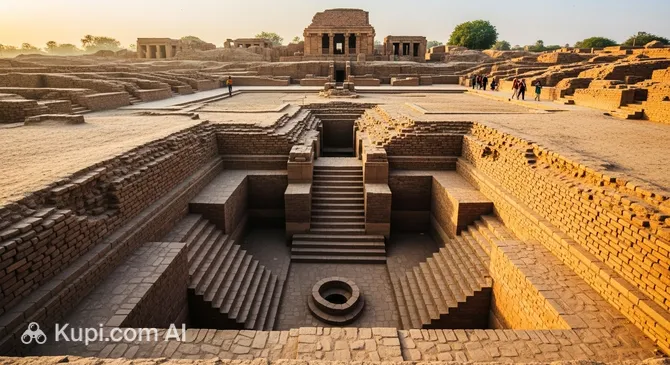
Mohenjo-Daro. Illustration.
Source: Kupi.com AI

The amazing history of Mohenjo-Daro reveals the secrets of one of the planet's first urban civilizations to its guests. Walking along the ancient streets, you will be struck by how sophisticated the urban planning was as early as 2600 BC. A complex water supply and sewerage system existed here, and houses were built from fired bricks according to strict architectural standards, which was an incredible achievement for that era.

Among the key attractions that cannot be missed, the Great Bath stands out — an ancient reservoir that was likely used for ritual ablutions and is considered the prototype of modern temple ponds. Looming over the city ruins is the majestic Buddhist Stupa, built much later than the main city but which has become its visual symbol. It is also worth noting the remains of the Granary and the Assembly Hall, which emphasize the administrative importance of this center in antiquity.

A trip to Mohenjo-Daro will be an unforgettable adventure for those seeking inspiration in the past. This place possesses a special energy where time seems to have stood still, allowing every guest to feel like a discoverer of the secrets of the ancient world.

Weather Overview

The climate of Mohenjo-Daro can be characterized as arid and hot, typical for the Sindh province. Summer here arrives early and is marked by extremely high temperatures: in May and June, the average maximum reaches 42–43°C. During this period, the sun is especially active, so travelers should be prepared for intense heat.

Winter brings long-awaited coolness and is considered the best time to visit. From December to February, daytime temperatures stay in a comfortable range of 17–22°C, although nights can be quite chilly, dropping to 8°C in January. Rainfall in the region is extremely low: even in the "wettest" months, July and August, only a few millimeters of rain are recorded.

Overall, expect a very hot summer and a mild, dry winter, which is ideal for long walks through historical sites. To choose the best dates for your trip and prepare for the climatic conditions, we recommend checking the detailed weather in Mohenjo-Daro before your departure.

Average monthly temperature

Average monthly precipitation

Interesting Facts

In addition to its monumental architecture, Mohenjo-Daro hides many amazing details that make its history even more mysterious and attractive. Here are a few facts that will help you look at this ancient city from a new perspective:

  • The true name is lost in time. The name we are accustomed to, "Mohenjo-Daro," translates from the Sindhi language as "Mound of the Dead" and was given to the site only in the 1920s when archaeologists discovered the ruins. What the residents themselves called their thriving metropolis thousands of years ago remains a mystery, as the Indus Valley script has still not been deciphered.

  • The mystery of the absence of power. Unlike Ancient Egypt or Mesopotamia, archaeologists have found neither opulent palaces nor grandiose temples here. The absence of obvious royal residences leads scientists to believe that Mohenjo-Daro's society might have been surprisingly egalitarian for its time or governed by a council of elders rather than a single ruler.

  • An engineering standard. The city's builders used an advanced system of standardization: practically all the bricks used to build the structures have strict proportions of 1:2:4. This uniform building standard was followed not only in this city but across vast territories of the Indus Valley civilization, indicating incredibly developed logistics and quality control.

  • A love for games. The residents of the ancient city knew how to have fun. During excavations, many cubic dice, game pieces, and even children's toys were found, such as clay whistles in the shape of birds and miniature carts. This is touching evidence that even 4,500 years ago, people paid great attention to the leisure and joy of their children.

How to Get There

Planning a trip to the ruins of an ancient civilization requires attention to detail, as the site is located far from modern metropolises. You can find out more about how to get to Mohenjo-Daro by studying various routes, but the main way for international tourists remains flying to the nearest major cities followed by a land transfer.

Mohenjo-Daro itself does not have a large international aviation hub, so travelers usually choose transit routes. The most convenient option is to fly to Jinnah International Airport (KHI), located in the city of Karachi. It is the country's largest transport hub, receiving many flights from abroad. It is located about 285 km from the historical complex. The journey by taxi or rented car will take about 7 hours and 30 minutes.

Another option is to use regional air services and fly to Rahim Yar Khan Airport (RYK), which is located in the city of Rahim Yar Khan. The distance from here to Mohenjo-Daro is about 242 km, and the travel time by car will take approximately 6 hours and 20 minutes. This airport is significantly smaller but can be convenient for building complex routes across the country.

For clarity, here is a summary of the nearest airports:

AirportPassenger trafficDistance
Rahim Yar Khan Airport2 004242 km
Jaisalmer120 714275 km
Jinnah International Airport7.3 mln285 km

Railway communication also plays an important role in the region's transport system. Although trains do not go directly to the ruins, Mohenjo-Daro railway station is located nearby, as well as a large hub station in the neighboring city of Larkana. From the station, you can quickly reach the archaeological complex by local taxi or motor rickshaw. Traveling by train in Pakistan is a colorful experience in its own right, allowing you to see the picturesque landscapes of the Sindh province.

Main Attractions

The ruins of Mohenjo-Daro are a vast open-air archaeological park where every stone breathes history. The territory of the ancient city is divided into two main parts: the elevated Citadel, where administrative and religious buildings were located, and the Lower City, where ordinary citizens lived. A walk here is like a journey through time, allowing you to examine the daily life of one of the world's oldest civilizations in detail.

The undisputed dominant feature of the complex is the Buddhist Stupa. This structure, located at the top of the Citadel, was built much later than the city itself — in the 2nd century AD, during the Kushan period. The stupa has become the most recognizable symbol of Mohenjo-Daro and an excellent observation deck. After climbing up to it, tourists can take in the entire scale of the excavations and appreciate the strict geometric layout of the ancient streets stretching into the distance.

Next to the Citadel is the famous Great Bath, an engineering marvel of its time. This rectangular pool, built of brick using natural bitumen for waterproofing, is considered the oldest public water reservoir in the world. Scientists believe it served not just for bathing, but for important religious purification rituals. The preserved steps leading into the water and the surrounding dressing rooms make it easy to imagine scenes from the lives of priests and nobility thousands of years ago.

To see the objects found during the excavations, it is worth visiting the Mohenjo-Daro Archaeological Museum, located near the ruins. It houses a rich collection of artifacts: the famous seals with images of animals and undeciphered inscriptions, jewelry, pottery, toys, and tools. The museum's exhibition helps "bring to life" the empty city streets in your imagination and understand how skillful the masters of the Indus Valley were.

Of particular interest to curious travelers is a walk through the Lower City, specifically the DK area. Here you can see a unique urban sewerage and water supply system, which in its complexity surpassed many European cities even in the 18th century. Brick wells, covered drains, and garbage chutes testify to the incredibly high culture of hygiene and urban planning that prevailed here during the Bronze Age.

Local Cuisine

A gastronomic journey to the vicinity of Mohenjo-Daro is an immersion into the rich culinary traditions of the Sindh province. Since the archaeological complex itself is far from metropolises, you won't find fine dining or trendy restaurants here. However, in the nearest city of Larkana and in roadside cafes (dhabas) on the way to the ruins, you can taste authentic dishes that are famous for their spiciness, aroma, and generous use of spices.

The main culinary symbol of the region is considered to be Sindhi Biryani. Unlike other versions of this popular South Asian rice dish, the local version is prepared with potatoes, dried plums, and a large amount of green chili, which gives it a special piquant taste. Another delicacy that is definitely worth trying is Palla fish. This fish is found in the Indus River and is considered a true gift of nature; it is usually fried in spices or cooked in a thick sauce.

For vegetarians, the local cuisine offers Sai Bhaji — a healthy and hearty stew made from spinach, sorrel leaves, fenugreek, and other green vegetables simmered with lentils. This dish is usually served with rice or fresh roti flatbreads. It is also worth paying attention to dishes made from lotus root (bhee), which is prepared here in clay pots, preserving its unique texture.

Given the hot desert climate, the drink culture here is excellently developed. The most refreshing local drink is Thadal. This is a sweet blend based on almonds, poppy seeds, cardamom, and black pepper, which tones perfectly on a hot day. Traditional hot tea (doodh patti) with milk and sugar is drunk everywhere and at any time of day. As for alcohol, it is officially prohibited for Muslims in Pakistan and is practically never found on open sale, especially in provincial areas, so tourists should count on a wide choice of juices, lassi, and sodas.

The food culture here is simple and democratic. Tourists and locals most often eat at open roadside establishments, sitting on woven daybeds (charpai). The food here is always fresh, prepared right in front of you, and served in large portions, demonstrating the famous Sindhi hospitality.

Travel Tips

A journey to the roots of one of the world's oldest civilizations is an exciting experience that requires careful preparation due to the remote location and specific climate. To ensure your trip to the ruins of Mohenjo-Daro is comfortable and safe, we have gathered a list of important practical recommendations to help you avoid common mistakes.

  1. Clothing and Gear. Given the hot climate of Sindh province and the country's conservative traditions, choose light, loose clothing made from natural fabrics (cotton, linen) that covers the body as much as possible (shoulders, arms, and legs should be covered). Be sure to bring a hat, sunglasses, and comfortable closed-toe shoes with flat soles, as you will have to walk on uneven ancient pavements and dusty paths.
  2. Transport Logistics. Public transport does not go directly to the archaeological complex. The most reliable way to get there and move around the vicinity is to rent a car with a driver for the whole day in the nearest major city (Larkana or Sukkur). Taxi apps may work unstable here, so arrange a "round trip" transfer in advance so the driver waits for you during the tour.
  3. Financial Matters. The official currency is the Pakistani Rupee. Museum ticket offices, souvenir shops, and local cafes accept only cash. There are no ATMs on the complex grounds, and payment terminals are very rare. Take care to withdraw enough cash in major cities before leaving. Prices here are low, but having small bills for tips and buying water is extremely useful.
  4. Health and Safety. The main enemy of the tourist here is the scorching sun. Always have a supply of bottled water with you and drink often, even if you don't feel thirsty, to avoid dehydration. Pharmacies and hospitals are far away, so pack a personal first aid kit with band-aids, and remedies for headaches and stomach upsets. The area is safe to visit, but staying after sunset is not recommended due to poorly lit roads.
  5. Communication and Connection. Locals speak Sindhi and Urdu; English is understood by museum staff and official guides, but in regular shops, you will have to explain yourself with gestures. Wi-Fi at the ruins is practically non-existent, so for connection, it's better to purchase a local SIM card (e.g., Zong or Jazz) with an internet package immediately upon arrival in Pakistan.
  6. Local Etiquette. Residents of the region are very hospitable but appreciate maintaining distance. Greet people with a slight bow or by placing your right hand over your heart. Men should not initiate handshakes with local women. If you want to take a photo of any of the locals, always ask permission first — it is a sign of respect that is highly valued here.
  7. What to Avoid. It is strictly forbidden to climb on the fragile walls of ancient buildings, sit on them, or take "souvenirs" in the form of stones or shards from the ground — this is strictly punishable by law. Also, refrain from public displays of affection (kissing, hugging) with your companion, as this is considered unacceptable behavior in a traditional society.
  8. Insider Tip. Plan your visit for early morning (right after opening) or the pre-sunset hours. At this time, the heat subsides, and the low sun creates a stunning play of shadows on the brickwork, allowing for the most atmospheric photos of the Great Stupa and ancient streets without crowds of other visitors.

Following these simple rules will allow you to feel confident and focus on the main thing — touching eternity. May your trip to Mohenjo-Daro be not just an excursion, but a real discovery of the secrets of the ancient world that will remain in your memory forever.

Entertainment & Nightlife

It is important to understand that Mohenjo-Daro is an archaeological reserve located in a rural area of the conservative Sindh province. There is no nightlife industry familiar to Western tourists here: you won't find nightclubs, discos, cocktail bars, or noisy parties. Life within the complex comes to a standstill at sunset, giving way to the silence of the desert and the majestic tranquility of the ancient ruins.

Nevertheless, a concept of "evening life" does exist here, but it has its own unique, traditional flavor. The main centers of attraction after sunset are tea houses (chai dhabas) and street cafes. These are social hubs where locals gather to discuss the news, watch cricket on TV, and drink a cup of strong, sweet milk tea (doodh patti). The atmosphere here is lively and authentic: visitors sit on woven daybeds (charpai) right under the open sky.

If you are looking for a more vibrant setting, it's worth heading to the nearest city — Larkana (about 30 km from the ruins). In the evening, the city's central streets turn into spontaneous gastronomic markets. Here you can find many establishments serving barbecue, kebabs, and fresh naan bread. The crowd in such places is predominantly male, and the dress code is modest and covered (long trousers, shirts). Alcohol is completely absent from open sale as it is prohibited by law, so "bar culture" is replaced by the culture of tea drinking and fresh juices.

For tourists staying directly near the archaeological complex, the only place for comfortable evening leisure is the restaurant at the PTDC Motel (Pakistan Tourism Development Corporation). This is a government-run hotel located within walking distance of the museum. In the evening, you can have dinner here in a quiet setting, try Pakistani dishes, and relax in the garden. This is the safest and most convenient place for foreigners who want to spend an evening without extra fuss.

Practical tips and safety:

  • Opening hours: Street cafes in Larkana stay open late, often until midnight or 1:00 AM. The motel restaurant usually closes earlier, around 10:00 PM – 11:00 PM.

  • Safety: The territory of the Mohenjo-Daro ruins themselves closes to visitors at sunset. Walking through the ancient city at night is strictly prohibited and dangerous: the territory is not illuminated, there is little security, and snakes or scorpions may hide among the stones. Enjoy the view of the Stupa from a distance or from the motel grounds.

  • Transport: If you decide to go to Larkana for dinner, be sure to arrange with a driver in advance to wait for you and take you back. Finding a taxi at night in an unfamiliar city can be problematic and unsafe.

Daytime entertainment in this region is exclusively cultural and educational. The main activity is, of course, exploring the excavations themselves and visiting the Archaeological Museum, where unique finds are collected. There are no amusement parks or theaters in the immediate vicinity, so a trip here is primarily an immersion into history and ethnography rather than an entertainment tour.

Parks & Museums

Mohenjo-Daro is a unique place where the concept of urban parks and museums intertwines with the very essence of ancient history. Since it is not a modern metropolis but an archaeological site in a desert area, you will not find the usual amusement parks with rides here. However, the territory of the complex is a vast open-air museum, complemented by specially created green zones that serve as an oasis for travelers in the hot climate of Sindh province.

Green Zones and Natural Landscapes

Museum Complex Gardens are perhaps the most picturesque and "living" place on the territory of the ancient city. Around the museum building and the PTDC guest house, there are well-kept lawns with flower beds and shady trees. In an arid climate, this green corner is perceived as a real mirage. Tourists often stop here to rest in the shade after a long walk through the ruins, enjoy the singing of birds, and the contrast between the bright greenery and the terracotta color of the ancient bricks.

Mohenjo-Daro Archaeological Park. The ruins themselves officially have the status of a protected archaeological park. This is a vast area where nature and history have merged into one. Walking through the ancient streets, you are surrounded by a desert landscape that changes its colors depending on the position of the sun. This place is ideal for meditative walks, where the silence is broken only by the wind. A special atmosphere is created by the view of the endless plains opening up from the height of the Citadel.

Banks of the Indus River. Although the river itself flows some distance from the excavations, the surrounding natural areas of the Indus floodplain deserve the attention of nature lovers. This is the life artery of Pakistan, thanks to which the ancient civilization arose. A trip to the riverbank will allow you to see the traditional rural way of life, local fishermen, and, if you are lucky, rare river dolphins that live in these waters.

Museums and Cultural Heritage

Mohenjo-Daro Archaeological Museum is the main and only specialized museum complex on the territory of the site. It is a mandatory stop for any tourist. The museum building, built in the mid-20th century, houses hundreds of priceless finds discovered during the excavations of the 1920s and later. The exhibition is divided into two floors and thematic halls, where the life of the Indus Valley civilization is presented chronologically and by subject.

In the museum, you will see the famous stamp seals with images of unicorns, bulls, and elephants, as well as undeciphered inscriptions. The collections of jewelry made of carnelian and gold, children's clay toys, weights, and household items attract special attention. Copies of the world-famous "Dancing Girl" and "Priest-King" figurines (the originals are kept in the national museums of Delhi and Karachi) are also on display here, allowing you to appreciate the supreme skill of ancient sculptors.

Large-scale murals and maps are placed on the museum walls, illustrating the presumed appearance of the city during its heyday. This helps visualize the ruins you will see outside and understand the scale of the ancient metropolis. A visit to the museum provides the necessary context: without it, a walk through the ruins might seem like just a look at brick walls.

Insider Tip: Try to plan your visit to the museum during the hottest midday hours (from 12:00 to 15:00). It is cool and quiet inside the building, which will allow you to wait out the peak of the heat profitably while studying the exhibits, and then, when the sun begins to set, head for a comfortable walk to the Great Stupa for the best photos.

Getting Around

It is important to immediately note the specificity of this place: Mohenjo-Daro is an archaeological park located in a rural area, not a modern residential city. Therefore, the public transport system familiar to metropolises is completely absent here: you will not find a metro, trams, trolleybuses, or a network of city bus routes. Moving around the complex itself is done exclusively on foot, and transport logistics only concern ways to reach the ruins from the nearest settlements or transport hubs.

The main and most colorful means of transportation in the area, connecting the museum complex with the nearest city of Larkana (about 28 km) and the airport, are motor rickshaws (auto-rickshaws) and their more spacious counterparts, locally called "chingchi." These are three-wheeled vehicles that replace minibuses and economy-class taxis here. They are ideal for short trips but are not comfortable: they do not have air conditioning, and protection from dust and noise is minimal.

A more comfortable alternative is a classic taxi or renting a private car with a driver. This is the most recommended option for tourists. Since services like Uber or Careem may not work in this remote location or have very few cars, it is better to order a car through your hotel administration or negotiate with a driver at the airport/station for a "round trip" with a wait. Finding a free taxi right on the street near the ruins, especially in the evening, will be extremely problematic.

The payment system in local transport is extremely simple and conservative: they accept only cash (Pakistani Rupees). No transport cards, season tickets, validators, or contactless payment via apps exist. In the case of motor rickshaws and private taxi drivers, the price is always negotiable. It is critical to agree on the exact cost of the trip before boarding the vehicle to avoid misunderstandings at the end of the journey. Bargaining is appropriate and even expected.

For moving directly within the archaeological complex (from the museum to the Great Stupa and the excavations), there is no special transport. You will have to walk a lot along dirt paths and ancient pavements. In rare cases, for elderly people or official delegations, the administration may provide a golf cart, but you should not count on this as a regular service. Given the size of the territory, calculate your strength and wear comfortable shoes.

If you are planning a budget trip, old intercity buses and minivans run between the city of Larkana and the village near Mohenjo-Daro. They do not have a fixed schedule (they depart as they fill up), and tickets are bought from the conductor inside for cash. This option is only suitable for experienced travelers ready for crowding and a lack of comfort for the sake of immersion in local flavor.

Accommodation

When planning a trip to Mohenjo-Daro, it is important to consider that it is a remote archaeological complex rather than a developed tourist resort. The choice of accommodation here is quite limited and specific. Tourists should not expect luxury five-star hotels or famous international chains. The main range of offers consists of government guest houses and private budget and mid-range hotels offering a basic set of amenities necessary for a short stay.

In terms of location, there are two main options for accommodation, each with its own advantages. The first and most atmospheric is to stay directly on the grounds of the museum complex. Here you will find the government motel (PTDC Motel), which is within walking distance of the ruins and the museum. This is the ideal choice for those who want to see the sunrise at the Great Stupa and avoid extra travel. However, keep in mind that this is not a modern hotel: the furnishings are simple, and the number of rooms is strictly limited.

The second option is to choose accommodation in the nearest major city, Larkana, which is about 28–30 kilometers from the excavations. In Larkana, the choice is much wider: you can find private hotels with air conditioning, generators (important for power outages), and their own restaurants. This option is convenient for those who want access to city infrastructure, shops, and pharmacies, but you will have to spend about 40–50 minutes traveling to Mohenjo-Daro by taxi or rental car.

The price range in the region varies from budget to mid-range; the cost of living remains very affordable by international standards. Luxury apartments or suites are practically non-existent here.

Booking tip: Digital booking services are poorly developed in this part of Sindh province. Large international aggregators often do not display local hotels or show outdated information. The most reliable way to guarantee a room is to book through trusted tour operators in Pakistan or contact hotel administrations by phone in advance. If you plan a trip during the winter season (from December to February), take care of accommodation several weeks in advance, as the best options are quickly taken by local tourists and school excursion groups.

Nearby Cities

For those who want to explore the surrounding area, Mohenjo-Daro serves as an excellent starting point for day trips to several interesting nearby locations:

The nearest major center is Larkana, located just a few dozen kilometers from the ruins. This city is often called the "Eden of Sindh" due to the fertile lands around it. Tourists come here to feel the rhythm of modern provincial life, stroll through colorful oriental bazaars (Shahi Bazaar), and try famous local sweets. Larkana also serves as a convenient base for overnight stays if you want to spend several days at the excavations.

A bit further away, about an hour and a half's drive, is the historic city of Sukkur, sprawling along the banks of the Indus River. This place is famous for its architectural and engineering monuments. The main attraction is the majestic Sukkur Barrage, built during the British era and one of the largest irrigation systems in the world. Also worth seeing here is the Lansdowne Bridge — an ornate 19th-century steel structure, and the unique Hindu temple complex of Sadh Belo, located on an island in the middle of the river.

CityPopulationDistance
Larkana490 50827 km
Kambar97 69132 km
Naushahro Firoz38 18153 km
Khairpur Mirs144 94965 km
Dadu146 17974 km

These nearby destinations provide insight into the diverse culture and landscapes of the region, complementing the impressions of visiting an ancient civilization with the vivid colors of modern Pakistan.

Shopping & Souvenirs

Shopping in Mohenjo-Daro is not about chasing brands or visiting glossy boutiques, but an opportunity to acquire unique items imbued with the spirit of history and the culture of Sindh province. Since it is a protected archaeological zone, trade here is exclusively for souvenirs. The range is limited, but each item possesses local flavor, whether it is a replica of an ancient artifact or a traditional handicraft.

The main shopping points are concentrated directly at the entrance to the archaeological complex and near the Archaeological Museum. Here you will find a number of small kiosks and stalls oriented towards tourists. This is the only place within the ruins where you can make purchases. A walk along these stalls after a tour has become a kind of tradition for guests wanting to take a piece of the ancient civilization home with them.

There are no conventional shopping centers or malls in Mohenjo-Daro, as it is an open-air museum in a rural area. For modern shopping, clothing, or electronics, you must go to the nearest major city — Larkana (about 28 km away). There you can find small shopping plazas and shops with everyday goods, but an atmosphere of antiquity reigns on the territory of the historical monument, undisturbed by modern commerce.

As for markets, you won't find large-scale bazaars inside the complex. However, local vendors often set up spontaneous mini-markets near the parking lot, offering handmade products. If you want to see a real oriental bazaar, you should visit Shahi Bazaar in Larkana. It is a noisy and colorful place where they sell everything from spices and fabrics to gold jewelry, and where you can feel the true rhythm of life in a Pakistani province.

When choosing souvenirs, pay attention to items symbolizing the region. The main must-have is the Ajrak, a traditional shawl or wrap with a geometric pattern, dyed with natural dyes in deep red and blue tones. Also popular are:

  • Sindhi Topi — a traditional round cap with a cutout in front, often decorated with mirrors.
  • Artifact Replicas — high-quality copies of the famous seals with unicorns, the "Dancing Girl" or "Priest-King" figurines, which make excellent reminders of your visit.
  • Ceramics — painted plates and vases made in a style that mimics the ancient technique of Indus Valley poters.
  • Rilli — bright patchwork quilts and bedspreads sewn by local craftswomen.

Opening hours of the souvenir stalls are tied to the operating schedule of the museum complex itself. They usually open around 9:00 AM and close at sunset (approximately 5:00 PM – 6:00 PM in winter and 7:00 PM in summer). Payment is accepted exclusively in cash in local currency (Pakistani Rupee). There are no card terminals here, and ATMs are also absent, so be sure to stock up on small bills in advance. Bargaining is appropriate and welcome, especially when buying several items at once.

The Tax Free system does not operate in Mohenjo-Daro. This applies both to small souvenir shops on the territory of the complex and to markets in the surrounding area. All prices are final, and the procedure for VAT refunds for tourists in this remote region is not provided for.

Reached the end of the page?

That means the route is fully explored