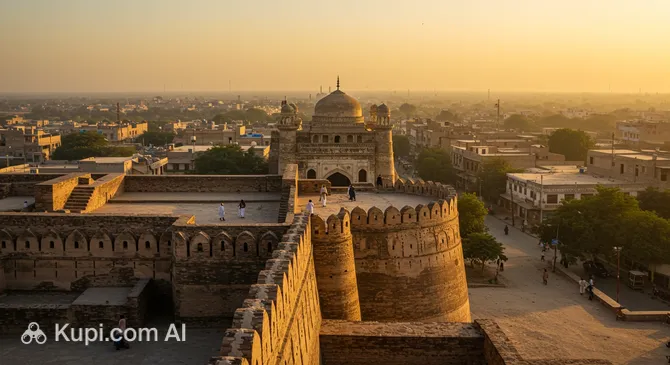
Hyderabad is one of the largest and most significant cities in the Sindh province, located in the southern part of Pakistan. It is not just an administrative center, but the true heart of regional trade and culture. The city stretches along the east bank of the Indus River, and its atmosphere is permeated with the rhythm of daily life, the noise of oriental bazaars, and centuries-old traditions. With a population of over 1.7 million people, Hyderabad serves as a vital hub connecting the rural areas of Sindh with the country's major metropolises.
Hyderabad. Illustration.
Source: Kupi.com AI
The rich historical heritage of Hyderabad dates back to 1768, when it was founded by the rulers of the Kalhora dynasty on the site of the ancient fishing village of Neroon Kot. Today, the city's historical fabric is closely interwoven with modern development: majestic tombs of past rulers stand alongside bustling commercial quarters. The city is known for its unique architectural appearance and windcatchers (badgirs) on the roofs of houses, which have saved residents from the sweltering heat for centuries.
For tourists, Hyderabad is primarily attractive for its authenticity. It is worth visiting the famous Shahi Bazaar, which stretches for several kilometers, and exploring ancient fortifications that preserve memories of former greatness. We invite you to dive into this colorful world, where every alley holds its own story, and the hospitality of the locals leaves the warmest impressions of the trip.
Weather Overview
For those planning a trip, it is important to consider that Hyderabad's climate is characterized as hot and dry for most of the year. Summer arrives early here: as early as April, the temperature begins to rise rapidly, reaching its peak in May and June, when the thermometer can rise above 40°C. During this period, the city is bathed in bright sun, and the air in the dense urban areas can feel particularly dusty.
Expect an extremely hot summer and brief relief during the monsoon period, which usually falls in July and August. Most of the annual precipitation falls during these months, and humidity rises significantly. The typical temperature range fluctuates from a moderate 10–12°C on winter nights in January to a grueling 42°C in the height of a summer day. Winter in the region is short and mild, making the period from November to February the most comfortable time to visit the city.
In the central shopping districts of Hyderabad, the heat can feel more intense due to a lack of greenery, so it is better to choose morning or evening hours for walks. Winter days please with pleasant warmth around 24°C, and the absence of rain and clear skies create ideal conditions for sightseeing and long walks through the famous bazaars of Sindh.
Average monthly temperature
Average monthly precipitation
Interesting Facts
Hyderabad was founded by Mian Ghulam Shah Kalhoro in 1768 on the ruins of the ancient settlement of Neroon Kot, becoming the capital of Sindh until the British conquest.
The city's Shahi Bazaar is considered one of the longest markets in Asia—it is about two kilometers long and almost never sleeps.
The surrounding areas house unique mausoleums of the Kalhora and Talpur rulers, decorated with traditional tiles that are still produced by local craftsmen using ancient techniques.
Hyderabad is historically known as the "City of Windcatchers" due to the unique chimneys on house roofs (badgirs) that direct the cool sea breeze indoors.
The city is the world's largest production center for traditional Glass Bangles, which are exported to many countries.
How to Get There
The city's transport accessibility makes it an important link in the south of the country. The most common and practical way to learn all the ways to get to Hyderabad is to use road or bus services from Karachi. A modern highway connects these two metropolises, and the journey usually takes 2 to 3 hours, depending on traffic density when leaving the provincial capital.
For those who prefer to travel by rail, the city offers regular connections to key points in the country. Hyderabad Railway Station receives trains of various categories, linking the south with the north and center of Pakistan. This is a convenient option for those who appreciate the flavor of local travel and want to enjoy the views of Sindh's rural landscapes from a train window.
When planning your arrival in the city, keep in mind that during morning and evening rush hours, central districts and station approaches can be heavily congested. Experienced travelers advise allowing extra time for logistics within the city and choosing daytime hours for checking into a hotel to avoid being stuck in traffic in the narrow quarters of the old center.
Main Attractions
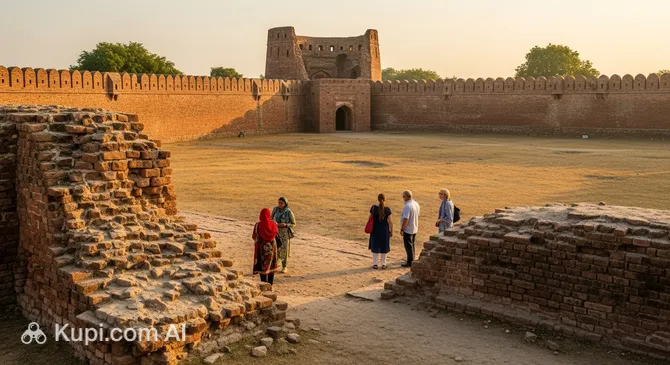
The main attractions of Hyderabad are inextricably linked to its status as the historical and dynastic center of Sindh. One of the most iconic sites is the Pacco Qilla Ground — the site of the ancient "Fort of Burnt Bricks." Built in the 18th century, it long served as a residence for rulers, and today it attracts travelers with its massive walls and preserved fragments of royal architecture.
Pakka Qila Ground. Illustration.
Source: Kupi.com AI
Traveler photos:
No less impressive are the tombs of the Kalhora and Talpur dynasty rulers. These magnificent mausoleums, decorated with exquisite carvings and traditional blue "Kashi" tiles, are masterpieces of Islamic architecture. Visiting these memorial complexes allows for a better understanding of the aesthetics and grandeur of the region's past eras.
The heart of city life is considered to be the Shahi Bazaar (Royal Bazaar). It is one of the longest markets in the world, where you can find literally everything: from famous Sindhi textiles and jewelry to exotic spices. A walk through the bazaar is not just shopping, but a full immersion into the living history of the city, where trading traditions are passed down from generation to generation. Hyderabad is a place for those seeking the real, unvarnished atmosphere of an Eastern city.
Local Cuisine
A gastronomic journey through Hyderabad is an introduction to vibrant and spicy Sindhi cuisine. The basis of the local menu consists of aromatic rice and meat dishes. You must try the traditional Mandi — a dish of Arabic origin but deeply rooted here, consisting of rice with tender meat cooked in a special oven. An excellent place for this is Ridan House of Mandi, where the traditions of preparing this hearty treat are honored.
Ridan House of Mandi. Illustration.
Source: Kupi.com AI
Traveler photos:
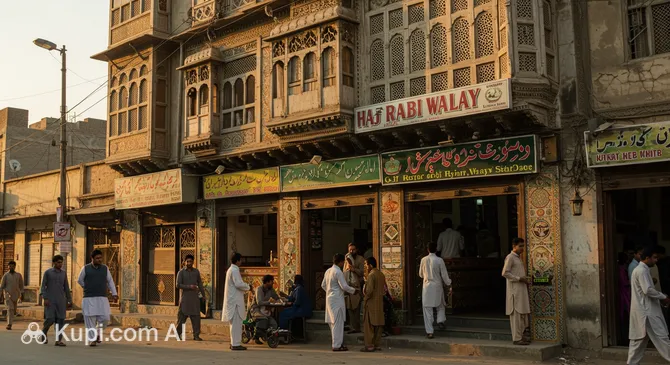
Those with a sweet tooth will remember Hyderabad for its famous dessert — Rabri. This is a thick delicacy made of boiled-down milk with sugar, cardamom, and nuts, which is considered a signature dish of the city. The most famous place where this masterpiece is prepared is Haji Rabri Walay. Locals take pride in their recipe, and a jar of fresh rabri is a great addition to any lunch.
Haji Rabri Walay. Illustration.
Source: Kupi.com AI
Traveler photos:
The food culture in the city is closely tied to street food and noisy bazaars. During the hot season, you can find tea vendors or cooling drinks made from sugarcane juice on every corner. Hyderabad's gastro scene is devoid of unnecessary pretension: taste, authenticity, and freshness of products are valued here. The best way to get to know the local cuisine is to go to family restaurants in the shopping districts where the locals themselves eat.
Travel Tips
Hyderabad is a city with a unique character, and to make your trip as comfortable as possible, we have prepared some practical tips.
Clothing and dress code: Choose clothing made of natural light fabrics to better handle the heat. Given local traditions, it is recommended to dress modestly: shoulders and knees should be covered. This applies to both women and men, especially when visiting mosques and tombs.
Transport: For moving around the city, use auto-rickshaws for short distances and taxis via apps (e.g., Uber or Careem) for long-distance trips. Always agree on the price with the rickshaw driver in advance if there is no meter.
Finance: The official currency is the Pakistani Rupee (PKR). Large shopping centers and hotels accept cards, but you will need cash at markets and small cafes. Exchange currency only at official points or banks.
Health: Drink only bottled water and avoid ice in drinks from street stalls. Always carry sunscreen and hand sanitizer.
Communication: The main languages are Urdu and Sindhi, but in hotels and large shops, many people speak basic English. Learn a few greeting phrases in the local language—this always wins people over.
Local Etiquette: Pakistanis are very hospitable. Always remove your shoes when entering a home or a mosque. Food or money should be accepted and given with the right hand.
What to avoid: Do not photograph military installations, government buildings, or local women without their explicit consent. Avoid discussing political topics and show respect for religious traditions.
Extra tip: Be sure to visit Shahi Bazaar in the evening when the heat subsides—this is when the city reveals itself in all its glory.
Following these simple rules will help you feel confident and enjoy every moment in this amazing city!
Entertainment & Nightlife
The entertainment scene in Hyderabad is predominantly local in nature, focusing on family traditions and leisurely evening relaxation. You won't find noisy nightclubs in the Western sense here, but you can fully enjoy the atmosphere of evening strolls through bustling streets and bazaars. Most life after sunset revolves around the commercial zones, where numerous street cafes and snack bars open, and locals gather to socialize.
One of the popular spots for a light snack in pleasant company is Milk Bar Joy. Such establishments specialize in traditional desserts and dairy drinks, which are particularly popular during hot Pakistani evenings. For those looking for larger-scale entertainment, cinemas, or modern malls, locals often recommend trips to neighboring Karachi; however, Hyderabad itself charms with its cozy and familiar pace.
The safety of evening walks in the central districts is good, especially on well-lit shopping streets. For moving around after dark, it is best to use the services of official taxis or rickshaws that can be called via mobile apps. Hyderabad is a city where evening leisure turns into a ritual of tasting local sweets and observing the slow flow of life under the night lights.
Parks & Museums
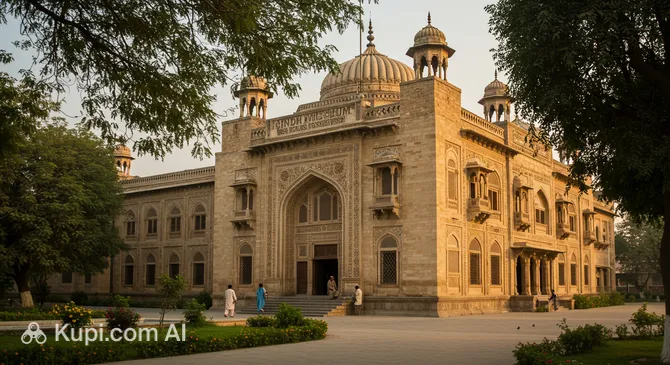
Despite the dense urban development, Hyderabad offers interesting cultural sites that allow you to touch the art and history of the region. If you want to learn more about the rich heritage of the province, head to the Sindh Museum. Its exhibits cover a vast period—from the ancient Indus Valley Civilization to the present day—featuring unique archaeological finds, ethnographic collections, and traditional craft items.
Sindh Museum. Illustration.
Source: Kupi.com AI
Traveler photos:
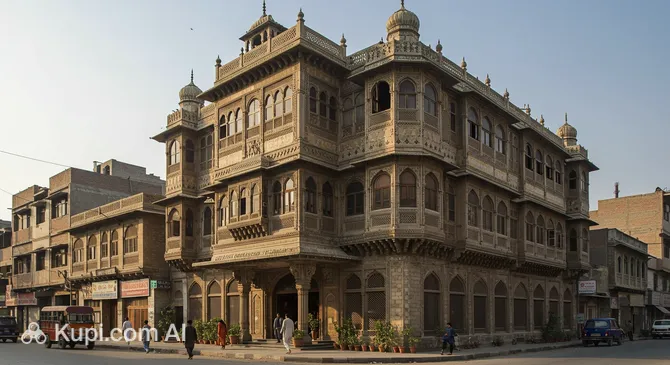
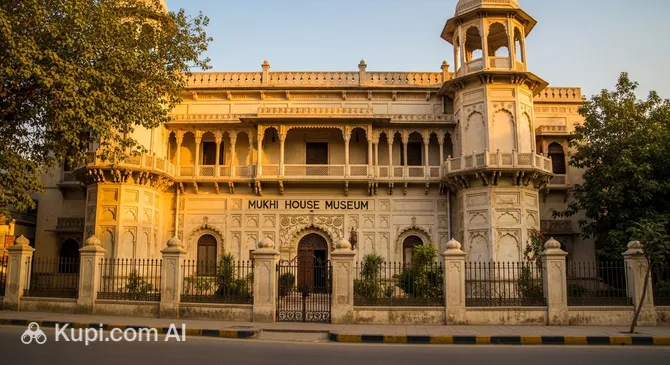
Special attention should be paid to the Mukhi House Museum. This building itself is an architectural monument that has preserved the spirit of the last century. Inside, you will find carefully restored interiors and household items that tell the story of one of the city's influential families, allowing a glimpse into the private life of wealthy citizens of a bygone era.
Mukhi House Museum. Illustration.
Source: Kupi.com AI
Traveler photos:
There are few park zones in the very center of the city, so the role of public spaces for recreation is often played by the areas near historical monuments and forts. If you want silence and greenery, look towards suburban areas or landscaped complexes, such as the vicinity of the Indus River, where you can enjoy the cool breeze and water views away from the bazaar bustle.
Getting Around
The transport system in Hyderabad reflects the energetic and somewhat chaotic nature of the city itself. The main means of transport for tourists and locals are nimble auto-rickshaws. This is the fastest way to cover short distances in the heavy traffic of the old quarters. For more comfortable trips around the city, it is better to call a taxi through popular mobile apps—this guarantees a fixed price and air conditioning.
Public transport consists mainly of buses and minibuses that connect various districts of the city. However, keep in mind that they are often overcrowded, and routes can be confusing for a foreign tourist without knowledge of the language. For travel between Hyderabad and neighboring cities, such as Jamshoro or Karachi, intercity buses are actively used, departing from the city's main transport hubs.
Travelers are advised to allow extra time for any movement, especially during rush hours when traffic on main thoroughfares virtually comes to a standstill. Payment in municipal transport and rickshaws is made in cash, so it is always useful to have small bills with you. Hyderabad is a city with heavy traffic, so it is best to plan walking tours within specific areas, using transport to move between them.
Accommodation
The choice of accommodation in Hyderabad is primarily oriented towards business travelers and tourists looking for a practical stop while exploring Sindh. Middle-range hotels and cozy city guest houses predominate here. Most high-quality accommodation options are concentrated along the main road arteries and in areas adjacent to administrative centers, which is convenient for quick logistics.
For those who value modern comfort and developed infrastructure, it is worth looking at facilities such as the Garrison Complex, where you can find not only relaxation opportunities but also accompanying services. Guest houses are also popular in the city, offering a more domestic atmosphere and the chance to get to know local hospitality more closely.
It is recommended to book accommodation in advance, especially if your visit coincides with major religious holidays or festivals when the demand for rooms increases significantly. The price range in Hyderabad is very affordable, allowing you to find a decent option even on a modest budget. When choosing a hotel, be sure to clarify the availability of air conditioning and a generator, as the climate in the region is hot and power outages are not uncommon.
Nearby Cities
Hyderabad serves as an excellent starting point for exploring the surroundings and immersing yourself in the atmosphere of southern Pakistan. Proximity to the Indus River and important transport hubs allows for easy planning of short trips to neighboring cities, each of which has its own unique character.
Very close by is the city of Jamshoro, known for its educational centers and picturesque views of the river. It is a peaceful place where the rhythm of life is slightly slower than in commercial Hyderabad. Also worth noting is Kotri, an industrial and transport satellite through which important railway routes pass. For a deeper study of the region, you can head to Mirpur Khas, which is famous for its orchards, especially its world-renowned mangoes.
Exploring the nearby territories will help you see the contrasts between the bustling commercial center and the more measured life of Sindh's small towns. Most of these destinations are accessible for a day trip, making Hyderabad a convenient base for the inquisitive traveler.
Shopping & Souvenirs
Shopping in Hyderabad is, above all, a journey through the endless rows of traditional markets. The main shopping symbol of the city is the legendary Shahi Bazaar. Here reigns the atmosphere of authentic Eastern bargaining, and the range of goods is mind-boggling. The city is famous for its textiles, handmade embroidery, and, of course, the famous glass bangles, which will be the best souvenir to remember your trip.
For those who prefer a modern shopping format with air conditioning and food courts, large shopping centers are open in Hyderabad. Boulevard Mall offers a wide selection of international and local brands, as well as comfortable conditions for family recreation. Another notable point on the modern shopping map is the Garrison Complex, where quality goods and services are presented in an organized space.
Shops in the city usually operate from late morning until late evening, though many stalls in the markets may close during the midday heat and prayer times. Credit cards are accepted in shopping malls, but be sure to stock up on cash in local currency for trips to traditional bazaars. Don't forget to haggle—in the markets of Hyderabad, it's not just a way to save money, but a part of the local culture of communication.