Support

Fort San Pedro

About

Fort San Pedro is an iconic historical defensive structure located in the heart of Cebu City in the Philippines. It is rightfully considered the oldest and smallest fort in the country, built by Spanish conquistadors under the leadership of Miguel López de Legazpi to protect their new holdings.
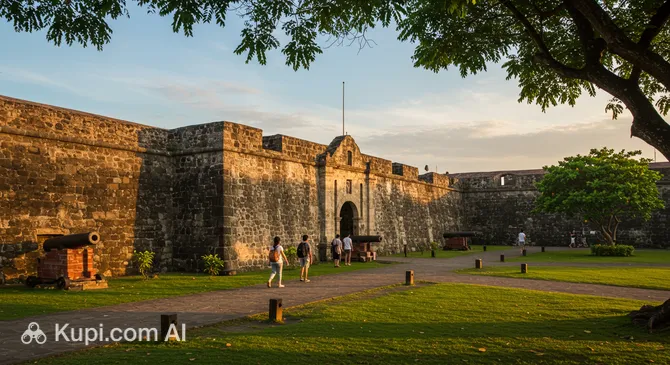
Fort San Pedro. Illustration.
Source: Kupi.com AI

Traveller photos:

Originally built by the Spanish, the fort today stands within the modern Plaza Independencia, in the very center of the city. It is easily recognizable by its characteristic triangular shape: two sides face the sea, providing control over the waters, while the third faces land to protect the city's approaches.

For centuries, Fort San Pedro played a key role in the history of Cebu City. It served as a vital strategic site, its powerful walls repeatedly repelling pirate attacks and protecting the city from various threats from both sea and land, ensuring the safety of its inhabitants.

Today, it is not only a valuable historical monument but also a popular cultural center. Visitors can walk along its walls, examine old cannons, and view a small exhibition inside. Various events and exhibitions are often held on the fort's grounds, allowing guests to delve deeper into the rich past of this remarkable place.

Contacts

For the most up-to-date information on visiting Fort San Pedro, including opening hours and available tours, it is recommended to consult official Cebu City tourism resources or check details directly on-site. This significant historical landmark is located in the city's port area and is usually easy to reach by taxi or public transport. Local tourist information centers can also provide helpful details.

How to contactContact
Address7WR4+X7J, A. Pigafetta Street, Cebu City, 6000 Cebu, Philippines
Phone+63 32 256 2284

What to Do

A visit to Fort San Pedro offers guests of Cebu City a unique opportunity to touch history. You can walk along the massive fortress walls, explore the bastions and the inner courtyard, imagining how life buzzed here centuries ago. Inside the fort is a museum with an exhibition dedicated to the city's colonial past and the history of the fort itself, where you can see various artifacts from that era. This place breathes history and provides a deeper understanding of the Philippines' past.

For history and culture enthusiasts, visiting the fort will be especially engaging, as it often hosts various cultural events, temporary exhibitions, and educational themed tours. These events add interactivity and allow for an even deeper immersion into the atmosphere of the ancient fortress. Such activities make every visit to Fort San Pedro unique in its own way.

Of particular interest to many visitors are the well-preserved walls and bastions, offering views of the surrounding area. It is also worth noting the existing underground tunnels, which add an element of mystery to your exploration. A well-kept park surrounds the fort, where you can enjoy a pleasant rest after sightseeing, soaking in the tranquility and the spirit of past centuries that lingers in this historic site.

Getting There

Getting to Fort San Pedro in Cebu City is quite simple, as it is located in the heart of the city at the well-known Plaza Independencia. If you are in the central part of Cebu City or strolling along the promenade, the fort is easily accessible on foot, allowing you to enjoy the city views along the way. This is a great opportunity to experience the local atmosphere and discover other interesting corners.

From more distant areas of Cebu City, you can easily reach Fort San Pedro by taxi—one of the most convenient and fastest ways. Local public transport is also at your service, with routes passing near Plaza Independencia. Another popular and colorful option is the tricycle, an integral part of the Philippine urban landscape that will easily take you to your destination.

For tourists arriving in Cebu City by cruise ship or intercity bus, Fort San Pedro is also within walking distance of the city's main transport hubs. Use the spacious and green Plaza Independencia as a landmark; it often hosts various city events and is a pleasant place to relax before or after visiting the historic fortress.

Nearest city: Cebu City

History & Facts

Fort San Pedro in Cebu City is more than just an old fortification; it is a living witness to the rich history of the Philippines. Its story began in 1565, when Spanish conquistadors led by Miguel López de Legazpi arrived on the island of Cebu. That was when the first stone was laid for the fort's foundation, which originally was a wood-and-earth structure designed to protect the Spanish settlement.

Over time, it became clear that the wooden structure did not provide adequate protection. Consequently, the decision was made to rebuild the fort in stone. By 1738, Fort San Pedro had taken on its current appearance—a powerful triangular structure with three bastions named La Concepción, Ignacio de Loyola, and San Miguel. This shape was chosen intentionally: it allowed for efficient defense against attacks from both sea and land.

Throughout its centuries-long history, Fort San Pedro has served many roles. It has been a military command post where important strategic decisions were made. At various times, its walls served as a prison and a hospital for treating wounded soldiers. Notably, at the end of the 19th century, during the Philippine Revolution, the fort became one of the centers of resistance, adding another significant chapter to its biography.

In the 20th century, the fort's fate continued to surprise: for a time, a zoo was even located on its grounds. Recognizing its immense historical and cultural value, Fort San Pedro was officially declared a National Historical Landmark in 1946. Today, it is one of the main attractions of Cebu City, drawing tourists with its authentic atmosphere and the chance to touch the past.

Time Needed

When planning a visit to Fort San Pedro in Cebu City, you should expect to spend about 1-2 hours exploring. This time is generally enough to immerse yourself in the atmosphere of the oldest Spanish fortress in the Philippines, walk around its grounds at a leisurely pace, and see the main exhibits.

Within this timeframe, you can stroll along the fort's walls for interesting views, visit the small museum located inside, and examine historical artifacts. If you choose to join a guided tour, it will also fit within the two-hour window. For a more thoughtful study of every corner and taking photos without rushing, you might want to set aside a bit more time, but on average, two hours is quite sufficient for a complete introduction to this important Cebu City landmark.

Working Hours

Fort San Pedro in Cebu City welcomes visitors daily. According to available information, the fort's doors are open to guests from 8:00 AM to 7:00 PM. This allows for flexible planning of your visit throughout the day.

While the fort is open every day, suggesting year-round availability, it is always helpful to verify current information. Before visiting, we recommend checking the attraction's official website or local tourist information centers for any changes in the schedule, as well as finding out if advance ticket booking or tour registration is required, especially during peak tourist seasons.

8:00 – 17:00

Nearby

Visiting such an iconic landmark as Fort San Pedro is an exciting event in itself. However, to truly immerse yourself in the atmosphere of Cebu City and make the most of your experience, it is worth looking at what lies nearby. Exploring the surrounding area will allow you to discover more facets of this amazing city and gain a more complete picture of its history and culture.

There are many interesting places located around Fort San Pedro, within walking distance or just a short ride away. This is a wonderful opportunity to complement your itinerary and see even more treasures of the Philippines without spending much time on travel. Below is a list of some attractions located nearby.

NameDistance
Plaza Independencia0.1 km
National Museum of the Philippines – Cebu0.2 km
Magellan's Cross0.4 km
Basilica Minore del Santo Niño0.4 km
Cebu Metropolitan Cathedral0.5 km
Heritage of Cebu Monument0.7 km
Carbon Market0.7 km

Reached the bottom of the page?

Looks like you know this route inside out