Support

Magellan's Cross

About

Magellan's Cross is an iconic historical and religious landmark located in the heart of Cebu City in the Philippines. This Christian cross was planted by order of the famous Portuguese explorer Ferdinand Magellan in 1521, marking a significant moment in the archipelago's history—the arrival of Europeans and the beginning of the spread of Christianity.
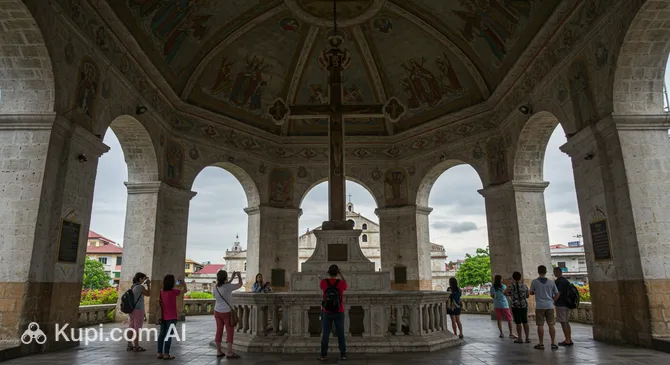
Magellan's Cross. Illustration.
Source: Kupi.com AI

Traveller photos:

According to historical records, the cross was erected to commemorate the baptism of Rajah Humabon, his wife, and hundreds of their subjects. This event is considered one of the key moments in the Christianization of the Philippines, and Magellan's Cross became a powerful symbol of this new faith for the local population and a major draw for pilgrims and tourists from around the world.

Today, the original cross is said to be encased within another wooden cross installed to protect it from damage and decay. This relic is housed in a small chapel with a painted ceiling depicting scenes of the cross being planted. Visiting this site allows you to touch upon the early colonial history of the Philippines and experience the spiritual atmosphere surrounding this ancient symbol.

Contacts

Magellan's Cross is a renowned historical landmark in Cebu City, and like many such sites, it may not have a direct contact telephone number for inquiries. To obtain the most up-to-date information regarding opening hours and visiting conditions, we recommend consulting official tourism resources for Cebu City or the Philippines, as well as local tourist information centers. Reaching Magellan's Cross is usually straightforward, as it is a popular destination; you can use local transport or taxis by following signs to this famous monument.

How to contactContact
Address7WV2+CQG, P. Burgos St, Cebu City, 6000 Cebu, Philippines
Phone+63 78 945 6321
Websitesantoninodecebubasilica.org

What to Do

Magellan's Cross in Cebu City is more than just a historical artifact; it is one of the key attractions in the Philippines, drawing many tourists and pilgrims. Visitors come here to see the famous wooden cross which, according to tradition, was planted by Ferdinand Magellan's expedition in 1521, symbolizing the arrival of Christianity to the islands. The main object of interest is the cross itself, housed inside a small but elegant chapel pavilion built for its protection and veneration.

The primary activity for visitors is, of course, viewing the cross itself and the chapel. Inside the pavilion, you can admire the ceiling paintings that vividly depict scenes of the original cross being planted by Magellan and the baptism of the first Filipino Christians. Many tourists enjoy taking commemorative photos of this significant historical and religious symbol. It is worth noting that the visible cross made of tindalo wood is believed to encapsulate the remains of the original cross planted by Magellan, protecting it from damage and from those who once tried to chip off pieces as souvenirs.

For many Filipinos and religious tourists, Magellan's Cross holds deep spiritual significance. It is a popular place for prayer, as there is a strong belief that the cross possesses healing powers. Visitors can often observe locals and pilgrims lighting candles at the base of the cross and offering prayers. For over four centuries, this cross has served as an important symbol of devotion and steadfast faith for Filipinos.

The convenient location of Magellan's Cross next to another major shrine—the Basilica del Santo Niño—makes it an essential part of popular tourist routes through the historical and religious landmarks of Cebu City. The importance of the cross to the city is also highlighted by its presence on the official city seal. Thus, a visit to this site allows you not only to encounter important pages of history but also to gain a deeper understanding of the culture and spiritual life of the Philippines.

Getting There

Magellan's Cross is located in the heart of Cebu City, making it easily accessible for travelers. This iconic landmark is situated in the immediate vicinity of the Basilica Minore del Santo Niño de Cebu, one of the oldest churches in the Philippines, approximately 1.9 km from the city's nominal center. This central location allows you to include a visit to the cross in a walking tour of Cebu's historical district.

There are several ways to reach Magellan's Cross. The most comfortable option is a taxi, which can be taken from anywhere in the city. A trip from most areas of Cebu City will be quick and affordable. Taxi drivers are well-acquainted with this popular spot, so there should be no navigation issues.

For a more authentic experience, you can use local public transport. Jeepneys are brightly painted, modified American jeeps that have become a symbol of Philippine roads. They run on specific routes, and many pass near the historical center. Tricycles (motorized rickshaws) are also popular and convenient for short distances. Confirm with the driver if they are heading toward the Basilica del Santo Niño, as Magellan's Cross is right next to it.

If you are arriving in Cebu City via Mactan-Cebu International Airport, you will first need to reach the city center. You can travel from the airport to the city by taxi, bus, or shuttle service. Once you are in central Cebu, reaching Magellan's Cross is easy by following the signs or using one of the transport methods mentioned above.

Nearest city: Cebu City

History & Facts

Magellan's Cross in Cebu City is not just an ancient artifact, but one of the most important historical symbols of the Philippines. Its history dates back to 1521, when the famous explorer Ferdinand Magellan, the first European to reach these lands, planted a wooden cross here. This event marked the conversion of the local ruler Rajah Humabon and his family to Christianity, essentially serving as the starting point for the spread of the Catholic faith in the Philippine Islands.

However, peaceful coexistence did not last long. Shortly after the cross was planted, a conflict arose with a tribe from Mactan Island, led by the chieftain Lapu-Lapu. The locals resisted Spanish influence, and this confrontation culminated on April 27, 1521, when Ferdinand Magellan was killed in a battle with the warriors of Mactan.

The fate of the original Magellan's Cross is shrouded in mystery and debate. Some historical accounts suggest that the locals may have destroyed it after the Spaniards left. Therefore, there is a belief that the current cross is only a replica and the original has long been lost. To protect the relic from the passage of time and from pilgrims who, believing in its miraculous powers, would chip away pieces of it, a small chapel was built around the cross in 1834. Today, this cross, encased in another wooden cross made of tindalo wood for preservation, continues to attract believers and tourists, serving as a reminder of key events in the history of the Philippines.

Time Needed

When planning a visit to Magellan's Cross in Cebu City, expect a relatively short visit. As it is a compact attraction, viewing the cross itself, the chapel where it is housed, reading the information plaques, and taking photos usually takes about 30 to 60 minutes. This is enough time to connect with the history of this iconic site.

If your plans also include visiting the Basilica Minore del Santo Niño, which is located right next door and is one of the oldest churches in the Philippines, your total time in the area will naturally increase. In this case, it is recommended to set aside an additional hour or more, depending on your level of interest in the basilica and its museum.

Working Hours

Magellan's Cross in Cebu City is one of the most iconic landmarks, and access to it is generally open to visitors throughout the day. Exact opening hours can vary, and specific information about them is not always available in general sources. Usually, such historical monuments are open daily, particularly during daylight hours.

Currently, there is no information indicating a need for advance booking or ticket purchases to view Magellan's Cross, as it is a public site. However, to get the most up-to-date information regarding hours and potential restrictions, it is highly recommended to check official tourism websites for Cebu City or the Philippines, or to verify details on-site upon arrival. The attraction is generally accessible to visitors year-round.

8:00 – 18:00

Nearby

Visiting such an iconic landmark as Magellan's Cross is undoubtedly a highlight of any traveler's itinerary in Cebu City. However, to truly soak in the city's atmosphere and its rich history, it is worth taking the time to explore the surroundings. Often, it is the nearby sites that help complete the picture and provide a deeper travel experience.

Numerous other points of interest are concentrated around Magellan's Cross, each telling the story of Cebu City and the Philippines in its own way. A short walk will allow you to discover new facets of this amazing city, from ancient churches to vibrant markets and historical forts. Below is a list of some attractions located in the immediate vicinity.

NameDistance
Basilica Minore del Santo Niño0.1 km
National Museum of the Philippines – Cebu0.3 km
Cebu Metropolitan Cathedral0.3 km
Plaza Independencia0.3 km
Fort San Pedro0.4 km
Carbon Market0.4 km
Heritage of Cebu Monument0.6 km

Reached the bottom of the page?

Looks like you know this route inside out