Support

Intramuros

About

Intramuros is not just a district, but the true heart of old Manila and the historic center of the capital of the Philippines. The name "Intramuros," derived from Latin and Spanish, literally means "within the walls," which perfectly describes the site. The entire area, covering about 0.67 square kilometers, is completely surrounded by massive stone walls, moats, and bastions that preserve centuries of history.
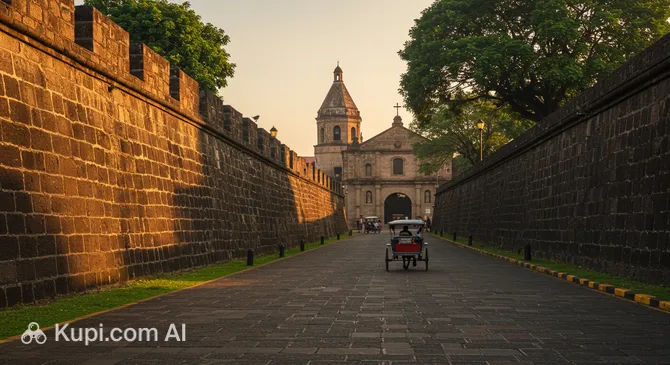
Intramuros. Illustration.
Source: Kupi.com AI

Traveler photos:

A whole world of the colonial era is hidden behind these impressive walls. Intramuros was the center of political, religious, and military life in the Philippines during the Spanish rule. Here you will find many beautifully preserved historic buildings, majestic churches, ancient monasteries, interesting museums, and cozy parks. Every street and every stone here breathes history.

Today, Intramuros is Manila's main attraction, drawing travelers from all over the world. Walking through its narrow cobbled streets past old houses with carved balconies takes you back several centuries. This is a unique opportunity to touch the rich past of the Philippines and feel the unique atmosphere of a bygone era dating back more than four hundred years.

Contacts

For the latest information on opening hours, ticket prices, and events in Intramuros, it is recommended to visit the official websites of its key attractions. You can also always find assistance at the tourist information centers in Manila.

How to contactContact
AddressHXRC+JP, Intramuros, Manila, 1002 Metro Manila, Philippines
Websiteintramuros.gov.ph

What to Do

In Intramuros, an immersion into history awaits you at every step. One of the main activities here is a leisurely stroll along the ancient cobbled streets, allowing you to fully experience the colonial era atmosphere. Be sure to visit Fort Santiago, one of Manila's most significant citadels. Here you can see preserved barracks, prison cells, and a monument to the national hero of the Philippines, José Rizal. A visit to San Agustin Cathedral—the country's oldest stone church and a UNESCO World Heritage site—is equally impressive, where you can admire magnificent architecture and interior decor.

For those interested in the culture and daily life of the past, Intramuros offers fascinating museums. For instance, Casa Manila, an ethnographic museum recreating the setting of a wealthy 19th-century Filipino home, provides a deeper understanding of the region's history. After a busy sightseeing program, you can relax in one of the many cozy parks and gardens, enjoying the quiet and taking beautiful souvenir photos. Also, within the historic center, there are cafes and restaurants where you can try authentic Filipino cuisine and refreshing local drinks.

Besides walking, there are other exciting ways to explore Intramuros. Tours in traditional horse-drawn carriages called kalesas are very popular. Such a ride adds a touch of romance to your trip and allows you to see the sights from an unusual perspective. You can also rent a bamboo bike and ride through the narrow streets, choosing your own route and stopping at places you like. These activities will help you fully enjoy the unique atmosphere of the ancient walled city.

Getting There

Intramuros is conveniently located in the heart of Manila, making it easily accessible for travelers. This historic district is situated near the popular tourist area of Ermita and the scenic Manila Bay. Due to its central location, there are several ways to reach Intramuros, depending on your location and preferences.

One of the most convenient ways to get to Intramuros is by public transport. You can use the Manila LRT: the nearest station is Central Terminal (LRT-1 line). From there, the old city walls are about a 10–15 minute walk away. Additionally, numerous buses and traditional Philippine shared taxis known as jeepneys run throughout the city, many of which pass near or stop at Intramuros.

For more comfort, you can always use taxi services. Ride-hailing apps like Grab are popular in Manila, offering a convenient and relatively predictable way to reach your destination. A taxi ride from central city areas to Intramuros usually doesn't take long, though it is worth considering potential traffic, especially during rush hour.

If you are staying in one of the hotels in central Manila, particularly in the Ermita or Malate districts, walking to Intramuros can be a pleasant experience that allows you to get a better feel for the city. You might also consider renting a bike. Intramuros itself is very pedestrian-friendly, and for those arriving by private or rented transport, there are parking areas available for cars and bicycles.

Nearest city: Manila

History & Facts

The history of Intramuros began in the 16th century when the Spanish conquistador Miguel López de Legazpi founded it in 1571. It was established on the site of a former Muslim settlement called Maynila. Initially, the walled city was built with the primary goal of protecting Spanish colonizers from pirate attacks and potential foreign invasions. Spanish residents lived within the massive walls, while suburbs known as arrabales formed outside, eventually growing into the modern districts of Manila.

During the period of Spanish rule, Intramuros was not just a fortification but the true center of colonial life in the Philippines. It housed the residences of the Governor-General, the Bishop, and other high-ranking officials. Numerous monasteries, churches, and colleges rose within its walls. Notably, it was in Intramuros that Asia's first university was founded. The city was reliably protected by eight powerful bastions, each named after a saint. Furthermore, Intramuros played a key role in trade between Asia and America, while also serving as the archipelago's most important religious and educational center.

Despite the destruction Intramuros suffered during World War II, its historical significance was recognized at the state level. In 1951, this unique district was granted the status of a national historical monument. Thanks to extensive restoration work, many historical buildings have been restored, and today Intramuros stands as a living symbol of the rich history and multifaceted culture of the Philippines, attracting travelers from all over the world.

Time Needed

When planning a visit to Intramuros, it is worth setting aside enough time to truly immerse yourself in its unique atmosphere. For a full introduction to this historic district of Manila, it is recommended to allocate between 3 and 5 hours. This is usually enough time to see the main sights, such as Fort Santiago and San Agustin Cathedral, visit one or two museums, take a leisurely stroll through the old streets and parks, and take a break for lunch or coffee at one of the local cafes.

If you want to delve deeper into the history and culture of Intramuros, plan to visit all available museums, participate in in-depth guided tours, or simply enjoy every corner without rushing, you might need a whole day. Remember that Intramuros is not just a collection of sights, but an entire historic city within walls where every stone tells a story, so the duration of your visit will depend on your pace and level of interest.

Working Hours

Most museums and attractions within Intramuros, such as forts, churches, and historic houses, are typically open to visitors daily, generally from 8:00 AM to 5:00 PM or 6:00 PM. However, some public spaces, such as parks and squares within the walls, may be accessible 24/7, allowing you to enjoy the old city atmosphere even in the evening. Since Intramuros comprises many different sites, the opening hours for specific museums, churches, or exhibitions may vary.

Before your visit, it is recommended to check the current schedule for the places you are interested in on their official websites or at tourist information centers in Manila. This is especially important if your trip coincides with public holidays when operating hours might change. Generally, most sites in Intramuros do not require advance booking, but some special tours or events may require a prior reservation.

DayOpening hours
Monday9:00 – 19:30
Tuesday9:00 – 19:30
Wednesday9:00 – 19:30
Thursday9:00 – 19:30
Friday9:00 – 19:30
Saturday9:00 – 20:30
Sunday9:00 – 20:30

Nearby

Visiting Intramuros is undoubtedly a highlight of any trip to Manila. However, to get a more complete and multifaceted impression of the Philippines' capital, it is worth exploring the attractions located in the immediate vicinity of this historical heart of the city. Exploring the surroundings will allow you to expand your horizons and see how the rich past harmoniously blends with the modern life of the metropolis.

There are many interesting places around Intramuros that will complement your travel experience. From iconic cultural sites to picturesque parks, everyone will find something to their liking. This is a wonderful opportunity to continue your journey through time and space without venturing far from the walls of the ancient fortress.

NameDistance
Casa Manila0.1 km
Jones Bridge0.7 km
National Museum of Fine Arts0.7 km
National Museum of Anthropology0.8 km
National Museum of Natural History1 km
Coconut Palace2.2 km
Roo Malate Rooftop Cafe2.5 km

Have you reached the end of the page?

So the route has been studied inside and out