Support

National Museum of Natural History

About

The National Museum of Natural History is one of the key cultural institutions of the Philippines, located in the heart of Manila. As part of the larger National Museum of the Philippines complex, it is entirely dedicated to the country's rich natural history, offering visitors a fascinating journey into the world of the archipelago's flora, fauna, and geological wonders. This is a place where you can truly feel the uniqueness of the Philippine Islands' nature.
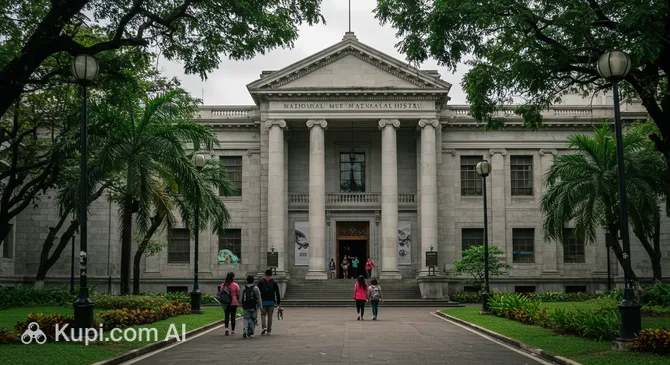
National Museum of Natural History. Illustration.
Source: Kupi.com AI

Traveler photos:

The museum tells the captivating story of the Philippines' incredible biodiversity and the unique geological formation of the islands. Here, you will find impressive exhibits showcasing the diversity of plant and animal life, including rare fossils and endemic species found nowhere else on the planet. Each display and installation is carefully designed to immerse you in the wonderful world of nature and speak to its fragility and beauty.

The museum is known for its spacious layout and well-organized, informative exhibits. Visitors note that the displays are not only educational but also presented in an engaging way, making the visit interesting for both adults and children. It is a wonderful place to gain a deeper understanding of the unique natural environment of the Philippine Islands, realize the importance of its conservation, and be inspired to treat the world around us with care.

Contacts

For the most up-to-date information on opening hours, ticket prices, and available tours at the National Museum of Natural History, it is recommended to visit the museum's official website or contact local tourist information centers in Manila. You can also find contact details for the museum administration there.

How to contactContact
AddressTeodoro F. Valencia Cir, Ermita, Manila, 1000 Metro Manila, Philippines
Phone number+63 2 8298 1100
Websitewww.nationalmuseum.gov.ph

What to Do

At the National Museum of Natural History, visitors can immerse themselves in the rich world of Philippine nature. You can examine in detail an impressive collection of taxidermy specimens of local fauna. The exhibits include Philippine eagles, mighty carabaos, rare tamaraws, monitor lizards, wild pigs, various species of mice and bats, monkeys, as well as crocodiles and many other animals inhabiting the islands.

A special pride of the museum and a main point of attraction for many is the exhibit dedicated to the legendary crocodile "Lolong." This giant entered the Guinness World Records as the largest crocodile ever held in captivity. Two impressive exhibits are dedicated to him: a skillfully crafted taxidermy mount on the fifth floor, and a full skeleton dramatically suspended from the ceiling in a hall on one of the lower floors, allowing you to appreciate the true size of this amazing creature.

In addition, other iconic exhibits will surely catch your eye. Near the entrance/exit on the Rizal Park side, a massive sperm whale skeleton found off Marinduque Island is on display. On the museum's front lawn facing Kalaw Avenue, you can see boulders brought from Mount Mayon, testifying to the region's geological activity. One cannot fail to mention the museum building itself: its central courtyard is adorned with the majestic "Tree of Life" architectural composition with an impressive dome at the top, symbolizing the interconnectedness of all living things.

Getting There

The National Museum of Natural History is conveniently located in the heart of Manila, within the famous Rizal Park. Its exact address is P. Burgos Drive, making the museum easily accessible from various parts of the city and a convenient stop on your tourist itinerary.

You can reach the museum by public transport, which is one of the most popular ways to get around Manila. If you prefer the metro, the nearest station is United Nations Ave on the LRT Line 1. It is a short walk from the station to the museum. Alternatively, you can take a city bus; the closest convenient stop is Antonio Villegas Street.

Thanks to its central location near the historic Intramuros district, a visit to the National Museum of Natural History is easy to combine with other major sights in the capital of the Philippines. Of course, you can always use a taxi or popular ridesharing apps, which will take you directly to the museum entrance from anywhere in the city—this can be especially convenient if you are traveling with family or have a tight schedule.

Nearest city: Manila

History & Facts

The history of the National Museum of Natural History is closely linked to the National Museum of the Philippines, of which it is a part. The National Museum of the Philippines itself was founded back in 1901. It was originally envisioned as an institution dedicated to the natural history and ethnography of the Philippines. Initially, its collections were housed in the picturesque Rizal Park, near the historic and colorful Intramuros district in Manila.

Interestingly, the magnificent main building that houses the museum complex today has its own unique history. It was designed in 1918 by the famous American architect Daniel Burnham and was originally intended to house the Philippine Congress. The museum collection moved into this monumental building relatively recently—only in 2003. In recent years, the National Museum of Natural History also joined the complex, significantly expanding its exhibition capacity and allowing for an even more complete presentation of the country's rich natural heritage.

Today, the National Museum of the Philippines, including its natural history section, is a major cultural and educational hub for the country. It is not just a single building, but a whole complex combining several diverse exhibitions. In addition to galleries dedicated to art, anthropology, and archaeology, the complex even includes a planetarium, making it an attractive destination for visitors with a wide range of interests seeking to delve deeper into the culture and nature of the Philippines.

Time Needed

To fully explore the National Museum of Natural History in Manila, it is recommended to set aside at least half a day. The museum spans several floors, each offering diverse and fascinating exhibits dedicated to the rich flora, fauna, and geology of the Philippines. To see all the halls and galleries carefully, without rushing and fully enjoying the collections, you will need a fair amount of time.

If you plan to leisurely examine all the exhibits, including the famous crocodile Lolong, and perhaps take photos, then 3-4 hours would be the optimal time. However, if your visit is part of a broader tour of the entire National Museum of the Philippines complex, which also includes the National Museum of Fine Arts and the National Museum of Anthropology, the whole complex might take a full day.

For those with limited time, a quicker overview of the main exhibits is possible and will take about 1.5-2 hours. But to truly immerse yourself in the amazing world of the Philippine Islands' nature, it's better to plan a longer visit.

Working Hours

To find out the exact opening hours of the National Museum of Natural History in Manila, it is highly recommended to check the museum's official website or its social media pages. Typically, museums of this scale operate during standard daytime hours, often with a closing day on Mondays, but the schedule may change depending on the season or holidays. You can also find information on official resources regarding the need for advance ticket booking, which is especially relevant during peak tourist seasons or for group visits.

Generally, the National Museum of Natural History is open to visitors year-round, but it is always best to verify this information in advance, especially if your trip coincides with Philippines national holidays. Checking official sources will help you plan your visit effectively and avoid any potential inconveniences due to schedule changes or special events.

9:00 – 18:00

Nearby

Visiting the National Museum of Natural History in Manila is an exciting experience in itself, but exploring the surrounding area can significantly enrich your trip. This part of the city is packed with other interesting sites within walking distance or a short drive, allowing you to dive deeper into the culture and history of the Philippines.

A stroll to nearby attractions will not only complement your museum visit but also allow you to see Manila from different perspectives, revealing new facets of this multifaceted city. The convenient location of the National Museum of Natural History makes it an excellent starting point for further discoveries. Below is a list of some interesting places located nearby:

NameDistance
National Museum of Anthropology0.3 km
National Museum of Fine Arts0.4 km
Intramuros1 km
Casa Manila1 km
Coconut Palace1.3 km
Jones Bridge1.5 km
Roo Malate Rooftop Cafe1.5 km

Have you reached the end of the page?

So the route has been studied inside and out