Support

National Museum of Anthropology

About

The National Museum of Anthropology is one of the most important cultural centers located in Manila, the capital of the Philippines. This significant museum is an integral part of the larger National Museum of the Philippines complex, which brings together several buildings and diverse exhibitions dedicated to the country's rich heritage.
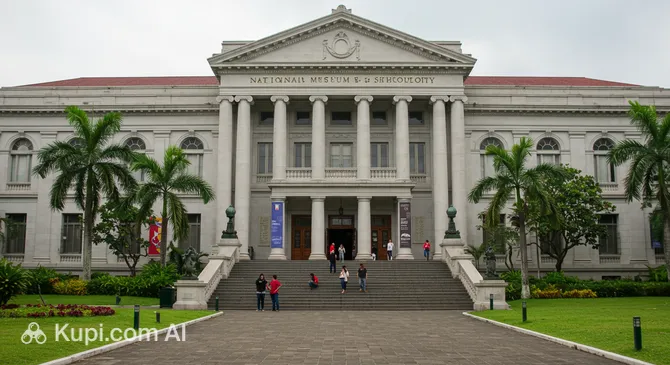
National Museum of Anthropology. Illustration.
Source: Kupi.com AI

Traveler photos:

The museum's primary mission is to highlight the archaeology, anthropology, and ethnography of the Philippines. Visitors can immerse themselves in the archipelago's pre-colonial culture, study traditional crafts, and see unique artifacts created by indigenous peoples. One of the most precious and world-renowned exhibits is the remains of Tabon Man—some of the oldest human remains discovered in the Philippines, shedding light on the region's early history.

Interestingly, this institution was previously known as the Museum of the Filipino People. As an ethnographic museum at its core, it offers a deep and comprehensive insight into the lives, daily activities, and cultural development of various Philippine peoples throughout many historical eras. The museum's displays allow visitors to trace the path of Filipino identity and learn more about the diverse cultures that make up modern Philippine society.

Contacts

To find the latest contact information for the National Museum of Anthropology, such as a phone number or email address, it is recommended to visit the museum's official website. Useful information can also be found at tourist information centers in Manila or on specialized travel portals dedicated to the Philippines.

How to contactContact
AddressP. Burgos Drive Rizal Park, HXPJ+3C6, Teodoro F. Valencia Cir, Ermita, Manila, 1000 Metro Manila, Philippines
Phone number+63 2 8298 1100
Websitewww.nationalmuseum.gov.ph

What to Do

Immerse yourself in the rich history and culture of the Filipino people by visiting the National Museum of Anthropology in Manila. Here, a fascinating journey through the centuries awaits you, presented through an extensive collection of exhibits. You can see national weapons, vibrant examples of traditional clothing, skillful folk crafts, and everyday items that tell the story of daily life for Filipinos across many generations.

Special attention is given to archaeological finds that shed light on the archipelago's ancient history. Among these, the remains of Tabon Man stand out—one of the oldest human remains found in the Philippines. These artifacts, along with other exhibits, allow you to trace the development of the Filipino people from ancient times to the present day.

The museum offers a unique opportunity to learn about the ethnography of the Philippines by exploring the traditions and cultural heritage of the various ethnic groups inhabiting the islands. The exhibitions are designed to give visitors a complete and vivid picture of the diverse cultures and lifestyles of the people who formed the modern Filipino nation. Visitors note that the museum is very cozy and informative, leaving a deep impression of the people of the Philippines, their history, and their rich cultural heritage.

Getting There

Getting to the National Museum of Anthropology in Manila is quite simple, as it is located in the heart of the city, within the famous Rizal Park. The museum is situated on Padre Burgos Avenue, making it easily accessible from various parts of the Philippines' capital. Thanks to its central location, a visit to the museum can be conveniently combined with exploring other iconic city landmarks.

One of the most convenient ways to reach the museum is by public transport. If you prefer the metro, you should take LRT Line 1 and get off at United Nations Avenue station (often referred to as UN Ave). From the station, the museum is just a few minutes' walk away. There is also a bus stop in the immediate vicinity on Antonio Villegas Street or nearby streets, served by various city routes. This makes the bus another convenient option for your trip.

Additionally, the National Museum of Anthropology is located near other popular tourist attractions, such as the historical Intramuros district. This allows you to easily include a visit to the museum in your walking or sightseeing tour of Manila. Of course, you can always take a taxi or book a ride through a mobile app, specifying the "National Museum of Anthropology" or Rizal Park as your destination.

Nearest city: Manila

History & Facts

The National Museum of Anthropology in Manila is a significant part of the National Museum of the Philippines, which dates back to 1901. Initially, this museum complex was established to study and display the natural history and ethnography of the peoples of the Philippines. Today, the Museum of Anthropology continues this important mission, located in the picturesque Rizal Park near the ancient Intramuros district, making it a popular destination for both tourists and locals.

Interestingly, the Museum of Anthropology itself, formerly known as the Museum of the Filipino People, moved into its current building relatively recently. It relocated to the former Department of Finance building in 2003. This building now houses extensive collections dedicated to the country's anthropology and archaeology. The museum's exhibits allow visitors to take a fascinating journey into the past, learning about ancient cultures, customs, and artifacts found across the Philippine archipelago.

It is worth noting that the main building of the entire National Museum of the Philippines complex was designed in 1918 by the famous American architect Daniel Burnham, originally for the Philippine Congress. The Museum of Anthropology is a vital component of this vast complex, which also includes the National Art Gallery and, since 2018, the National Museum of Natural History. Thus, a visit to the Museum of Anthropology offers an opportunity not only to delve into Filipino culture but also to appreciate the scale of the entire museum precinct dedicated to preserving the nation's heritage.

Time Needed

When planning a visit to the National Museum of Anthropology in Manila, you should allow at least half a day for exploration. This museum is an important part of the larger National Museum of the Philippines complex, which includes several buildings and various exhibits. To fully enjoy the collections and study the exhibits without rushing, it is recommended to set aside sufficient time.

To properly explore all the halls and galleries dedicated to the archaeology, anthropology, and ethnography of the Philippines, at least half a day is truly necessary. This time frame will allow you to immerse yourself in the country's rich history and culture, represented through numerous artifacts and exhibitions, at a leisurely pace. If you are short on time, you can focus on the sections that interest you most, but for full immersion, it is best not to hurry.

Working Hours

According to available information, the National Museum of Anthropology in Manila is open to visitors on Sundays from 9:00 AM to 6:00 PM. Unfortunately, full details regarding opening hours for the rest of the week are not available in the provided sources. Therefore, to find out the exact schedule for other days, as well as to check if pre-booking or registration is required, it is highly recommended to visit the museum's official website or check local information resources before planning your visit. This will also help clarify whether the museum is open year-round or if there are any seasonal changes to the schedule.

9:00 – 18:00

Nearby

A visit to the National Museum of Anthropology in Manila is an immersive experience into the rich culture and history of the Philippines in its own right. However, to make your trip even more fulfilling, it is worth exploring the nearby attractions. Exploring the surrounding area will allow you to better understand the context of the museum's exhibits and see other facets of the Philippine capital.

Many interesting sites are within walking distance of the museum, making them easily accessible for a combined visit. You can plan a diverse itinerary, covering several iconic Manila landmarks in a single day.

NameDistance
National Museum of Fine Arts0.2 km
National Museum of Natural History0.3 km
Intramuros0.8 km
Casa Manila0.8 km
Jones Bridge1.2 km
Coconut Palace1.6 km
Roo Malate Rooftop Cafe1.8 km

Have you reached the end of the page?

So the route has been studied inside and out