Support

Banat Village Museum

About

Located on the northeastern outskirts of Timisoara, in a picturesque area known as the Green Forest, lies the wonderful Banat Village Museum. This large-scale open-air ethnographic complex allows guests to travel back in time and see how rural Romania lived in past centuries.
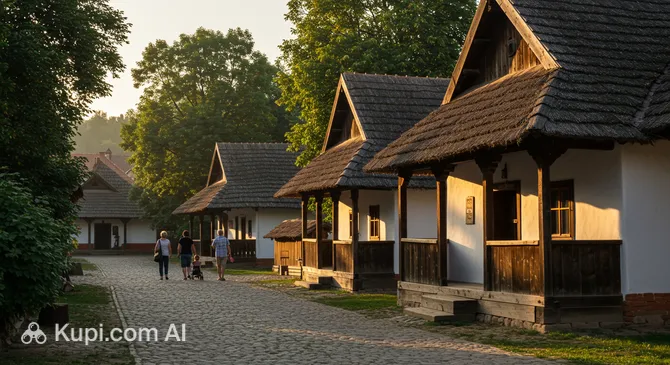
Banat Village Museum
Banat Village Museum. Иллюстрация. Источник: Kupi.com AI

The museum's extensive grounds house authentic wooden churches, residential houses, and farm buildings brought from various corners of the historical Banat region. Each building is a unique architectural monument, preserving the atmosphere of its time and way of life.

The museum's special value lies in its reflection of the cultures of several ethnic groups: Romanians, Germans, Hungarians, Serbs, and Slovaks. Walking between the estates, you can see how closely the traditions and crafts of different peoples were intertwined in this land.

Contacts

For those planning a visit, it's helpful to have up-to-date contact information on hand. You can contact the administration or check details for upcoming events using the contact information below.

How to contactContact
AddressStrada Avram Imbroane 31, Timișoara 300136, Romania
Phone+40 256 225 588
Websitemuzeulsatuluibanatean.ro

What to Do

The main activity here is taking leisurely strolls through the improvised village streets. You can step inside many of the houses to see antique furniture, hand-woven rugs, national costumes, and tools used by peasants hundreds of years ago. Most structures feature information panels revealing interesting facts about the owners and the building's history.

The museum often serves as a venue for living history. Thematic festivals, craft fairs, and workshops where you can watch potters or weavers at work are regularly organized here. It's an excellent spot for those who want to not only observe but also experience traditions through participation in cultural events and tasting traditional cuisine.

Getting There

Reaching the ethnographic complex is quite simple, despite its location on the outskirts of the city. The most comfortable and fastest way is to take a taxi from the city center or drive a personal car. A convenient parking area is available for visitors near the museum entrance.

Public transport also serves the Green Forest area. Buses run from central Timisoara in this direction; however, it is recommended to check the current schedule and route numbers on city information websites before your trip. The journey from the central squares typically takes about 15–20 minutes.

For those who prefer active recreation, the route to the museum can be a pleasant bike ride. The path passes through scenic and quiet areas, allowing you to enjoy nature even before entering the complex grounds.

Ближайший город: Timisoara

History & Facts

The history of this place began with the vision of Joachim Miloia, who served as the director of the Banat Museum from 1928 to 1940. Inspired by the example of the ethnographic museum in Cluj-Napoca, he was determined to create something similar in Timisoara. The first exhibits—ancient wooden churches and peasant houses—were initially displayed right in the courtyard of the historic Huniade Castle.

It wasn't until 1967 that the museum was allocated the spacious plot of land where it stands today. This allowed for the creation of a full-scale open-air complex mimicking a real village. Large-scale transport and restoration work on the authentic buildings were completed by the summer of 1971.

The official opening of the museum to the general public took place on August 20, 1971. Since then, the collection has continuously expanded, becoming an increasingly detailed reflection of the multinational heritage and cultural diversity of the Banat region.

Time Needed

Visitors typically spend 1.5 to 3 hours exploring the collection. This is enough time to stroll leisurely across the entire site, view the exteriors, and look inside the most interesting houses.

If you plan to study the information boards in detail or if your visit coincides with a folk festival or fair, it is worth setting aside at least half a day. The spacious grounds and fresh air invite long walks and contemplative relaxation.

Working Hours

Please take the operating schedule into account when planning your visit. The museum welcomes guests from Wednesday to Sunday, while Monday and Tuesday are closing days.

From Wednesday to Saturday, the exhibition is open from 10:00 AM to 6:00 PM. On Sunday, the museum opens a bit later and closes in the evening—visiting hours are from 12:00 PM to 8:00 PM.

DayWorking hours
ПонедельникЗакрыто
ВторникЗакрыто
Среда10:00 – 18:00
Четверг10:00 – 18:00
Пятница10:00 – 18:00
Суббота10:00 – 18:00
Воскресенье12:00 – 20:00

Nearby

Exploring the surroundings of the ethnographic museum will help you get a fuller picture of modern Timisoara, where history harmoniously coexists with the present. Very close to the silence of the "old village" are popular leisure spots and architectural monuments.

NameDistance
Amazonia Aquapark1.2 km
Georgiana Apartments2.7 km
Iulius Town3.1 km
Maria Theresia Bastion3.3 km
Memorial to the Revolution3.3 km
National Museum of Banat3.5 km
Ion Creangă Children's Park3.5 km

Reached the end of the page?

That means the route is fully explored