Support

National Museum of Banat

About

No dive into the rich history of the western region of Romania is complete without visiting this place. The National Museum of Banat is the primary custodian of the region's cultural identity, with its halls housed in the majestic Huniade Castle — the oldest building in the city of Timișoara.
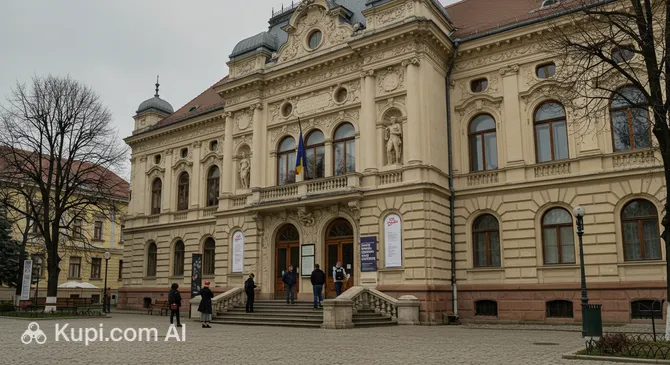
National Museum of Banat
National Museum of Banat. Иллюстрация. Источник: Kupi.com AI

Tracing its history back to 1872, the museum today boasts an impressive collection of history, archaeology, and ethnography exhibits. The main exhibition is located in the Maria Theresia Bastion, where medieval walls harmonize with modern museum technologies to create a special atmosphere for every guest.

The significance of this institution cannot be overstated: it houses unique evidence of Banat's development from the Paleolithic era to the present day. Tourists value the museum not only for its rich collections but also for the opportunity to touch the ancient walls of the 14th-century castle, a symbol of resilience and continuity.

Contacts

To help plan your visit to this unique historical space, here is the current contact information. Use these details to inquire about special tours or current temporary exhibitions.

How to contactContact
AddressБастион Марии Терезии, Strada Martin Luther 4, 305500 Timișoara, Румыния
Phone+40 256 491 339
Websitemnab.ro

What to Do

A fascinating journey through the centuries awaits in the halls of the National Museum of Banat. Here, you can see archaeological treasures firsthand, including Roman-era artifacts, rare medieval weapons, and ancient coins that once circulated in these lands. Special attention should be paid to the ceramics and documents that reveal the secrets of daily life in Banat across different historical periods.

Beyond the display cases, visitors can soak up the atmosphere of the ancient castle. Preserved segments of the fortress walls and mighty bastions offer a glimpse of how the fortress looked centuries ago. This is an excellent spot for those who appreciate detailed architecture and seek inspiration in the interiors of the past.

For a deeper dive, we recommend the ethnographic section, which showcases traditional costumes and household items of local communities. The museum often serves as a venue for temporary exhibitions and cultural events, adding a contemporary perspective to the history. Be sure to set aside time for photos against the authentic walls — the shots here are truly impressive.

Getting There

The museum is located in the heart of the city, in the Maria Theresia Bastion at Strada Martin Luther 4. Thanks to its central location in the southern part of the Old Town, it is easily reachable on foot from popular tourist spots like Unirii Square.

For those who prefer public transport, numerous buses and trams stop near the bastion. If you are coming from the railway station, the most convenient way is to take tram No. 1 or No. 9 — the trip to the center takes no more than 15 minutes, followed by a 5–10 minute walk.

Tourists arriving in Timișoara via Traian Vuia International Airport can reach the museum by taxi or express buses No. 16 or No. 36. The distance is about 15 km, and travel time usually does not exceed 30–40 minutes, depending on traffic.

Parking is available in the immediate vicinity of the bastion for travelers by car. The city is also actively developing its cycling infrastructure, so reaching the museum by bike via dedicated lanes is a pleasant and quick way to get around.

Ближайший город: Timisoara

History & Facts

The roots of this venerable institution date back to 1872, when it was founded to preserve the heritage of the Banat region. However, the museum building itself — Huniade Castle — has an even older and more fascinating history. Built between 1443 and 1447 by order of John Hunyadi, it served as an important royal residence and strategic site in the 14th century.

Over the centuries, the castle has changed its appearance many times. A major reconstruction from 1850–1856 gave it the features we see today, blending the ruggedness of a medieval fortress with 19th-century architectural elements. Throughout the ages, these walls witnessed changing eras: from Hungarian rule to Ottoman dominion and subsequent Habsburg influence.

The Banat region has always been a melting pot of cultures, which is vividly reflected in the museum's collections. Here, you can trace how the city was rebuilt in the Baroque style, earning its famous nickname, "Little Vienna". Each era left its mark on the architecture and lifestyle, all of which are carefully documented by the museum staff.

Interestingly, from 1940, part of the collection was integrated with the art museum, but today the National Museum of Banat remains an independent and significant cultural center. It stands as living proof of how the interweaving of different traditions has shaped the unique identity of modern Romania.

Time Needed

To immerse yourself in the region's centuries-old history and examine the most valuable artifacts without rushing, an average visitor will need 1.5 to 2.5 hours. This is enough time to explore the main halls and appreciate the architecture of the castle itself.

If there are temporary themed exhibitions during your visit or if you plan to use an audio guide, it's worth allowing a bit more time. The museum has extensive archives, and history buffs could easily spend half a day exploring the ethnographic collections and archaeological finds.

Working Hours

The museum is open to visitors from Wednesday to Sunday, 10:00 AM to 6:00 PM. This schedule is convenient for those planning cultural activities over the weekend or midweek.

Please note that Monday and Tuesday are the museum's closing days. Before visiting on public holidays, it is recommended to check the schedule on the official website to ensure your trip goes as planned.

DayWorking hours
понедельникЗакрыто
вторникЗакрыто
среда10:00–18:00
четверг10:00–18:00
пятница10:00–18:00
суббота10:00–18:00
воскресенье10:00–18:00

Nearby

Exploring the surroundings of the National Museum of Banat will allow you to feel the atmosphere of this ancient city more deeply. Iconic architectural monuments and cozy squares are located nearby, making a walk through the center truly fulfilling.

NameDistance
Maria Theresia Bastion0.1 km
St. George's Cathedral0.2 km
Holy Trinity Monument0.3 km
The Scotland Yard0.3 km
Vinto0.3 km
Timișoara Art Museum0.3 km
Union Square0.3 km

Reached the end of the page?

That means the route is fully explored