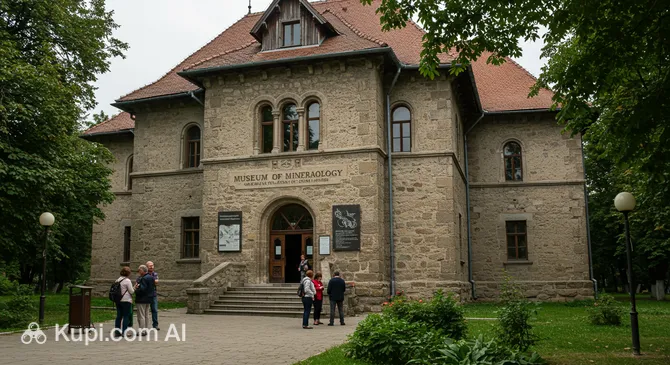
In the very heart of Baia Mare lies a true treasure trove of natural wonders — the Mineralogy Museum. This unique cultural space is dedicated to the amazing world of stones and minerals that have been mined for centuries in the ore-rich Maramureș region. Romania is rightfully proud of this collection, which is considered one of the most significant and comprehensive in Central Europe.
Museum of Mineralogy. Illustration.
Source: Kupi.com AI
Traveler photos:
The museum impresses its guests not only with its scale but also with the quality of the specimens on display. Here, you will see rare crystals, native gold and silver, as well as stunning semi-precious stones that amaze with their shapes and shades. The exhibition is designed to highlight the connection between the region's geological wealth and its historical development as a major mining center.
Visitors and experts highly rate this site: the museum has a rating of 4.8, confirming its status as a must-visit attraction. This is not just a scientific collection, but an aesthetically refined space where each "flower of the mine" is presented as a true work of art created by nature itself.
Contacts
To clarify details before your visit, you can use the museum's official communication channels. The staff is usually friendly and ready to answer questions about current temporary exhibitions or group visit conditions.
The main reason to visit the museum is to embark on a visual journey through several floors filled with shimmering displays. You can examine the rarest specimens of crystals in detail, learn about the origin of various ores, and see what precious metals look like in their raw form before processing. Special attention should be paid to the collection of local minerals that made the mines of Maramureș world-famous.
For families with children, there is a special interactive zone on the first floor. Here, the basics of geology are explained in an accessible and engaging way, turning a standard tour into an educational adventure. The educational aspect of the museum is complemented by information plaques describing the chemical composition and unique properties of each stone.
Photography enthusiasts will find plenty of creative inspiration here: the whimsical shapes of the minerals and their unusual lighting allow for impressive shots. At the end of your visit, stop by the souvenir shop, where you can purchase memorable gifts — from small natural stones to specialized books on mineralogy, which will serve as a great reminder of your trip.
Getting There
Getting to the museum is quite simple, as it is located on one of the city's main thoroughfares — Bulevardul Traian 8. If you are staying in the historic center, a pleasant walk from Liberty Square (Piața Libertății) will take about 10–15 minutes, passing by iconic architectural monuments.
For those who prefer public transport, many city buses and trolleybuses stop in the Bulevardul Traian area. From the main railway station, which is just a couple of kilometers away, you can take bus No. 2 or No. 9. Tickets can easily be purchased at special kiosks at the stops.
If you are arriving from Baia Mare Airport, located about 10 km away, it is most convenient to take a taxi or rent a car. For car owners, parking spaces are provided near the museum building.
Nearest city: Baia Mare
History & Facts
The history of this place is inextricably linked with the underground riches of the Maramureș region. Mining here began in ancient times: archaeologists find traces of mining left by Thracian tribes and the Dacians of King Burebista. The city itself was first mentioned in 14th-century documents under the poetic Latin name Rivulus Dominarum ("Ladies' River").
During the Middle Ages, Baia Mare became one of the most important centers for gold and silver mining in Europe. In 1411, Emperor Sigismund granted these rich lands to the famous Hunyadi family, which gave a new impetus to the development of the mines. It is from this historical environment — from the depths of ancient mines — that the museum's most valuable exhibits originate.
The Mineralogy Museum acts as the guardian of this centuries-old heritage. Although the museum building itself is modern, every crystal in its display cases is a witness to the grand geological history of Romania, spanning millions of years. Interestingly, the collection is constantly updated with unique specimens that geologists call "flowers of the mine" for their incredible natural beauty.
Time Needed
To carefully explore all levels of the exhibition and enjoy the play of light on the facets of rare stones, you will typically need between 1 and 2 hours. This is usually enough time for a leisurely tour of both the main ore halls and the special displays featuring unique crystals.
If you are traveling with children, you might want to stay longer in the interactive zone on the first floor. For true geology enthusiasts, the visit may take longer, as each exhibit is accompanied by a detailed description that is well worth your attention.
Working Hours
When planning your visit, please note that the museum maintains a consistent schedule throughout the week, except for Mondays.
After immersing yourself in the world of crystals and minerals, it is worth taking the time to explore other interesting locations in the city. The museum's surroundings are rich in both historical monuments and cozy spots for relaxation, allowing you to create a full day's itinerary.
A walk through the center will reveal the architectural diversity of the region, from medieval towers to monumental sculptures dedicated to prominent historical figures.