Support

Regina Maria Park

About

Strolling along the right bank of the Bega Canal in the Fabric district, you will certainly notice the majestic gates inviting you into Queen Marie Park. This oldest green space, which graces the city of Timișoara, is a magnificent example of English-style landscape art. Spanning over 45,000 square meters, the park is not just a recreation area, but a true historical monument that has preserved the spirit of past centuries.
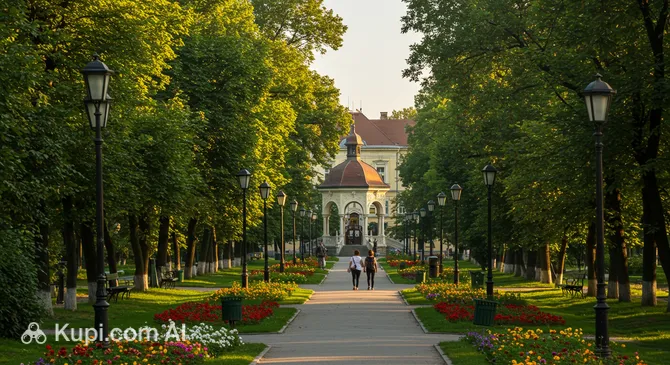
Queen Marie Park
Queen Marie Park. Иллюстрация. Источник: Kupi.com AI

The main architectural highlight of the location is the monumental Secession-style entrance gate, created in the early 20th century by the prominent architect László Székely. Inside the park, an atmosphere of tranquility reigns: elegant walking paths are laid out among century-old oaks and pines, while wooden music pavilions recall the times when a military band gave concerts here. At the heart of this garden stands an expressive bust of Queen Marie, after whom the place is named.

For anyone visiting a country like Romania, a trip to this park is a wonderful opportunity to touch the history of Banat. Natural beauty and architectural heritage combine harmoniously here, making the park one of the city's most significant landmarks.

Contacts

For those planning a visit, basic contact information for the park is provided below. The site is a public space, so no advance booking is required for walks.

How to contactContact
AddressSplaiul Nistrului 2, Timișoara, Romania

What to Do

In Queen Marie Park, everyone will find something to enjoy. Lovers of quiet walks will appreciate the shady alleys lined with rare tree species, including century-old oaks, yews, and pines. It is an ideal spot for morning jogs or peaceful reading on a bench in one of the wooden pavilions, where live music once played.

Families with children often choose the park's spacious lawns for active games and outdoor relaxation. Special attention should be paid to the architectural elements: besides the famous gates, the building of the former Apollo Cinema (Cinema Parc), built in 1909, is of interest. Although it currently houses a private clinic, its facade still preserves the historical features of the early last century.

Photographers and Art Nouveau enthusiasts will find many interesting angles here. The monumental gates and the park's wrought-iron fence perfectly convey the Secession aesthetics characteristic of Timișoara's buildings at that time. Don't forget to visit the Queen Marie monument, which serves as the thematic center of the park's composition.

Getting There

Finding this green oasis is quite simple: Queen Marie Park is nestled in the Fabric district at Splaiul Nistrului, 2. Its territory is bounded by Splaiul Nistrului, Pestalozzi Street, and 3 August 1919 Boulevard. The main entrance to the park is in the immediate vicinity of the Decebal Bridge, which is an excellent landmark for pedestrians.

If you are coming from the city center, a pleasant walk will take very little time. You can also use the well-developed public transport network: city buses and trams stop near 3 August Boulevard. For those who prefer maximum comfort, a taxi ride from Union Square (Piața Unirii) or Liberty Square will take only about 5–10 minutes.

Ближайший город: Timisoara

History & Facts

The history of this place dates back to the mid-19th century. The park was established between 1849 and 1861 at the personal initiative of Johann Baptist Coronini-Cronberg, the military governor of Banat. It was originally named after its founder — Coronini Park. Notably, the area was developed on the territory of the so-called esplanade surrounding the city fortress, where any construction or landscape changes were previously strictly prohibited.

In 1868, the park came under city management and gradually became a favorite leisure spot for residents. During the Austro-Hungarian era, it was called Városliget (City Park). The site received its current name in 1918 in honor of Queen Marie of Romania, whose contribution to the country's unification is hard to overstate. In 2009, a bust of the Queen was installed in the center of the park to commemorate her historical role.

Over the decades of its existence, the park's appearance has changed several times. In 1910, an elegant iron fence with stone pillars was installed, and the main entrance was decorated with Secession-style gates designed by the famous architect László Székely. During the socialist period, the name changed again to "Youth Park" and "People's Park," but historical justice eventually prevailed, and the Queen's name returned to the city map.

Time Needed

To leisurely walk through all the winding paths, examine the architectural details of the gates, and enjoy the silence at the bust of Queen Marie, it usually takes about 1 to 2 hours. This time is quite sufficient for a comfortable introductory stroll and a few memorable photos against the backdrop of ancient trees.

If you plan to have a small picnic on the grass or want to sit with a book in one of the wooden pavilions, you could stay for half a day. The park has a particularly calming energy that invites a long break from city noise.

Working Hours

One of the main advantages of Queen Marie Park is its accessibility. It is open to the public 24/7. You can come here for an early sunrise walk or enjoy the evening coolness under the lamplight on any day of the week, including weekends and holidays.

Круглосуточно

Nearby

The park's location in the historic Fabric district makes it an excellent starting point for further exploration of the city's architectural treasures. A walk from the quiet alleys to the main squares will allow you to see how eras and styles shift in Timișoara's urban development.

Within walking distance are both monumental fortifications and elegant palaces that create the city's unique appearance. Below are the closest attractions:

NameDistance
Ion Creangă Children's Park0.5 km
Maria Theresia Bastion0.7 km
National Museum of Banat0.8 km
Pirates' Paradise0.8 km
Civic Park0.9 km
Timișoara Art Museum1 km
Roses Park1 km

Reached the end of the page?

That means the route is fully explored