Support

Malaga Cathedral

About

Malaga Cathedral, officially known as the Cathedral Basilica of the Incarnation (Santa Iglesia Catedral Basílica de la Encarnación), is the majestic heart of the old city. It is one of the primary cultural treasures of Malaga and one of the most significant landmarks in Spain. The temple's impressive scale towers over the narrow streets and tidy houses, creating an unforgettable silhouette against the cityscape.

Construction of the cathedral began in the 16th century and lasted for over two hundred years, yet it was never fully completed. Because of this, it has the affectionate nickname "La Manquita", which translates to "The One-Armed Lady," as its south tower was left unfinished. The cathedral is considered one of the jewels of the Spanish Renaissance in Andalusia and was built on the site of an ancient mosque following the Reconquista. This unique history is reflected in its architecture, which blends Gothic, Renaissance, and Baroque elements.
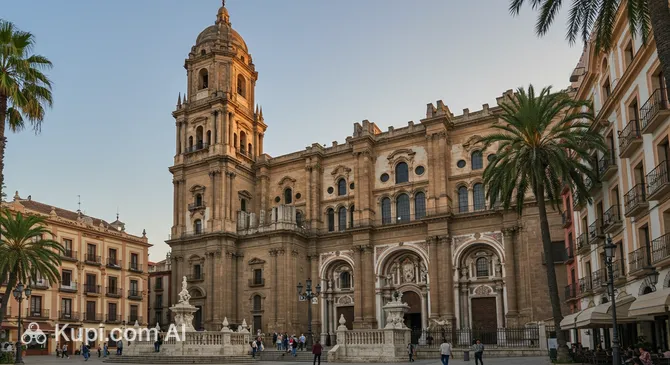
Malaga Cathedral. Illustration.
Source: Kupi.com AI

Traveler photos:

Located within ancient fortress walls, the cathedral is part of a magnificent architectural ensemble alongside the Moorish Alcazaba fortress and Gibralfaro Castle. This grand temple became one of the last "great" cathedrals built in Europe, making it not just a religious site, but a true monument to history and architecture. A visit to the cathedral allows you to touch the centuries-old history of the region and enjoy its monumental beauty.

Contacts

To plan your visit, check current service and event schedules, and confirm ticket prices, we recommend consulting official sources. All necessary information is available on the cathedral's website and via the contact telephone number.

How to contactContact
AddressC. Molina Lario, 9, Distrito Centro, 29015 Málaga, Spain
Phone number+34 617 50 05 82
Websitemalagacatedral.com

What to Do

A visit to Malaga Cathedral is an opportunity not only to appreciate its impressive exterior but also to immerse yourself in a rich inner world filled with art and history. Inside the cathedral, visitors are met with a grand interior where Renaissance and Baroque elements are harmoniously intertwined. This space, conceived as a symbol of the grandeur of the Catholic Church, is filled with light and air thanks to its high vaults and skillfully placed columns. Here, one can spend hours examining various architectural details and artworks created by famous masters of their time, such as Diego de Siloé and Pedro de Mena.

One of the main jewels of the interior is the 17th-century choir stalls, located in the central nave. They represent a masterpiece of woodcarving, crafted from cedar and mahogany, featuring 42 sculptures of saints created by Pedro de Mena. Equally interesting are the numerous chapels, each dedicated to a different saint and decorated with valuable paintings and sculptures. For example, the Chapel of the Virgin of the Rosary houses a famous work by the artist Alonso Cano. Examining these works of art allows you to trace the long history of the cathedral's construction and appreciate the contribution of various masters to its creation.

For those seeking unforgettable impressions and the best views of the city, a climb to the cathedral roof is a must. After climbing about 200 steps up the spiral staircase of the north tower, you reach observation decks that offer a breathtaking panorama of the historic center, the port, and the Alcazaba fortress. This is a unique opportunity not only to see Malaga from a bird's-eye view but also to closely examine the unusual roof construction with its numerous domes. Additionally, there is a small museum at the cathedral, and cozy gardens and an orange courtyard spread out around it, where you can relax after your tour.

Getting There

Malaga Cathedral is located in the heart of the historic center, making it easily accessible for travelers. The most pleasant way to reach it is a stroll through the charming streets of the old town. Since the cathedral is surrounded by other key attractions, restaurants, and shops, the walk itself becomes an engaging part of getting to know Malaga. Most central hotels are within walking distance, so you likely won't need transportation.

For those coming from more distant parts of the city or the coast, public transport is an excellent option. Numerous city bus routes pass near the cathedral. The nearest major stop, "Paseo del Parque (Plaza de la Marina)," is just a few minutes' walk away. Buses No. 1, 4, 14, 19, 25, 36, and 37 stop here, making it easy to arrive from almost anywhere in the city. Additionally, Hop-On-Hop-Off tourist buses run through the city and have a stop right by the cathedral, which is very convenient for those wishing to see all the main sights in one day.

If you prefer comfort, you can take a taxi. A trip from any part of the city to the center is quick and relatively inexpensive. However, keep in mind that some streets in the historic center are pedestrian-only, so the driver will drop you off at the nearest accessible point. Driving a personal or rental car into the very center can be difficult due to narrow streets and restricted traffic. It is recommended to leave your car in one of the underground parking lots, such as Parking Plaza de la Marina, located very close to the cathedral and the waterfront.

Nearest city: Malaga

History & Facts

The history of Malaga Cathedral is closely linked to a key moment in Spanish history—the Reconquista. The decision to build it was made immediately after the Catholic Monarchs, Isabella and Ferdinand, recaptured the city from the Moors. They ordered the construction of a temple that was meant to be a powerful symbol of the victory of Christianity. As in many other conquered cities in Andalusia, a symbolic site was chosen—the foundations of the main mosque, which was demolished to make way for the new cathedral. Thus, from the very beginning, the cathedral was envisioned not just as a religious structure, but as an assertion of new power and faith.

Construction began in 1528 and turned into a centuries-long project, continuing intermittently for nearly two and a half centuries until 1782. Although the cathedral was consecrated as early as 1588, work continued for a very long time. This lengthy and interrupted construction history is why the building was never finished according to the original design. The most famous evidence of this incompleteness is the missing south tower, which earned the cathedral its popular nickname "La Manquita" (The One-Armed Lady).

Outstanding architects of the time worked on creating this architectural masterpiece. The initial plans and drawings were developed by the famous architect Diego de Siloé, considered a key figure of the Spanish Renaissance. At various times, other renowned masters such as Enrique Egas, Hernán Ruiz II, and Pedro López were involved. Later, in the 16th century, project management passed to Diego de Vergara, and an architect from Toledo was even invited to Malaga for consultations and work on specific elements. This constellation of talent explains the unique blend of styles that can be seen in the cathedral today.

Time Needed

Most visitors will need about 1–1.5 hours to see the main part of Malaga Cathedral. This is enough time to leisurely walk through the main nave, admire the famous choir stalls created by Pedro de Mena, and examine the details of the numerous chapels. If you use an audio guide, which helps you delve deeper into the cathedral's history and art, the tour will take about an hour.

Previously, a significant part of the visit was the climb to the roof, which offered magnificent panoramic views of the city. That excursion took about an hour. However, it is important to know that as of spring 2024, roof access is temporarily closed due to large-scale restoration work, which is expected to last for several years. Therefore, when planning your trip at this time, you should focus only on viewing the cathedral's interior.

Thus, for a full and thoughtful acquaintance with all the available treasures of the cathedral, including its small museum and artworks, you should set aside about an hour and a half. Of course, if you are short on time, you can take a quicker 45-60 minute walk, but to truly appreciate the grandeur and beauty of this unique architectural monument, it's better not to rush.

Working Hours

Malaga Cathedral is open to tourists year-round; however, opening hours may change depending on the season, religious holidays, and scheduled services. Generally, the cathedral is open for cultural visits from Monday to Saturday starting at 10:00 am, and on Sundays in the afternoon from 2:00 pm. Closing times vary: on weekdays it is usually 7:00 pm, and on Saturdays and Sundays it is 6:00 pm. In the mornings, from 8:30 am to 9:00 am (until 9:30 am on Sundays), entry may be free, but is primarily intended for worship.

To avoid long queues, especially during the peak tourist season, it is recommended to purchase tickets online in advance. This can be done through the cathedral's official website or partner sites offering tours. Pre-booking a visit is not always mandatory but is highly recommended if you want to enter at a specific time. Before your trip, we strongly advise checking the current schedule and potential changes on the official cathedral website, as working hours may be adjusted, including due to ongoing restoration work.

DayOpening hours
Monday10:00 – 19:00
Tuesday10:00 – 19:00
Wednesday10:00 – 19:00
Thursday10:00 – 19:00
Friday10:00 – 19:00
Saturday10:00 – 18:00
Sunday2:00 – 18:00

Nearby

After exploring the majestic Cathedral, don't be in a hurry to leave the area. Its location in the heart of Malaga's historic center makes it the perfect starting point for further exploration. A walk through the nearby streets will allow you to dive deeper into the atmosphere of Andalusia, discover other iconic sites, and feel the rhythm of Spanish life.

A variety of cultural sites, cozy restaurants, and authentic bars are concentrated within walking distance of the cathedral. To help you plan your onward route, we have prepared a list of interesting places located very close by.

NameDistance
El Pimpi0.2 km
Kraken Centro0.2 km
Picasso Museum Málaga0.2 km
Barsovia Club0.2 km
Malaga Historic Center0.3 km
La Tasquita de en Medio0.3 km
Picasso Birthplace Museum0.5 km

Have you reached the end of the page?

So the route has been studied inside and out