Support

Nerja Cave

About

The Nerja Cave (Cueva de Nerja) is one of the most impressive natural attractions in Spain, located just a few kilometers from the charming town of Nerja. This vast karst cave system, stretching for nearly 5 kilometers, is striking in its scale and beauty. Discovered only in 1959, it now attracts travelers from all over the world.

Known for its majestic chambers decorated with giant stalactites and stalagmites, the cave is often called the "Natural Cathedral of the Costa del Sol." Inside, breathtaking landscapes await: columns connecting the floor and ceiling, whimsical flowstone formations, and grand spaces formed over millions of years. One of the stalactites in the Hall of the Cataclysm, standing 33 meters tall, is considered one of the largest in the world. Cave paintings and traces of ancient human presence were also found here, making the site an important archaeological monument.
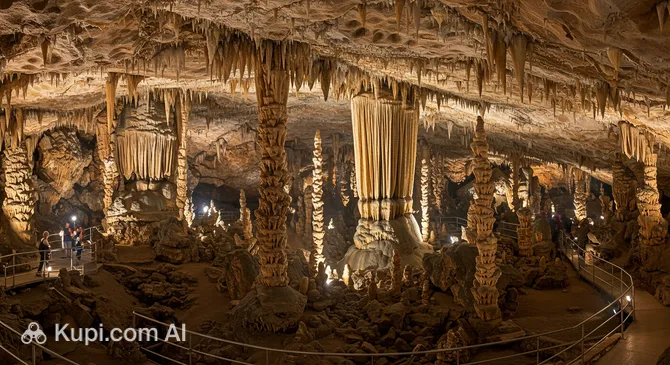
Nerja Cave. Illustration.
Source: Kupi.com AI

Traveler photos:

The uniqueness of the Nerja Cave lies not only in its natural splendor. One of its halls, which boasts magnificent natural acoustics, transforms into a true concert hall. The International Festival of Music and Dance is held here annually, featuring world-famous artists. This is a rare opportunity to enjoy art in a truly magical underground atmosphere, making a visit to the cave an unforgettable cultural event.

Contacts

To plan your visit to the Nerja Cave, check the latest schedules, or purchase tickets, it is recommended to use the official communication channels. On the cave's website, you will always find the most up-to-date and detailed information regarding prices, special events, and visiting rules.

How to contactContact
AddressCarr. de Bajada a Playa de Maro, 29787, Málaga, Spain
Phone number+34 952 52 95 20
Websitewww.cuevadenerja.es

What to Do

Visiting the Nerja Cave is an immersion into a wonderful underground world, accessible to everyone thanks to specially equipped tourist routes. Strolling through the spacious halls, you can admire the giant stalactites and stalagmites, some of which are recognized among the largest in the world. In addition to the majestic natural formations, the cave preserves traces of ancient history: here you can see prehistoric cave paintings, as well as display cases with archaeological finds, including ceramics, tools, and the remains of ancient animals.

For those who want to learn more, themed guided tours are offered, focusing on the archaeology and geological history of the cave. This is an excellent opportunity to gain a deeper understanding of the site's uniqueness. Furthermore, the Nerja Cave is known as a cultural venue: during the summer months, one of its halls, with a natural amphitheater and superb acoustics, becomes the stage for the International Festival of Music and Dance. This allows you to combine a visit to a natural wonder with world-class concerts in an unforgettable atmosphere.

Getting There

Getting to the Nerja Cave is quite easy, as it is located just 4–5 kilometers east of the town of Nerja. One of the most convenient ways is by car, for which a spacious paid parking lot is provided near the entrance. Additionally, tourist buses regularly depart from the center of Nerja and neighboring towns, stopping right at the cave, making the trip accessible for travelers without their own transport.

For those who enjoy walking, there is a scenic route. You can reach the cave on foot from the neighboring village of Maro. This walk takes about 20–30 minutes and allows you to enjoy beautiful views of the surrounding area. There is also a tourist train in Nerja that runs to the cave and the village of Maro.

If you are staying in other cities in the region, such as Malaga or Granada, you can take advantage of organized excursions. Many tour companies offer transfers that include round-trip delivery to the cave, eliminating the need to plan the route yourself. Regular ALSA buses also run from Malaga to the stop at the cave.

Nearest city: Nerja

History & Facts

The history of the Nerja Cave reads like the plot of an adventure movie, as its discovery was a complete accident. It happened on January 12, 1959, when five local boys from the villages of Maro and Nerja went out to catch bats. While chasing a colony, they stumbled upon a small hole in the rock from which a stream of air was blowing. Realizing there was a cavity behind it, they returned the next day with tools to clear the passage, which was blocked by stalactites. They soon found themselves in a massive hall that captured their imagination. News of the find spread quickly, and by 1961, the cave was officially designated a Historical-Artistic Monument of Spain.

The geological history of this underground wonder began long before its discovery—about 5 million years ago. During the Upper Miocene epoch, rainwater seeping through cracks in the limestone gradually dissolved it, forming giant underground cavities. Archaeological research has shown that the cave served as a home and shelter for ancient people for tens of thousands of years. Some studies date the earliest traces of human presence back more than 41,000 years, making Nerja one of the oldest human-visited sites in Europe.

The Nerja Cave is a true treasure trove for archaeologists. Numerous pieces of evidence of prehistoric life have been discovered in its chambers: stone tools, ceramic fragments, and even skeletal remains. Of particular value are the cave paintings, of which there are nearly 600. On the walls, you can see images of goats, horses, deer, and even seals. These findings prove that the cave was used not only for habitation but also for rituals and burials.

Time Needed

It is recommended to set aside between 1.5 and 2.5 hours for a visit to the Nerja Cave. This time is usually sufficient for a self-guided walk along the main tourist route, which passes through the most impressive halls. You can take your time examining the giant stalactites and stalagmites, admire the grandeur of the underground galleries, and take souvenir photos without being rushed.

If you want to dive deeper into the history and geology of this unique site, your visit may last longer. For example, if you join a guided tour or wish to explore the exhibits in the small archaeological museum at the cave in detail. You should also consider time for cultural events, such as concerts, which are sometimes held in one of the halls. In such cases, the total stay may approach three hours.

Working Hours

The Nerja Cave is open to visitors year-round, but opening hours depend on the season. Typically, the cave opens daily at 9:30 AM and closes for entry between 4:30 PM and 6:00 PM. Keep in mind that on public holidays or during festivals, the schedule may change, so it is recommended to check the current information before your visit.

To avoid long queues and guarantee your entry, especially during the peak tourist season, we strongly advise purchasing tickets in advance online. This is the most reliable way to plan your trip to this popular Spanish attraction. The most accurate and up-to-date information on opening hours and ticket purchases can always be found on the official Nerja Cave website.

9:30 – 15:30

Nearby

Visiting the Nerja Cave is just one part of the adventure that awaits you in this picturesque corner of Spain. To get the most out of your trip, it is worth spending some time exploring the surroundings. The town of Nerja and its outskirts are rich in both natural and man-made attractions that perfectly complement your visit to the famous cave.

Near the cave, you will find many interesting spots: from ancient aqueducts and scenic beaches to cozy restaurants and viewpoints with breathtaking vistas. Exploring these places will allow you to better experience the culture and atmosphere of the Costa del Sol region. Below is a list of some attractions located in the immediate vicinity.

NameDistance
Eagle Aqueduct0.6 km
Burriana Beach2.3 km
Bar H2O2.5 km
Parador of Nerja2.7 km
Paraiso del Mar Hotel2.7 km
Rincon del Sabor2.8 km
Carabeillo Beach2.8 km

Have you reached the end of the page?

So the route has been studied inside and out