Support

Murcia

About

Murcia is a sunny gem in southeastern Spain, nestled comfortably on the fertile banks of the Segura River, just 40 kilometers from the Mediterranean Sea. Surrounded by picturesque hills and famous citrus orchards, this city harmoniously combines the authentic atmosphere of Andalusia with the tranquility of the Mediterranean coast. Murcia is famous for its mild climate, offering over 300 sunny days a year, making it an attractive destination to visit at any time.

With a population of about 672,000, Murcia is not only the administrative center of the region of the same name but also one of the largest cities in the southeast of the country. The city masterfully interweaves historical heritage with modernity: ancient quarters with narrow streets, where the spirit of the Middle Ages still lingers, stand alongside newer districts. Among the iconic sites are the majestic Murcia Cathedral (Santa Maria), a masterpiece of Spanish Baroque, and the lively Plaza del Cardenal Belluga, the heart of urban life.
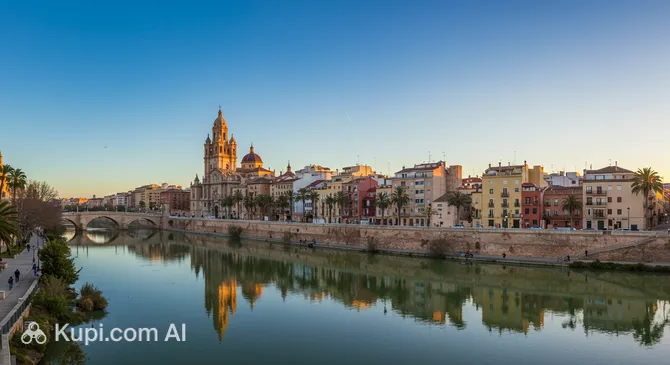
Murcia. Illustration.
Source: Kupi.com AI

In addition to its rich architecture, Murcia attracts tourists with its unique gastronomy, based on the freshest products from local gardens known as the "Huerta de Murcia." Don't miss the chance to try traditional tapas and local wines. For lovers of nature and wellness, the unique Mar Menor lagoon is located near the city, known for its healing muds and warm waters.

Murcia is a city where life flows at a measured pace, and the hospitality of the locals creates a particularly warm atmosphere. If you are looking for a place to experience authentic Spanish culture, enjoy the sun, and savor delicious food, Murcia will undoubtedly charm you with its color and hospitality.

You can find more interesting facts on the history of Murcia page.
Weather Overview

The weather in Murcia is characterized by a very warm and dry climate. Expect hot summers with minimal rainfall and mild, also mostly dry winters. Average monthly temperatures are comfortable for visiting most of the year, ranging from around 10.7°C in January to peaks of 27.7°C in August.

In the summer months, especially July and August, daytime temperatures regularly rise above 33°C, and rain is very rare, often with 0 mm of precipitation. In winter, during December and January, average temperatures hover around 10-12°C, with night-time lows of about 5-6°C and daytime highs up to 16-17°C. Rainfall in Murcia is extremely low throughout the year, making it one of the driest cities in Europe. To view a detailed forecast and seasonal data, visit the weather in Murcia page.

Average monthly temperature

Average monthly precipitation

Interesting Facts

Murcia is not only the "orchard of Europe" but also a city with a rich history and many curious details that aren't always obvious at first glance. Behind the facades of famous landmarks lie amazing stories and facts that can surprise even the most seasoned traveler.

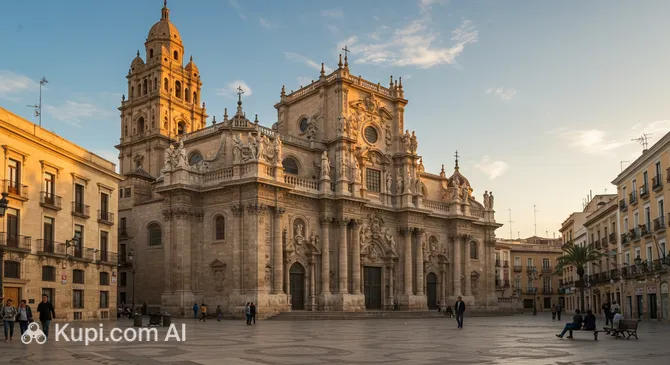
Murcia Cathedral. Illustration.
Source: Kupi.com AI

Traveler photos:

  • The majestic Murcia Cathedral was built over nearly four centuries, from the 15th to the 18th century. This resulted in a unique blend of architectural styles—from Gothic and Renaissance to Baroque and Neoclassicism. Its 98-meter bell tower is one of the tallest in Spain and serves as the city's main landmark.

  • The city is dominated by an iconic mountain crowned by the ancient fortress of Castillejo de Monteagudo. It was once the residence of Moorish rulers, and today it is famous for the huge statue of Christ (Cristo de Monteagudo), which seems to bless Murcia from above.

  • Murcia is home to one of Spain's oldest universities, founded back in 1272 by King Alfonso X the Wise. This gives the city a special, lively, and youthful atmosphere that is felt in its many cafes and at cultural events.

  • The city gave the world Francisco Salzillo y Alcaraz, one of the greatest 18th-century Spanish Baroque sculptors. His expressive, drama-filled works, especially religious sculptures (pasos), can be seen in the Salzillo Museum and many churches throughout the region.

  • Murcia is famous for its colorful and unique festivals. The "Burial of the Sardine" (Entierro de la Sardine) stands out as the culmination of the spring festivities, featuring a grand parade with allegorical floats, music, and the distribution of toys.

How to Get There

There are many ways to reach this sunny region, as the transport infrastructure here is excellent. You can choose the most convenient route depending on your budget and time. For all the details and to plan your trip efficiently, we recommend reading more details on how to get to Murcia.

The nearest air hub is Corvera International (IATA: RMU), also known as the International Airport of the Region of Murcia. It is important to note that this airport is not in the city itself, but in the municipality of Fuente Álamo, about 20.5 km from the regional capital's center. It is a modern but relatively small airport. The trip from here to the city by taxi or bus usually takes less than an hour.

Many more international flights arrive at Alicante-Elche Airport (IATA: ALC). It is located in the city of Alicante, approximately 59.9 km from Murcia. This is a major transport hub with very high passenger traffic, serving millions of tourists annually. Traveling from Alicante Airport to Murcia by land transport takes about 1 hour, making it a very popular arrival option for the region.

For your reference, here is a summary of the main airports:

AirportPassenger trafficDistance
Corvera International907 66820 km
Alicante-Elche Airport18.4 mln60 km
Almeria Airport786 205168 km
Valencia Airport9.9 mln176 km
Ibiza Airport9.1 mln240 km

If you prefer rail transport, you should consider the major hub stations in neighboring cities from where you can continue your journey. A key point is the Alicante Railway Station (IATA: YJE). This station is not in Murcia itself; it is in Alicante, about 68.3 km from your destination. From here, you can reach Murcia by bus or taxi quite quickly.

Another important transport hub is the Valencia Station (IATA: YJV), located in the city of Valencia. The distance to Murcia is about 176.5 km. This is a massive station with huge passenger traffic, connecting the region to many other cities in Spain. A transfer from here takes about 2–2.5 hours by car or slightly longer by public transport.

Below is information about the nearest major railway stations:

StationPassenger trafficDistance
Alicante Railway Station3.8 mln68 km
Albacete Railway Station915 608128 km
Valencia Railway Station14 mln177 km
Jaén Railway Station580 600235 km
Granada Railway Station2.0 mln236 km

Main Attractions

Murcia, the capital of the eponymous region in southeastern Spain, is rich in historical and cultural treasures that attract travelers from all over the world. The city offers a wonderful blend of Baroque architecture, lively squares, and modern cultural spaces.

One of the city's main jewels is the Murcia Cathedral (Catedral de Murcia). This impressive structure, which began construction in the 14th century, combines a Gothic interior with a magnificent Baroque facade. Its 93-meter bell tower is the second tallest in Spain and offers breathtaking views of the city. Inside the cathedral are valuable works of art, including the tomb of King Alfonso X the Wise.

Murcia Cathedral. Illustration.
Source: Kupi.com AI

Traveler photos:

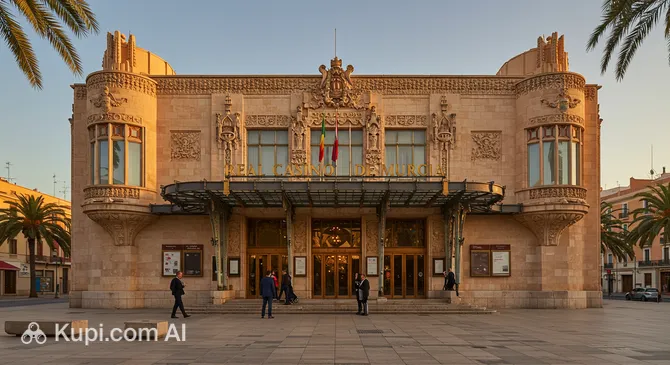
No less famous is the Royal Casino of Murcia (Real Casino de Murcia). It is not a gambling establishment in the modern sense, but a luxurious 19th-century private club open to the public. Its interiors are stunning in their richness: the Arabic Courtyard inspired by the Alhambra, the pompous Ballroom, the Neo-Baroque Ladies' Room, and an impressive library. Every room is a true work of art.

Royal Casino of Murcia. Illustration.
Source: Kupi.com AI

Traveler photos:

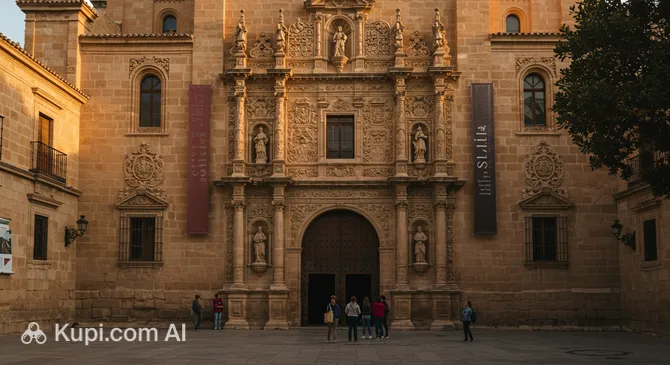
Art lovers should definitely visit the Salzillo Museum (Museo Salzillo). It is dedicated to the work of Francisco Salzillo, a prominent 18th-century Spanish sculptor and master of Baroque religious figures. The museum exhibits his famous "pasos" sculptural groups, which are carried through the city streets during Holy Week processions. These detailed and emotional works are an important part of Murcia's cultural heritage.

Salzillo Museum. Illustration.
Source: Kupi.com AI

Traveler photos:

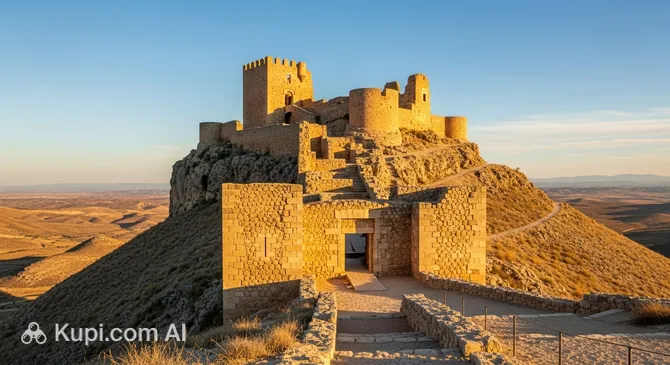
For those interested in history, the Castillejo de Monteagudo is a must-see. This archaeological complex includes the ruins of a 13th-century palace built during Muslim rule. Located on a hill, it offers not only historical immersion but also panoramic views of the surroundings. The hill is crowned by a monumental statue of Christ the Redeemer.

Castillejo de Monteagudo. Illustration.
Source: Kupi.com AI

Traveler photos:

A pleasant place for walking and relaxation is the Paseo del Malecón. This picturesque promenade along the Segura River was created as far back as the 15th century as a flood defense, and today it is a popular spot for leisurely strolls, enjoying the views, and resting in the shade of the trees. Nearby is the historical Old Bridge (Puente de los Peligros), the city's oldest stone bridge.

Local Cuisine

The cuisine of Murcia is a true gastronomic journey based on the freshest gifts from its fertile land—it’s no wonder this region is called "Europe's Orchard." Local dishes are characterized by simple preparation, rich flavors, and the use of high-quality seasonal products. The city's gastronomic scene will delight both lovers of traditional recipes and those looking for modern culinary interpretations.

Among the dishes you must try in Murcia is zarangollo—a delicate omelet made of zucchini, onion, and sometimes potato, often served as a tapa or side dish. Equally popular is the refreshing Murcian salad (ensalada murciana), consisting of tomatoes, canned tuna, hard-boiled eggs, onions, and olives. For a heartier meal, choose caldero—a rich rice dish cooked in a strong fish broth with fish and seafood, or michirones—flavorful stewed large dried beans with chorizo, ham, and spicy pepper.

Those with a sweet tooth must try paparajotes—a unique local dessert. These are fresh lemon leaves dipped in a special batter and deep-fried, then sprinkled with sugar and cinnamon. It's important to remember that you don't eat the leaf itself; you enjoy the aromatic batter around it.

As for drinks in Murcia, local wines are popular, especially from nearby wine regions such as Jumilla, Yecla, and Bullas, offering red, white, and rosé varieties. Of course, beer (cerveza) is drunk everywhere, and in hot weather, freshly squeezed juices from local fruits or horchata (a drink made from tiger nuts) are perfectly refreshing.

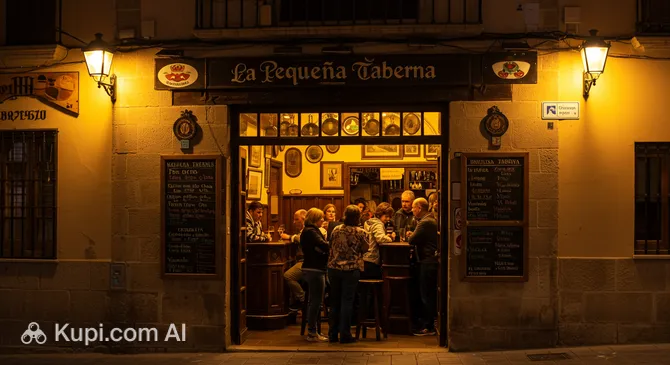
The dining culture in Murcia centers around tapas bars and restaurants. Locals love gathering in bars to socialize and enjoy various small snacks (tapas) before their main meal. Restaurants offer more substantial dishes of traditional Murcian cuisine. To experience the authentic atmosphere and try local specialties, you can visit establishments such as the La Pequeña Taberna Restaurant. It is also worth visiting the local markets, where you can find the freshest vegetables, fruits, cheeses, and ham, and sometimes try street food.

La Pequeña Taberna Restaurant. Illustration.
Source: Kupi.com AI

Traveler photos:

The gastronomy of Murcia is a bright reflection of its rich agricultural culture. The city often hosts gastronomic festivals; for example, during the Spring Festival (Fiestas de Primavera), the streets fill with the aromas of local dishes, and tastings and culinary competitions are held. This is a great opportunity to get a deeper look at the region's culinary traditions and enjoy the hospitality of the locals.

Travel Tips

Planning a trip to charming Murcia? Excellent choice! To make your journey through this sunny corner of Spain as comfortable as possible and leave you with only vivid impressions, we have prepared some useful tips for you.

  1. Clothing and Essentials: The climate in Murcia is Mediterranean, with hot summers and mild winters. In summer, bring light, breathable clothing made of natural fabrics, a hat, sunglasses, and sunscreen. In spring and autumn, a light jacket or sweater will come in handy for evening walks. In winter, mid-season clothing is sufficient. Be sure to bring comfortable shoes, as the city is a pleasure to explore on foot. Don't forget a power adapter (type F). For visiting churches and cathedrals, modest clothing that covers shoulders and knees is recommended.
  2. City Transport: Murcia's historical center is quite compact and easy to explore on foot. For longer trips, you can use city buses – the main form of public transport. Taxis are available, and you can also use apps to call them. Car rental can be useful if you plan to travel around the Murcia region, but it's not always convenient for getting around the city itself due to parking.
  3. Finances: The official currency in Spain is the Euro (EUR). You can exchange currency at banks or exchange offices ("cambio"), but it is often more profitable to withdraw cash from ATMs ("cajero automático") or pay by card. Credit and debit cards (Visa, Mastercard) are accepted in most shops, restaurants, and hotels. It's recommended to always carry a small amount of cash for minor purchases. Tipping is not strictly mandatory but is welcomed for good service (usually 5-10% in restaurants or rounding up the bill in cafes). Regarding a daily budget, it's individual, but as a guide: budget travelers can expect to spend €50-70 per day (hostel, self-catering, free entertainment). For a mid-range level of comfort (hotel, cafes, some paid attractions), you'll need around €100-180. If you prefer not to limit yourself, the budget can be higher.
  4. Health and Safety: Pharmacies ("farmacia") are easy to find by the green cross; some operate 24 hours ("farmacia de guardia"). EU tourists are advised to carry their European Health Insurance Card (EHIC). For other travelers, travel insurance is vital. Murcia is generally a safe city, but as everywhere, basic precautions should be taken: watch your belongings in crowded places and don't leave valuables unattended.
  5. Communication: The main language is Spanish. In tourist areas, hotels, and some restaurants, staff may speak English, but knowing a few basic Spanish phrases (e.g., "Hola" – hello, "Gracias" – thank you, "Por favor" – please, "¿Cuánto cuesta?" – how much is it?) will be very useful and appreciated by locals. Mobile SIM cards can be purchased at carrier stores or some supermarkets. Wi-Fi is available in many hotels, cafes, and public areas. For navigation and leisure planning, it's useful to install a few apps: offline maps (like Google Maps with downloaded maps or Maps.me), public transport apps (look for the official Murcia bus network app), and audio guides or tourism apps for Spain and the Murcia region.
  6. Local Etiquette: Spaniards, and Murcians in particular, are open and friendly. The greeting "Hola" is appropriate in most situations. Using "tú" (you) is common, but it's better to address older people or use "Usted" (You) in formal settings. Don't be surprised by the siesta – many small shops may be closed in the afternoon (roughly from 14:00 to 17:00). Dinner here, as in all of Spain, is quite late – restaurants usually fill up after 21:00.
  7. What to Avoid: Try not to criticize local traditions or customs, especially if you don't fully understand them. Also, avoid speaking too loudly in public places, especially in churches or during siesta. Showing impatience in lines or when being served is also not welcomed – the measured pace of life is valued here.
  8. Murcia's Specialty – "Tapas Culture": Be sure to dive into the local tapas culture! It's not just snacks; it's a whole ritual. Order a drink in a bar, and you'll likely be offered a small free snack. Move from bar to bar (known as "ir de tapas" or "tapeo"), trying different signature dishes. It's a great way to experience the local cuisine and socialize with residents.

We hope these tips help you feel more confident and enjoy every moment of your stay in hospitable Murcia. We wish you an unforgettable journey! ¡Buen viaje!

Entertainment & Nightlife

Murcia, a lively university city in southeastern Spain, offers its guests diverse opportunities for evening and night-time entertainment. When the sun goes down, the city transforms, and its streets fill with the energy of students and locals ready to have fun until morning.

The main centers of Murcia's nightlife are the areas around the university (La Merced) and central streets like Calle de la Trapería and Plaza de las Flores. Numerous bars, tapas bars, and pubs are concentrated here. The atmosphere in these places is usually laid-back and friendly. The evening often begins with "tapeo" — hopping from bar to bar to taste snacks and drinks. Many establishments offer cozy terraces where you can enjoy the warm Spanish evening. A popular place to start the night could be Bodegón Los Toneles, known for its authentic atmosphere, or the stylish Cosa Fina Gastrobar.

Bodegón Los Toneles. Illustration.
Source: Kupi.com AI

Traveler photos:

Near midnight, the crowd moves to nightclubs, which usually start operating from 23:00-00:00 and stay open until the early morning (5:00-7:00). Murcia has clubs for every taste: from electronic music venues to those playing Latin rhythms or popular hits. One well-known nightclub is Aztekum, which offers energetic parties. Another popular spot is the Ithaca club. The dress code in most clubs isn't too strict, but a neat appearance is welcomed. Drink prices in Murcia's bars and clubs are quite moderate by European standards.

Aztekum. Illustration.
Source: Kupi.com AI

Traveler photos:

Practical tips: The best time to visit bars is from 20:00 to midnight, and clubs after 01:00. You can get around the city center on foot at night, as the main entertainment zones are close to each other. For trips to more distant areas or back to the hotel, it is recommended to use a taxi. Various taxi services operate in Murcia and can be called by phone or through mobile apps. The central districts are considered safe for nighttime walks, however, as in any city, it's worth observing basic precautions.

While Murcia is famous for its nightlife, there is also plenty to do during the day. The city offers a rich cultural program: you can visit the Salzillo Museum, famous for its sculptures, or the Archaeological Museum of Murcia. For art lovers, the doors of the Murcia Museum of Fine Arts are open. If you are traveling with children, they will surely enjoy La Isla Children's Park or the Myrtea Trampoline Park. A walk through the picturesque Floridablanca Garden will also be a delight.

Parks & Museums

Murcia, a sunny city in southeastern Spain, offers its guests not only a rich historical heritage but also many cozy green zones for relaxation and impressive museums housing the region's cultural treasures.

Among the city's green gems is the Floridablanca Garden (Jardín de Floridablanca), the oldest public garden in Murcia, established in the 18th century. It is a wonderful place for leisurely strolls among centuries-old ficus trees and sculptures, a true oasis of tranquility in the city center, perfect for escaping the urban bustle.

Floridablanca Garden. Illustration.
Source: Kupi.com AI

Traveler photos:

For those who prefer riverside walks, the Paseo del Malecón (Paseo del Malecón) is an ideal choice. This picturesque promenade along the Segura River is a popular spot for locals to relax, jog, and take evening strolls, offering beautiful views of the city and the river.

Another notable spot is Fofó Park (Parque de Fofó), named after a famous clown. This spacious park offers various relaxation areas, children's playgrounds, and picnic spots, making it a great choice for family time and outdoor activities.

You can immerse yourself in the world of Murcia's art and history by visiting its remarkable museums. One of the most iconic is the Salzillo Museum (Museo Salzillo), dedicated to the work of the prominent 18th-century Spanish sculptor Francisco Salzillo. It houses his famous collection of sculptures for Easter processions, striking in their detail and expression—a must-visit for lovers of religious art.

Salzillo Museum. Illustration.
Source: Kupi.com AI

Traveler photos:

For those interested in the ancient history of the region, the Archaeological Museum of Murcia (Museo Arqueológico de Murcia) is essential. Its exhibition covers periods from prehistoric times to the Middle Ages, presenting artifacts from Iberian, Roman, and Muslim cultures found in the region.

Equally interesting is the Santa Clara Museum (Museo de Santa Clara), located in a former 13th-century convent. It uniquely combines historical architecture, religious art, and archaeological finds, including the remains of the Arab palace Alcázar Seguir, on the site of which the convent was built. Visitors can see both Christian heritage and Islamic artifacts.

In addition to parks and museums, Murcia is proud of its architectural masterpieces. It is impossible to ignore the majestic Murcia Cathedral (Catedral de Murcia) with its impressive Baroque facade and one of the tallest bell towers in Spain. It is also worth visiting the luxurious Royal Casino of Murcia (Real Casino de Murcia) building, a true 19th-century work of art with eclectic interiors.

Murcia Cathedral. Illustration.
Source: Kupi.com AI

Traveler photos:

For authentic experiences and a look at the city's modern cultural life, check out the Old Prison Center for Contemporary Culture (Centro de Cultura Contemporánea Cárcel Vieja). This former penitentiary has been interestingly transformed into a vibrant art space that frequently hosts exhibitions, concerts, and other cultural events. Also, don't miss the chance to wander through the lesser-known but charming streets in the Plaza de las Flores area to enjoy the atmosphere and local tapas bars.

Getting Around

Public transport in Murcia offers convenient ways to get around the city and its surroundings. The transport system is based on buses and a modern tram line that connects the center with various districts and important sites.

The bus network in Murcia is quite extensive and served by several companies. Buses run on numerous routes, covering both central streets and more distant areas. This is a reliable way to reach most points in the city. Schedules and routes are usually available at stops and on transport operators' websites.

The Murcia Tram (Tranvía de Murcia) is a relatively new and very popular mode of transport. It consists of one main line with several branches, connecting the northern districts, the university campus, large shopping centers, and the city center. The trams are modern, comfortable, and run with high frequency.

The fare payment system in Murcia is quite flexible. You can purchase single tickets directly from the bus driver (though this might be more expensive) or at machines at tram stops. For more economical travel, it is recommended to use transport cards such as "Bonobús" or similar, which allow for several rides at a discount. These cards can be topped up at special kiosks, tobacco shops (estancos), or machines. Fares vary but are generally affordable; a single trip usually costs about 1-1.50 euros, but using transport cards is significantly more advantageous. Some transport cards may be universal for both buses and trams.

Practical tips for tourists: it is better to buy tickets and transport cards in advance. On buses, the ticket is usually validated upon entry. On tram lines, the ticket must be validated on the platform before boarding. Public transport usually operates from early morning until late evening, however, the schedule may change on weekends and holidays. It is recommended to check the current schedule before your trip.

In addition to public transport, other options for getting around are available in Murcia. Taxis can be found at special ranks or called by phone. Also, the "MuBici" bike-sharing system is gaining popularity in the city, offering a convenient and eco-friendly way to explore, especially the central part. Car-sharing services may be less common compared to large metropolises, but it is worth checking for local operators upon arrival.

Accommodation

In Murcia, travelers will find a wide range of accommodation options to suit any budget and preference. The city offers everything from affordable backpacker hostels and cozy guesthouses to comfortable mid-range hotels and more luxurious options. Apartment rentals are also popular, which is particularly convenient for families or long stays.

For tourists, the most attractive areas to stay are traditionally the central parts of the city. Staying in the historical center allows you to be within walking distance of the main attractions, such as the majestic Murcia Cathedral or the famous Royal Casino of Murcia. It is also worth considering options near the main transport hubs if you plan to actively explore the surroundings.

Murcia Cathedral. Illustration.
Source: Kupi.com AI

Traveler photos:

A wide range of hotels is represented in Murcia—from budget establishments to higher-end venues offering a variety of services. Besides hotels, you can always find guesthouses or rent an apartment through online services, which offers more flexibility and space. The choice depends on your personal preferences and travel budget.

Regarding booking, it is recommended to arrange your accommodation in advance, especially during the peak tourist season. Prices can range from budget to luxury, depending on the type of accommodation and its location. The most common booking methods are popular online platforms and aggregators, as well as direct booking on hotel websites. This allows you to compare prices and choose the most suitable option.

Nearby Cities

For those who want to explore the surrounding area, Murcia serves as an excellent starting point for day trips to several interesting nearby places:

CityPopulationDistance
Beniaján11 2336 km
Alcantarilla42 6308 km
Molina de Segura74 76210 km
Santomera16 15411 km
Las Torres de Cotillas21 98011 km

Each of these cities offers something unique. For instance, Orihuela attracts with its rich historical heritage, including ancient churches and palaces, and it is the birthplace of the famous poet Miguel Hernández. Molina de Segura, being very close by, offers a glimpse into local life and the region's industrial history. And San Javier, located on the coast of the Mar Menor, is known for its beaches, water sports opportunities, and lively resort atmosphere.

These nearby destinations provide an insight into the diverse culture and landscapes of this region of Spain. Every trip promises new discoveries, whether it's historical streets, local markets, or picturesque scenery.

Shopping & Souvenirs

Murcia offers its guests a pleasant and diverse shopping experience, combining traditional Spanish shops with modern boutiques and large shopping centers. While the city is not famous for world-class exclusive goods, you can find high-quality local products, delicacies, and items from well-known Spanish brands. Particular attention should be paid to leather goods, ceramics, and, of course, the region's gastronomic specialties.

The main shopping life of Murcia is concentrated in its historical center. Stroll along the pedestrian streets of Calle Trapería and Calle Platería, where you will find numerous boutiques, jewelry stores, souvenir shops, and cafes. Larger stores and department stores are located along the city's main artery—Gran Vía Escultor Salzillo. Both Spanish and international brands of clothing, footwear, and accessories are represented here.

For those who prefer shopping under one roof, Murcia has several shopping centers. One of the most famous is El Corte Inglés, a popular Spanish department store chain offering a wide range of goods: from fashion and cosmetics to electronics and home goods. Another large complex is the El Tiro Shopping Center, which, in addition to shops, has restaurants, a cinema, and entertainment areas.

El Corte Inglés. Illustration.
Source: Kupi.com AI

Traveler photos:

Be sure to visit the local markets to experience the auténtico (authentic) spirit of Murcia. The city's main food market is Mercado de Verónicas, located in a beautiful building near the Segura River. Here you can buy the freshest fruits, vegetables, meat, cheeses, olives, and other local delicacies. It is a great place to try the famous Murcian "ñora" pepper or buy high-quality ham.

As souvenirs from Murcia, it is worth bringing back:

  • Ceramics: Painted plates, jugs, and other handmade tableware.
  • Pimentón de Murcia: The famous local paprika, which can be sweet (dulce) or spicy (picante). It is an essential ingredient in many Spanish dishes.
  • Local Wines: The Murcia region is famous for its wines, especially from the wine zones of Jumilla, Yecla, and Bullas.
  • Leather Goods: Good quality bags, belts, and shoes.
  • Confectionery: For example, "paparajotes" (lemon leaves in batter, fried and sprinkled with sugar and cinnamon), though these are best eaten fresh, or other local sweets.

Most shops in Murcia follow a typically Spanish schedule: Monday to Saturday, from approximately 09:30-10:00 to 13:30-14:00, and then after the siesta from 17:00 to 20:00-20:30. Large shopping centers, such as El Corte Inglés and El Tiro, usually work without a break from 10:00 to 22:00. On Sundays, most shops are closed, except for some tourist shops and during sales periods. Cash (Euros) and bank cards are widely accepted for payment.

El Tiro Shopping Center. Illustration.
Source: Kupi.com AI

Traveler photos:

Tourists from non-EU countries can use the Tax Free system and reclaim VAT (IVA in Spain) on purchases above a certain threshold (check the current amount at the time of your trip). To do this, you must ask the shop for a special Tax Free receipt at the time of purchase and present it along with the items at customs when leaving the EU to receive a stamp.

Reached the end of the page?

That means the route is fully explored