Support

Tumba de Camarón de La Isla

About

In the quiet Andalusian town of San Fernando lies a place that has become a true shrine for all lovers of musical art. The Tomb of Camarón de la Isla is a memorial dedicated to the most influential flamenco performer in history, José Monje Cruz. The legendary singer, whose voice became the symbol of an entire era, is laid to rest in a local cemetery in Spain, and since his death in 1992, the site has drawn visitors every single day.
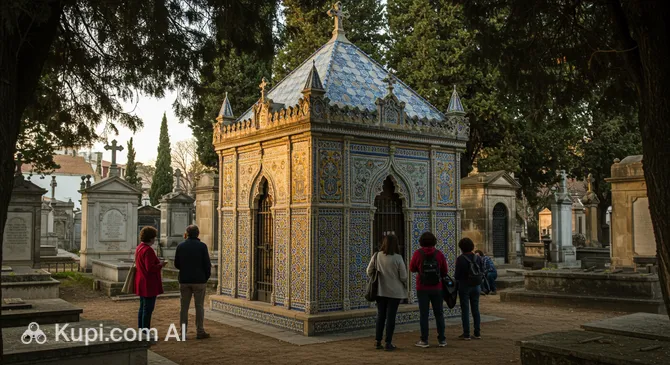
Tomb of Camarón de la Isla
Tomb of Camarón de la Isla. Иллюстрация. Источник: Kupi.com AI

The mausoleum is an elegant artistic structure, featuring a sculpture of the singer himself as its centerpiece. Fans from all over the world gather here to pay tribute to the man who revolutionized the cante jondo genre. The artist received his unusual nickname "Camarón" (Spanish for "Shrimp") because of his fair skin, which was a rarity in his community.

Today, the tomb is not just a burial site but a vibrant cultural symbol. It is constantly adorned with fresh flowers and tokens of remembrance left by fans. Visiting this memorial allows you to feel the incredible love and respect that the Spanish people and the global flamenco community continue to hold for their idol decades later.

Contacts

To check the current visiting schedule of the cemetery where the memorial is located, it is recommended to contact the local tourist office.

How to contactContact
Address11100 Сан-Фернандо, Кадис, Испания

What to Do

A visit to Camarón's tomb is, above all, an emotional experience. Here, you can pay your respects to the legendary artist whose contribution to music is recognized worldwide. Many visitors bring bouquets of flowers to the base of the mausoleum or light candles, maintaining its status as a "living" memorial. Be sure to notice the details of the gravestone and the inscriptions left by loved ones and fans.

Although the site is located in a cemetery, the atmosphere is more solemn than somber. It is an excellent place to reflect on the power of talent and how music can unite people. You can take commemorative photos by the statue of Camarón, which depicts him in his signature expressive performance style.

A walk to the tomb should be combined with exploring other memorial sites in San Fernando. For instance, after visiting the memorial, you can head to the Camarón de la Isla House Museum to see the artist's personal belongings and better understand the life story that began on these very streets.

Getting There

Reaching the final resting place of the great musician is quite straightforward. The tomb is located in the municipal cemetery of San Fernando in the province of Cádiz. If you are traveling from the city of Cádiz, you can take a commuter train (San Fernando-Cádiz station) or use the regular bus service. The trip is very short, and from the station, the cemetery is a 10–15 minute walk or a short taxi ride away.

For those traveling by car from Seville or Málaga, follow the A-4 and AP-4 highways. The journey takes between one and two hours depending on your starting point. There is usually plenty of parking space near the cemetery entrance, and access to the grounds is free. A visit to the tomb is easily combined with a trip to the Camarón de la Isla House Museum, also located in the city.

Ближайший город: San Fernando

History & Facts

The life of José Monje Cruz, better known as Camarón de la Isla, began on December 5, 1950, in San Fernando. He received his famous nickname ("Shrimp") as a child due to his very fair skin and reddish hair. By the age of 16, the young talent had already won first prize at the prestigious Cante Jondo festival in Seville, marking the start of his phenomenal rise to fame.

A true revolution in the world of flamenco occurred when Camarón began collaborating with the virtuoso guitarist Paco de Lucía. Their joint recordings changed the perception of the genre, making it popular far beyond the borders of Spain. A special place in the singer's discography is held by the album "La leyenda del tiempo" (1979), based on poems by Federico García Lorca, which is still considered one of the most influential recordings in the history of Spanish music.

Tragically, the genius's life was cut short too soon: Camarón passed away in 1992 at the age of 41. His funeral in his hometown of San Fernando became a massive event, with approximately 100,000 people attending to pay their respects. In 2000, the Government of Andalusia posthumously awarded him the highest honor in the flamenco world — the "Golden Key of Flamenco".

Time Needed

To pay your respects to the great artist, leave flowers, and view the artistic details of the mausoleum, 30–45 minutes is usually sufficient. This site does not require a long stay, as it is located within an active cemetery where silence and tranquility are expected.

If you also plan to walk through the grounds of the San Fernando Cemetery or take artistic photographs of the memorial, you should budget about one hour. A visit to the tomb fits perfectly into a busy city itinerary dedicated to the heritage of flamenco.

Working Hours

The memorial's opening hours coincide with those of the San Fernando municipal cemetery. Visitors are strongly encouraged to check the current schedule on the city's official website or at tourist information centers before traveling, as access hours may vary depending on the season and public holidays.

Nearby

San Fernando is a city rich in history, and a visit to the memorial of the great cantaor can easily be complemented by exploring other local points of interest. A walk around the area allows you to dive deeper into the atmosphere of Andalusian culture and see unique archaeological sites.

NameDistance
Los Napolitanos San Fernando0.3 km
Admiral Laulhé Park0.4 km
La Levantera Tapas Bar0.6 km
Bahía Sur Shopping Center0.6 km
Barrero Park0.6 km
Punic and Phoenician Ovens of San Fernando0.9 km
Naval Museum of San Fernando0.9 km

Reached the end of the page?

That means the route is fully explored