Support

The Match Museum

About

In the heart of Jönköping, on the shores of Lake Vättern, lies one of the country's most unusual attractions — the unique Match Museum (Tändsticksmuseet). It is one of only three such museums in the world, housed in an authentic wooden building of a former factory built in 1848. Sweden gave the world "safety match" technology, and it was here, in the Tändsticksområdet district, that the history of this global industry was made.
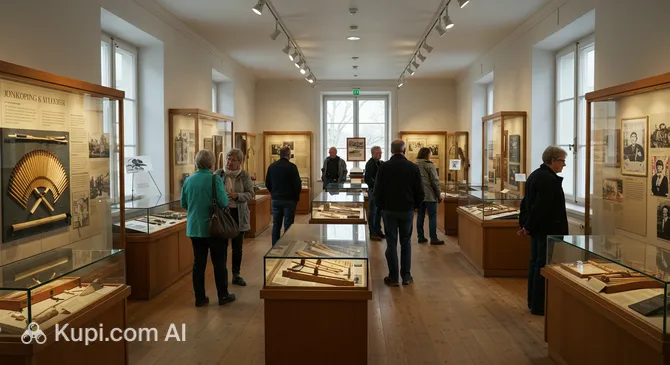
The Match Museum
The Match Museum. Иллюстрация. Источник: Kupi.com AI

The museum offers a fascinating journey into the past, when the city was proudly called the "Match Capital." In those days, a local company controlled most of the global market, and small boxes with bright labels were shipped all over the world. The exhibition masterfully combines the technical side of production with human stories: you will learn not only how matches were made but also how the thousands of people who dedicated themselves to this industry lived and worked.

Today, the Match Museum is more than just a collection of machines and artifacts; it is a vibrant cultural center. In its halls, you can see rare examples of package graphic design, including the famous "Boy with a Match" (Solstickepojken), and trace the evolution from fire-hazardous phosphorus sticks to the modern everyday item. This place will be equally interesting to fans of industrial history and those who appreciate the aesthetics of vintage design.

Contacts

For more details on group visits or to receive the latest information about special exhibitions, you can use the official communication channels. The museum staff is always ready to assist travelers in planning their visit to this unique industrial complex.

Below are the main contact details for reaching the administration:

How to contactContact
AddressTändsticksgränd 27, 553 15 Jönköping, Sweden
Phone+46 36 10 55 43
Websitematchmuseum.jonkoping.se

What to Do

Visiting the museum is an interactive experience that begins with viewing giant match-making machines, which are remarkably complex for the mid-19th century. You can follow the entire production process: from the processing of aspen logs to the moment the finished boxes were packed for export. A special atmosphere is created by archival films showing the factory's daily life during its heyday.

Be sure to check out the design section. The label collection is a true kaleidoscope of styles and eras, where portraits of kings, images of exotic animals, and car advertisements sit side-by-side on small paper rectangles. Children and adults alike enjoy exploring the story of Solstickepojken — the most famous Swedish character in the world of matches, who became a graphic icon.

A poignant part of the tour is a visit to the "Match Workers' House." Here, the interiors of factory families' apartments have been recreated in detail, allowing you to literally touch the lifestyle of the past and learn about the social changes brought about by industrialization. Before leaving, don't forget to stop by the museum shop — here you can buy unique souvenirs, high-quality Swedish matches, and reproductions of vintage labels as a memento of your trip.

Getting There

The unique Match Museum is located at Tändsticksgränd 27, in the historic Tändsticksområdet district. This picturesque spot is situated right by the harbor on the southern shore of Lake Vättern, in close proximity to the center of Jönköping. If you are already in the city center or arriving at the railway station, the walk to the museum will take only a few minutes — the route passes through historic quarters that were once the heart of the match empire.

For those who prefer public transport, there are city bus stops serving the Tändsticksområdet area within walking distance of the museum. If you are traveling from Jönköping Airport (JNK), a taxi or rental car trip will take about 15–20 minutes via the E4 motorway. Parking spaces for visitors are available near the museum complex.

Outdoor enthusiasts will enjoy the option of reaching the museum by bicycle or on foot along the Vättern lakefront. The entire area is very compact and perfect for walking, allowing you to combine your visit to the exhibition with an exploration of old factory buildings that have now been converted into cozy cafes and shops.

Ближайший город: Jonkoping

History & Facts

The history of this site began in the mid-19th century when brothers Johan and Carl Lundström founded the first factory in 1845. It was here that the global fame of Swedish matches was born. At the industry's peak, nearly a third of the city's population was employed in production, earning Jönköping the well-deserved nickname of "The Match City." A landmark event occurred here in 1853 — the invention of the first truly safety match, which eventually replaced dangerous phosphorus versions worldwide.

In the early 20th century, the enterprise became part of the vast empire of Ivar Kreuger, known as the "Match King." His company, Svenska Tändsticksaktiebolaget, controlled up to 70% of the global market. Matchboxes from Sweden were exported to the farthest corners of the planet, and their design became an art form in itself. One of the most recognizable symbols was the "Boy with a Match" (Solstickepojken) by Einar Nerman; proceeds from its sale were directed to charity for decades.

The building that houses the museum today was built in 1848 and is one of the oldest surviving wooden industrial structures in the country. The factory operated until 1970, after which production was closed, but the rich heritage was carefully preserved. Today, it is not just a collection of exhibits, but a living testament to how a small wooden stick changed the daily lives of millions and the economy of an entire country.

Time Needed

For a standard tour of the museum's main exhibition, most visitors need between 1 and 2 hours. This is quite enough time to leisurely study the vintage machines, watch archival newsreels, and browse the impressive collection of matchbox labels, which is considered one of the largest in the world.

If you plan to study the workers' daily life in detail at the reconstructed "Match Workers' House" or wish to wander through the historic Tändsticksområdet quarter, checking out souvenir shops and workshops, we recommend allowing about 3 hours for your visit. This will let you fully soak in the atmosphere of the place and finish your visit with a cup of coffee at one of the local cafes.

Working Hours

The museum welcomes visitors daily, although opening hours vary depending on the day of the week. Please note that on weekdays and Saturdays, the exhibition closes quite early, so it is best to plan your visit for the first half of the day.

Current schedule:

  • Monday: 10:00 – 17:00
  • Tuesday: 10:00 – 15:00
  • Wednesday – Saturday: 11:00 – 15:00
  • Sunday: 10:00 – 15:00
DayWorking hours
Понедельник10:00 – 17:00
Вторник10:00 – 15:00
Среда11:00 – 15:00
Четверг11:00 – 15:00
Пятница11:00 – 15:00
Суббота11:00 – 15:00
Воскресенье10:00 – 15:00

Nearby

The Tändsticksområdet district, where the museum is located, is a historical monument in its own right, but exploring its surroundings will allow you to dive even deeper into the atmosphere of an old industrial city. A stroll through the adjacent streets will reveal many interesting details: from old residential houses of workers to modern art spaces and cozy waterfronts.

Below are some attractions located within walking distance of the museum that are worth including in your itinerary:

NameDistance
Idlewild Beer Café0 km
Kappa Bar0.3 km
Town Hall Park0.5 km
Frimans Restaurant0.6 km
STUK Café0.9 km
Jönköping County Museum1.1 km
Vätterstranden1.7 km

Reached the end of the page?

That means the route is fully explored