Support

Anatomical Museum of the University of Basel

About

At the heart of university life, where academic traditions meet modern research, lies one of Europe's most fascinating scientific sites. The Anatomy Museum of the University of Basel is more than just a collection of medical curiosities; it is the oldest treasure trove of its kind dedicated to the most complex mechanism in the world—the human body. Located in the historic city of Basel, this museum is part of the Faculty of Medicine and a source of pride carefully preserved by Switzerland.
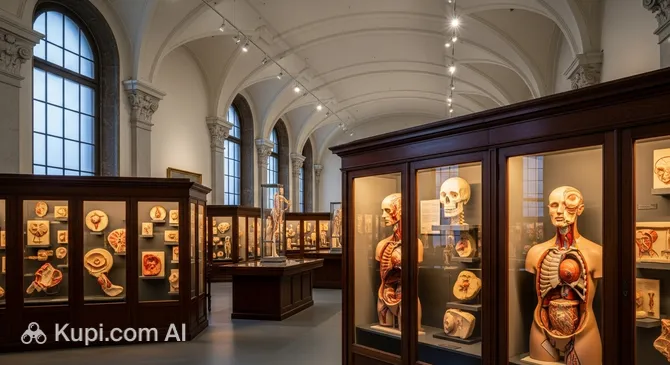
Anatomical Museum of the University of Basel
Anatomical Museum of the University of Basel. Иллюстрация. Источник: Kupi.com AI

The exhibition offers visitors a unique journey through the centuries: original organ preparations, intricate 19th-century wax models, and ultra-modern displays sit side-by-side. One of the main reasons to visit is the chance to see the oldest anatomical skeleton in the world, created in the mid-16th century. The museum masterfully combines its educational role for future doctors with the popularization of science for the general public, focusing on body structure, development, and the evolution of medical knowledge.

Here you will find not only historical artifacts but also clear examples of how modern technology helps treat ailments. The collection is organized so that visitors can compare healthy organs with pathological changes, turning a visit into a captivating biology lesson. Thanks to careful restoration of the exhibits, the museum maintains the atmosphere of a classic scientific study while remaining a vital 21st-century educational center.

Contacts

To confirm current information before your visit or to organize group tours, you can use the contact details provided below. Museum staff are always ready to help visitors navigate the exhibition.

The Anatomy Museum is managed by the Faculty of Medicine, so its schedule and visiting rules may be linked to the academic calendar.

How to contactContact
AddressPestalozzistrasse 20, 4056 Basel, Швейцария
Phone+41 61 207 35 35
Websiteanatomie.unibas.ch

What to Do

Visiting the museum is a unique chance to see a human "from the inside." One of the most impressive parts of the program is viewing the skeleton of Andreas Vesalius, dating back to 1543. Besides this historical rarity, it's worth noting unusual exhibits: a "headless" skeleton, deformed skulls, and detailed preparations showing the complex interplay of nerves and tendons. A fascinating experience is comparing the hearts of various creatures—from a tiny mouse to a giant elephant and, of course, a human.

For those interested in modern medical achievements, there are sections dedicated to innovation: you can see real hip implants, knee prosthetics, and examples of complex bone restoration surgeries for fractures. The museum clearly illustrates the path medicine has taken from early wax models to modern biomaterials, encouraging reflection on the fragility and incredible resilience of our bodies.

While the museum doesn't have many interactive buttons, its educational value is immense thanks to detailed explanations. You can trace all stages of human prenatal development and see how tissues and organs form before birth. This place is perfect for curious travelers ready for serious content who want to gain deep knowledge about the history of medicine in a quiet, academic setting.

Getting There

Reaching the museum, located at Pestalozzistrasse 20, is quite simple thanks to the city's excellent transport system. If you arrive at the main railway station, Basel SBB, the journey by public transport takes only 15–20 minutes. Tram lines 10 or 11 will take you to the University stop, from where the anatomy wing is just a few hundred meters away.

For those who prefer walking, the route from central squares (such as Marktplatz or the Cathedral) takes about 20–30 minutes. The path leads through charming university quarters, which is a pleasant part of the city tour in itself. You can also use a taxi or a bicycle—a popular way to get around in this part of Europe.

If you plan to arrive by car, keep in mind that parking spaces directly at the university are very limited. In this case, it's wiser to leave your car in one of the city parking garages in the center and continue by tram or on foot to avoid wasting time searching for a spot in the dense urban area.

Ближайший город: Basel

History & Facts

The history of this unusual place began in 1824, when Professor Carl Gustav Jung founded the collection as an essential teaching aid for future medical students. From the start, the museum was intended not just as a collection of items, but as a scientific tool allowing a look inside the human organism to understand its complex structure. Today, it is recognized as one of the world's oldest specialized anatomy museums.

Without a doubt, the collection's crown jewel is the skeleton prepared by Andreas Vesalius in 1543. Vesalius, often called the "father of modern anatomy," performed the dissection and prepared this specimen right here in Basel. This exhibit is officially considered the world's oldest anatomical preparation still in existence today and holds colossal value for the history of science.

Beyond Vesalius's work, the halls feature unique wax models from the mid-19th century and exceptionally thin anatomical slices created by Hanson Kelly Corning around 1900. These objects vividly demonstrate how methods of researching and visualizing the human body have changed over the centuries—from the first attempts to capture form to sophisticated tissue preservation techniques.

In 2026, the museum celebrates its 200th anniversary, confirming its status as a vital guardian of scientific heritage. Despite its venerable age, the collection is constantly updated and restored using modern technologies, remaining a living scientific center where history meets the future of medicine.

Time Needed

The Anatomy Museum is compact and clearly structured, so 1 to 2 hours is usually sufficient for a thoughtful exploration of most displays. This allows enough time to study the major historical relics, including the famous Vesalius skeleton, and familiarize yourself with the modern sections of the exhibition.

If you have a deep interest in medicine or the history of science, you might spend a bit more time reading the detailed explanatory texts on pathologies and comparative stands. However, for most tourists, an hour and a half is quite enough to get a vivid impression without feeling overwhelmed by the abundance of specific scientific information.

Working Hours

The museum follows a specific schedule focused on weekdays and Sunday visits. On Monday–Friday, the doors are open from 14:00 to 17:00, and on Sunday, you can visit in the morning from 10:00 to 16:00. Please note that the museum is usually closed on Saturdays.

As the institution is part of the university, opening hours may change during public holidays or academic breaks. We highly recommend checking the official website for up-to-date information before planning your visit to ensure the exhibition is accessible.

DayWorking hours
понедельник14:00–17:00
вторник14:00–17:00
среда14:00–17:00
четверг14:00–17:00
пятница14:00–17:00
субботаЗакрыто
воскресенье10:00–16:00

Nearby

After exploring the fascinating collection of anatomical rarities, you can continue exploring the city's cultural landscape. The university district and surrounding neighborhoods are rich in historical monuments and interesting sites that help form a more complete impression of Swiss traditions and architecture.

A walk through the area will allow you to see both ancient city gates and modern cultural spaces. Below is a list of interesting sites located within walking distance or a short ride away.

NameDistance
Fiorentina Restaurant0.7 km
Spalentor0.8 km
Les Trois Rois0.8 km
Basel Natural History Museum1.1 km
Münsterplatz Basel1.3 km
Basel Minster1.3 km
Toy Worlds Museum Basel1.4 km

Reached the end of the page?

That means the route is fully explored