Support

Royal Pavilion

About

The Royal Pavilion is one of the most amazing and memorable landmarks in Brighton, the former seaside resort of the UK monarchs. It is not just a building, but a true architectural whim—a former royal residence that captures the imagination with its exotic appearance. Built in the first half of the 19th century, the pavilion is a striking example of Indo-Saracenic style, making it completely unique in British architecture.
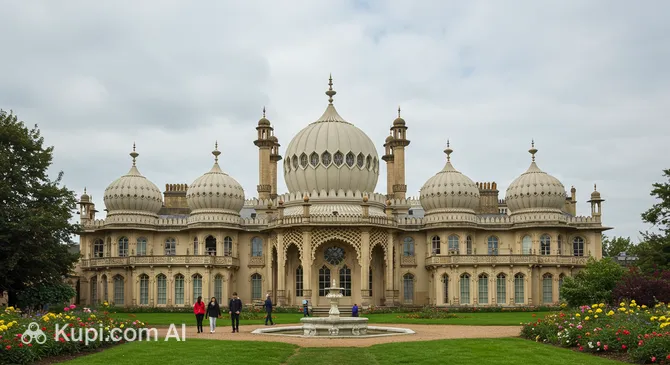
Royal Pavilion. Illustration.
Source: Kupi.com AI

Traveler photos:

The exterior of the Royal Pavilion is a feast of shapes and styles. Indian, Moorish, and Chinese motifs are whimsically intertwined. You will see elegant fretwork terraces, chimneys cleverly disguised as minarets, onion domes that look like they belong in an Oriental fairy tale, and side towers resembling exquisite pagodas. This blend of cultures creates a truly unforgettable sight and makes the pavilion one of the main architectural gems of South East England.

Today, the Royal Pavilion functions as a museum, opening its doors to all who wish to experience its unusual history and admire its luxurious interiors. Its magnificent halls, each with its own unique design, are also occasionally used for wedding ceremonies and other festive events, adding a special charm to any occasion. A visit to the pavilion is an opportunity to immerse yourself in an atmosphere of royal luxury and exoticism, leaving you with vivid impressions of your trip to Brighton.

Contacts

For the most up-to-date information about the Royal Pavilion, including opening hours, ticket prices, and special events, we recommend checking the official data. Basic contact details are provided in the table below:

How to contactContact
Address4/5 Pavilion Buildings, Brighton and Hove, Brighton BN1 1EE, UK
Phone number+44 300 029 0900
Websitebrightonmuseums.org.uk

What to Do

A visit to the Royal Pavilion is an immersion into a world of luxury and exoticism created for King George IV. The main thing to do here is explore its incredible interiors, each reflecting the monarch's extravagant tastes. You can walk through the magnificent Banqueting Room, where grand feasts were once held, see the spacious Long Gallery, and appreciate the elegance of the Grand Saloon. Each room is unique and filled with surprising details.

The Music Room is particularly noteworthy, with its impressive dome creating a unique acoustic environment and atmosphere. It is also interesting to look into the Royal Kitchen to imagine the scale of food preparation for the royal court, and to walk through the South Gallery. During your tour, you can enjoy the unique blend of architectural styles: Indian Mughal architectural motifs are harmoniously combined with refined Chinese themes in the chinoiserie style, creating a truly one-of-a-kind atmosphere.

In addition to the main building, the Pavilion Stables are open to visitors and are an integral part of the architectural ensemble. Inside the pavilion itself is a museum with an exhibition that tells the detailed history of this amazing residence and the lives of the British royal family during that period. This is a wonderful opportunity not only to admire the unique architecture and decor but also to learn something new about the past.

Getting There

The Royal Pavilion is ideally located in the heart of Brighton, making it easily accessible for visitors. Thanks to its central position, it can be reached in various ways, depending on your preferences and starting point in the city.

One of the most convenient ways to get to the Royal Pavilion is by public transport. Brighton has an extensive bus network, and many routes pass in the immediate vicinity of the pavilion or stop nearby. You should look for buses heading to the city center or the Old Steine area, which is adjacent to the attraction. Brighton Railway Station is also within walking distance (about a 15-20 minute walk), from where you can either enjoy a stroll or take a local bus or taxi.

If you prefer walking and are in the central part of Brighton, such as the seafront or The Lanes shopping district, walking to the Royal Pavilion is easy. It is a pleasant walk that allows you to get a better feel for the city. A good landmark is the Brighton Palace Pier, from which the pavilion is just a few minutes' walk inland.

For those who value comfort and speed, a taxi is always an option. Taxis are easy to find throughout the city or can be ordered via a mobile app. The ride from most hotels in central Brighton to the Royal Pavilion will be short and relatively inexpensive. If you are arriving in the city by car, please note that parking in the center can be limited and paid; there are several public parking lots nearby.

Nearest city: Brighton

History & Facts

The history of the Royal Pavilion began not with the exotic palace we see today, but with a more modest neoclassical villa that once stood on this site. Dramatic changes occurred thanks to the Prince of Wales, the future King George IV, who commissioned the famous architect John Nash to rebuild the residence. The work took place between 1815 and 1822, resulting in the ornate palace that reflects the monarch's extravagant tastes and his desire for flashy luxury, so characteristic of the Regency era.

After the death of King George IV in 1830, the pavilion was used for a time by his successor, King William IV. However, the next monarch, Queen Victoria, did not share her predecessors' fondness for this unusual palace. After visiting Brighton only once in 1845, she deemed the residence unnecessary and decided to sell it. In 1849, the Royal Pavilion was purchased by the town of Brighton, which essentially saved it from potential neglect and oblivion.

The Royal Pavilion has seen many changes over the years. During the Second World War, its grand halls were converted into a military hospital, fulfilling an important humanitarian mission. It was only after extensive restoration in the 1980s that the pavilion regained its former splendor and was reopened to the public as a museum. Today, it continues to fascinate visitors from all over the world with its unique architecture and rich history, serving as one of the primary symbols of Brighton.

Time Needed

To tour the Royal Pavilion in Brighton, it is generally recommended to set aside 1.5 to 2.5 hours. This will be enough time to leisurely walk through all the main rooms, including the magnificent Banqueting Room, the Music Room, and the Royal Kitchen, to carefully examine the unique Indo-Saracenic and Chinese-style interiors, and to explore the museum exhibits that tell the history of the pavilion and its famous residents.

If you are particularly interested in history or architecture and want to study every corner in detail, including the Pavilion Stables, or linger for photographs (where permitted), your visit might take a bit longer, perhaps up to 3 hours. For those with limited time, a quicker overview of the main highlights is possible in about 1 hour, but this would mean sacrificing some of the depth of the experience at this amazing site.

Also, consider potential waiting times at the entrance, especially during peak tourist season or on weekends. When planning your visit, it is best to allow some extra time to enjoy the Royal Pavilion without rushing and to fully appreciate its unusual beauty and historical significance.

Working Hours

The Royal Pavilion in Brighton is typically open to visitors year-round; however, exact opening hours may vary depending on the season, day of the week, and special events. As specific information on hours is currently unavailable, it is highly recommended to check the current schedule on the official Royal Pavilion website or inquire at local tourist information centers just before your planned visit. This will help avoid misunderstandings and allow you to plan your time effectively.

To guarantee your visit, especially during peak tourist season or on weekends, it is recommended to book tickets online in advance. This not only helps avoid potential queues but can sometimes provide a discount. Advance booking or purchasing tickets is particularly important if you plan to visit any special exhibitions or events held at the pavilion. Please verify this information on the attraction's official resources.

9:30 – 17:30

Nearby

A visit to the Royal Pavilion is certainly a highlight of any trip to Brighton. However, to make your experience even more fulfilling and complete, it is worth exploring other interesting sites located nearby. Discovering the surroundings will allow you to dive deeper into the atmosphere of this vibrant seaside city and discover its multifaceted character.

Fortunately, many of Brighton's attractions are within walking distance of the Royal Pavilion. This makes exploring the city particularly pleasant and convenient, allowing you to combine your cultural program with leisurely strolls. Below is a list of some interesting sites that can complement your impression of Brighton.

NameDistance
Brighton Museum & Art Gallery0.1 km
Permit Room Brighton0.2 km
Brighton Aquarium0.3 km
Queens Hotel Brighton0.3 km
Burnt Orange0.4 km
Captain's Fish and Chips0.4 km
Brighton Beach0.4 km

Have you reached the end of the page?

So the route has been studied inside and out