Support

Ithaca Falls Natural Area

About

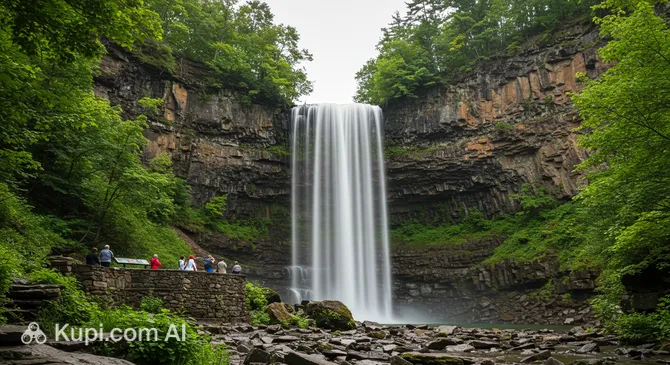
Imagine a powerful roar of water and a cool mist right in the middle of a residential neighborhood. The Ithaca Falls Natural Area is an impressive natural oasis in the very heart of Ithaca, USA. Standing about 45 meters high, this waterfall is considered one of the most majestic in the region and is a hallmark of New York State.
\n\n
Ithaca Falls Natural Area. Source: Kupi.com AI
\n\n

The waterfall crowns the picturesque Fall Creek Gorge, whose walls are composed of ancient sedimentary rocks. Its appearance changes dramatically from season to season: in the spring, it crashes down in a crushing torrent of meltwater, while in the autumn, it transforms into elegant streams framed by gold and crimson foliage.

\n\n

As the last in a cascade of drops along Fall Creek, this site wonderfully combines wild natural energy with urban accessibility. For many tourists, it is here that their journey into the amazing world of waterfalls, for which the city's surroundings are so famous, begins.

Contacts

To clarify travel details or obtain additional information regarding the condition of the park trails, you can use the official contacts. The Ithaca Falls Natural Area is managed by city services, and up-to-date tourist information is often published on the city portal.

\n\n\n \n \n \n \n \n \n \n \n \n \n \n \n
AddressLake St, Ithaca, NY 14850, USA
Phone+1 607-272-1313
Websitevisitithaca.com

What to Do

The main activity here is enjoying the monumental beauty of the falling water. A short and easy trail leads directly to the base, allowing you to get close enough to feel the mist on your face. This place is a true paradise for photographers: the layered rocks and the play of light in the spray create perfect conditions for landscape photography.

\n\n

Outdoor and nature enthusiasts can explore the local geology. Fossilized remains of ancient bivalve mollusks are often found among the stones near the shore. Additionally, the pool at the base of the falls is popular with fly fishing enthusiasts who come here in search of a good catch surrounded by rocky walls.

\n\n

History buffs will find it interesting to inspect the surviving ruins of stone walls and foundations of old mills and factories. However, remember to stay safe: swimming in the waterfall is strictly prohibited due to strong currents and the rocky bottom, so it is better to stick to walking along the shoreline.

Getting There

Reaching this natural wonder is very easy, as it is located directly within the city limits on Lake Street. The waterfall is so grand that drivers often see it right from their car windows. For those traveling by car, there is a small parking area provided near the entrance to the natural area.

\n\n

If you prefer public transportation, city buses run regularly to the Fall Creek neighborhood. You can also use taxi services — the ride from the city center will take no more than 5-10 minutes. Thanks to its proximity to Cornell University, many tourists prefer to walk to the waterfall, enjoying the architecture of old Ithaca along the way.

History & Facts

The history of this place is inextricably linked to the region's industrial development. As early as 1814, settlers recognized the potential of the water flow and began building the first mills here. In 1830, Ezra Cornell, who would later become the founder of the famous Cornell University, blasted a tunnel through the rock above the waterfall to create a canal system to power an entire complex of enterprises.

\n\n

During the industrial heyday, the area was bustling with life: the neighborhood was known as "Fall Creek Village." Dozens of factories produced flour, wool, oil, and agricultural machinery. The most famous enterprise was the Ithaca Gun Company, which manufactured sporting firearms from 1880 to 1987. The old brick chimney of this factory still towers over the gorge as a monument to a bygone era.

\n\n

After the production facilities closed, the area required significant restoration. In the early 2000s, a large-scale environmental cleanup was conducted to remove traces of industrial pollution. Today, the Ithaca Falls Natural Area is completely safe and has been returned to nature, becoming a favorite spot for locals and travelers alike.

Time Needed

For a quick look at the landmark and a few memorable photos, guests usually find 30–60 minutes to be sufficient. The path from the road to the base of the waterfall is only about 150 meters, so most of the time is spent contemplating the cascading water.

\n\n

If you are interested in geology or industrial history, we recommend setting aside 1 to 2 hours for your visit. This will provide enough time to examine the exposed layers of sedimentary rock in detail, find remains of ancient fossils in the stones, or carefully study the ruins of old factory buildings.

Working Hours

You can visit the Ithaca Falls Natural Area at any time that is convenient for you. The territory is open to the public around the clock, allowing you to see the waterfall in the morning sunlight as well as in the mysterious twilight.

\n\n

The park is open seven days a week: from Monday to Sunday, access is available 24 hours a day. This makes the location an ideal option for a spontaneous stop while walking through the city.

Nearby

A walk to the waterfall can be an excellent start to a grand tour of the city. Exploring the surrounding area will allow you to see not only natural beauty but also touch upon the region's rich historical and scientific heritage.

\n\n\n \n \n \n \n \n \n \n \n \n \n \n \n \n \n \n \n \n \n \n \n \n \n \n \n \n \n \n \n \n \n \n \n \n \n \n \n \n \n \n \n \n \n \n \n \n \n \n \n
NameDistance (km)
Stewart Ave Historic Bridge0.3
Carl Sagan's Resting Place0.4
A.D. White House1.0
Ellis Hollow Stone Circle1.2
Ithaca Downtown Historic District1.5
Clinton Hall1.5
Quarry Arms Building1.8
Allan Treman Lighthouse2.1
Cayuga Inlet Light Beacon2.3
Coreorgonel4.9

Reached the end of the page?

That means the route is fully explored