Support

Casemate Museum of Fort Monroe

About

Imagine massive stone vaults that have guarded the peace of the Virginia coast for centuries. The Fort Monroe Casemate Museum is a unique space located inside a historic fortress near the city of Norfolk. The exhibition is housed directly within the former defensive casemates, allowing you to literally touch the walls that witnessed key events in US history.
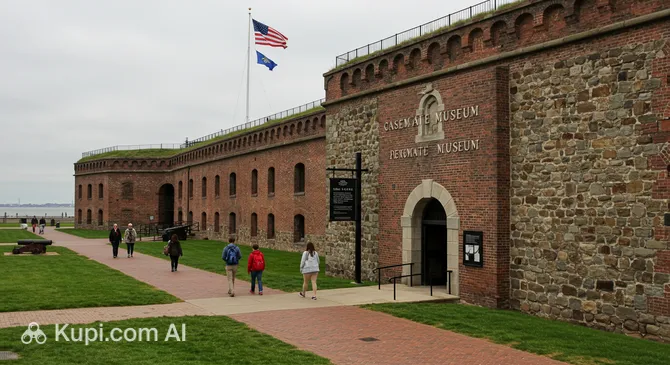
Casemate Museum at Fort Monroe
Casemate Museum at Fort Monroe. Иллюстрация. Источник: Kupi.com AI

This museum is dedicated not only to military architecture and engineering but also to the lives of people whose fates were closely intertwined with the fort. It houses authentic artifacts, rare photographs, and documents telling the story of coastal defense development and the role of this powerful bastion across different eras.

The main feature of the museum lies in its atmosphere: massive stone halls that once served to protect the garrison and store ammunition have now been transformed into exhibition galleries. Visitors can see how the fortress functioned from the inside and appreciate the scale of this grand fortification surrounded by majestic ramparts.

Contacts

To confirm the current schedule of events or group visit conditions, you can always contact the museum administration directly. The visitor center staff will help you navigate the extensive grounds of the fort and answer questions about current exhibitions.

How to contactContact
Address30 Ingalls Rd, Fort Monroe, VA 23651, USA
Phone+1 757-690-8181
Websitewww.fortmonroe.org

What to Do

Inside the museum, an immersion into the past awaits you, starting from the very first fortifications of the early 17th century. Be sure to visit the room where Jefferson Davis was held—it is one of the most emotionally powerful spots in the exhibition, capturing the spirit of the post-Civil War era.

Special attention should be paid to the galleries telling the story of the fort as "Freedom's Fortress." Interactive materials and documents recount the fates of escaped slaves who found protection here. You will see personal items of service members, old fortification blueprints, and examples of weaponry used for coastal defense.

For those who prefer active exploration, temporary themed exhibitions and educational zones are available. You can explore the casemates on your own using the information stands or join an organized tour to hear fascinating details about the daily life of the garrison during various historical periods.

Getting There

Located on the picturesque coast near the city of Norfolk, the museum is easily accessible for travelers by car. The main route follows the I-64 highway, where clear signs lead to Fort Monroe. Entry to the fort grounds is free, and convenient parking is provided for guests arriving in private vehicles.

If you plan to use public transport, you can take a taxi from the city center or nearby transport hubs. Upon arrival, your first stop should be the Visitor & Education Center at 30 Ingalls Road to obtain the mandatory free timed-entry ticket.

From the visitor center, the entrance to the casemates is just a few minutes' walk away. A stroll through the historical grounds will allow you to immerse yourself in the atmosphere of this unique site even before the main tour begins.

Ближайший город: Norfolk

History & Facts

The history of this site began long before the construction of the current stone walls: as early as 1609, Fort Algernon was built here to protect the first English settlers. The fortification took on its modern appearance in the early 19th century, becoming the largest stone fort ever built in the USA.

During the Civil War, Fort Monroe gained exceptional strategic importance, remaining a vital stronghold. It went down in history as "Freedom's Fortress," becoming a sanctuary for thousands of people seeking refuge from slavery following a momentous command decision in 1861.

Interestingly, after the war ended, the fort's casemates were used not only for defense but also as a prison for high-ranking figures, including Jefferson Davis. Until recently, the site was actively used by the military, maintaining its status as an active military center for many decades.

Time Needed

A thoughtful exploration of the museum's main exhibition usually takes about 1 to 2 hours. This time is quite sufficient to leisurely examine archival documents, soldiers' personal belongings, and the unique architectural details of the casemates themselves.

If you plan to not only tour the interior but also walk the fort grounds or participate in one of the educational programs, it is worth setting aside half a day for your visit. The surrounding views and the scale of the defensive structures deserve extra attention.

Working Hours

The museum welcomes visitors throughout the week, except for Mondays. The casemate doors are open Tuesday through Sunday from 10:00 AM to 4:00 PM. This is a convenient time to plan a daytime visit followed by a walk around the area.

Please note that to visit, you must obtain a free timed-entry ticket at the Visitor & Education Center. It is recommended to arrive a little early to secure your pass before your desired viewing session begins.

DayWorking hours
ПонедельникЗакрыто
Вторник10:00 – 16:00
Среда10:00 – 16:00
Четверг10:00 – 16:00
Пятница10:00 – 16:00
Суббота10:00 – 16:00
Воскресенье10:00 – 16:00

Nearby

Exploring the surroundings of the fort will give you a more complete picture of life in this region. Many sites related to the maritime and military history of the Atlantic coast are located nearby.

A walk through the adjacent areas offers a chance to see an ancient lighthouse, centuries-old trees that witnessed important historical events, and modern cultural centers. Below is a list of interesting places within reach:

NameDistance
Fort Monroe National Monument0.3 km
Outlook Beach0.9 km
Convocation Center2.8 km
Emancipation Oak3 km
Virginia Air & Space Science Center3.9 km
Buckroe Beach and Park4.5 km
Buckroe Beach4.8 km

Reached the end of the page?

That means the route is fully explored