Support

Emancipation Oak

About

Standing at the entrance to the historic Hampton University campus, the Emancipation Oak spreads its mighty branches as a living monument to history and a symbol of the struggle for civil rights. This majestic tree, centuries old, has been officially designated by the National Geographic Society as one of the 10 Great Trees of the World. Its trunk measures five meters in circumference, and its broad crown, spanning about 30 meters, forms a natural canopy under which a new chapter in the history of education in the USA once began.
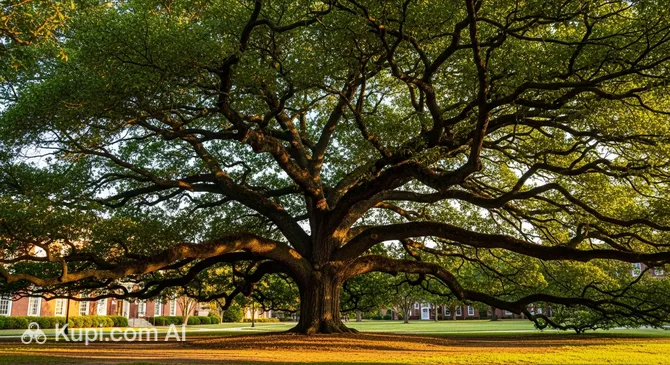
Emancipation Oak
Emancipation Oak. Иллюстрация. Источник: Kupi.com AI

This site is considered more than just a botanical wonder; it is a true cultural icon. For residents of Norfolk and the surrounding areas, it embodies the transition from an era of bondage to a time of enlightenment. The tree is so significant to the local community that its image graces the university logo, and the tree itself is carefully protected by a small metal fence.

Visiting the Emancipation Oak offers a chance to connect with a living witness to the past. The atmosphere near the oak is one of peace and solemnity, attracting not only curious tourists but also genealogical researchers and students seeking inspiration in the shade of its ancient limbs.

Contacts

For those planning to visit this iconic site, it is helpful to review the official contact information in advance. Since the tree is located on the grounds of an active educational institution, general inquiries or group tour arrangements can be directed to the university administration.

How to contactContact
AddressХэмптон, Вирджиния 23663, США
Phone+1 757-727-5000
Websitehome.hamptonu.edu

What to Do

The primary activity here is contemplative relaxation and historical immersion. You can stroll through the well-kept grounds surrounding the Emancipation Oak, carefully read the nearby information plaques, and take striking photos against the backdrop of its giant, sprawling branches, which provide dense, cool shade during the summer. This spot is perfect for meditation or quiet reflection on the legacy of the past.

Many visitors combine their visit to the tree with a walk through the lanes of Hampton University. Depending on the season, you might catch university events, craft festivals, or simply enjoy the architecture of one of the region's most significant educational institutions. Nature lovers will appreciate this as an excellent spot for birdwatching, as many birds choose the oak's wide crown for resting.

To make the most of your trip, it is recommended to complement your visit with a tour of the nearby Fort Monroe. This helps build a complete picture of the historical events that took place on these lands. Throughout the year, the atmosphere of peace and inspiration makes this a must-visit for those looking for meaning rather than just sights.

Getting There

The famous Emancipation Oak is located on the Hampton University campus, right near the entrance, close to the intersection of Emancipation Drive and William R. Harvey Way. For those driving, it is most convenient to take Interstate 64—the tree is located very close to the exit. You can park in one of the university's visitor parking lots after checking the local parking regulations.

If you prefer public transportation, Hampton Roads Transit (HRT) buses run from Norfolk or neighboring areas of Hampton, stopping within walking distance of the campus. For travelers arriving via Norfolk International Airport (ORF), taking a taxi or using Uber or Lyft is the most convenient option—the ride takes about 20–30 minutes.

For those who prefer the railway, the nearest Amtrak stations are in Newport News, from where you can reach the landmark by taxi in 15–20 minutes. If you are already exploring the Fort Monroe area, you can reach the oak on foot or by bicycle while enjoying the coastal views.

Ближайший город: Norfolk

History & Facts

The history of this majestic tree began long before it received its current name. In 1861, as neighboring Fort Monroe became a sanctuary for people seeking freedom, a settlement known as the Grand Contraband Camp emerged around it. It was here, beneath the sprawling crown of the oak, that Mary Peake began conducting the first reading and writing lessons for formerly enslaved people, despite state laws at the time that prohibited their education.

These humble open-air classes laid the foundation for the creation of Hampton University. Later, the school moved to the Brown Cottage, but the tree remained a permanent symbol of the thirst for knowledge and resilience. Among the graduates of the institution that grew from these outdoor lessons was the famous orator Booker T. Washington.

The Emancipation Oak received its current name in January 1863. It was here that the local community gathered to hear one of the first public readings of the Emancipation Proclamation, signed by President Abraham Lincoln. This event transformed the tree into a living monument to civil rights and freedom in the Southern USA.

Today, the spirit of this site is recognized globally: the National Geographic Society included it in its list of the "10 Great Trees of the World." As a silent witness to key turning points in history, the oak continues to grow, serving as a reminder of the importance of education and human dignity.

Time Needed

To truly soak in the atmosphere of this historical site, an average tourist should set aside 30 to 60 minutes. This is ample time to leisurely examine the tree, read the information plaques detailing its significance, and take a few memorable photos of its impressive canopy.

If you decide to combine your visit with a full walk through the picturesque Hampton University campus or a visit to nearby Fort Monroe, you should plan for about 1.5–2 hours. This will allow you to enjoy the architecture of the historic institution and experience the unique spirit of coastal Virginia without rushing.

Working Hours

A huge advantage of visiting the Emancipation Oak is its accessibility. According to public records, the tree is located in an open area of the campus, so it can be viewed 24 hours a day, 7 days a week. There are no entrance gates or strict schedules, allowing tourists to plan their visit at any convenient time—whether early morning for the best photos or a quiet evening.

However, as the landmark is on the grounds of an active university, visitors are advised to be respectful of the educational process and the privacy of students. If you wish to visit the university museum or book an organized tour, it is best to check the current operating hours on the university's official website beforehand.

Круглосуточно

Nearby

Exploring the surroundings of the Emancipation Oak will allow you to dive deeper into the rich history and culture of this coastal region. Its proximity to historic forts, museums, and scenic waterfronts makes a campus visit just one part of a fascinating itinerary through Virginia's landmark sites.

Many interesting locations are within a short drive or even a pleasant walk, allowing you to create a full-day program.

NameDistance
Convocation Center0.4 km
Virginia Air & Space Science Center1.2 km
Fort Monroe National Monument2.9 km
Casemate Museum at Fort Monroe3 km
Outlook Beach3.2 km
Buckroe Beach and Park4 km
Buckroe Beach4.2 km

Reached the end of the page?

That means the route is fully explored