Support

Da Nang Museum of Cham Sculpture

About

The Museum of Cham Sculpture in Da Nang, also known as the Cham Museum or Bao Tang, is one of Vietnam's most significant cultural institutions, conveniently located in the city of Da Nang on the picturesque left bank of the Han River. This museum takes pride in housing the world's largest collection of Cham sculpture, representing the priceless heritage of the ancient Champa civilization.
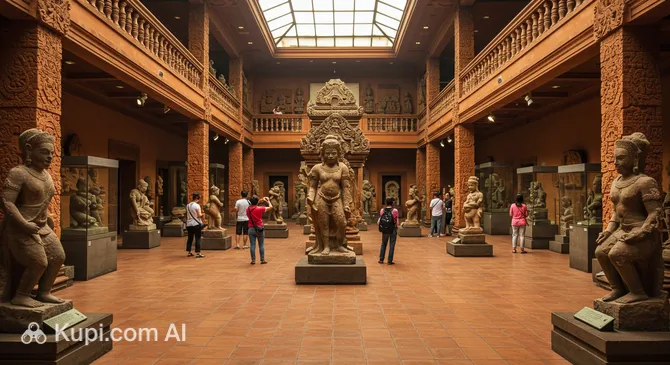
Da Nang Museum of Cham Sculpture. Illustration.
Source: Kupi.com AI

Traveler photos:

The Champa civilization flourished in what is now central and southern Vietnam from the 1st millennium BC until the 15th century AD, leaving behind a rich cultural and artistic legacy. The museum's exhibits, made of sandstone, terracotta, and other materials, tell stories of the beliefs, rituals, and daily lives of these mysterious people, allowing visitors to immerse themselves in their fascinating world.

The museum building itself is a work of art, featuring a unique architectural blend of traditional Cham motifs and French colonial style. It was designed by French architects Delaval and Auclair, who drew inspiration from the ideas of Henri Parmentier. Despite expansions over the years, the museum has maintained its original appearance, creating a special atmosphere for discovering ancient artifacts.

Contacts

To get up-to-date information on opening hours, ticket prices, and possible guided tours at the Museum of Cham Sculpture in Da Nang, it is recommended to visit the museum's official website or contact local tourist information centers in Da Nang. You can also find useful information on travel portals or directly on-site at the museum entrance.

How to contactContact
AddressSố 02 Đ. 2 Tháng 9, Bình Hiên, Hải Châu, Đà Nẵng 550000, Vietnam
Phone number+84 236 3572 935
Websitechammuseum.vn

What to Do

Visitors to the Museum of Cham Sculpture in Da Nang immerse themselves in the world of the ancient Champa civilization by exploring a rich collection of artifacts. The museum features 10 exhibition halls displaying a variety of items, including altars, lingas, and sculptures that once adorned Hindu and Buddhist temples. Most of these artworks date from the 7th to the 17th centuries.

Particular attention is drawn to unique examples of Cham art, such as the skillfully carved sandstone depictions of Hindu deities—Brahma, Shiva, and Vishnu. Although the Cham people practiced Buddhism, a strong Hindu influence is clearly visible in their sculptural works, and elements of Khmer and Vietnamese art can also be observed. In total, the museum's collection includes about 1,800 sculptures of various sizes, of which approximately 500 are on public display, while the rest are carefully kept in storage.

A visit to the museum provides a unique opportunity to gain a deeper understanding of the culture and art of the Cham people. This journey through time allows you to see evidence of a civilization that once occupied a significant part of modern Vietnam, but whose heritage was almost entirely lost. Each exhibit tells its own story, opening pages of the past to visitors.

Getting There

The Museum of Cham Sculpture is conveniently located in the central part of the city of Da Nang, on the picturesque west bank of the Han River. This prime location makes it easily accessible for tourists, and finding this famous landmark is quite simple.

You can reach the museum in various ways, choosing the most suitable option for you. One of the most comfortable and fastest options is a taxi or a local motorcycle taxi (known as "xe om"). A trip from most areas of Da Nang will be quick and relatively inexpensive. Additionally, you can always use popular ride-hailing apps like Grab, which are widely available throughout Vietnam.

For those who prefer more budget-friendly options or want to get a closer look at city life, public transport is a good choice. There are bus routes in Da Nang that pass near the museum. We recommend checking the route numbers and their current schedules in advance. If you are staying in a hotel nearby, a pleasant alternative could be a walk to the museum, especially if your path takes you along the beautiful Han River waterfront.

Nearest city: Da Nang

History & Facts

The idea of creating the Museum of Cham Sculpture in Da Nang originated in 1902, during the period when Vietnam was a French colony. This significant project was initiated by the renowned archaeologist Henri Parmentier, a member of the Archaeological Department of the French School of the Far East (EFEO). It was he who conducted large-scale archaeological excavations of Cham civilization sites in Vietnam, and the museum was originally named after him as he was the main driving force behind the construction of this cultural institution.

The museum was officially founded in 1915 through the efforts of the same French School of the Far East. Since then, it has become the most famous landmark inextricably linked to the rich Cham culture. The core of the museum's collection consists of artifacts discovered by French archaeologists during their expeditions. Some of these priceless finds were sent to Paris, but many others became the basis for the exhibition at the Museum of Cham Sculpture in Da Nang, revealing the heritage of an ancient civilization to the world.

The Kingdom of Champa, whose artifacts now grace the museum's halls, was wealthy and prosperous. Its golden age occurred between the 7th and 11th centuries, a period marked by the construction of majestic red-brick temples known as Cham towers and the creation of unique works of art, including the famous Cham sculptures. Although small groups of Cham people live in southern Vietnam and Cambodia today, the Museum of Cham Sculpture in Da Nang is effectively the primary repository and testament to the greatness of their vanished civilization, carefully preserving its heritage for future generations.

Time Needed

When planning a visit to the Museum of Cham Sculpture in Da Nang, expect to spend between 1 and 3 hours exploring it. This time is usually sufficient to get acquainted with the main exhibition and gain a vivid impression of the heritage of the ancient Champa civilization. Of course, the exact time will depend on your personal interest in the details and your desire to delve into the history of each artifact.

For a general introduction to the collection and viewing the most significant sculptures, one hour may be enough. However, if you want to examine the exhibits more closely, read the accompanying information, and truly soak up the atmosphere of this unique place, you should plan for 2–3 hours. The museum offers plenty of food for thought and imagination, so there is no need to rush.

Some visitors, especially those with a deep interest in Southeast Asian art and archaeology, may spend more than three hours in the museum, examining each sculpture in detail and studying the intricacies of Cham culture. In any case, a visit to the Museum of Cham Sculpture is an opportunity to touch an incredible past, and the time spent here will be long remembered.

Working Hours

The Museum of Cham Sculpture in Da Nang is usually open to visitors daily, but exact opening hours may vary, especially during holidays. Typically, museums of this level operate during standard daytime hours, such as 8:00 AM to 5:00 PM. However, to get the most up-to-date information on opening hours and any potential schedule changes, it is highly recommended to check the museum's official website or consult recent Da Nang travel guides immediately before your visit.

While pre-booking tickets for individual visitors to the Museum of Cham Sculpture is usually not required, it may be necessary or at least advisable for large groups or to arrange guided tours. The museum generally operates year-round, offering the chance to explore its unique collection at any time of year. Nevertheless, verifying this information via official resources will help you plan your visit in the best possible way and avoid any potential inconvenience.

7:00 – 17:00

Nearby

Visiting the Museum of Cham Sculpture in Da Nang is undoubtedly an immersion into the fascinating world of an ancient civilization. However, to make your journey through Da Nang even more rewarding and complete, it is worth paying attention to other interesting places located nearby. Exploring the area around the museum will allow you to better feel the city's atmosphere, discover its versatility, and perhaps find new favorite spots.

Near the museum, you will find various establishments and attractions that can complement your experience. Whether it's a cozy cafe, another cultural site, or simply a scenic place for a walk—all of this will help create a more comprehensive picture of Da Nang and its unique local flavor.

NameDistance
MAAZI Da Nang0.2 km
Hoang Van Thu Pizza Restaurant0.3 km
On The Radio Bar0.6 km
Nuna Lounge0.6 km
Dragon Bridge0.7 km
Indochina Da Nang Pizza Restaurant1.1 km
Dang Quang Watch1.1 km

Have you reached the end of the page?

So the route has been studied inside and out