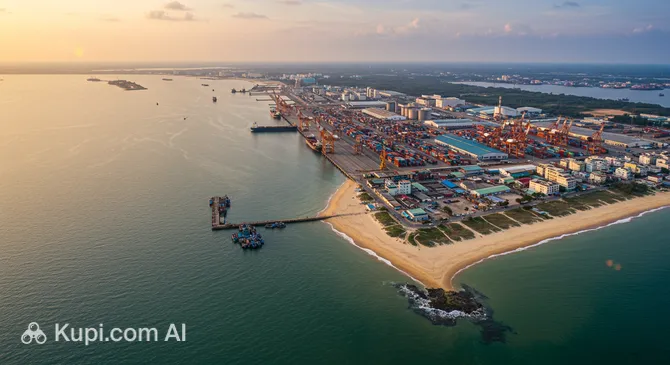
Nghi Son is a dynamically developing coastal town in Thanh Hoa province, situated on the picturesque north-central coast of Vietnam. Long remaining a remote rural area, it officially gained town status (thị xã) in 2020, becoming a vital industrial hub for the country. The atmosphere of Nghi Son is unique: here, the industrial power of one of Southeast Asia's largest oil refinery complexes sits side-by-side with the untouched beauty of the seaside.
Nghi Son. Illustration.
Source: Kupi.com AI
The city's geographic location on the shores of the South China Sea defines its climate and the lifestyle of its population, which has already exceeded 300,000 people. The coastline stretches for about 42 kilometers, offering travelers views of endless waters and rocky islands. If you are interested in the history of transformation of this region from a poor province into a powerful economic center, Nghi Son serves as an excellent example of modern Vietnamese progress.
For tourists, the city is primarily attractive for its authenticity. There are no crowds of vacationers here, and beaches such as Bai Dong or Hai Hoa retain their natural charm. A visit to Nghi Son is an opportunity to see the real Vietnam, where industrial landscapes meet quiet fishing villages and crystal-clear water. We invite you to discover this contrasting and welcoming corner of the coast.
Weather Overview
The climate in Nghi Son is classified as tropical monsoon, which means a clear division of the year into a hot, humid summer and a relatively cool, dry winter. If you are planning a trip, keep in mind that the warmest months are from May to August, when average daytime temperatures often exceed +32°C. During this period, the sea water is at its warmest, which is ideal for a beach holiday, though you should be prepared for brief tropical rain showers.
The winter period, lasting from December to February, is characterized by more moderate temperatures — averaging around +18°C...+20°C. This time is great for walking and excursions when there is no exhausting heat, although the sea water may seem cool for swimming. To plan your wardrobe in more detail, study the data on the current weather in Nghi Son.
The rainy season usually peaks in September and October, when rainfall increases significantly. The South China Sea coast provides the city with good ventilation and a fresh breeze, but keep in mind that humidity in this region remains high throughout the year. The best time to visit Bai Dong and Hai Hoa beaches is considered to be the period from March to May, when stable sunny weather sets in without extreme heat.
Average monthly temperature
Average monthly precipitation
Interesting Facts
Nghi Son is a city with deep meaning and interesting features that often escape the gaze of the casual passerby. Here are a few facts to help you get to know this region better:
The name Nghi Son itself translates from Vietnamese as "Inkwell Mountain." Legend has it that the surrounding landscape or the ancient crafts of the region served as inspiration for such a poetic name.
Until 2020, the city was officially considered a rural district called Tinh Gia, but rapid industrial growth allowed it to achieve urban town status in just a few years.
The Nghi Son island commune, located just off the coast, was formerly known as Bien Son and has a unique geographical shape — a narrow strip of land with magnificent beaches stretching over 10 km.
The city's petrochemical complex is a strategic site of national importance and one of the largest enterprises in Southeast Asia, making Nghi Son the industrial heart of northern Vietnam.
Despite its status as an industrial center, nearly 42 kilometers of coastline with "wild" beaches remain in the city's vicinity, where the water stays crystal clear.
How to Get There
The transport accessibility of Nghi Son is due to its strategic position on Vietnam's main coastal artery. Although the city itself does not have its own airport, getting here is easy thanks to a developed road network. A journey from the country's capital, Hanoi, by bus or private car takes about 5 hours, while the regional center, Thanh Hoa, can be reached in just an hour. More detailed information on travel methods can be found on the page about how to get to Nghi Son.
The nearest air harbors are located in neighboring provinces, from where you can reach the city by transfer or taxi. Travelers most often use the Thanh Hoa airport for quick access to the region.
There is no direct railway connection to the city, but the country's main railway artery passes through Thanh Hoa province. Tourists can take a train to the nearest major station and then transfer to a local bus or taxi to reach the Nghi Son coast. This is a convenient way to combine viewing Vietnam's rural landscapes with a comfortable trip.
Station
Passenger traffic
Distance
Thanh Hoa Railway Station
5
54 km
Vinh Railway Station
6
73 km
Ninh Bình railway station
6
102 km
Nam Định railway station
7
126 km
Phủ Lý railway station
6
135 km
Main Attractions
Although Nghi Son is primarily known as an industrial center, its natural treasures can surprise even the most seasoned traveler. The city's main pride is its coastline. Bai Dong Beach is considered one of the most beautiful and secluded spots in the region: golden sand framed by rocks and pine trees creates an atmosphere of complete tranquility. It is an ideal place for those wanting to escape the noise of big cities.
Another gem of the region is Hai Hoa Beach. It is famous for its wide shoreline and gentle entry into the water, making it popular among locals. Here, you can observe the daily life of fishermen returning with their catch at dawn and taste the freshest seafood right on the shore. For those who enjoy panoramic views, a trip to the Nghi Son island commune is a must, where white sandy beaches stretch for more than 10 kilometers along the pristine sea.
For those interested in modern engineering, the Nghi Son Refinery and Petrochemical Complex is a landmark in its own right. This grandiose facility defines the city's economic face and is spectacularly illuminated at night. A visit to Nghi Son allows you to combine relaxation on pristine beaches with exploring the industrial progress of modern Vietnam in a setting of absolute authenticity.
Local Cuisine
The culinary traditions of Nghi Son are inextricably linked to the sea. The main reason a gourmet should visit is the freshest seafood at very affordable prices. Local markets and coastal cafes offer dozens of types of fish, shrimp, crabs, and mollusks. Be sure to try seafood grilled with local spices or as part of traditional Vietnamese soups flavored with lemongrass and pineapple.
In addition to marine delicacies, the city widely features the classic cuisine of northern Vietnam. Street food is the heart of Nghi Son's gastronomic scene. It's worth ordering Bún chả (rice noodles with grilled pork) or a local interpretation of Phở soup. Dining in family cafes is often accompanied by an abundance of fresh herbs and traditional sauces that give the dishes a unique character.
As for drinks, it's impossible to imagine a local morning without strong Vietnamese coffee with condensed milk or ice. During the day, freshly squeezed juices from tropical fruits and sugarcane are popular. In the evening, cold local beer is often ordered in coastal restaurants, perfectly complementing spicy and salty seafood snacks. The gastronomy of Nghi Son is honest and simple cuisine, where the taste and freshness of the ingredients come first.
Travel Tips
Preparing for a trip to a unique city like Nghi Son requires attention to detail to ensure your journey is as comfortable and pleasant as possible. We have gathered several practical recommendations from experienced travelers for you.
Clothing and Essentials: Choose light clothing made from natural fabrics, as the region can be very hot. Sunscreen and a hat are essential for visiting beaches. When visiting local temples or administrative buildings, follow the dress code: shoulders and knees should be covered.
Transport: The most convenient way to explore the coast is by renting a motorbike. If you are not confident in your driving skills, use official taxis (such as Mai Linh) or ride-hailing apps.
Finance: Cash transactions prevail in the city. Cards are only accepted in large hotels and some restaurants. Be sure to carry a supply of Vietnamese dong; there are ATMs in the city center, but they are not very numerous.
Health and Safety: Take insect repellent with you, especially if you plan evening walks by the sea. Drink only bottled water and avoid ice at questionable street stalls.
Communication: English is not widely spoken in the city. We recommend downloading an offline translator and learning a few basic phrases in Vietnamese — this goes a long way with the locals. For connectivity, buy a SIM card from a local operator (Viettel or Vinaphone).
Local Etiquette: Greet people with a slight bow or a smile. In Vietnam, it is not common to show outbursts of emotion or raise your voice in public places. Always ask for permission before taking photos of local residents.
What to Avoid: We do not recommend walking at night in the immediate vicinity of the industrial zones of the petrochemical complex — it can be noisy, and the air may be less clean due to production.
Extra Tip: Try to get to Hai Hoa Beach early in the morning (around 5:30 AM) to see the return of the fishing boats — it is one of the most vivid and authentic sights in the region.
May your introduction to Nghi Son be filled with only positive emotions and amazing discoveries in this distinctive corner of Vietnam!
Entertainment & Nightlife
The entertainment industry in Nghi Son is mainly oriented toward local residents and employees of the industrial sector, so you won't find a classic "tourist" nightlife with an abundance of clubs here. The main evening pastime revolves around coastal cafes and restaurants where you can enjoy the sea breeze and fresh food. Along popular beaches like Hai Hoa, lights of improvised open-air bars flicker in the evening.
Daytime activities in the city are closely linked to the sea and nature. Travelers can rent a boat for a trip to nearby islands or engage in water sports in the calm bays. For more active evening leisure, including karaoke (extremely popular in Vietnam) or modern shopping areas, locals usually head to the nearby major city of Thanh Hoa, which is about an hour's drive away.
Safety in the city is high, and walking through residential neighborhoods or along illuminated embankments in the evening is quite comfortable. If you need a taxi at night, it is best to use mobile apps or ask hotel staff to call one. The atmosphere of Nghi Son leans more towards contemplative relaxation and quiet evenings by a campfire on Bai Dong Beach rather than loud parties until dawn.
Parks & Museums
In Nghi Son, you won't find large state museums or art galleries in the traditional sense, as the city is still shaping its tourist identity. However, the coastal landscapes and authentic fishing villages themselves serve as an "open-air museum." A walk through the island commune allows you to see traditional life that has changed little over the decades, which is a valuable cultural experience in itself.
Natural parks in the city are primarily represented by natural recreational zones by the sea. Instead of landscaped urban gardens, "wild" green spaces surrounding Bai Dong beaches dominate here. Pine groves that come right up to the sandy shores create excellent conditions for walks and outdoor picnics. This is a great alternative to traditional parks for those who appreciate untouched nature.
For residents and guests, Nghi Son Island offers natural green zones where sea air mixes with the scents of tropical vegetation. Despite the modest scale of urban greenery in industrial areas, the proximity to the ocean and island ecosystems fully compensates for the lack of classic botanical gardens, turning every trip to the water into a complete outdoor retreat.
Getting Around
The transport system of Nghi Son reflects its provincial status and industrial focus. The main type of public transport here is local buses that run between residential neighborhoods and key production zones. However, for tourists, this mode of travel might not be the most convenient due to the lack of information in foreign languages and specific routes.
The most popular and practical way to move around the city and its picturesque surroundings remains renting a motorbike. This provides complete independence and allows you to easily reach remote beaches like Bai Dong. The rental cost is low, but it is important to consider the peculiarities of local traffic and the condition of provincial roads. For those who prefer comfort, taxis are always available and can be called by phone or through mobile apps.
The payment system for local transport and taxis is predominantly cash, so it's always worth having Vietnamese dong in small denominations. Although there is no metro or tram system in Nghi Son, the city's compactness and the presence of good coastal roads make moving between hotels and attractions quick and hassle-free. During peak hours, minor congestion is possible on the main highways leading to the industrial complex, which should be taken into account when planning trips.
Accommodation
The hospitality sector in Nghi Son is actively developing, offering accommodation options for both business travelers and beach lovers. You can find everything here: from modest family guesthouses (nhà nghỉ), which are popular with budget tourists, to modern mid-range hotels catering to employees of the international industrial complex. Most of these facilities are located in central districts, providing easy access to infrastructure.
For those seeking comfort and scenic views, it is worth looking at upscale resorts on the coast. Areas near Hai Hoa and Bai Dong beaches are particularly popular, where hotels offer direct access to the sea and pools. Staying here allows you to fully enjoy the tranquility of the coastal zone away from industrial facilities.
If you plan to visit Nghi Son during national holidays or the summer vacation season (May to August), we strongly recommend booking accommodation in advance. The price range in the city is very democratic compared to Vietnam's major tourist hubs, and international services and local websites remains the primary platforms for selection and booking.
Nearby Cities
Thanks to its convenient coastal location, Nghi Son serves as an excellent starting point for exploring the central part of Thanh Hoa province. Proximity to important transport routes makes it easy to plan day trips to neighboring cities, each possessing its own unique character and attractions.
Just 50 kilometers to the north is the provincial capital — the city of Thanh Hoa. This is a major cultural and commercial center where you can visit historical temples, modern shopping malls, and enjoy the atmosphere of a bustling Vietnamese city. Also nearby is the famous resort of Sam Son, known for its wide promenade and developed tourist infrastructure.
Exploring the surroundings of Nghi Son will give you plenty of new experiences — from visiting the busy markets in Vinh to peaceful walks along the coastal streets of Cua Lo. Each of these destinations is accessible by car or taxi, making your stay in the region rich and varied.
Shopping & Souvenirs
Shopping in Nghi Son is primarily about getting to know the colorful local markets. There are no huge shopping malls with global brands here, but there is the lively atmosphere of traditional Vietnamese trade. Food markets are the main point of interest, where you can buy not only the freshest seafood but also exotic fruits, spices, and local delicacies. This is the perfect place for those wanting to bring home a piece of Vietnamese flavor.
If you are looking for souvenirs, look for handmade items from local artisans. Small shops offer woven goods, traditional ceramics, and dried or cured seafood, which are very popular in Vietnam as gifts. Most shops operate from early morning until late evening, and small stalls accept exclusively cash (Vietnamese dong) as payment.
For larger purchases or supermarket visits, city residents usually head to the neighboring city of Thanh Hoa, where the infrastructure is significantly more developed. However, it is precisely in Nghi Son that you can shop at a relaxed pace, enjoying the absence of tourist hustle and bustle. Remember that light and friendly bargaining is appropriate at local markets and is part of the national culture of communication.