Support

Hrodna State Museum of Religion History

About

In the heart of the historical center, on the ancient Zamkavaja Street, lies the Grodno State Museum of the History of Religion — the only institution of its kind in Belarus. It occupies the majestic Khreptovich Palace, an 18th-century architectural monument that harmoniously combines the austerity of Classicism with the elegance of Baroque.
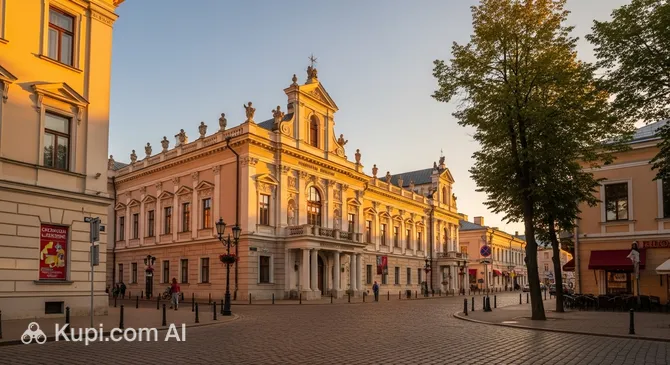
Grodno State Museum of the History of Religion
Grodno State Museum of the History of Religion. Иллюстрация. Источник: Kupi.com AI

This museum is more than just a collection of artifacts; it is a profound exploration of the spiritual path of the peoples who have inhabited Grodno and the entire country for centuries. Spanning over 600 square meters, the exhibitions cover beliefs ranging from ancient pagan cults to modern world religions, highlighting the interfaith tolerance traditional to this region.

The museum's holdings are impressive in scale: it houses over 85,000 exhibits, including rare icons, antique books, and religious items. A visit here allows you not only to see unique relics but also to experience the atmosphere of a magnate's palace that has become a guardian of a rich cultural heritage.

Contacts

For current information regarding events or to book a guided tour, you can contact the museum administration directly.

How to contactContact
AddressПалац Храптовіча, улица Замковая, Гродно, Гродненская область, Беларусь
Phone+375 152 71-87-07
Websitemuzej.by

What to Do

The main reason to visit the museum is its large-scale permanent exhibitions: "Era. Time. Building" and "Religion and Culture in Belarus." Here, you can see unique liturgical objects, rare icons, and archival documents that vividly demonstrate how the fates of different peoples and faiths intertwined on Belarusian lands.

Of particular interest are the theatrical tours, such as "Visiting Lord Khreptovich." Guides in authentic historical costumes lead you through the ceremonial halls, turning an ordinary walk into an exciting journey back in time. This is a great way to learn about the history of the palace and its former owners in an interactive format.

Don't forget to pay attention to the architecture itself. The 18th–19th-century interiors have been meticulously restored: you can appreciate the stucco work, massive staircases, and the layout characteristic of wealthy urban estates of that era. The museum also frequently hosts temporary exhibitions and concerts of sacred music, with information available on posters at the entrance.

Getting There

Finding the museum is easy, as it is located in the heart of the historical center on Zamkavaja Street. If you are already visiting the Old or New Castle, the walk to the Khreptovich Palace will take no more than 10–15 minutes through picturesque streets.

For those preferring public transport, take a bus or trolleybus to the "Zamkavaja vulica" or "Stary zamak" stops (e.g., routes No. 1, 2, 5, 8). From the Grodno railway station, you can quickly reach the museum by bus No. 29 or by taxi — the trip takes about 10 minutes.

Drivers can use the coordinates 53.6778161, 23.8257892. You can park your car on the adjacent sections of Zamkavaja Street, though the center can be crowded on weekends, so it is best to arrive early.

Ближайший город: Grodno

History & Facts

The museum's history began in 1973, though it was originally located in Polotsk and named the "Republican Museum of Atheism." It wasn't until 1977 that the institution was moved to Grodno, occupying the premises of the former Nativity of the Mother of God Convent. Interestingly, during restoration work on the monastery grounds in 1980, the remains of the 12th-century Prechistenskaya Church — a unique monument of Old Russian architecture — were discovered.

In the early 1990s, the museum shifted its focus and name, becoming the Belarusian State Museum of the History of Religion. During this same period, the process of returning the monastic buildings to the church began, and the museum collection moved to its current home — the Khreptovich Palace. This architectural masterpiece of the 18th–19th centuries is a valuable exhibit in its own right, having been carefully restored by 2009.

The museum's collection grew at an impressive pace: while it held fewer than two thousand items in the late 1970s, it now boasts more than 85,000 exhibits. The institution received its current name — the Grodno State Museum of the History of Religion — in 2005, finally cementing its status as the country's primary center for the study of spiritual culture.

Time Needed

For a standard tour of the museum's main exhibits, most tourists need between 1.5 to 2 hours. This is enough time to leisurely explore the halls dedicated to different faiths and admire the palace interiors.

If you plan to participate in a theatrical tour or study rare archival documents and temporary exhibitions in detail, you should set aside at least 2.5–3 hours for your visit. The museum fits perfectly into a one-day tour program of the city's historical center.

Working Hours

The museum is open to visitors daily, which is very convenient for those visiting Grodno for a weekend. The doors are open from 11:00 AM to 7:00 PM every day of the week, from Monday to Sunday.

As the museum may host special events or undergo temporary maintenance, it is recommended to check the official website before your visit to confirm the ticket office hours and tour start times.

11:00–19:00

Nearby

A stroll around the museum's surroundings will allow you to dive even deeper into the atmosphere of the ancient city. Its location on Zamkavaja Street makes it an ideal starting point for a walking route through key historical sites.

NameDistance
Old Castle0.2 km
St. Francis Xavier Cathedral0.4 km
Kalozha Church of Saints Boris and Gleb0.5 km
Faraday Bar0.6 km
Hookah Place0.6 km
Kalozha Park0.6 km
Old Bridge0.6 km

Reached the end of the page?

That means the route is fully explored