Support

Most Musala

About

Imagine a place where the elegance of European architecture meets Balkan hospitality. Musala Square is the heart of the \"new\" town in Mostar, formed during the period of Austro-Hungarian rule. It serves as an important link between different eras, demonstrating how Bosnia and Herzegovina gained its modern urban character at the end of the 19th century.
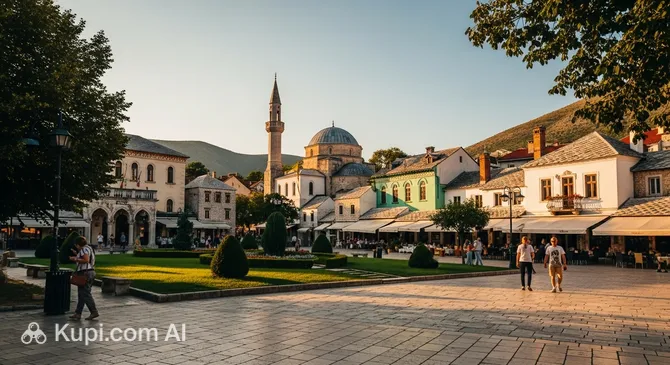
Musala Square
Musala Square. Иллюстрация. Источник: Kupi.com AI

Located on the picturesque banks of the Neretva River, this square draws attention with its grand buildings, such as the Vakuf House and the historic City Bath (Gradska Banja). It is a symbol of the city's Europeanization and an important public space where tourist trails and the daily routes of local residents intersect.

Today, it is not just an architectural complex, but a living testament to history. Musala harmoniously combines the monumentality of the Imperial style with the coziness of a Mediterranean city, remaining one of the most recognizable and significant locations outside the famous Old Town.

Contacts

Since this is a central city square, it does not have an official website or a single phone number. For additional information about tourist routes, you can contact the local tourist information center.

How to contactContact
Address8RV6+H6W, Mostarskog bataljona, Mostar 88000, Bosnia and Herzegovina

What to Do

Strolling through this area is primarily an aesthetic pleasure from observing architectural contrasts. Be sure to notice the Vakuf House, built in 1937, and the old fire watchtower, which has towered over the square since the beginning of the last century. It is a great spot for photo sessions, where you can capture the spirit of fallen empires in a single frame.

Slow-travel enthusiasts should check out the local cafes located around the perimeter. It is pleasant to enjoy a cup of traditional coffee here while watching the rhythm of city life. Thanks to its location, the square also serves as an ideal starting point for walks to the famous Old Bridge or for exploring the Neretva embankment.

Occasionally, city festivals or open-air cultural events are held here. If you are lucky enough to be here on such a day, you can feel the true drive of a modern city that honors its traditions but looks confidently toward the future.

Getting There

Getting to this lively spot is easy, as it is located in the heart of the city and serves as a major transport hub. If you are staying in the historic part of town, the walk to the square will take only a few minutes. From the city's main bus station, you can reach it on foot in about 10–15 minutes by heading towards the Neretva River.

For those who prefer comfort, city taxi services are always available to quickly bring you from any part of the city. If you are traveling by rental car, keep in mind that parking in the very center can be limited, so it is better to leave your car in one of the nearby paid parking lots and continue on foot while enjoying the views.

Ближайший город: Mostar

History & Facts

The area began to acquire its modern European appearance at the end of the 19th century when Bosnia and Herzegovina was under Austro-Hungarian rule. A landmark event was the construction of the Franz Joseph Bridge in 1882, which was later renamed the Musala Bridge. Around the same time, a commercial school opened here, eventually becoming a music school, laying the foundation for the district's cultural status.

The beginning of the 20th century brought technical innovations to the square: a fire watchtower was erected in 1901, and in 1913, a modern post office and even the city's first public toilet—considered the height of innovation at the time—were opened. In 1914, the real gem became the Gradska Banja (City Bath), a luxurious spa complex with pools and relaxation terraces that attracted the city's elite.

During the Yugoslav period, the square's history took a new turn: it was renamed Republic Square. It became the main stage for parades, rallies, and festive concerts, and for a time, it even served as a bus station. Today, the square has been returned to its historical name and once again serves as a cozy space for meetings and strolls.

Time Needed

To leisurely explore the architectural monuments surrounding the square and soak in its atmosphere, 1–2 hours is usually enough. This time allows for a short walk and capturing beautiful shots against the backdrop of historical buildings.

However, if you decide to stop by one of the local coffee shops or plan to continue your route toward the Old Bridge, it is better to budget about 2–3 hours. The evening hours here are particularly pleasant for a long rest, as the city lighting emphasizes the grandeur of the old facades.

Working Hours

Since this is an open public space, access is available 24/7 and is completely free. You can come to the square early in the morning to catch it empty, or late in the evening when the streetlights come on.

Keep in mind that the surrounding cafes, shops, and banks operate on their own schedules—most of them are open from 8:00 AM to 10:00 PM. On public holidays, the working hours of commercial establishments may change, so it is best to check the official pages of specific restaurants for up-to-date information.

Nearby

Exploring the surroundings of the square will allow you to feel the multifaceted character of the city, where Austro-Hungarian monuments stand alongside Ottoman heritage. Most iconic locations are within walking distance, making for a rich and effortless stroll.

NameDistance
Spanish Square0.3 km
Bišćević House0.4 km
Karađoz Bey Mosque0.4 km
Von Herzog0.6 km
Museum of War and Genocide Victims0.6 km
Zrinjevac Park0.6 km
Mepas Mall0.7 km

Reached the end of the page?

That means the route is fully explored