Support

War Childhood Museum

About

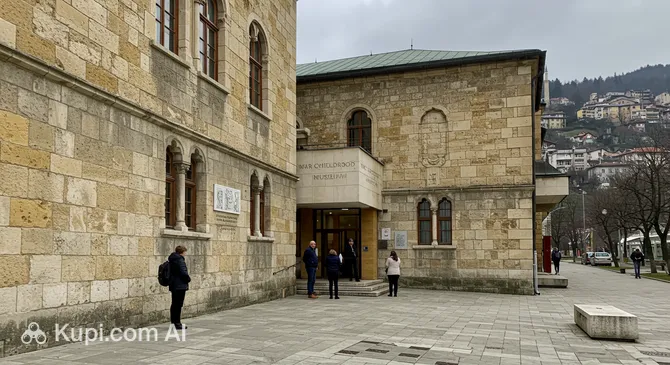
In the historic heart of Sarajevo sits one of Europe’s most moving and profound cultural institutions—the War Childhood Museum. Housed in an elegant white building with a distinct modern design, this museum is entirely dedicated to preserving the memories of children whose lives were affected by the events of 1992–1995 in Bosnia and Herzegovina.
War Childhood Museum
War Childhood Museum. Иллюстрация. Источник: Kupi.com AI

It is more than just a historical archive; it is a living space for reflection and understanding the resilience of the human spirit. Unlike traditional military history exhibitions, the focus here is on personal objects and oral testimonies, making a visit to the museum an incredibly emotional and personal experience for every traveler.

Today, the collection includes thousands of artifacts, ranging from worn-out dolls to childhood drawings, each accompanied by a brief story from its owner. The museum's minimalist interior highlights the significance of each exhibit, allowing visitors to focus on stories of hope, friendship, and everyday life in extraordinary circumstances.

Contacts

For more information regarding special exhibitions or group visits, you can contact the museum administration directly. The War Childhood Museum actively engages with visitors through its official communication channels.

How to contactContact
Address30-32, Logavina, 32, Sarajevo 71000, Bosnia and Herzegovina
Phone+387 33 535-558
Websitewww.warchildhood.org

What to Do

Inside the museum, you will find a deep immersion into personal stories through artifacts, each imbued with special meaning. Here, you can see everyday items—keys, books, sweaters, or handmade toys—that became symbols of safety for children. Next to each exhibit, there are descriptions in English and the local language, explaining the role the item played in the child's life.

Special attention should be given to the multimedia installations. Video recordings of eyewitness accounts allow you to hear the voices of those who grew up during those years and understand how they found room for joy, creativity, and play even in the most difficult times. One of the most striking parts of the exhibition is an art installation featuring "floating" children's clothing, which creates a powerful visual image of fragility and, at the same time, incredible vitality.

Visitors are also encouraged to leave time for quiet reflection. The museum is designed so that you can not only observe but also empathize, discovering different facets of childhood psychology and resilience. This place is ideal for those seeking more than just sightseeing—it’s for those looking for deep meaning and an understanding of human nature.

Getting There

Finding the War Childhood Museum is easy, as it is located at Logavina 30-32, in the historic city center. It is situated very close to major tourist thoroughfares, so most guests prefer to walk here, combining the visit with a stroll through the city's colorful streets.

If you are staying in a more distant area, the most convenient way is to use public transport. Trams and buses run regularly to the city center. The nearest stops are just a few minutes' walk from the museum. You can also always use a local taxi, which will quickly take you to the entrance directly from your hotel or any key point in the city.

Ближайший город: Sarajevo

History & Facts

The story of this touching place began in 2010 when Jasminko Halilović, a young activist and entrepreneur, launched an online platform. His goal was to collect memories from people who spent their childhood between 1992 and 1995. The response was overwhelming: over a thousand people shared their stories, and it turned out that everyone had kept an object that had become a symbol of survival and hope.

In 2013, based on these testimonies, the book "War Childhood: Sarajevo 1992–1995" was published, eventually gaining international acclaim. However, with about 3,000 artifacts collected, the idea for a full-scale museum emerged. People continued to donate their personal belongings—toys, letters, clothes, and even musical instruments—to preserve the memory for future generations.

Before finding its permanent home, the exhibition was displayed in various cities. It wasn't until January 2017 that the War Childhood Museum officially opened its doors in a modern building on Logavina Street. Today, it is a globally recognized project that focuses not on politics, but on human resilience and the universal experience of growing up during challenging times.

Time Needed

To thoughtfully explore the exhibition, visitors typically need about 1.5 to 2 hours. This is enough time to read the personal stories accompanying each object and watch the video testimonies that are an essential part of the collection.

Since every exhibit in the museum is not just an object but a unique human story, there is no need to rush. The atmosphere encourages reflection, so many guests choose to stay longer at the displays to fully immerse themselves in the context of the memories presented.

Working Hours

When planning your visit, keep in mind that the museum follows a very convenient and consistent schedule. It is open to visitors daily, including weekends, making it easy to fit into any city sightseeing itinerary.

The museum doors are open from 11:00 AM to 7:00 PM. These uniform hours from Monday to Sunday make the War Childhood Museum one of the most accessible attractions in terms of scheduling.

11:00 – 19:00

Nearby

The museum's location in the historic center makes it easy to combine your visit with other iconic landmarks. A walk through the surrounding area will help you better appreciate the multilayered culture and architectural diversity of this region.

NameDistance
Sebilj0.3 km
Gazi Husrev-beg's Bezistan0.3 km
Dveri0.3 km
Baščaršija0.3 km
Gazi Husrev-beg Mosque0.3 km
Sacred Heart Cathedral0.4 km
Markale Market0.4 km

Reached the end of the page?

That means the route is fully explored